
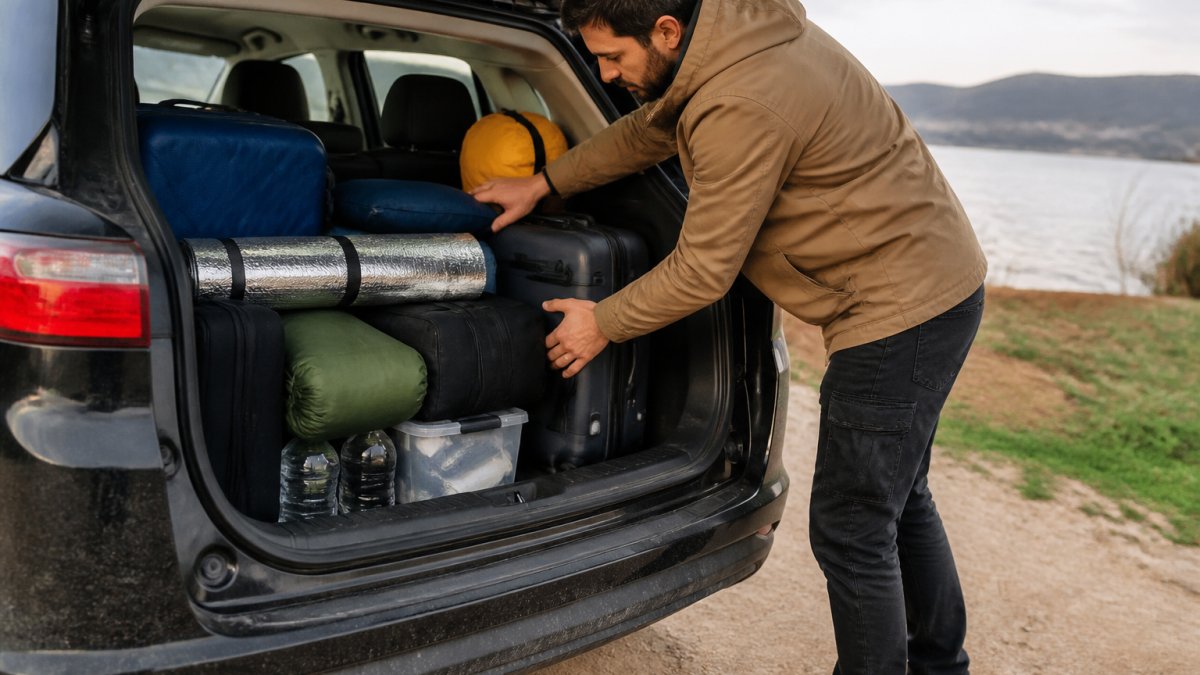
How to Pack Your Car for Long Distance Travel
Last Updated: October 30, 2026
Quick Summary
For long distance travel, keep a core kit that warns other drivers, fixes what you can and keeps people safe: warning triangle, high-visibility vest for every occupant stored in the cabin, torch, jump leads or jump starter pack, first-aid kit, basic tools and a warning beacon. Add at least one litre of drinking water per person, snacks, a phone charger and a charged power bank. Check tyres, fluids and electrics the day before you leave.
- A pre-trip check takes about 20 minutes; do it the day before you leave, not on the morning.
- Check tyre pressure when tyres are cold using the figures in your handbook, and check the spare too.
- High-visibility clothing belongs in the cabin, within reach of the driver’s seat, not the boot.
- Pack at least one litre of drinking water per person, and more in hot weather.
- Leave aerosols, lighters and loose heavy objects on the parcel shelf out of a parked car.
Table of Contents
- Why Your Long Distance Travel Kit Starts with the Vehicle
- What to Check Before a Long Drive: A 20-Minute Routine
- Car Emergency Kit Essentials for Motorway Breakdowns
- Road Trip Essentials for Food, Water and Device Power
- What Not to Leave in a Car on a Long Journey
- Packing by Passenger, Season and Vehicle Type
- Building Your Kit with Roadflash
- Frequently Asked Questions
Why Your Long Distance Travel Kit Starts with the Vehicle
Most drivers pack for a long distance travel trip by filling the boot first. That is backwards. The kit only matters if the car itself is ready, and a well-prepared vehicle prevents most of the breakdowns a kit is meant to handle.
Start with the car. Then pack.
For a full walkthrough of vehicle preparation, read our guide on how to prepare your car for long motorway journeys.
Tyre Pressure, Tread Depth and Your Spare
Tyres are the most common cause of roadside stops on a long journey. Check pressure when the tyres are cold, using the figures in your handbook rather than the number on the tyre wall.
Then check the spare. A space saver often runs at a much higher pressure than the road tyres, so read the label. Confirm the jack, wheel brace and locking wheel nut key are all in the car.
Fluids, Filters and the Bonnet Check
Five minutes with the bonnet up catches most problems before they start:
- Engine oil: on the dipstick, between the marks
- Coolant: at the level line, checked when cold
- Brake fluid: above the minimum mark
A dirty cabin filter fogs windows faster and makes the whole cabin stuffier on a long drive.
What to Check Before a Long Drive: A 20-Minute Routine
A proper pre-trip checklist takes about 20 minutes and covers everything that matters. Do it the day before you leave, not on the morning, so you have time to fix what you find.
Work through it in this order:
- Walk around the car (2 min): lights, indicators, number plate, obvious damage
- Check tyre pressures and tread (5 min): all four tyres plus the spare
- Lift the bonnet (5 min): oil, coolant, brake fluid, washer fluid
- Test the electrics (3 min): all lights, horn, wipers, washers
- Check the kit (5 min): first-aid kit, warning triangle, high-visibility vest, torch, phone charger
The Highway Code guidance on vehicle safety sets out the legal requirements for tyres, lights and brakes.
A proper pre-trip check takes about 20 minutes; work through it in this order the day before you leave.
| Step | What to do | Time |
|---|---|---|
| Walk around the car | Lights, indicators, number plate, obvious damage | 2 min |
| Check tyre pressures and tread | All four tyres plus the spare | 5 min |
| Lift the bonnet | Oil, coolant, brake fluid, washer fluid | 5 min |
| Test the electrics | All lights, horn, wipers, washers | 3 min |
| Check the kit | First-aid kit, warning triangle, high-vis vest, torch, phone charger | 5 min |
Car Emergency Kit Essentials for Motorway Breakdowns
A car emergency kit essentials list should cover three jobs: warn other drivers, fix what you can, and keep people safe while you wait. Build it around those jobs and you will not carry dead weight.
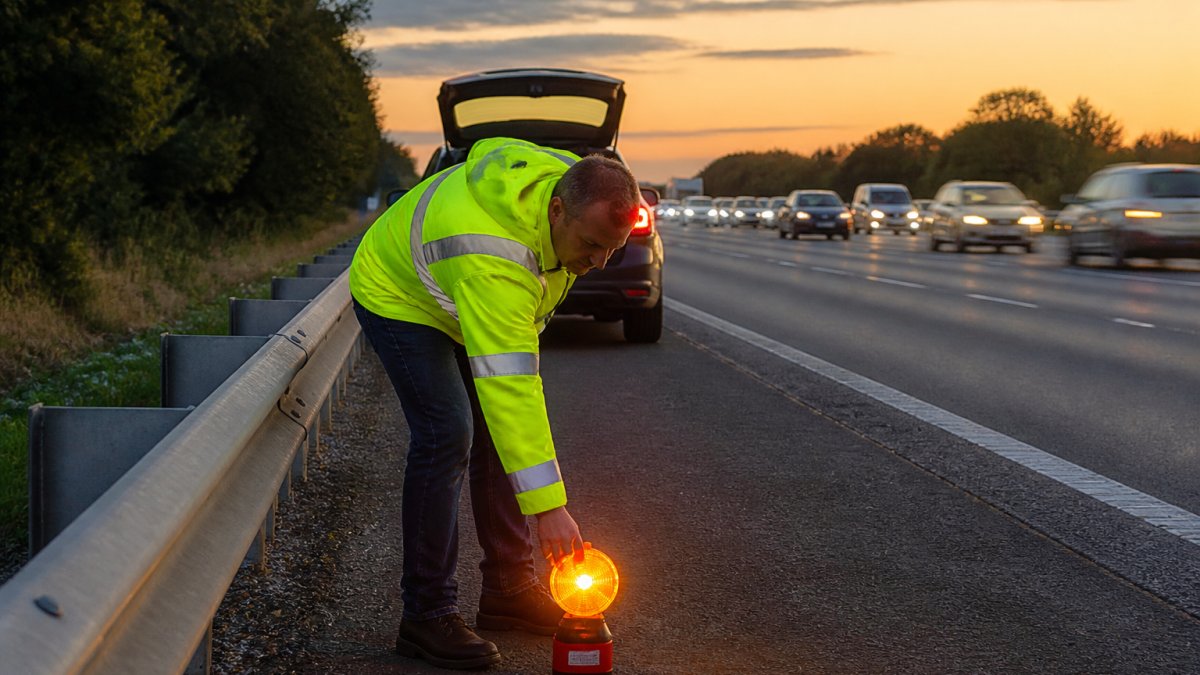
The core kit:
- Warning triangle for visibility on the road
- High-visibility vest for every occupant, stored in the cabin, not the boot
- Torch with spare batteries or a wind-up option
If a tyre fails on the hard shoulder, knowing the safe procedure matters more than the spare itself. Our guide on how to change a flat tyre on the motorway safely walks through it step by step.
Warning Lights, Triangles and High-Visibility Gear
Warning lights and visibility gear are the part of the kit that protects you, not the car.
A reflective triangle is useful here, but it is not always safe to place one on a busy motorway.
High-visibility clothing belongs in the cabin, within reach of the driver’s seat. Our article on why to keep high-vis clothing in your car explains how much earlier other drivers spot you.
Road Trip Essentials for Food, Water and Device Power
Road trip essentials for food and power are about keeping people comfortable and connected, not about luxury. Keeping your animal companions satisfied requires similar attention to detail, as preventing pet food spills remains a vital part of maintaining a clean and stress-free cabin for the duration of your trip.
Pack these:
- Drinking water: at least one litre per person, more in hot weather
- Snacks: nuts, cereal bars, fruit; avoid anything that needs a fridge
- Soft-sided cooler or portable fridge for anything perishable
Charge devices the night before. A car adapter is a backup, not a plan.
What Not to Leave in a Car on a Long Journey
Some items turn a minor problem into a serious one when left in a parked car. Heat, cold and movement all take a toll.
Leave these out:
- Aerosols and lighters in direct sun, which can rupture or ignite
- Medicines that need cool storage, unless you carry them in a cooler
- Loose heavy objects on the parcel shelf, which become projectiles in a stop
If you break down at night, the plan changes: stay visible, stay behind the barrier, and call for help. Our guide on what to do if your car breaks down at night covers the sequence.
Packing by Passenger, Season and Vehicle Type
A generic kit leaves gaps because the same boot serves a solo commuter, a family with a toddler and a driver crossing a remote moor in January. Adjust the core kit along three axes: who is travelling, what the weather is likely to do, and what you drive. The aim is not to carry more, but to carry the right things for the trip in front of you.
By passenger
- Children: pack one litre of water per child plus a refillable bottle, a small snack bag per child, spare clothes in a labelled bag, and motion-sickness bags within reach of the seat. A tablet or book reduces distraction for the driver. Keep a folded blanket per child rather than one shared blanket, so nobody is left cold when one is in use.
- Older passengers: carry a week’s medication in original packaging with a copy of the prescription, a folded blanket, a small cushion for posture, and a note of emergency contacts. Plan a stop every 90 minutes to two hours; long unbroken stints are harder on joints and circulation. If a passenger uses a walking stick or frame, confirm it fits in the boot alongside the kit rather than on a seat where it becomes a projectile.
- Pets: use a carrier or a properly fitted harness and restraint; a loose dog in the cabin is a distraction and a danger in a sudden stop. Carry a water bowl, a lead, waste bags and a towel. Never leave a pet in a parked car in warm weather, even with the windows cracked; cabin temperatures rise faster than most people expect.
By season
- Winter: add a blanket per occupant, a shovel, de-icer and a scraper, warm gloves and a hat, grit or a traction mat, and a fully charged phone with a power bank. Check the battery; cold mornings expose a weak one.
- Summer: carry at least two litres of water per person, a sunshade for the windscreen, a cool bag, sunglasses and high-factor sun cream. Check coolant and tyre pressures more often; heat raises pressure and accelerates wear. Never leave children or pets in a parked car.
- Rain and wind: add a waterproof jacket per occupant, a towel, and a spare set of wipers if yours are near the end of their life. Check that the warning beacon and high-vis vest are still within reach after wet-weather gear goes in the boot.
- Remote routes: double the water and snacks, carry a paper map and a compass, and tell someone your route and expected arrival time. Mobile coverage is patchy on many rural routes, so an offline plan matters more than a charged phone alone.
By vehicle type
- Electric vehicles: carry the charging cable that matches the car and know which connector types your route’s chargers use. Plan charging stops with a buffer rather than arriving on a low state of charge, and check real-world range in cold weather, which is typically lower than the official figure. Keep a Type 2 cable and, if your car supports it, a three-pin emergency cable for a slow top-up.
- Older cars: carry more spares, especially belts, bulbs and fuses, and check fluid levels more often. An older battery can be more prone to failure in cold weather.
- Vans and fleet vehicles: add a second warning beacon, a larger first-aid kit, and a fire extinguisher rated for vehicle use. Secure loads so they cannot shift into the cabin.
Build the kit around the trip, not the calendar. A winter kit in the boot in July is dead weight; a summer kit on a January moor is a gap. Swap the seasonal layer the week before you travel.
Building Your Kit with Roadflash
A warning beacon is the one item in your kit that works hardest when things go wrong.
Roadflash builds early warning systems for exactly this moment. Our beacons include DGT 3.0 compliant models with GPS and geolocation.
If you are choosing a beacon for your kit, our roundup of the best emergency beacons for car breakdowns compares the options.
Pricing depends on the model and quantity, so check the Roadflash website for current prices.
Frequently Asked Questions
What should I keep in my car for a long journey?
Start with the legal and safety basics: a warning triangle, high-visibility vest, torch, first-aid kit, jump leads or a jump starter, and a spare tyre with the tools to change it. Add drinking water, non-perishable snacks, phone charger and car adapter, a soft-sided cooler for food, and a blanket. A portable power bank and paper map cover you if devices or signal fail. Store everything in a trunk organizer so it stays accessible and doesn’t become a projectile under braking.
What are five things I should check before a long drive?
Check tyre pressure and tread depth, including the spare; engine oil, coolant, brake fluid and washer fluid levels; all lights and indicators working; windscreen wipers and washer jets; and brake response plus any dashboard warning lights. This five-point routine takes about 20 minutes and catches most breakdown causes before you leave. Also confirm your breakdown cover is current and your phone is charged before setting off.
What should you not leave in your car?
Avoid leaving aerosols, lighters, hand sanitiser and pressurised containers in a hot car, as they can rupture or ignite. Don’t store medication that degrades in heat, or electronics and lithium batteries exposed to direct sun. Never leave pets or children in a parked vehicle. Also remove valuables from view to reduce theft risk, and don’t leave wet clothing or food waste inside, as these cause mould and odours over a long journey.
What should I do if my car breaks down on a motorway?
Move to the hard shoulder or a refuge area if you can, switch on hazard lights, and exit through the left-hand doors, away from traffic. Wait behind the barrier, never on the verge or in the vehicle. Wear a high-visibility vest and place a warning triangle or LED beacon well behind the car if safe. Call your breakdown provider or 999 if anyone is in danger.
A breakdown on a busy motorway is stressful enough without wondering whether you packed the right gear. Roadflash helps you prepare for that moment with multi-award-winning warning beacons, DGT 3.0 compliant GPS models, and high-visibility lighting that protects drivers and passengers at the roadside. Get started with Roadflash and build a kit that keeps you seen, safe and found.
