
7 Best Emergency Beacons for Car Breakdowns 2026
Table of Contents
- Why Roadside Visibility Matters More Than Ever
- Quick Comparison: 7 Best Emergency Beacons for Car Breakdowns
- 1. Roadflash: DGT 3.0 Compliant Emergency Beacons with GPS
- 2. StonePoint LED Emergency Beacon: Best Budget Three-Pack
- 3. Ocean Signal rescueME PLB1: Best for Remote Breakdowns
- 4. Garmin inReach Mini 3 Plus: Best for Two-Way Communication
- 5. ACR ResQLink View: Best for Professional-Grade Reliability
- 6. Zoleo Satellite Communicator: Best for Budget-Conscious Drivers
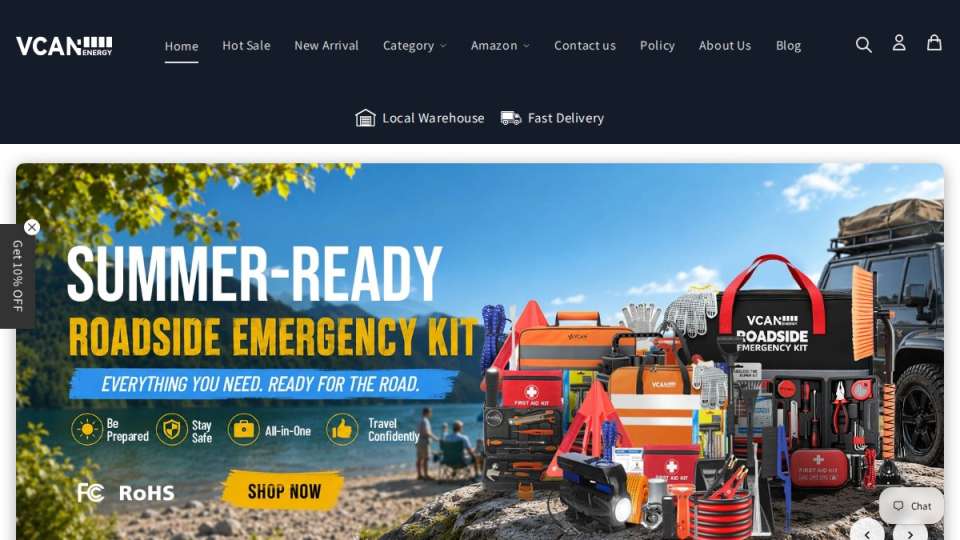
- 7. VCANENERGY Emergency Roadside Kit: Best All-in-One Option
- What Most Buyers Get Wrong
- Frequently Asked Questions
Last Updated: September 13, 2026
Why Roadside Visibility Matters More Than Ever
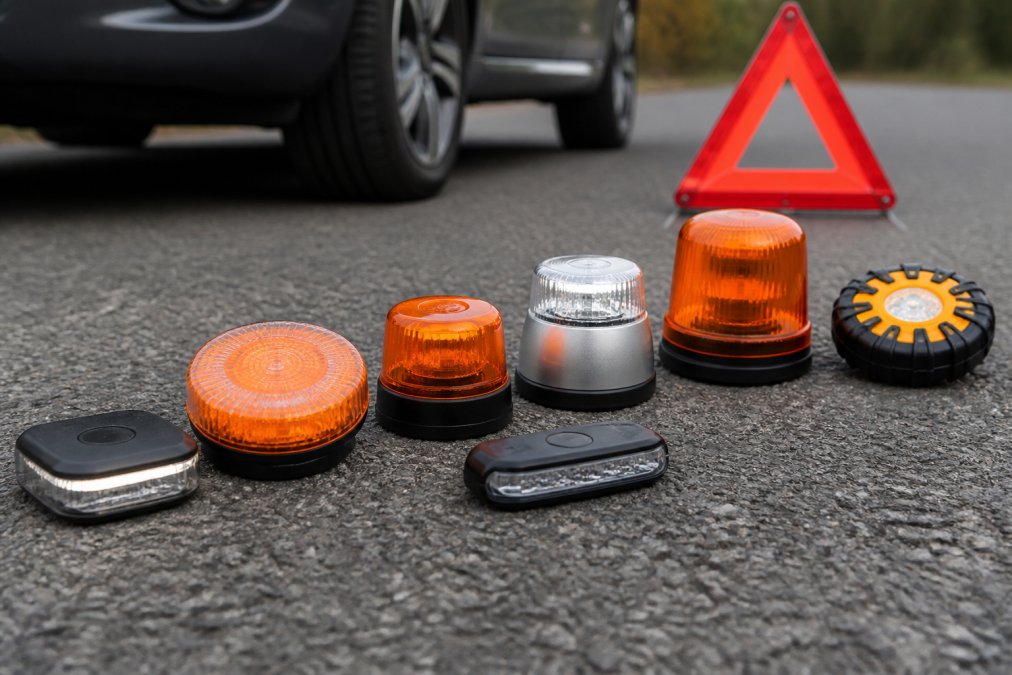
Breaking down on a motorway hard shoulder remains one of the most dangerous situations a driver can face. According to National Highways safety guidance on breakdowns, stationary vehicles on high-speed roads are at serious risk from approaching traffic, which is why rapid, highly visible warning is essential. This guide from Roadflash examines emergency beacons for car breakdowns, comparing visibility, power, durability and legal compliance.
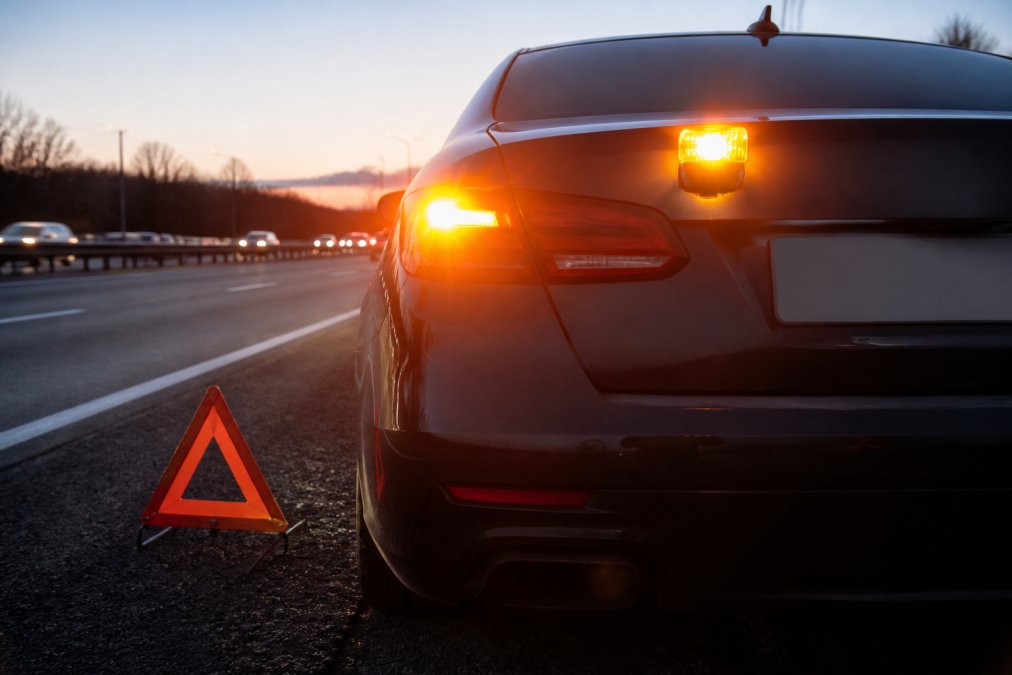
An emergency beacon is a portable warning light that alerts approaching traffic to a stationary vehicle, typically using a bright amber flashing beacon and a magnetic base for quick attachment to bodywork. Unlike a warning triangle, a powered beacon stays visible at night, in rain and at distance.
The difference between a near-miss and a collision often comes down to seconds of warning. Below, we break down what each beacon does well, where it falls short, and who it suits.
The physics of being seen
Visibility is not one number. It is the product of three things: light output, beam pattern and contrast against the background.
- Light output is measured in lumens. A basic magnetic beacon might put out 100-300 lumens; a high-output unit can exceed 1,000. But lumens alone tell you very little, because a tightly focused 300-lumen beam can be more visible at 200 metres than a diffuse 1,000-lumen one.
- Beam pattern determines where the light goes. A 360-degree beacon spreads light evenly, which is useful when you are not sure which direction traffic will approach from. A directional beacon throws light further in one direction, which is useful on a motorway where traffic comes from behind.
- Contrast is the variable most buyers ignore. At night, almost any amber light stands out. In bright daylight, a cheap beacon can be effectively invisible against a light-coloured vehicle or a sunlit road surface.
Night vs. day: the test most guides skip
Most buying guides test beacons at night, because that is when they look impressive. The problem is that breakdowns happen in daylight too, and daylight is where cheap beacons fail.
A common pattern in real-world use is that a beacon rated at 300 lumens is clearly visible at 150-200 metres after dark, but drops to 30-50 metres in direct sunlight. That is not enough warning at motorway speed. If you want a beacon that works in daylight, look for one with a high candela rating (the unit that actually describes perceived brightness at distance) and a strobe or double-flash pattern rather than a slow pulse, rapid flashes cut through ambient light far better.
What actually matters at the roadside
When you are standing on a hard shoulder in the rain, the specs that matter are not the ones on the marketing page. They are:
- How fast you can deploy it. A beacon that takes 30 seconds to attach is a beacon you will not use.
- Whether it stays attached. Magnetic bases vary enormously in pull strength, and aluminium body panels (common on bonnets and boot lids) hold far less well than steel. A suction mount or a weighted base is more reliable on non-ferrous panels.
- Whether it survives the weather. IP67 means it can be submerged to 1 metre for 30 minutes; IP54 means it can handle splashes only. For UK roadside use, IP67 is the sensible minimum.
- Whether it still works when you need it. Rechargeable units need to be charged; battery units need to be checked. A beacon with a flat battery is a paperweight.
If you’re injured or disoriented after a breakdown, geolocation matters more than brightness alone. A beacon that transmits your position saves critical minutes for recovery teams.
Quick Comparison: 7 Best Emergency Beacons for Car Breakdowns
| Product | Best For | Power | Price From |
|---|---|---|---|
| Roadflash | Overall visibility and compliance | Rechargeable | See site |
| StonePoint LED (3-pack) | Budget multi-point coverage | Battery | £25.00 |
| Ocean Signal rescueME PLB1 | Remote areas, no signal | 7-year battery | £240.00 |
| Garmin inReach Mini 3 Plus | Two-way communication | Rechargeable | £349.99 |
| ACR ResQLink View | Professional reliability | Battery | £320.00 |
| Zoleo Communicator | Budget satellite messaging | Rechargeable | £180.00 |
| VCANENERGY Roadside Kit | All-in-one breakdown kit | Battery | £45.00 |
1. Roadflash: DGT 3.0 Compliant Emergency Beacons with GPS
Roadflash combines high-visibility lighting with GPS geolocation in a single unit. These multi-award-winning early warning systems are built specifically for stationary vehicles on busy highways, increasing hazard awareness and improving vehicle visibility at the side of the road.
Key Features
- DGT 3.0 compliant emergency beacons with GPS/Geolocation
- High-visibility lighting for improved roadside visibility
- Designed to prevent vehicle collisions during breakdowns
- UK-based, safety-focused design
Pros and Cons
Pros: Purpose-built for motorway breakdowns; compliant with DGT 3.0 requirements; geolocation helps emergency services locate you.
Cons: Pricing depends on quantity and delivery; check the site for current rates.
If you’re injured or disoriented after a breakdown, geolocation matters more than brightness alone. A beacon that transmits your position saves critical minutes for recovery teams.
2. StonePoint LED Emergency Beacon: Best Budget Three-Pack
For drivers who want 360-degree coverage without spending much, the StonePoint three-pack delivers. Each unit has a magnetic base and multiple flashing modes, and the crushproof, waterproof build survives adverse weather.
Key Features
- Magnetic base for secure attachment to bodywork
- Multiple flashing and strobing light modes
- Crushproof and waterproof construction
- Sold as a three-pack for 360-degree illumination
Pros and Cons
Pros: Durable and weather-resistant; quick deployment on metal surfaces.
Cons: Requires manual placement around the vehicle.
3. Ocean Signal rescueME PLB1: Best for Remote Breakdowns
If you drive routes with poor mobile signal, a personal locator beacon is the difference between being found and being stranded. The rescueME PLB1 transmits via the COSPAS-SARSAT satellite network with integrated 66-channel GPS.
Key Features
- Global coverage via satellite network
- Integrated 66-channel GPS
- 7-year battery life
- Waterproof up to 15 metres
Pros and Cons
Pros: No subscription fees; compact and lightweight.
Cons: Designed for life-threatening emergencies rather than minor breakdowns.
4. Garmin inReach Mini 3 Plus: Best for Two-Way Communication
Where most beacons only broadcast, the inReach Mini 3 Plus lets you message back. Two-way text over the Iridium satellite network means you can tell recovery services exactly what’s wrong.
Key Features
- Two-way text messaging via Iridium
- Interactive SOS to emergency services
- Compact, rugged design (approx. 122g)
- Pairs with smartphone for messaging and maps
Pros and Cons
Pros: Two-way communication, not just SOS; reliable satellite connectivity.
Cons: Requires an active monthly or annual subscription.
5. ACR ResQLink View: Best for Professional-Grade Reliability
The ResQLink View adds a digital display showing GPS coordinates and beacon status, so you know the signal is transmitting. A built-in infrared strobe aids night-time rescue visibility.
Key Features
- Digital display showing GPS coordinates and status
- Multi-constellation GPS receiver
- Built-in infrared strobe
- Buoyant design
Pros and Cons
Pros: Screen provides reassurance during activation; no subscription costs.
Cons: Higher price point than basic beacons.
6. Zoleo Satellite Communicator: Best for Budget-Conscious Drivers
Zoleo switches automatically between Wi-Fi, cellular and satellite, so you only pay for satellite when you need it. The dedicated SOS button and app-based interface keep things familiar.
Key Features
- Automatic switching between Wi-Fi, cellular and satellite
- Dedicated SOS button
- Long-lasting battery
- App-based messaging interface
Pros and Cons
Pros: More affordable than many competitors; seamless network switching.
Cons: Requires a subscription plan.

7. VCANENERGY Emergency Roadside Kit: Best All-in-One Option
Some drivers want one box that covers everything. This kit bundles LED flashing beacons, reflective warning triangles and jumper cables in a durable carry case.
Key Features
- High-intensity LED flashing beacons
- Reflective warning triangles for daytime visibility
- Durable carry case
- Includes jumper cables
Pros and Cons
Pros: Covers multiple breakdown scenarios; good value.
Cons: Individual components may be less strong than standalone professional gear.
What Most Buyers Get Wrong
The biggest mistake is treating brightness as the only spec that matters. A blinding beacon with a weak magnetic base slides off a wet boot lid at speed. Look for impact resistance, a secure magnetic base, USB charging, and a genuine IP67 waterproof rating before you compare lumen output.
But the more expensive mistake is buying a beacon that does not meet the legal requirements for where you actually drive. This is where most buying guides, and most buyers, fall down, because the rules are not the same across the UK, the EU and the US.
The UK position
There is no single ‘approved’ portable beacon for UK breakdowns in the way there is in some other markets. What the law does say is set out in the Road Vehicles Lighting Regulations 1989 and the Highway Code. In practice, this means:
- Amber is the correct colour for a warning beacon on a stationary vehicle. Red is reserved for emergency services and blue for certain other authorities, so a red flashing beacon on a private car is not appropriate.
- A warning triangle is not a legal substitute for a powered beacon at night. It has no light source, so on an unlit motorway it may not be seen in time.
- Highway Code Rule 274 covers what to do if your vehicle breaks down on a motorway: pull onto the hard shoulder or into an emergency area, leave the vehicle by the left-hand door, and wait behind the barrier. A beacon is a supplement to that procedure, not a replacement for it.
- Hazard warning lights should be used as well, but they are only visible from the front and rear, not from the side.
Where the rules diverge
If you drive in Europe, the picture changes. Spain’s DGT 3.0 connected beacon (the V16) is now mandatory for breakdown warning on Spanish roads, and it must transmit a geolocated signal to the DGT’s national traffic platform. A plain amber magnetic beacon does not satisfy that requirement. If you regularly drive to Spain, a DGT 3.0-compliant unit is the only option that keeps you legal.
In the US, by contrast, the relevant guidance comes from the Federal Motor Carrier Safety Administration and state-level rules, and warning triangles are the standard requirement for commercial vehicles. A UK driver buying a beacon for domestic use does not need to worry about that, but it is worth knowing if you hire a car abroad.
What this means in practice
For most UK drivers, the sensible checklist is:
- Amber light, flashing or strobe, not red, not blue.
- Magnetic or suction base that will hold on a wet, curved boot lid.
- IP67 or better so rain and spray do not kill it.
- Rechargeable via USB-C so you are not hunting for disposable batteries at the roadside.
- A DGT 3.0-compliant unit if you drive in Spain, or a satellite messenger if you drive remote routes with no mobile signal.
A warning triangle alone is not enough at night on a motorway. It offers no powered light source, so approaching drivers may not see it until far too late. Use it in addition to a beacon, not instead of one.
For legal requirements, GOV.UK guidance on vehicle breakdowns sets out what you must do to stay safe at the roadside, and Highway Code Rule 274 covers motorway breakdown procedure specifically.
Frequently Asked Questions
Are LED emergency beacons legal to use on public roads?
Yes, but with conditions. In the UK, the Road Vehicles Lighting Regulations 1989 govern vehicle lighting. While not a legal requirement to carry, using amber flashing beacons on a stationary vehicle to warn other road users is generally acceptable. They must not be used while driving. Always check local rules, especially when driving abroad, as requirements differ. For example, drivers in Spain must use a DGT 3.0 compliant emergency beacon.
What is the best car emergency kit for my car?
A comprehensive car emergency kit should include a high-visibility vest, a warning triangle, and a reliable emergency beacon. The best emergency beacons for car breakdowns offer high lumen output, durable construction, and easy mounting, like a magnetic base or suction cup. Consider a kit that also has a first-aid kit, a torch, and jumper cables. A kit like the VCANENERGY Emergency Roadside Kit provides a good starting point.
Do I need a magnetic or suction-mount emergency light?
The choice depends on your vehicle and needs. Magnetic base beacons are quick to attach to metal bodywork like a car roof or boot, offering secure placement in high winds. Suction-mount lights are versatile for non-metal surfaces but can lose grip over time. For most cars, a magnetic base is more reliable and stable. Some beacons, like the StonePoint LED Emergency Beacon, use strong magnets for a secure hold.
How do I choose a reliable emergency beacon for my vehicle?
Focus on key features: high lumen output for visibility, a long battery life (rechargeable via USB is ideal), and a durable, weatherproof design with an IP rating like IP67. Consider the mounting method (magnetic vs. suction) and any smart features like GPS or SOS patterns. For drivers in Spain, ensure it is a DGT 3.0 compliant emergency beacon. Brands like Roadflash offer multi-award-winning options with these features.
Breaking down is stressful enough without wondering whether anyone can see you. Roadflash builds multi-award-winning early warning systems with DGT 3.0 compliant beacons, GPS geolocation and high-visibility lighting, all designed to prevent collisions and protect drivers and passengers during breakdowns. Get started with Roadflash and add proven roadside visibility to your breakdown kit.