
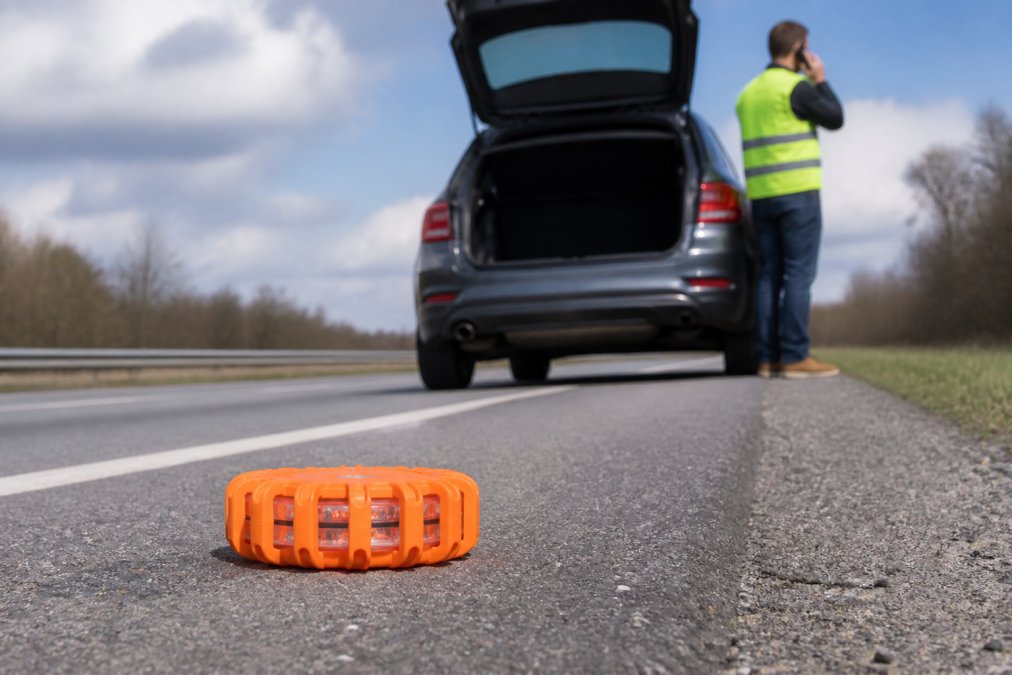
Benefits of GPS-Enabled Breakdown Beacons
Table of Contents
- What Are GPS-Enabled Breakdown Beacons?
- How Does GPS Emergency Tracking Work in Breakdown Beacons?
- Emergency Beacon vs Warning Triangle: Why the Shift Matters
- Real-Time Location Tracking and Faster Emergency Response
- Benefits of DGT 3.0 Compliant Beacons for Roadside Safety
- Visibility, Detection Range, and Collision Risk Reduction
- Maintenance, Testing, and Long-Long-Term Value
- Conclusion
- Frequently Asked Questions
Last Updated: September 1, 2026
What Are GPS-Enabled Breakdown Beacons?
A GPS-enabled breakdown beacon is a connected emergency warning device that combines high-visibility LED lighting with real-time location tracking to alert emergency services and other road users when a vehicle breaks down on a motorway or busy road. Unlike traditional warning triangles, which rely on passive reflectivity and manual deployment, GPS-enabled beacons automatically transmit a vehicle’s exact position to emergency services and traffic management systems, significantly reducing response times and collision risk.
When activated, they broadcast location data every 100 seconds, ensuring emergency responders know precisely where to find a stranded driver. The flashing amber light, visible up to 1 kilometre away, provides immediate visual warning to approaching traffic, creating a layered defence against secondary collisions. Roadflash offers DGT 3.0 compliant GPS-enabled beacons, which combine automatic geolocation with 360-degree visibility.
GPS-enabled beacons replace the need to exit your vehicle and deploy a warning triangle, they activate from inside the car and automatically notify emergency services of your exact location.
How Does GPS Emergency Tracking Work in Breakdown Beacons?
GPS emergency tracking in breakdown beacons operates through a three-stage process: location acquisition, data transmission, and emergency service notification. When a beacon is activated, its built-in GPS receiver locks onto satellite signals to determine the vehicle’s precise coordinates. This positioning data is then transmitted via a cellular or IoT connection to a cloud-based system, where it’s made available to emergency services and traffic management networks.
Most modern beacons transmit location data every 100 seconds, balancing battery efficiency with real-time responsiveness (peer-reviewed research). In Spain, the DGT 3.0 standard mandates that beacons connect directly to the Dirección General de Tráfico’s cloud infrastructure, automatically flagging breakdowns in traffic management systems and allowing authorities to alert other drivers and dispatch resources with full situational awareness.
Modern beacons use assisted GPS (A-GPS), which supplements satellite signals with cellular tower triangulation to improve accuracy when satellite reception is weak. Most GPS beacons operate for 48-72 hours on a single charge, though this varies based on transmission frequency and environmental conditions (peer-reviewed research).
GPS beacons rely on cellular or satellite connectivity. In remote areas with no network coverage, location data cannot be transmitted. Always verify coverage in the regions where you regularly drive.
Emergency Beacon vs Warning Triangle: Why the Shift Matters
The transition from warning triangles to GPS-enabled beacons addresses a fundamental safety gap: triangles are passive, manual, and slow. A driver must exit their vehicle, exposing themselves to oncoming traffic, to position a triangle 50-100 metres behind their car. GPS-enabled beacons eliminate this exposure. They’re activated from inside the vehicle, require no manual deployment, and immediately notify emergency services of the breakdown’s exact location.
The amber flashing light provides continuous visual warning, visible in daylight and darkness, whereas reflective triangles fade in visibility during poor weather or low-light conditions. When emergency services receive an automated GPS alert, they can begin responding before a driver even makes a phone call. In congested motorway environments, this difference between reactive and proactive notification can mean the difference between a safe evacuation and a secondary collision.

Warning triangles are also easy to misplace, forget, or damage by wind and weather. GPS beacons are fixed installations or stored in dedicated mounting locations, ensuring they’re always available and operational when needed. Many European countries now recommend or mandate GPS-enabled beacons for certain vehicle types, recognising that modern safety demands connected devices.
Motorway commuters, professional drivers, fleet operators, and anyone who regularly travels busy highways. GPS beacons are particularly valuable for drivers in areas with high traffic density where secondary collision risk is greatest.
Real-Time Location Tracking and Faster Emergency Response
Real-time location tracking transforms the emergency response process. Instead of relying on a driver’s verbal description of their location, often inaccurate during a stressful breakdown, emergency services receive exact GPS coordinates. This eliminates guesswork and dramatically reduces the time required to locate a stranded vehicle.
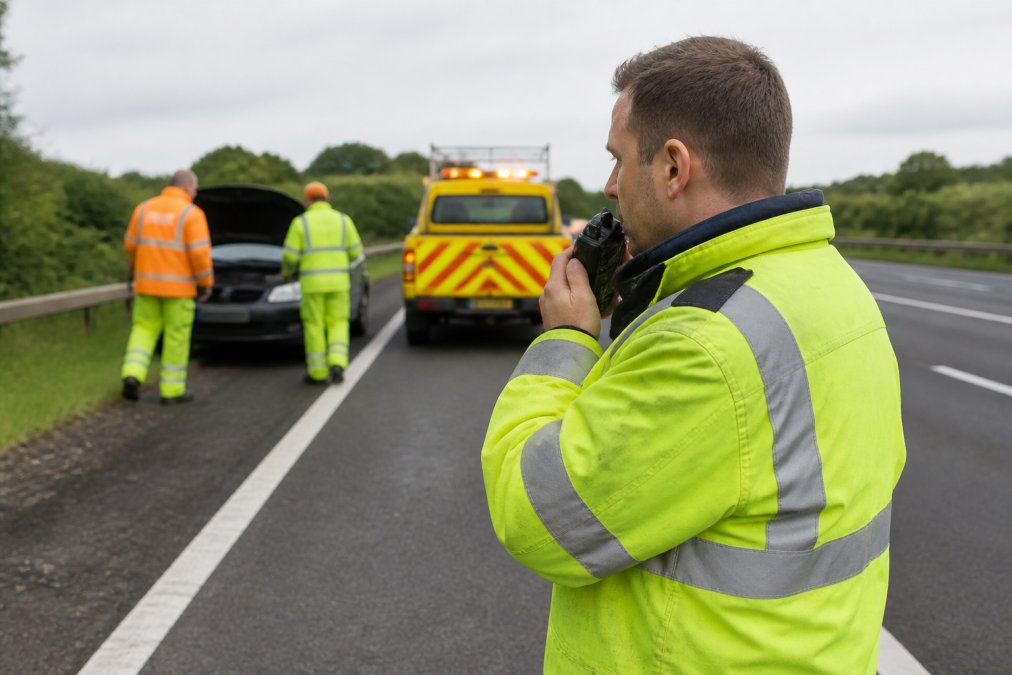
A driver who breaks down on a feeder road or slip road can be difficult to locate using traditional methods. With GPS tracking, responders know the precise coordinates and can navigate directly to the breakdown. This is particularly valuable at night, in fog, or during heavy traffic when visual identification of a specific vehicle is nearly impossible.
Most beacons use redundant connectivity, combining cellular networks with satellite backup, to ensure location data reaches emergency services even if one network experiences congestion or outage. GPS beacons are designed to operate efficiently for extended periods, with many devices capable of transmitting location data continuously for 48-72 hours, ensuring a driver remains trackable throughout an incident.
Benefits of DGT 3.0 Compliant Beacons for Roadside Safety
DGT 3.0 compliance represents the current gold standard for GPS-enabled breakdown beacons in European markets. The standard mandates specific technical requirements for connectivity, transmission frequency, and integration with official traffic management systems. For drivers in Spain or those who travel regularly there, DGT 3.0 compliance is now legally required for certain vehicle categories from January 1, 2026.
Roadflash’s V16 Emergency Beacon Light DGT 3.0 meets these requirements with built-in GPS geolocation that transmits vehicle location to the DGT cloud every 100 seconds. This integration means a breakdown is instantly visible to Spanish traffic authorities, enabling them to issue alerts to other drivers, adjust traffic management protocols, and dispatch emergency resources with full awareness of the incident.
When a vehicle is stationary on a motorway, every other driver in the vicinity is at increased collision risk. DGT 3.0 systems address this by ensuring that traffic authorities know about breakdowns in real time and can take preventative action. For fleet operators and professional drivers, DGT 3.0 compliance eliminates regulatory uncertainty and ensures full alignment with official standards.
If you operate vehicles in Spain or travel there regularly, verify that any GPS beacon you purchase carries DGT 3.0 certification before deploying it. Non-compliant devices may result in fines or safety violations during traffic stops.
Visibility, Detection Range, and Collision Risk Reduction
The effectiveness of a GPS-enabled beacon depends on how far approaching drivers can see it and how quickly they can react. Most modern beacons achieve visibility up to 1 kilometre in daylight conditions, with effective range extending further in darkness when the flashing amber light is more conspicuous.
High-intensity amber LEDs provide sufficient brightness to be visible even in bright sunlight or heavy rain. On a motorway where traffic travels at 70 mph (112 km/h), a beacon visible at 1 kilometre provides roughly 30 seconds of warning, sufficient time for a driver to safely change lanes or reduce speed (nhtsa.gov). A traditional warning triangle, visible at perhaps 200 metres, provides only 6-7 seconds of warning.
The 360-degree visibility of modern beacons is another critical advantage. Traditional triangles are directional, while a beacon mounted on a vehicle’s roof provides warning in all directions, ensuring drivers in any lane have clear sight of the hazard. In fog, heavy rain, or snow, reflective triangles become nearly invisible, whereas LED beacons maintain visibility through active light emission.
Secondary collisions, where a vehicle hits a stationary broken-down car, account for a significant proportion of motorway accidents. By combining GPS-based emergency response with high-visibility warning, GPS-enabled beacons address both the time a vehicle remains stationary and the risk of collision during the breakdown period.
Maintenance, Testing, and Long-Long-Term Value
GPS-enabled beacons require minimal maintenance compared to traditional equipment, but regular testing ensures reliability when needed. Most beacons should be tested monthly to verify that the GPS lock acquires quickly, the LED flashing operates normally, and the battery holds adequate charge.
Battery degradation is the primary long-term maintenance consideration. Lithium-ion batteries gradually lose capacity over time. Manufacturers typically recommend battery replacement every 2-3 years, depending on usage patterns and storage conditions. Beacons stored in hot vehicles experience faster degradation than those kept in cooler environments.
The cost-benefit analysis of GPS-enabled beacons extends beyond the initial purchase price. While a basic warning triangle costs only a few pounds, it provides no connectivity or emergency notification. A GPS beacon represents an investment in faster emergency response, reduced collision risk, and peace of mind. For drivers who regularly travel motorways, the reduction in breakdown-related anxiety justifies the investment over the device’s operational lifetime.
Roadflash’s multi-award-winning beacons are designed for durability and reliability. The V16 model incorporates weatherproofing (IP54 rating), magnetic mounting for secure attachment, and built-in redundancy in GPS and connectivity systems.
Testing protocols should include:
- Monthly GPS lock verification (device should acquire position within 60 seconds)
- LED flashing pattern confirmation (should operate continuously when powered)
- Battery charge level check (should hold charge for at least 48 hours when fully charged)
- Mounting security verification (magnetic or suction attachment should be secure)
Regular maintenance, particularly battery checks every 3-6 months, is the best insurance that your GPS beacon will function reliably when you need it most.
Conclusion
GPS-enabled breakdown beacons represent a fundamental upgrade in motorway safety, replacing passive warning triangles with connected devices that automatically notify emergency services of your exact location. The shift from manual deployment to automatic GPS tracking eliminates the need to exit your vehicle during a dangerous breakdown, while real-time location data ensures emergency responders can reach you quickly.
For drivers in Spain or those who travel there regularly, DGT 3.0 compliant beacons like Roadflash’s V16 Emergency Beacon Light are now the regulatory standard, offering 360-degree visibility up to 1 kilometre, built-in GPS geolocation, and automatic transmission of location data every 100 seconds. Roadflash’s multi-award-winning early warning systems are engineered specifically for stationary vehicles on busy highways and motorways, combining high-visibility LED lighting with reliable GPS connectivity to prevent vehicle collisions and protect drivers during breakdowns. Get started with Roadflash and add a GPS-enabled beacon to your vehicle today, it’s the most effective way to ensure faster emergency response and greater peace of mind on every journey.
Frequently Asked Questions
How does a GPS-enabled breakdown beacon improve emergency response times?
GPS-enabled beacons transmit the exact location of a stationary vehicle to emergency services automatically, eliminating the delay of manual location reporting. Emergency responders receive precise coordinates within seconds, allowing them to locate and reach the breakdown faster. This is particularly valuable on motorways where identifying the exact location can be difficult. Faster response times reduce the risk of secondary collisions and ensure drivers receive assistance sooner.
What makes GPS-enabled beacons better than traditional warning triangles?
Traditional warning triangles require manual placement outside the vehicle, exposing drivers to fast-moving traffic. GPS-enabled beacons mount magnetically on the vehicle roof and activate remotely, keeping drivers safe inside. They transmit real-time location data to emergency services and offer 360-degree visibility up to 1 kilometre, whereas triangles rely on passive reflection. Beacons also integrate with traffic management systems, alerting other road users and emergency services simultaneously.
Do GPS-enabled beacons work in areas with poor mobile signal?
Most modern GPS-enabled beacons use satellite technology for location transmission rather than relying solely on mobile networks. This means they can function in remote areas where mobile signal is weak or unavailable. However, connectivity features that depend on data transmission may be limited without signal. It’s important to check the specific beacon’s specifications; beacons compliant with standards like V16 are designed to maintain core location-tracking functionality even in challenging coverage areas.
Are GPS-enabled beacons a legal requirement in the UK?
GPS-enabled beacons are not currently mandatory for all UK drivers, though warning triangles or hazard warning lights are recommended. However, they are mandatory in Spain under DGT 3.0 regulations from January 2026 for all vehicles. Many safety-conscious motorists and fleet operators choose GPS-enabled beacons voluntarily because they significantly reduce collision risk and provide peace of mind. Professional drivers, motorhome users, and those frequently travelling on motorways benefit most from their enhanced safety features.
This article was written using GrandRanker