
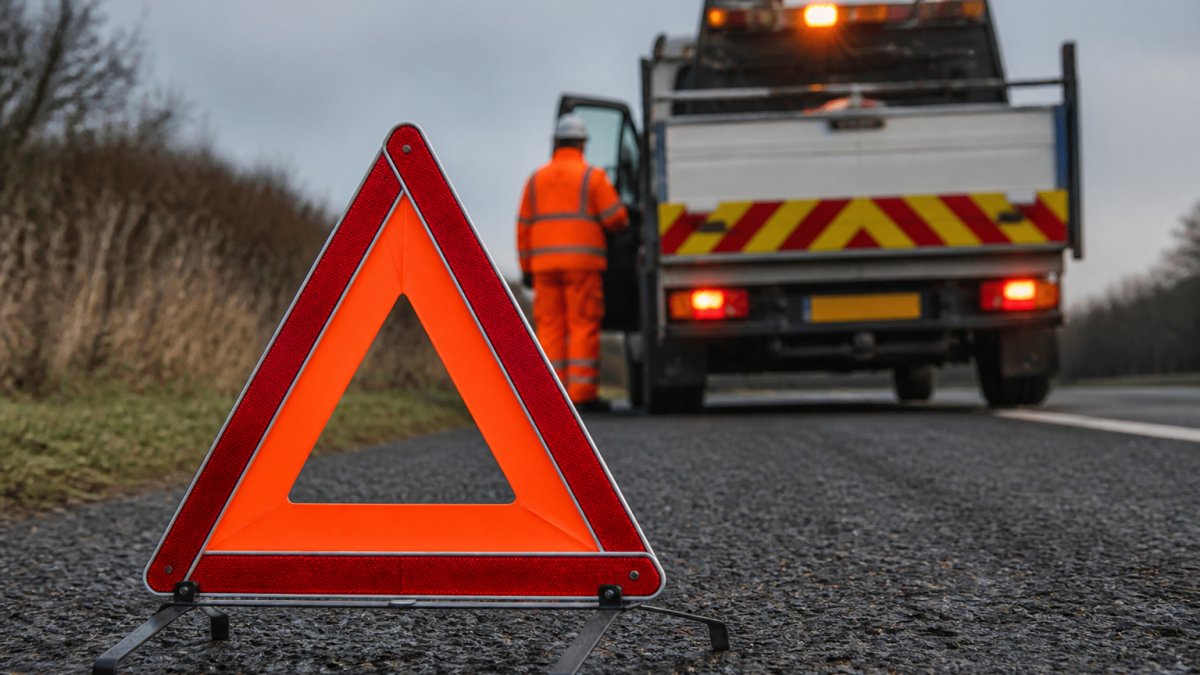
Hazard Lighting on Utility Vehicles: Legal Requirements
Table of Contents
- What Are Hazard Lighting Requirements for Utility Vehicles?
- Amber Flashing Beacon Regulations and Permitted Colours
- Use of Hazard Warning Lights on Stationary Vehicles
- DGT 3.0 Compliant Emergency Beacons for Cross-Border Operations
- Mounting Requirements and Visibility Standards
- Maintenance, Inspection and Compliance Checklists
- Penalties and Enforcement for Non-Compliance
- Frequently Asked Questions
Last Updated: October 3, 2026
What Are Hazard Lighting Requirements for Utility Vehicles?
Hazard lighting utility vehicles must comply with specific regulatory standards to operate legally on UK roads. These warning systems serve a critical function: alerting approaching drivers to stationary or slow-moving vehicles that pose a collision risk, particularly on motorways and busy highways.
The fundamental requirement is that hazard lights must be visible, functional, and used appropriately. For utility vehicles, including breakdown recovery trucks, road maintenance vehicles, and emergency service support units, the regulations are more stringent than for standard cars. The positioning, colour, and flashing frequency of warning beacons are all governed by statutory requirements designed to maximise visibility and safety.
Understanding these legal requirements protects you from penalties and, more importantly, reduces the risk of serious accidents. A stationary utility vehicle without proper hazard warning systems becomes a genuine hazard to other road users, especially in poor visibility or at night. The regulations exist because inadequate warning has contributed to high-speed collisions involving stationary vehicles.
Our multi-award-winning hazard warning systems are designed specifically to exceed these legal minimums, providing the visibility and reliability that matter when lives depend on it.
The distinction between “hazard warning lights” (the flashing lights on your vehicle’s dashboard control) and “hazard warning beacons” (external warning lights mounted on the roof or body) is critical. Both are required in different contexts, and both have distinct legal specifications.
Amber Flashing Beacon Regulations and Permitted Colours
Amber flashing beacons are the primary warning system for utility vehicles in stationary or low-speed operations. The colour amber is not optional, it’s mandated by UK traffic law and international standards. Amber provides the highest visibility contrast in daylight and poor weather conditions, which is why it’s the standard for breakdown vehicles, road maintenance equipment, and similar utility operations.
The flashing frequency is also regulated. Beacons must flash at a rate between 60 and 120 flashes per minute to be legally compliant (How to stay compliant with aftermarket light products). This specific range ensures the light captures attention without causing confusion with other vehicle signals. Too slow, and drivers may not register the warning quickly enough.
Red and blue lights carry different legal meanings. Red lights are restricted to emergency vehicles operated by the police, fire service, and ambulance services. Blue lights are permitted for certain emergency response vehicles but not for general utility or breakdown operations.
White lights are permitted for side-facing warning lights on some utility vehicles, but amber remains the primary requirement for top-mounted beacons. The combination of amber and white lights, when properly positioned, creates the maximum visibility envelope. This is why professional hazard warning systems often incorporate both colours in a coordinated design.
Installing red or blue flashing lights on a non-emergency utility vehicle is illegal and can result in fines up to £1,000. Beyond the legal penalty, it undermines the authority of genuine emergency vehicles and puts other road users at risk by creating confusion about vehicle intent.
Use of Hazard Warning Lights on Stationary Vehicles
When your utility vehicle is stationary on a public road, hazard warning lights must be activated immediately. This applies whether you’re broken down, parked for maintenance work, or stopped for any reason that blocks traffic flow or creates a hazard. The legal requirement is straightforward: stationary vehicles must warn approaching traffic of their presence and position.
The hazard warning lights (the flashing lights controlled from your vehicle’s dashboard) serve a different purpose from external hazard beacons. Dashboard hazard lights indicate to following traffic that your vehicle is stationary or moving abnormally. However, on motorways and dual carriageways, dashboard hazard lights alone are insufficient, external warning beacons are required in addition.
The timing of activation matters. Hazard lights and beacons must be switched on before you exit the vehicle and must remain on until the vehicle is moving again. Many accidents occur because drivers delay activating warnings while they assess the situation or retrieve safety equipment.
For utility vehicles performing roadside work, the hazard warning beacon becomes even more critical. Road maintenance crews, traffic management personnel, and breakdown recovery operators are frequently working in the live traffic lane or immediately adjacent to it. External warning beacons provide the visibility necessary to protect workers and other road users from high-speed collisions.
DGT 3.0 Compliant Emergency Beacons for Cross-Border Operations
If your utility vehicle operates across European borders, particularly in Spain, DGT 3.0 compliance is a legal requirement. The DGT (Dirección General de Tráfico) is Spain’s traffic authority, and DGT 3.0 is the current standard for hazard warning beacons used in cross-border operations. Non-compliance can result in vehicle impoundment and substantial fines.
DGT 3.0 compliant emergency beacons incorporate several technical specifications beyond basic amber flashing. These include GPS/geolocation capability, which allows emergency services to locate a stationary vehicle with precision.
The standard also mandates specific brightness levels, measured in candela, to ensure visibility in all weather conditions and lighting environments. A beacon that meets DGT 3.0 specifications will be visible from a minimum distance of 500 metres in daylight conditions, and significantly further at night.
Many UK utility operators who work in Europe or operate vehicles that may be hired for European use choose DGT 3.0 compliant beacons even when operating exclusively in the UK. The additional visibility and geolocation features provide a safety margin that extends beyond legal compliance.
Mounting Requirements and Visibility Standards
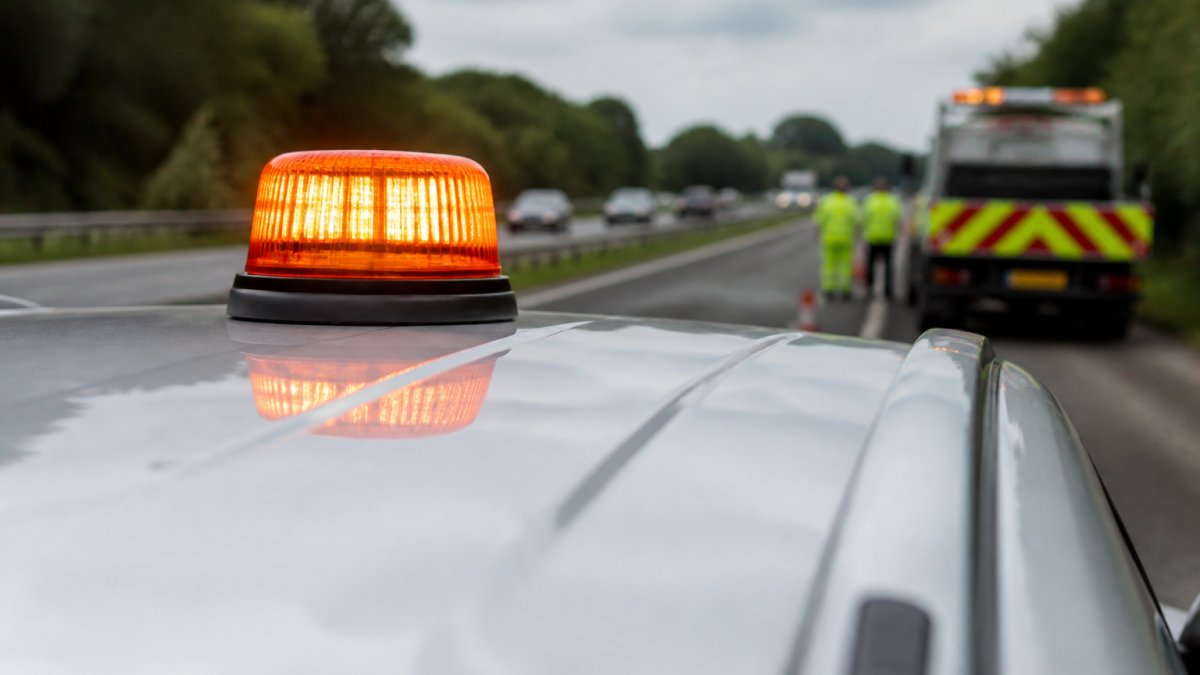
The physical position of hazard warning beacons is regulated to ensure maximum visibility. Beacons must be mounted on the highest point of the vehicle that’s practical, typically the roof or upper body. This positioning ensures the light is visible above the height of surrounding traffic, reducing the risk that other vehicles will obscure the warning.
The mounting height requirement is typically a minimum of 1.5 metres above ground level for standard utility vehicles. This ensures visibility to approaching drivers at typical motorway speeds, where sightlines extend several hundred metres ahead.
Horizontal positioning matters equally. The beacon should be centred on the vehicle roof or positioned to provide 360-degree visibility. A beacon mounted to one side of the roof may not be visible to traffic approaching from certain angles.
The illuminated area, the physical space on the road surface illuminated by the beacon, must meet minimum standards. The light should create a visible warning pool that extends at least 50 metres in front of and behind the vehicle in daylight conditions.
Mounting brackets and fixtures must be strong enough to withstand vibration and weather exposure. Poor mounting can lead to beacon misalignment, which reduces visibility and may cause the beacon to fail during vehicle movement. Professional installations use stainless steel or corrosion-resistant materials to ensure durability in all weather conditions.
Visibility standards exist because they directly correlate with accident prevention. A beacon mounted incorrectly or obscured by vehicle design can fail to warn approaching drivers in time. The regulations specify mounting positions because those positions have been proven to maximise visibility and reduce collision risk.
Maintenance, Inspection and Compliance Checklists
Regular maintenance of hazard warning systems is essential for legal compliance and safety. A beacon that fails during an emergency provides no protection and may result in penalties for operating with defective safety equipment. Establishing a maintenance schedule ensures your hazard lighting systems remain reliable.
Monthly Inspection Checklist:
- Test beacon activation from the driver’s position
- Verify flashing frequency (should be steady and regular)
- Check for physical damage, cracks, or lens degradation
- Confirm mounting brackets are secure and show no corrosion
- Inspect wiring for signs of damage or wear
- Test beacon brightness in daylight and darkness
- Verify GPS/geolocation function (if equipped with DGT 3.0 system)
Quarterly Deep Inspection:
- Clean beacon lens thoroughly to remove dirt and oxidation
- Check electrical connections for corrosion or looseness
- Inspect mounting hardware for rust or degradation
- Test beacon operation with vehicle engine running
- Verify backup power systems if equipped
- Review any incident reports or near-misses involving hazard visibility
Annual Compliance Certification:
- Have hazard lighting systems professionally tested
- Obtain written certification of compliance with current regulations
- Update vehicle maintenance records
- Photograph beacon condition for insurance documentation
- Review any regulatory changes that may affect your equipment
Maintenance records serve multiple purposes. They demonstrate to enforcement officers that you’ve maintained your hazard lighting systems to legal standards. They also protect you in the event of an accident, insurance companies will investigate whether safety equipment was properly maintained. A vehicle involved in a collision with a stationary utility vehicle will have its records scrutinised; if the utility vehicle’s hazard beacon was non-functional due to poor maintenance, liability questions become complex.
Penalties and Enforcement for Non-Compliance
Operating a utility vehicle with defective or non-compliant hazard lighting systems carries significant penalties. The severity depends on the specific violation and whether the vehicle was involved in an accident or incident.
For vehicles found to have non-functional hazard warning beacons, the standard penalty is a fixed penalty notice of £100, which can be issued by traffic officers or police. However, if the vehicle is involved in an accident, the penalties escalate considerably.
Using unauthorised colours, red or blue lights on non-emergency vehicles, carries stricter penalties. The fixed penalty for this violation is £1,000, and prosecution can result in fines up to £5,000. The severity reflects the danger posed by creating confusion about vehicle intent on busy roads.
Enforcement is most likely on motorways and dual carriageways, where traffic officers conduct regular safety checks. Roadside checks often include verification that hazard warning systems are functional and properly positioned. Fleet operators with multiple vehicles should expect periodic inspections of their entire fleet.
Beyond legal penalties, non-compliance creates liability exposure. If a vehicle with defective hazard lighting is involved in a collision, your insurance may deny or reduce claims if the accident was contributed to by inadequate warning systems.
Hazard lighting on utility vehicles isn’t merely a legal formality, it’s a critical safety system that protects you, your passengers, and other road users.
The challenge most fleet operators face isn’t understanding the regulations; it’s ensuring consistent compliance across multiple vehicles and maintaining systems reliably over time. Whether you’re managing a breakdown recovery fleet, road maintenance crew, or utility service operation, proper hazard lighting, installed correctly and maintained regularly, is the foundation of safe roadside operations.
Frequently Asked Questions
Are hazard warning lights a legal requirement for utility vehicles?
Hazard lighting requirements depend on the vehicle classification and its intended use. Under The Road Vehicles Lighting Regulations 1989, utility vehicles used for roadside operations, maintenance, or emergency response must display hazard warning lights when stationary or operating in traffic. Vehicles classified as emergency or specialist vehicles have stricter requirements. Standard commercial vehicles have fewer mandatory requirements, though hazard warning lights are strongly recommended for safety. Check your vehicle’s classification and intended use to confirm your specific obligations.
What colour flashing beacons are permitted on utility vehicles?
Amber flashing beacons are the standard permitted colour for most utility vehicles, maintenance vehicles, and roadside operations under UK regulations. Blue flashing lights are restricted to emergency service vehicles only. Red lights are generally prohibited on forward-facing beacons. Amber provides optimal visibility whilst complying with statutory requirements. When selecting amber flashing beacon regulations for your fleet, ensure the beacon meets type approval standards and complies with visibility requirements for the illuminated area. Always verify the specific regulations for your vehicle type before installation.
When must utility vehicles use hazard warning lights on motorways?
Utility vehicles must activate hazard warning lights whenever they are stationary or moving slowly on a motorway, particularly during breakdowns, maintenance work, or emergency response. The use of hazard warning lights on stationary vehicles is mandatory to alert approaching traffic and reduce collision risk. Vehicles must also display hazard lights when parked on the hard shoulder or verge. Even brief stops require activation. This requirement applies regardless of visibility conditions, though the lights become especially critical in poor weather or low-light conditions. Failure to use hazard lights in these situations can result in enforcement action.
Are DGT 3.0 compliant emergency beacons necessary if I operate across borders?
Yes, if your utility vehicle operates in Spain or other European countries, DGT 3.0 compliant emergency beacons are essential. DGT 3.0 certification ensures your beacon meets Spanish regulatory standards and is recognized across EU member states. DGT 3.0 compliant emergency beacons typically include GPS/geolocation features and enhanced visibility specifications. Using non-compliant equipment abroad exposes your fleet to fines and operational disruption. Even occasional cross-border trips require compliance.