
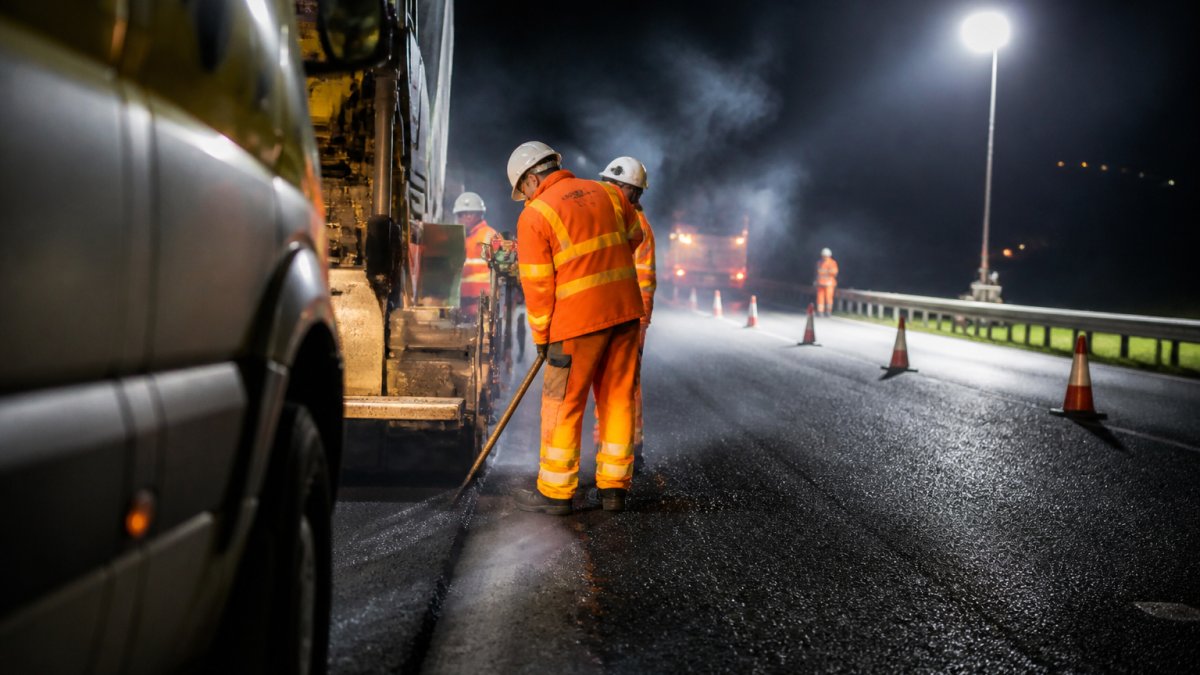
Improve Worker Safety During Night Road Maintenance
Table of Contents
- Why Night Road Maintenance Poses Greater Risks to Workers
- Step 1: Implement High-Visibility Lighting for Road Works
- Step 2: Deploy DGT 3.0 Compliant Emergency Beacons at Work Sites
- Step 3: Establish Comprehensive Traffic Management and Control Plans
- Step 4: Address Night Shift Fatigue Management for Road Workers
- Step 5: Enforce Personal Protective Equipment and Safety Training
- Step 6: Use Protective Barriers, Cones, and Electronic Signage
- Step 7: Prepare Emergency Response Protocols for Night Incidents
- Frequently Asked Questions
Last Updated: October 1, 2026
Why Night Road Maintenance Poses Greater Risks to Workers
Worker safety night road maintenance requires addressing three compounding hazards: visibility drops dramatically, driver awareness plummets, and worker fatigue climbs.
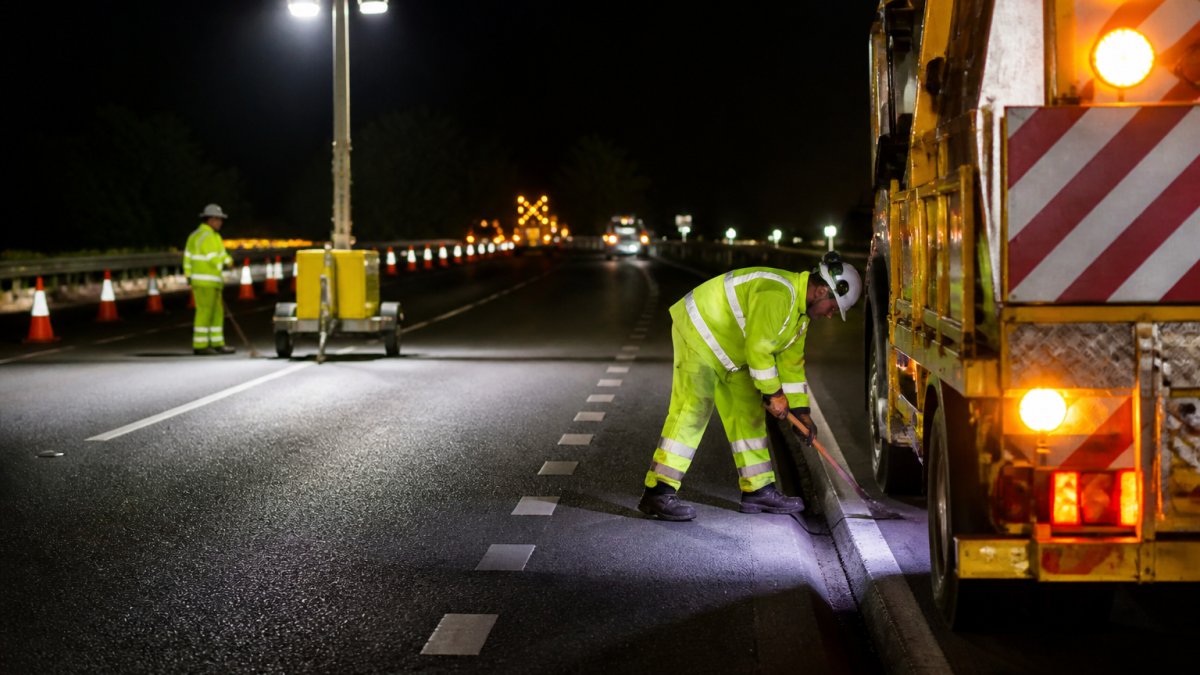
Stationary workers become nearly invisible to approaching traffic. A driver at 60 mph has seconds to spot a hazard and react. Collisions are preventable only by addressing the specific risks night work introduces.
Analysis of roadside incidents reveals three controllable factors that separate safe night operations from dangerous ones: inadequate lighting, poor traffic management, and worker fatigue.
Effective worker safety night road maintenance requires three essentials: lighting that works, traffic management that slows drivers, and protocols that keep teams alert and protected.
Step 1: Implement High-Visibility Lighting for Road Works
Work zone lighting is non-negotiable. Without it, crews are invisible beyond headlight range. With proper lighting, hazards are obvious from 200+ metres away.
Lighting must serve two purposes: illuminate the work area for crews and make the zone visible to approaching traffic.
Position two or three LED work lights from different angles to eliminate shadows. Single lights create dark zones on the opposite side.
Position directional lights toward approaching traffic to create a clear visual corridor warning drivers of the work zone.
High-visibility apparel complements but doesn’t replace lighting. Combine both for redundancy.
Step 2: Deploy DGT 3.0 Compliant Emergency Beacons at Work Sites
Emergency beacons grab attention at distance and signal hazard. DGT 3.0 compliant beacons meet Spanish regulatory standards.
Roadflash’s DGT 3.0 compliant emergency beacons include GPS/Geolocation capability, documenting work zone location for incident reports and enabling precise emergency service response.
Position three beacons at 100 metres, 150 metres, and the work zone edge to create a clear warning sequence.
Verify battery capacity before deployment and rotate units regularly to prevent mid-shift failures.
Step 3: Establish Comprehensive Traffic Management and Control Plans
Traffic management plans must be implemented and monitored, not just documented on paper.
Your plan must specify: taper distances, speed reduction zones, diversion routes, barrier placement, and communication points.
A proper taper gradually narrows lanes over 200+ metres, giving drivers time to react and adjust speed safely.
Use reflective cones and barriers. Electronic message boards communicate real-time warnings and can be updated as conditions change.
Step 4: Address Night Shift Fatigue Management for Road Workers
Understanding Circadian Rhythm Disruption
The HSE recognises shift work as a significant occupational health risk (Managing shift work: Health and safety guidance). Workers at hour 6 of a night shift have measurably slower reaction times than at hour 2, even if they report feeling fine.
Fatigue Risk Management Before the Shift
Workers transitioning from day to night shifts require a minimum 24-hour recovery period.
Fixed night schedules allow better adaptation than rotating shifts.
Fatigue Monitoring During the Shift
Task Rotation and Cognitive Engagement
Rotate workers between different tasks every 60-90 minutes to prevent monotony and maintain alertness.
Assign high-attention tasks early in the shift when alertness is highest; routine tasks later.
Break Environment and Recovery
Provide well-lit, warm break areas. Bright light exposure resets circadian signals and improves alertness.
Caffeine and Stimulant Use
Caffeine improves short-term alertness but is not a substitute for rest.
Caffeine is acceptable in the first half of a shift only.
Seasonal and Individual Variation
Winter night shifts carry higher fatigue risk than summer shifts due to reduced natural light exposure.
Individual tolerance varies.
Documentation and Incident Correlation
Track fatigue-related incidents.
Step 5: Enforce Personal Protective Equipment and Safety Training
PPE is your last line of defence. It won’t prevent collision but reduces injury severity.
High-visibility apparel must use proper retroreflective materials that reflect headlights back toward drivers’ eyes. Cheap vests without retroreflective materials are nearly useless at night.
Hard hats, safety boots, and gloves each serve specific protective purposes.
PPE only works if worn properly. Training must emphasise why each piece matters, not just that it’s required.
Training must cover proper fitting, why each item matters for night work, damage identification, and emergency procedures. Refresh annually and provide special attention to new and seasonal workers.
Step 6: Use Protective Barriers, Cones, and Electronic Signage
Physical barriers create separation between traffic and your work zone, your most reliable protection against vehicle intrusion.
Choose barriers based on work conditions: water-filled (portable), plastic (light), or metal (durable).
Space barriers 1-2 metres apart to create a continuous visual barrier.
Use reflective cones to mark work zone edges and guide traffic. Cones without retroreflective materials are nearly invisible at night.
Electronic message boards display dynamic warnings based on conditions and are far more effective than static signage.
Position electronic signage 500 metres before the taper to give drivers time to process and adjust speed.
Step 7: Prepare Emergency Response Protocols for Night Incidents
Despite precautions, incidents occur.
Real-Time Worker Proximity and Intrusion Detection
Immediate Actions and Worker Response
Response sequence: (1) Alert all workers with audible and visual alarms. (2) Move to designated safe zones reachable in under 10 seconds. (3) Establish traffic control and display hazard warnings. (4) Supervisor accounts for all workers within 30 seconds.
Communication Systems for Night Incidents
Medical Emergency Response in Low-Light Conditions
Medical emergencies during night maintenance are complicated by darkness, traffic hazards, and limited visibility for paramedics. Your protocol must address these factors:
-
First aid capability on site: At least two workers must be trained in first aid and CPR. For major work zones (motorway closures, extended night operations), consider having a paramedic or trained medical technician on site. The HSE recommends this for high-risk operations.
-
Lighting for medical response: Designate a well-lit area as the medical response zone. When a medical emergency occurs, move the casualty to this area if safe to do so. Portable LED work lights should be positioned to illuminate the casualty and allow paramedics to assess injuries clearly.
-
Paramedic access and guidance: When calling 999, provide paramedics with precise directions to your work zone. At night, work zones can be difficult to locate. Assign a worker to stand at the main access point with a high-visibility light or beacon to guide paramedics to the exact location. Provide them with a radio frequency or mobile number so paramedics can communicate directly with your site supervisor.
-
Casualty stabilisation: While waiting for paramedics, trained first aiders should stabilise the casualty. For injuries involving the head, spine, or potential internal injuries, minimise movement. For bleeding, apply direct pressure with clean materials. Keep the casualty warm and monitor breathing and consciousness.
-
Scene safety during medical response: Do not allow other workers to cluster around the casualty. Maintain traffic control and barrier integrity. A second vehicle intrusion during a medical emergency is catastrophic. Keep the work zone secure and traffic diverted while paramedics work.
Incident Scene Preservation and Investigation
After immediate medical response, the incident scene must be preserved for investigation:
- Do not move equipment, barriers, or debris unless necessary for safety
- Photograph the scene from multiple angles, including lighting conditions, barrier placement, and vehicle position
- Document weather conditions, visibility, and road surface conditions
- Collect contact information from all witnesses
- Preserve GPS/geolocation data from beacons and proximity detection systems
- Preserve radio communications logs and mobile phone records
This documentation is critical for understanding what happened and preventing similar incidents.
Quarterly Emergency Drills
Workers who have never practiced an emergency response will hesitate or freeze when an actual incident occurs. Run quarterly drills:
- Simulate an intrusion alert and measure time for workers to reach safe zones (target: under 10 seconds)
- Simulate a medical emergency and measure time for first aiders to respond and paramedics to be contacted (target: under 2 minutes from alert to paramedic contact)
- Simulate communication failures and practice backup communication methods
- Debrief after each drill and identify gaps
Drills should be unannounced to workers (except for the supervisor) to test realistic response times. Workers who know a drill is coming often perform better than they would in a real incident.
Post-Incident Procedures
After an incident:
-
Stand down the work zone. Do not resume work until the incident has been investigated and the scene cleared.
-
Notify your organisation’s health and safety team and incident reporting authority (if required by regulation).
-
Provide support to affected workers. Witnessing a serious incident or injury creates psychological trauma. Offer counselling or employee assistance programme access.
-
Conduct a formal incident investigation within 48 hours. Identify root causes and contributing factors. Update protocols if gaps are identified.
-
Share findings with all teams. A near-miss or incident at one site provides learning for all sites.
Frequently Asked Questions
What are the primary risks for workers during night road maintenance?
Night road maintenance exposes workers to reduced visibility, faster-moving traffic, driver fatigue, circadian disruption, and difficulty spotting hazards. Drivers approaching work zones at night have less reaction time, and workers’ own alertness declines during nighttime hours. Blind spots around vehicles and equipment become more dangerous. Proper illumination, high-visibility clothing, traffic management plans, and early warning systems significantly reduce these risks by increasing hazard awareness and giving approaching drivers more time to respond.
How does high-visibility lighting for road works improve safety?
High-visibility lighting for road works extends sight lines and makes work zones, equipment, and personnel visible from greater distances, giving drivers more time to slow down and react. Adequate illumination standards eliminate shadows where hazards hide and allow workers to spot incoming traffic and obstacles more easily. Combined with retroreflective materials on clothing and barriers, active lighting creates multiple layers of visibility enhancement that reduce collision risk significantly during night operations.
Are DGT 3.0 compliant emergency beacons necessary for all night road maintenance?
DGT 3.0 compliant emergency beacons are essential for any stationary vehicle or work zone on busy highways and motorways during night operations. These beacons provide GPS/Geolocation capability, alerting approaching drivers to hazards and enabling faster emergency response if an incident occurs. Compliance ensures your equipment meets regulatory standards and provides the visibility enhancement and incident prevention that modern safety protocols require.
What can managers do to manage night shift fatigue in road workers?
Night shift fatigue management requires rotating workers off night duties regularly, limiting consecutive night shifts, ensuring adequate rest between shifts, and educating workers about circadian rhythm disruption. Provide well-lit break areas, encourage hydration and light meals, avoid scheduling critical decision-making tasks during peak fatigue windows (typically 2-6 AM), and monitor workers for signs of exhaustion. Mental health support and awareness of fatigue’s impact on hazard perception are equally important for maintaining alertness and incident prevention.