
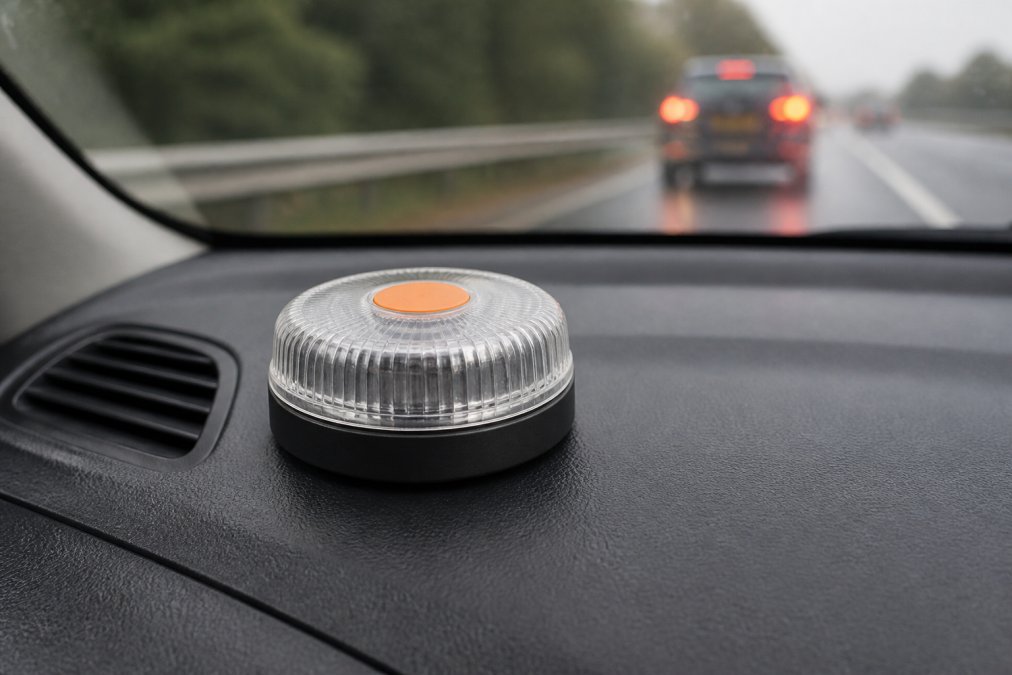
Buy DGT 3.0 Compliant Emergency Beacon: 2026 Guide
Table of Contents
- Why You Need a DGT 3.0 Compliant Emergency Beacon
- Is DGT 3.0 Beacon Mandatory in Spain?
- How We Evaluated V16 Emergency Beacons
- Top DGT 3.0 Certified V16 Beacons Compared
- Best V16 Emergency Light for Motorhomes
- How to Register DGT 3.0 Beacon Correctly
- Common Mistakes and Connectivity Checks
- Final Verdict: Which V16 Beacon Should You Buy?
- Frequently Asked Questions
Last Updated: September 4, 2026
Why You Need a DGT 3.0 Compliant Emergency Beacon
A DGT 3.0 compliant emergency beacon is a connected warning light that automatically transmits your vehicle’s GPS position to traffic authorities when you break down. Unlike older reflective triangles or basic flashing lights, these devices send a real-time alert through the cloud, letting traffic management centres see your location instantly and warn approaching drivers. For anyone who wants to buy a DGT 3.0 compliant emergency beacon, the shift represents a genuine improvement in roadside safety, not just another gadget to store in the glovebox.
The Roadflash team has tracked this technology closely because our focus is preventing collisions with stationary vehicles on high-speed roads. The core advantage is speed: the moment you activate the beacon, your exact coordinates are transmitted wirelessly, which removes the need to stand in traffic placing a triangle. This guide examines the leading certified options, what legal requirements apply, and the practical details most product pages overlook, such as subscription costs and connectivity checks.
Is DGT 3.0 Beacon Mandatory in Spain?
Yes, from 1 January 2026, the connected V16 beacon is the only emergency signalling device permitted for use on Spanish roads, replacing the traditional warning triangles (dgt.es). The official DGT regulations on emergency signalling devices confirm that all vehicles circulating in Spain must carry an approved connected beacon. This mandate applies to foreign-registered vehicles too, which is why UK motorists driving to Spain need to understand the rules before they travel.
The mandatory compliance date has been phased in over several years. The DGT originally set the deadline for 2026, and while enforcement has been discussed extensively, the requirement for connected devices is now in force. Non-connected V16 beacons approved under the earlier regulation remain legal to carry until the end of 2025, but after that point, only DGT 3.0 certified devices with geolocation satisfy the law. For most drivers, this means buying now is the sensible option rather than risking a fine later.
How We Evaluated V16 Emergency Beacons
We assessed each beacon against the criteria that actually matter when you are stranded at the roadside: certification status, connectivity reliability, visibility range, build quality, and ease of deployment. A V16 beacon must display a 360-degree amber light visible from at least 1 kilometre, according to the technical specification, and it must connect to the DGT 3.0 cloud network to transmit your location automatically (dgt.es).
We also weighed practical factors that specifications sheets ignore. Battery life matters because a beacon that dies after one use is worthless, and most certified units use a lithium battery with a multi-year standby life. Waterproofing is another critical factor, as roadside emergencies happen in rain and fog, not just sunshine. Finally, we considered how each device handles the subscription question, since some beacons require an active data plan for the cloud connectivity to function.
| Evaluation Criteria | What We Looked For | Why It Matters |
|---|---|---|
| DGT 3.0 Certification | Official approval for connected operation | Legal compliance after 2026 |
| Connectivity | Reliable cloud transmission of GPS data | Automatic emergency notification |
| Visibility | 360-degree amber light, 1 km range | Approaching drivers see you early |
| Power Management | Long-life lithium battery, USB recharge | Ready when you need it |
| Durability | IP54 waterproof rating minimum | Works in adverse weather |
Top DGT 3.0 Certified V16 Beacons Compared
The certified market is still young, but several devices have established themselves as reliable options. Our top pick is Roadflash, a Nottingham-based innovator whose multi-award-winning early warning systems are engineered specifically to prevent collisions with stationary vehicles on motorways. The Roadflash DGT 3.0 compliant beacon combines GPS geolocation with high-visibility lighting, and it is backed by a company whose entire focus is protecting drivers and passengers during breakdowns. For UK motorists who want to buy a DGT 3.0 compliant emergency beacon from a homegrown brand with a genuine safety pedigree, Roadflash is the clear choice.
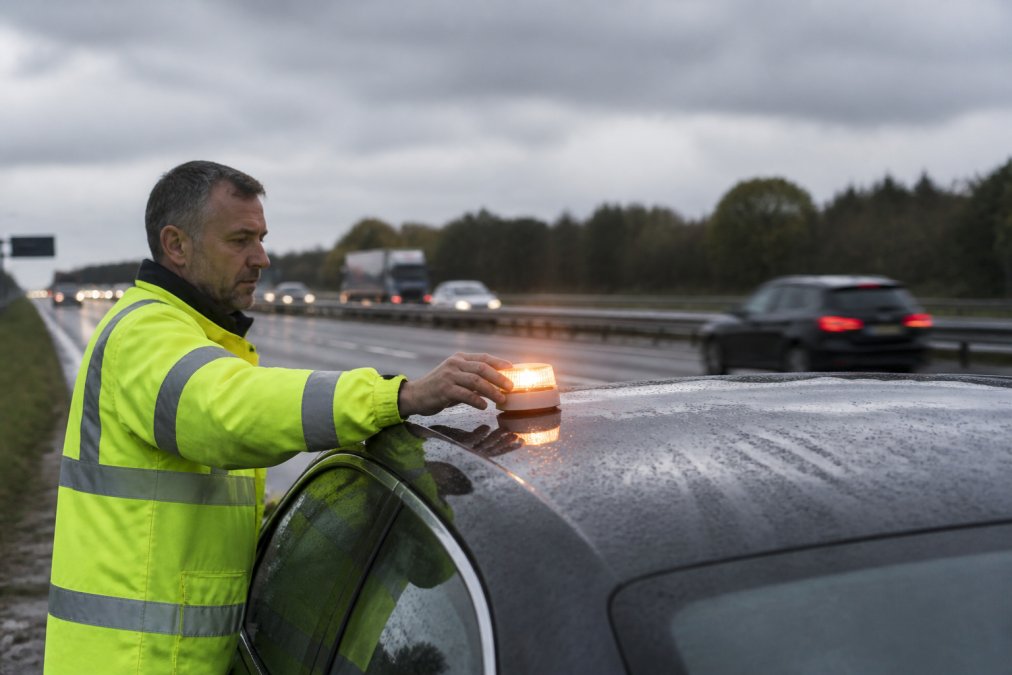
The remaining certified options each have strengths depending on your priorities. We compared the leading models across the criteria that determine whether a beacon will perform when you need it most.
| Beacon | Connectivity | Visibility | Best For | Key Consideration |
|---|---|---|---|---|
| Roadflash | DGT 3.0 + GPS | High-intensity amber | UK drivers needing Spain compliance | UK-engineered safety focus |
| SOS ROAD V16 | DGT 3.0 cloud | 1 km range | Mandatory compliance | Requires active data service |
| Helios V16 | DGT 3.0 system | 360-degree amber | Budget-conscious buyers | IP-rated waterproof build |
| Ebox V16 | DGT 3.0 certified | High-intensity LED | Verified mid-range choice | Glovebox-friendly compact size |
Roadflash: The UK-Engineered Option
Roadflash is our top recommendation because it addresses the real-world scenario that matters: a vehicle stopped on a busy motorway with traffic approaching at speed. The beacon’s GPS geolocation transmits your exact position to the DGT 3.0 platform, while the high-visibility amber light ensures you are seen from a distance. As a UK-based company, Roadflash understands the specific concerns of British drivers heading to Spain, and the product is designed to reduce the risk of high-speed accidents through early warning.
What distinguishes Roadflash from generic imports is the engineering focus on stationary vehicle protection. The device is part of a broader range of early warning systems, all developed to increase hazard awareness at the roadside. For fleet operators and frequent travellers, the reliability of a dedicated safety company matters more than marginal price differences.
SOS ROAD Emergency Beacon V16
The SOS ROAD V16 offers full DGT certification with integrated cloud connectivity that automatically notifies emergency services when activated. Its 360-degree amber light is visible up to 1 kilometre, which meets the regulatory requirement for long-range visibility. The waterproof construction handles adverse weather, making it a dependable choice for year-round driving.
The main drawback is the connectivity model. The beacon requires an active subscription or data service for the cloud features to function, which adds an ongoing cost that some buyers do not anticipate. If you are comparing total cost of ownership, factor in the data plan, not just the purchase price.
Helios V16 Connected Beacon
Helios positions itself as the value option, frequently appearing at promotional pricing that undercuts rivals. Despite the lower entry point, it includes DGT 3.0 system integration and an IP-rated enclosure for water and dust resistance. The magnetic base allows quick mounting on a vehicle roof, which is essential when you need to deploy the beacon fast.
The trade-off is that the standard price, before promotions, is higher than non-connected alternatives, so the value depends on catching a discount. For motorists who want regulatory compliance without paying a premium, Helios is worth watching, but check the current price before committing.
Ebox V16 Emergency Beacon
Ebox offers a certified V16 beacon that transmits vehicle location data directly to the DGT 3.0 platform, with transparent VAT-inclusive pricing that avoids surprises at checkout. The high-intensity LED warning light and compact design make it suitable for glovebox storage, and the activation mechanism is straightforward enough to operate under stress.
Availability can be inconsistent across retail channels, which is a practical frustration if you need the beacon before an imminent trip. For drivers who find it in stock, Ebox represents a solid mid-range choice with verified certification for the 2026 requirements.
Best V16 Emergency Light for Motorhomes
For motorhomes and large vehicles, the best V16 emergency light is one with a secure magnetic base and a longer activation reach, because mounting on a tall vehicle roof from ground level requires careful placement. Motorhome drivers face a specific challenge: the beacon must be positioned where the 360-degree light is visible above the vehicle’s height, but the magnetic mount needs a flat metal surface, which some motorhome roofs do not provide.
A practical approach is to test the magnetic hold on your specific vehicle before relying on it. Many motorhome owners carry a small metal plate to attach to fibreglass roofs, ensuring the beacon stays put in windy conditions. The DGT 3.0 connectivity requirement is identical regardless of vehicle type, so certification remains the primary buying criterion, but the mounting solution deserves equal attention for larger vehicles.
How to Register DGT 3.0 Beacon Correctly
Registering a DGT 3.0 beacon is a straightforward process that connects your device’s unique identifier to your vehicle registration. When you buy a DGT 3.0 compliant emergency beacon, the packaging includes instructions for linking the device to the DGT’s platform, typically through a mobile app or web portal. You will need your vehicle registration document and the beacon’s serial number to complete the setup.
The registration step is essential because it tells the DGT which vehicle the beacon belongs to when it transmits a distress signal. Without registration, the geolocation data still reaches the traffic management centre, but the system cannot automatically identify your vehicle or link you to your emergency profile. Take five minutes to complete this during installation, and verify the connection works before you rely on it.
Common Mistakes and Connectivity Checks
The most common mistake buyers make is assuming the beacon works immediately after purchase without verifying the connectivity. A DGT 3.0 compliant emergency beacon depends on a mobile data connection to transmit your location, and that connection can fail if the device is not activated, registered, or within network coverage. Before your first trip, activate the beacon and confirm the app or dashboard shows a successful transmission.
Another frequent error is ignoring the battery status. Most certified beacons use a lithium battery designed for years of standby, but they are not indestructible. Check the battery indicator periodically and replace the unit if the charge drops below the manufacturer’s recommended level. Finally, test the magnetic mount on your actual vehicle, since paint thickness and roof curvature can affect the hold.
Do not wait until you break down to discover your beacon is unregistered or the battery is depleted. A beacon that cannot transmit your GPS position fails the core purpose of the DGT 3.0 regulation, leaving you with a flashing light but no automatic alert [to traffic authorities](/how-gps-emergency-tracking-works/).
Final Verdict: Which V16 Beacon Should You Buy?
For most drivers, the decision comes down to whether you want a device from a dedicated safety company or a generic import. If you are a UK motorist who drives in Spain, Roadflash is the standout recommendation because the product is engineered around the exact scenario of a stationary vehicle on a high-speed road, with GPS geolocation and high-visibility lighting designed to protect you during a breakdown. The multi-award-winning status reflects genuine expertise in collision prevention, not just regulatory compliance.
If you are comparing purely on price, the certified alternatives from Helios and Ebox offer verified compliance at competitive price points, though you should verify current pricing and availability before purchasing. Whichever you choose, confirm the DGT 3.0 certification, register the device, and test the connectivity before you need it. The regulation is mandatory, but the right beacon does more than satisfy the law, it genuinely improves your chances of being seen and helped quickly when it matters most.
Choosing the right emergency beacon is about protecting yourself and your passengers at the roadside, and the DGT 3.0 mandate makes that protection smarter through automatic geolocation. Roadflash offers DGT 3.0 compliant emergency beacons with GPS and high-visibility lighting, designed to increase hazard awareness and improve vehicle visibility when you are stopped on a busy road. Add the beacon to your basket and travel to Spain with the confidence that your breakdown signal reaches the right people automatically.
Frequently Asked Questions
What is a DGT 3.0 compliant emergency beacon?
A DGT 3.0 compliant beacon, also known as a V16, is a connected emergency warning light approved for use in Spain. Unlike older non-connected lights, it transmits your vehicle’s GPS geolocation to the DGT 3.0 cloud platform when activated. This alerts traffic management systems and emergency services to your exact breakdown location, replacing the traditional warning triangles.
Is a connected V16 beacon mandatory in Spain?
Yes, from 1 January 2026, only connected V16 beacons that transmit geolocation to the DGT 3.0 platform are legal for use on Spanish roads. Non-connected V16 lights and traditional warning triangles are being phased out. If you plan to drive in Spain, you must carry a DGT 3.0 compliant beacon to avoid fines and ensure breakdown visibility.
How do I register a DGT 3.0 beacon?
Registration is typically done by linking the device to the DGT’s platform, often through a mobile app or web portal, using your vehicle registration document and the beacon’s serial number. You need an active data plan or subscription for this connectivity to function. Check the manufacturer’s instructions to confirm your specific model is configured for the Spanish network.
Can I use a DGT 3.0 beacon on a motorcycle or motorhome?
Yes, DGT 3.0 beacons are generally compatible with all vehicle types, including motorcycles and motorhomes. For motorhomes, the magnetic base often works well on the roof or bonnet, but you may need a flat metal surface. For motorcycles, consider how you will mount and activate it while wearing gloves. Check the device’s mounting specifications for your vehicle.
What happens to my V16 beacon when the battery dies?
Most V16 beacons have a non-replaceable lithium battery designed to last several years. When it expires, the device is no longer functional for emergency signalling or DGT 3.0 connectivity. You should recycle the beacon at a designated WEEE collection point and replace it with a new certified unit to remain compliant.
This article was written using GrandRanker