
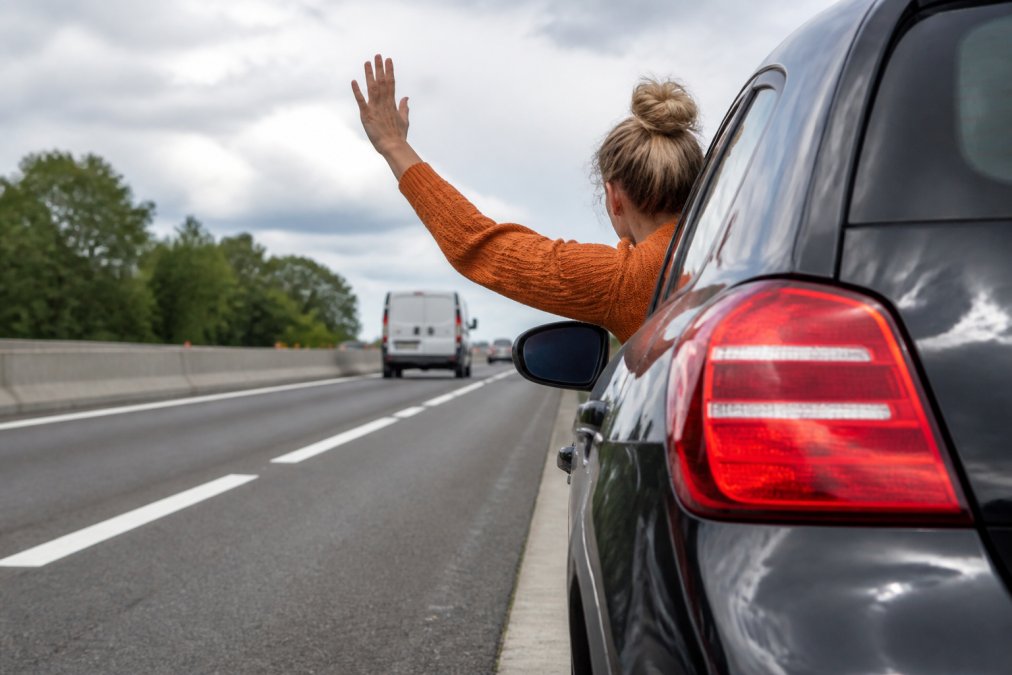
Signal for Help on Smart Motorways: A Driver’s Guide
Table of Contents
- Understanding Smart Motorway Signals and Communication Methods
- What to Do If Broken Down on a Smart Motorway
- How to Use SOS Phones on Motorways
- Vehicle Visibility Safety Devices and Their Role
- Red X Signals and Lane Closures: What They Mean
- Signalling for Help: Step-by-Step Actions
- Psychological Safety and Staying Calm During Breakdown
- Conclusion
- Frequently Asked Questions
Last Updated: September 3, 2026
Understanding Smart Motorway Signals and Communication Methods
Smart motorways use electronic signals and communication methods to manage traffic flow and assist drivers in distress. Overhead gantry signs display variable speed limits, lane closure indicators, and red X signals that close lanes during incidents or hazards. Understanding these signals is essential for regular users.
The red X signal means a lane is closed and must not be used. When you see it, move out of that lane immediately. Dynamic speed limits adjust based on traffic conditions, weather, and incidents ahead. Green arrows indicate open lanes, while amber lights warn of congestion or hazards. Emergency communication infrastructure includes SOS phones positioned at regular intervals along the hard shoulder and emergency refuge areas as safe stopping points for broken-down vehicles.
Communication during a breakdown involves multiple channels. Your mobile phone is the primary method for contacting emergency services, but SOS phones offer a dedicated line with automatic location tracking. Hazard lights, warning triangles, and modern high-visibility warning devices alert other road users to your presence. Roadflash, a Nottingham-based innovator, has developed multi-award-winning early warning systems specifically designed to enhance visibility for stationary vehicles on busy motorways, helping drivers communicate their presence to approaching traffic before emergency services arrive.
Smart motorway signals change frequently based on real-time traffic conditions. Check your mirrors regularly and watch the overhead gantries continuously; a lane that was open seconds ago may close suddenly.
What to Do If Broken Down on a Smart Motorway
Immediate steps when you lose power or control
If your vehicle breaks down on a smart motorway, your immediate priority is safety. Do not attempt to restart your engine or fix the problem yourself. Instead, focus on getting to a safe location and alerting other drivers.
If you’re still moving, try to reach an emergency refuge area. These designated safe zones are positioned every 500 metres or so along smart motorways, clearly marked with blue and white signs (highwaysengland.co.uk). If you cannot reach one, move as far to the left as possible, away from live traffic lanes. Turn on your hazard lights immediately.
Once stationary, switch off your engine. If it’s safe to do so and you’re on the hard shoulder or in an emergency refuge area, exit the vehicle and move away from traffic, ideally behind a barrier or on the verge. Never stand between your vehicle and oncoming traffic. If exiting feels unsafe due to heavy or fast-moving traffic, stay inside the vehicle with your seatbelt fastened and doors locked until help arrives.
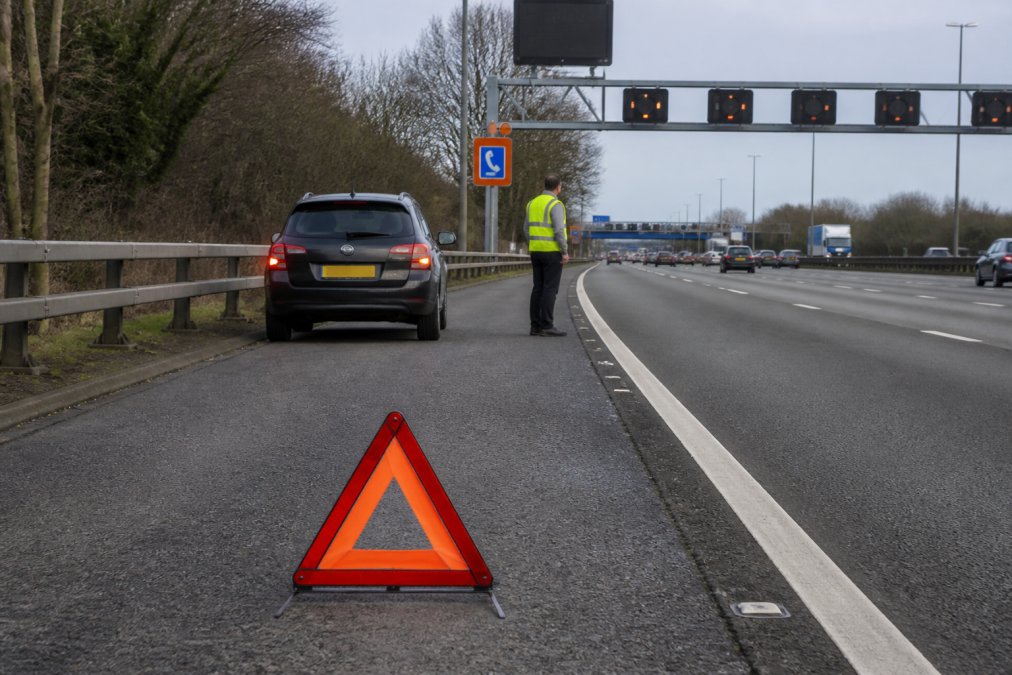
Place your warning triangle at least 45 metres behind your vehicle if you have one and can safely deploy it. Modern drivers increasingly carry high-visibility warning beacons that activate automatically or via remote control, providing far greater visibility than traditional triangles, especially at night or in poor weather.
Using your hazard lights and warning triangle
Your hazard lights are your primary visual signal that your vehicle is stationary and in distress. Activate them immediately when you break down. These flashing amber lights are visible from considerable distances and alert approaching drivers to slow down and change lanes if possible.
A standard warning triangle should be placed on the road behind your vehicle at the legal minimum of 45 metres (gov.uk). Position it on the hard shoulder or central reservation, never in an active traffic lane. High-visibility warning devices offer substantial advantages over traditional triangles. Roadflash’s DGT 3.0 compliant emergency beacons use LED lighting and GPS geolocation to increase hazard awareness effectively, are visible from greater distances, work in all weather conditions, and provide emergency services with precise location data.
Never leave your warning triangle or beacon unattended in a traffic lane. Always retrieve it from the safety of the hard shoulder or refuge area, or wait until traffic has cleared significantly before attempting retrieval.
How to Use SOS Phones on Motorways
Locating emergency refuge areas and SOS phones
Emergency refuge areas are purpose-built safe zones on smart motorways, typically positioned every 500 metres and marked with distinctive blue and white signs showing a phone symbol and an arrow. These areas are wider than the hard shoulder, allowing you to pull off the live traffic lanes completely. If your vehicle breaks down, reaching an emergency refuge area should be your primary goal.
Each emergency refuge area contains an SOS phone mounted on a pole. These dedicated emergency telephones connect directly to the local traffic control centre. Unlike mobile phones, SOS phones have automatic location identification built in; when you call, the control centre immediately knows exactly where you are. This eliminates the need for you to describe your location, which is invaluable if you’re injured, disoriented, or in shock.
To use an SOS phone, lift the handset. The connection is automatic; you do not need to dial. Speak clearly to the operator who answers. If you cannot reach an emergency refuge area and are stranded in a live lane or on the hard shoulder, use your mobile phone instead. Dial 999 for emergency services or 101 for non-emergency police assistance.
What information to provide when you call
When you contact emergency services via SOS phone or mobile, state clearly that you have broken down on a smart motorway and provide your location using the blue distance markers visible on motorway signs. For example: “I’m broken down on the M25, approximately 2 miles before junction 10.”
Describe your vehicle: colour, make, model, and registration number. Explain the nature of the problem briefly. If anyone is injured, state this immediately; it affects the priority response. Tell the operator if you are out of the vehicle and where you are positioned. Ask for an estimated arrival time for assistance. Follow the operator’s instructions; they have real-time traffic information and can see your location on their system.
Highways England guidance on smart motorway safety provides detailed information about emergency procedures and refuge areas.
Vehicle Visibility Safety Devices and Their Role
Vehicle visibility is the critical factor that determines whether approaching drivers notice your broken-down vehicle in time to slow down and change lanes. On a motorway where vehicles travel at 60-70 mph or higher, visibility can mean the difference between a near-miss and a catastrophic collision.
Standard equipment includes hazard lights and warning triangles, both legally required. Hazard lights are effective during daylight and in reasonable visibility, but can be difficult to spot at night, in fog, or during heavy rain. Warning triangles are passive and depend on other vehicles’ headlights for visibility.
Modern high-visibility warning devices address these limitations. LED-based beacons emit their own light, making them visible in darkness, fog, and rain. They are visible from greater distances than reflective triangles, often 300 metres or more compared to perhaps 150 metres for a triangle. Roadflash’s emergency beacons combine high-visibility LED lighting with GPS geolocation, meaning they alert approaching drivers and transmit your precise location to emergency services, significantly reducing the time between breakdown and assistance.
Reflective clothing for the driver and passengers also matters. High-visibility vests are recommended by safety organisations. When you exit your vehicle, wear a high-visibility vest so that you are visible to approaching traffic.
The combination of hazard lights, a warning device (triangle or beacon), and reflective clothing creates multiple layers of visibility, increasing the chance that approaching drivers will see you and react in time.
Red X Signals and Lane Closures: What They Mean
The red X signal is the most critical communication tool on a smart motorway. When you see a red X displayed on an overhead gantry above a lane, that lane is closed and must not be used. This is not a suggestion; it is a mandatory instruction. Failing to obey a red X is illegal and dangerous.
Red X signals appear when a vehicle has broken down in that lane, an accident has occurred, debris or hazards are present, or traffic flow management requires closure. Whatever the reason, the signal means the lane is not available for traffic.
When you see a red X, move out of that lane immediately if you are in it. Signal your intention, check your mirrors and blind spots, and change lanes decisively. If all lanes ahead display red X signals, slow down and be prepared to stop. Variable speed limit signs work in conjunction with red X signals. A speed limit of 50 mph or 40 mph indicates congestion or hazards ahead. Comply with these limits; they are set based on real-time conditions and are designed to prevent collisions and maintain traffic flow.
Signalling for Help: Step-by-Step Actions
Signalling for help on a smart motorway involves a coordinated sequence of actions designed to ensure your safety and bring assistance to you as quickly as possible.
Step 1: Move to safety and turn on hazard lights
The moment you realise you cannot continue driving safely, activate your hazard lights immediately. This is your first signal to approaching traffic. Steer your vehicle away from live traffic lanes towards the hard shoulder or an emergency refuge area. Do not attempt to reverse or perform complex manoeuvres on the motorway.
Once stopped, keep hazard lights flashing and switch off your engine. Check that you and your passengers are uninjured. Make a quick assessment of the situation: is the vehicle safe to remain in, or should you exit? Is traffic heavy or light?
Step 2: Contact emergency services via SOS phone or mobile
If you are in an emergency refuge area, use the SOS phone. Lift the handset and speak to the operator. If you are on the hard shoulder or cannot reach a refuge area, use your mobile phone. Dial 999 and request the police or traffic officers. State that you have broken down on a smart motorway, provide your location using junction numbers or distance markers, and describe your vehicle and the nature of the problem.
Give the operator your mobile phone number so they can contact you if the line disconnects. Ask for an estimated arrival time for assistance and listen carefully to any instructions they provide.
Step 3: Increase visibility with warning devices
If you have exited the vehicle safely, deploy a warning triangle or high-visibility beacon. If using a triangle, place it on the hard shoulder at least 45 metres behind your vehicle. If you have a high-visibility warning beacon, activate it according to its instructions. Modern beacons often have a simple button or switch and will emit bright LED light visible from considerable distances.
Wear a high-visibility vest if you have one. Never stand in an active traffic lane; remain on the hard shoulder, behind a barrier, or in an emergency refuge area.
Step 4: Wait for assistance in a safe location
Once you have alerted emergency services and deployed warning devices, remain safe until help arrives. If you are in an emergency refuge area, remain there. If you are on the hard shoulder, consider your options carefully. In heavy traffic or poor visibility, staying inside the vehicle with doors locked and seatbelt fastened may be safer than standing outside.
Do not attempt to repair the vehicle yourself on the motorway. Do not flag down other drivers or attempt to push the vehicle. Emergency services are trained to handle breakdowns safely. Your job is to signal your location and remain safe until they arrive.
Psychological Safety and Staying Calm During Breakdown
Breaking down on a busy motorway is stressful. Recognise that breakdown is a normal occurrence and thousands of vehicles break down on motorways every year. You are not alone, and help is coming.
Focus on the actions you can control. You have activated hazard lights, deployed a warning device, and contacted emergency services. These actions have done what they can do. Your role shifts from action to waiting safely. If you are in a vehicle with passengers, communicate calmly and reassure them that help is on the way.
Knowing that your vehicle is equipped with a high-visibility device that transmits location data to emergency services can reduce anxiety about breakdown. You have a backup communication system that works even if your mobile phone fails or you are unable to speak clearly.
Psychological safety during a breakdown means accepting that you have done what you can, trusting that emergency services are responding, and focusing on staying calm and safe until help arrives.
Conclusion
Signalling for help on a smart motorway requires understanding multiple communication systems, hazard lights, warning devices, SOS phones, and emergency refuge areas, and executing a clear sequence of actions under stress. The steps are straightforward: move to safety, activate hazard lights, contact emergency services, deploy a warning device, and wait safely.
The difference between a breakdown that ends with minor inconvenience and one that results in collision lies largely in visibility and communication speed. Roadflash’s multi-award-winning emergency beacons combine high-visibility LED lighting with GPS geolocation, ensuring that both approaching drivers and emergency services know exactly where you are. This dual-function approach significantly reduces response times and collision risk. Add a Roadflash beacon to your vehicle today and travel with the confidence that you are equipped with an effective signalling system.
Frequently Asked Questions
Q: How do I use an SOS phone on a motorway if my mobile has no signal?
A: SOS phones are positioned every 2 kilometres along motorways and connect directly to the traffic control centre without requiring a mobile signal. Locate the nearest emergency refuge area marker, walk to the phone, and press the button. Provide your location (visible on the pole) and vehicle details. The control centre will dispatch assistance and monitor your safety. Never attempt to flag down other vehicles or leave your breakdown location unattended.
Q: What should I do if I break down in a live lane on a smart motorway?
A: If you cannot reach an emergency refuge area, turn on hazard lights immediately and exit your vehicle only if it is safe to do so. Move away from traffic and call 999 or use an SOS phone. Do not attempt repairs in a live lane. Stay away from your vehicle and behind the barrier if possible. Use high-visibility safety devices to alert other drivers. Traffic control centres monitor live lanes continuously and will close the lane or reduce speed limits to protect you.
Q: How do vehicle visibility safety devices improve my chances of being spotted during a breakdown?
A: Visibility devices such as LED warning beacons and reflective markers increase your vehicle’s visibility to oncoming traffic, especially in poor weather or low light. They work alongside hazard lights and warning triangles to create multiple layers of hazard awareness. GPS-enabled beacons also alert the traffic control centre to your exact location, enabling faster emergency response. These devices significantly reduce collision risk when your vehicle is stationary on a motorway.
Q: What does a red X signal mean and how should I respond?
A: A red X displayed on a smart motorway gantry means that lane is closed and you must not enter or remain in it. If you are already in that lane, move to an open lane safely as soon as possible. Red X signals are used for accidents, breakdowns, debris, or congestion ahead. Ignoring a red X puts you and others at serious risk. Always check overhead signs and adjust your lane position accordingly. Variable speed limits displayed alongside red X signals help manage traffic flow and prevent further incidents.
This article was written using GrandRanker