

How GPS Emergency Beacons Save Lives
Table of Contents
- What GPS Emergency Beacons Do
- How GPS Emergency Beacons Transmit Distress Signals
- PLB vs Satellite Messenger: Key Differences
- Emergency Beacon Battery Life and Reliability
- How to Register a PLB in the UK
- The Golden Day: Why Speed Matters in Rescue
- When GPS Emergency Beacons Fail: Environmental Limitations
- Choosing the Right Emergency Beacon for Your Needs
Last Updated: August 16, 2026
What GPS Emergency Beacons Do
GPS emergency beacons are portable distress devices that transmit your precise location to search and rescue services when activated during an emergency. Unlike traditional SOS signals, these beacons use satellite networks to ensure your position reaches rescuers even in remote areas where mobile networks fail. When you’re stranded on a motorway, lost in wilderness, or injured at sea, GPS emergency beacons eliminate dependency on mobile coverage by transmitting directly to satellites, which relay your distress signal to rescue coordination centres within minutes.
What makes this capability life-saving is speed. Search and rescue teams receive your exact position instantly rather than triangulating their location from mobile tower data or conducting time-consuming ground searches. In the golden hour following an accident or breakdown, this difference in response time can determine survival outcomes. Roadflash’s GPS-enabled emergency beacons exemplify this principle, combining satellite transmission with high-visibility hazard lighting to alert both emergency services and approaching traffic.
How GPS Emergency Beacons Transmit Distress Signals
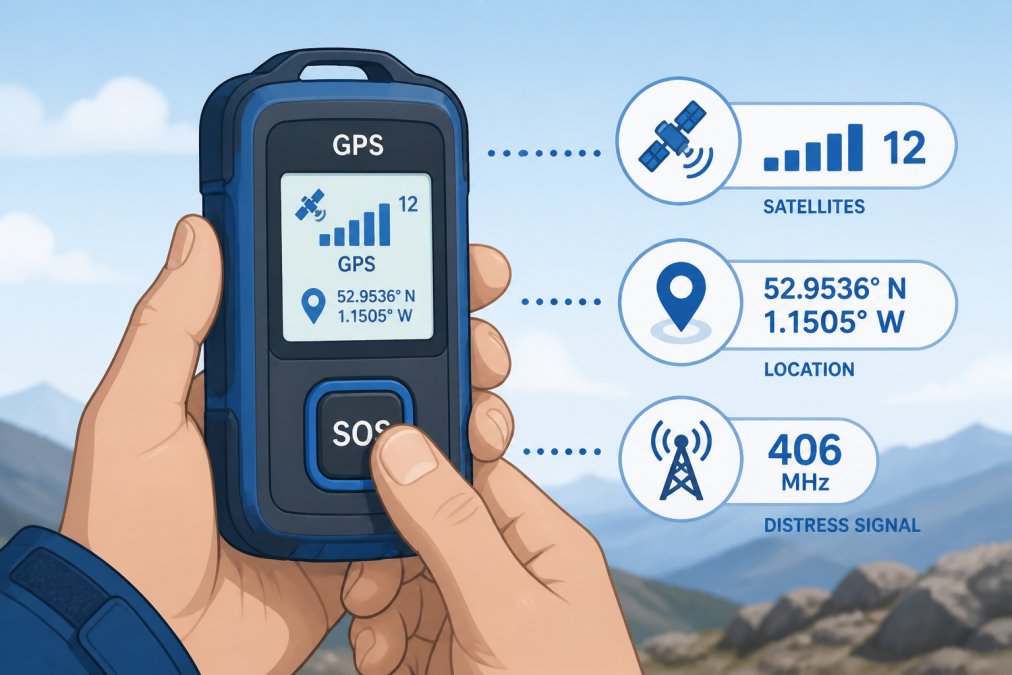
When you activate a GPS emergency beacon, it acquires your position using GPS satellites, encodes that location along with your beacon’s unique registration code, and broadcasts this data on a dedicated emergency frequency monitored continuously by rescue coordination centres worldwide.
The role of the Cospas-Sarsat satellite network
The Cospas-Sarsat system forms the backbone of global distress alerting. This international satellite network, established in 1979, monitors emergency frequencies 24/7 across the planet. When your beacon transmits, one of these satellites detects the signal and relays it to ground stations, which forward your distress alert to the appropriate rescue coordination centre based on your location.
This system covers virtually every inhabited area and most remote regions through a constellation of satellites in polar and geostationary orbits. The frequency used by emergency beacons, 406 MHz, was specifically designated by international agreement for distress signals and penetrates clouds and adverse weather better than higher frequencies. The Cospas-Sarsat system processes thousands of alerts annually, with response times averaging under 30 minutes for detected signals in populated areas.
Signal transmission and rescue coordination
Once your beacon’s distress signal reaches a rescue coordination centre, trained personnel verify the alert and access your registration data, including your name, emergency contacts, vessel or vehicle details, and medical information. This information packet, combined with your precise coordinates, enables rescuers to plan an effective response before departure.
Modern beacon models transmit a return link message (RLM), allowing rescue coordination centres to send acknowledgment back to your beacon, confirming that your distress signal was received. This two-way communication provides critical psychological reassurance during an emergency. From activation to rescue coordination centre notification typically takes 5-15 minutes, vastly faster than waiting for someone to discover your disabled vehicle or calling emergency services when mobile coverage is unavailable.
PLB vs Satellite Messenger: Key Differences
A Personal Locator Beacon (PLB) is a one-way distress device activated only during genuine life-threatening emergencies. It broadcasts your position to rescue services and cannot be deactivated remotely, preventing accidental activation. PLBs are purpose-built for rescue scenarios: maritime accidents, aircraft emergencies, wilderness survival situations, or motorway breakdowns where immediate professional help is essential.
Satellite messengers enable two-way communication and are designed for routine communication in remote areas. You can send text messages, check weather, or request non-emergency assistance. They’re ideal for expedition teams, remote workers, or recreational adventurers who need regular contact capability.
The critical difference emerges during actual emergencies. A PLB’s single-purpose design ensures rapid alerting without confusion. Rescue coordination centres recognize PLB signals as genuine emergencies requiring immediate response. Satellite messengers, while capable of sending distress alerts, sometimes generate false alarms because they’re used for routine messaging.
For motorway safety specifically, PLBs are superior. When your vehicle breaks down on a busy road, you need rescue services and traffic management immediately. A dedicated distress beacon eliminates ambiguity. Roadflash’s GPS emergency beacons function as PLBs, purpose-built for vehicle emergencies with integrated high-visibility lighting that warns approaching traffic while transmitting your distress signal to rescue services.
Emergency Beacon Battery Life and Reliability
Most modern GPS emergency beacons operate for 48-72 hours continuously after activation, sufficient for rescue response in virtually all scenarios. Beacons use non-rechargeable lithium batteries specifically because they maintain charge during storage. A beacon sitting in your vehicle for years won’t develop the self-discharge problems that plague rechargeable batteries.
Battery reliability depends on proper maintenance. Beacons should be registered with rescue services and checked annually to verify battery condition. The registration process, required for UK-based beacons, ensures rescue services have current information. Unregistered beacons create problems during actual emergencies because rescue services cannot access your identification or medical information.
Beacons are designed to function across -20°C to +60°C temperature ranges, covering conditions experienced on UK motorways and most remote areas. Extreme cold reduces battery voltage temporarily, though typically not enough to prevent transmission.
How to Register a PLB in the UK
Registering your GPS emergency beacon with UK rescue services is mandatory for proper functioning during emergencies. The registration process links your beacon’s unique identifier to your personal information, emergency contacts, and vehicle details. When rescue services receive your distress signal, they access this registration data immediately.
The process begins with obtaining your beacon’s unique identification number, typically a 15-digit code printed on the device. You then submit this number along with your personal details to the UK’s beacon registration authority, including your name, address, emergency contact information, and vehicle details. Registration is free and takes approximately 10-15 minutes online.
Keep your registration current. If you change address, emergency contacts, or vehicle details, update your beacon registration within 30 days. Rescue services rely on accurate information during emergencies. Never test-activate your beacon in the field; the distress signal will trigger an actual rescue response. Testing should only occur under controlled conditions with rescue services notified in advance.
The Golden Day: Why Speed Matters in Rescue
The "golden day" concept in emergency medicine refers to the first 24 hours following trauma or critical incident, when survival outcomes depend heavily on rapid access to appropriate medical care. For motorway breakdowns, this principle translates directly into collision prevention and injury mitigation.
When your vehicle breaks down on a busy road, approaching traffic poses immediate danger. A stationary vehicle becomes a collision hazard, especially at night or in poor visibility. GPS emergency beacons actively notify rescue services of your location and situation, triggering professional response within minutes. This rapid response achieves two critical outcomes: emergency services arrive quickly to manage the scene and provide medical care, and rescue services can inform traffic management authorities to implement traffic control measures before collisions occur.
Speed also affects psychological outcomes. Knowing that your distress signal has been received and confirmed provides psychological reassurance. You’re not waiting helplessly. Professional help is responding to your known location. This mental state improves decision-making during crisis situations.
When GPS Emergency Beacons Fail: Environmental Limitations
GPS emergency beacons operate reliably in most situations, but specific environmental conditions can degrade performance. Dense forest canopy blocks satellite signals, as GPS requires line-of-sight to satellites. Urban canyon effects, where tall buildings surround your location, can also interfere with satellite signals through reflections and signal blockage. However, these limitations rarely affect motorway scenarios, where open road typically provides clear sky access.
Submersion in water presents a more serious challenge. Most emergency beacons are waterproof to specific depths, typically 10-30 metres. For maritime emergencies, this limitation is addressed through design; maritime beacons are built to higher waterproofing standards and include flotation devices to maintain surface proximity.
False alarm prevention requires operator discipline. Accidental activation during transport or storage can trigger unnecessary rescue responses. Beacons are designed with protective covers and intentional activation resistance to prevent accidental triggering. Never activate your beacon except during genuine life-threatening emergencies.
Choosing the Right Emergency Beacon for Your Needs
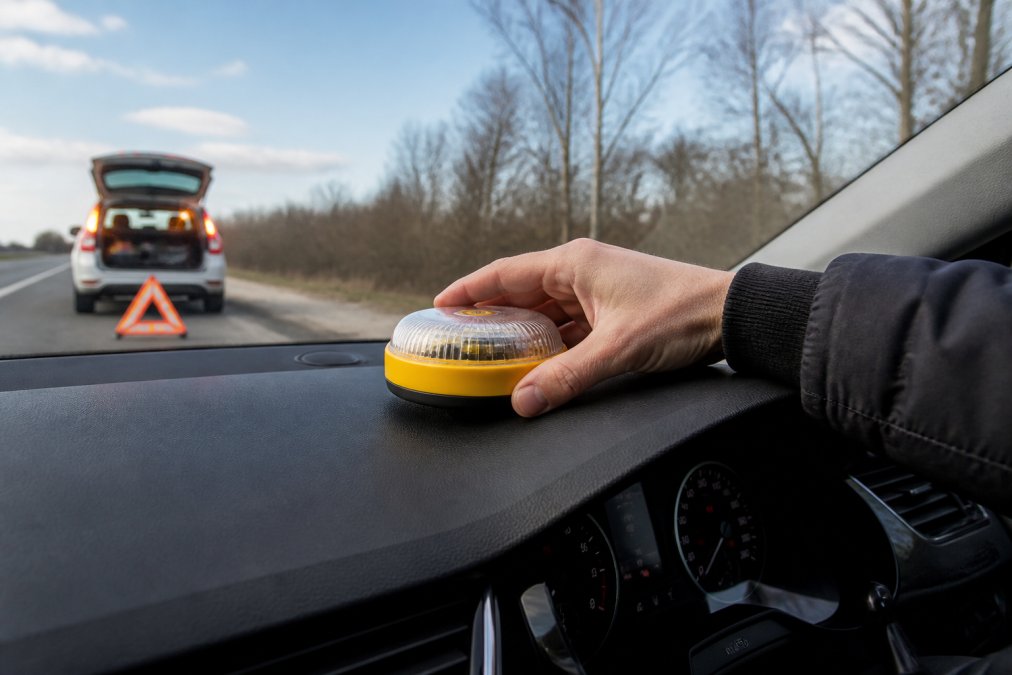
Selecting an appropriate GPS emergency beacon depends on your specific situation, usage patterns, and regulatory requirements. For frequent motorway users, integrated vehicle beacons offer the best combination of reliability and convenience. These devices mount permanently in your vehicle, activate with a simple button press during emergencies, and combine GPS transmission with high-visibility lighting. Roadflash’s GPS emergency beacons exemplify this category, providing DGT 3.0 compliance for international travel, and hazard lighting that alerts approaching traffic simultaneously with transmitting your distress signal to rescue services.
Portable PLBs suit occasional users or those who travel across multiple vehicles. These handheld devices can be carried in your vehicle, stored in a boat, or taken on outdoor activities. They’re lighter and more affordable than vehicle-mounted systems but require deliberate activation and positioning during emergencies.
Consider your travel patterns. Do you regularly drive motorways, particularly at night or in remote areas? Vehicle-mounted beacons provide automatic protection without requiring conscious action during emergencies. Do you travel internationally? Ensure your beacon meets destination country standards; Spain requires DGT 3.0 compliance, for example. Do you work in remote areas without mobile coverage? Satellite messengers might supplement your beacon for routine communication.
Battery longevity matters less than registration currency. A beacon with perfect battery performance won’t help if your registration data is outdated. Verify registration annually and update immediately if personal details change.
Size and visibility affect usability. Larger beacons with bright display screens are easier to operate during emergencies when stress and adrenaline impair fine motor control. Integrated high-visibility lighting serves dual purpose, warning approaching traffic while your beacon transmits distress signals. This dual functionality, incorporated in Roadflash’s beacon design, addresses the specific hazards of motorway breakdowns.
Motorway breakdowns happen without warning. When they do, GPS emergency beacons transform your response capability from passive waiting to active rescue coordination. Your precise location reaches rescue services within minutes rather than hours. Professional help arrives faster. Traffic management prevents secondary collisions. Your distress signal includes your identity, emergency contacts, and vehicle details, everything rescuers need to respond effectively.
Roadflash’s GPS emergency beacons integrate this life-saving technology with high-visibility hazard lighting, creating a comprehensive motorway safety solution. Their DGT 3.0 compliance ensures legal compliance across Europe, while GPS/Geolocation functionality provides the precision that makes rescue response possible. For drivers who value their safety and that of their passengers, these beacons represent essential protection during the emergencies you hope never happen.
Frequently Asked Questions
How do GPS emergency beacons work?
GPS emergency beacons transmit a distress signal containing your geospatial coordinates to the Cospas-Sarsat satellite network. When activated, the beacon sends your location to a rescue coordination centre within minutes. Modern GPS-enabled beacons provide precise positioning, reducing search time significantly. Non-GPS beacons transmit a signal that rescue services triangulate, which takes longer but still alerts authorities to your emergency. The faster your location reaches rescue teams, the higher your survival chances during the critical golden day window.
What is the difference between a PLB and a satellite messenger?
A Personal Locator Beacon (PLB) transmits a one-way distress signal only, it alerts rescue services to your location but does not allow two-way communication. Satellite messengers, by contrast, enable two-way messaging; you can send and receive messages via satellite networks. PLBs are designed purely for emergency situations and typically cost less, while satellite messengers offer ongoing communication capability but at higher cost. For roadside emergencies, a PLB with GPS provides rapid location transmission to rescue coordination centres without monthly subscriptions.
How long does an emergency beacon battery last?
Most GPS emergency beacons have battery longevity of 5 to 10 years in standby mode, though this depends on the specific model and storage conditions. Once activated during an emergency, the beacon typically transmits a distress signal for 24 to 48 hours continuously. Battery performance degrades in extreme cold, so beacons stored in vehicles should be checked annually. Regular testing and battery replacement according to the manufacturer's schedule ensures your beacon will function when needed. Always verify the battery expiry date on your device before any journey.
Do I need a subscription for a GPS emergency beacon?
Most GPS emergency beacons do not require monthly subscriptions. They transmit directly to the Cospas-Sarsat satellite network and rescue coordination centres at no ongoing cost. However, some advanced models with two-way messaging or real-time tracking features may include optional subscription services. Registration with your local maritime authority or search and rescue service is free and mandatory in the UK. Check your specific beacon model's terms, as some premium features may involve fees, but core distress transmission is always subscription-free.
This article was written using GrandRanker