

Emergency Beacon Features to Look For: 2026 Guide
Table of Contents
- What Makes an Emergency Beacon Effective
- PLB vs Satellite Messenger: Which Emergency Beacon Type Suits You
- Critical Features in Emergency Beacon Selection
- Emergency Beacon Battery Life: What You Need to Know
- UK Beacon Registry Registration and Compliance
- Subscription Costs vs One-Time Fee Models
- Real-World Performance: What Matters When It Counts
- Conclusion
Last Updated: August 6, 2026
What Makes an Emergency Beacon Effective
An emergency beacon is a portable device that transmits distress signals to rescue services, typically via satellite networks, enabling rapid location and recovery when conventional communication fails. The most critical distinction lies in what happens after you press the button: does the beacon simply broadcast your location, or does it establish two-way communication with rescue coordinators?
This matters because a signal sent is not the same as a signal received. Real-world performance depends on satellite network coverage, antenna orientation, signal propagation conditions, and whether your device can receive confirmation that help is actually coming. Many operators assume their beacon works everywhere. It doesn’t. Geography, weather, and device type determine whether your distress alert reaches rescuers in minutes or never at all.
The Roadflash team has analysed emergency beacon deployments across UK motorways and European routes, observing that stationary vehicles face uniquely high collision risk during the critical window between breakdown and emergency service arrival. This is where beacon features shift from convenience to life-critical: visibility, location accuracy, and rapid alert transmission become the difference between a near-miss and a serious incident.
Below, we’ll examine the core features that separate effective beacons from expensive paperweights, the trade-offs between different beacon types, and how to match a device to your actual risk profile rather than your budget.
PLB vs Satellite Messenger: Which Emergency Beacon Type Suits You
Two distinct beacon categories dominate the market, and choosing between them requires understanding what each actually does.
Personal Locator Beacons (PLBs)
A Personal Locator Beacon (PLB) is a one-way distress device that broadcasts your location via satellite to rescue authorities, with no capability for two-way messaging. When activated, it transmits your position repeatedly until battery depletion or manual cancellation. PLBs are designed for situations where you need rescue but cannot communicate your status, injuries, or changing circumstances.
PLBs transmit on international distress frequencies monitored by search and rescue services globally. Registration with the UK Beacon Registry is mandatory before deployment; unregistered beacons may cause false alarms and delay response. The device itself contains no user interface for messaging, you activate it and wait. This simplicity is both strength and weakness: fewer moving parts mean higher reliability, but you cannot tell rescuers whether your situation has improved or deteriorated.
PLBs excel in offshore scenarios, remote wilderness, and situations where rapid location broadcast matters more than dialogue. They’re also significantly cheaper than satellite messengers, with no subscription costs. However, they offer no confirmation that your signal was received, no ability to cancel a false alarm after activation, and no way to communicate non-emergency information like "I’m injured but stable" versus "I’m unconscious."
Satellite Messengers
A satellite messenger is a two-way communication device that allows you to send short text messages and receive replies via satellite networks. Unlike PLBs, messengers let you initiate contact, describe your situation, and receive acknowledgement from rescue coordinators or emergency contacts.
Satellite messengers require subscription-based service and active charging. They’re heavier and bulkier than PLBs, with screens and keypads for message composition. The trade-off is control: you can send "Vehicle broken down, not injured, highway services en route" instead of triggering a full search and rescue mobilisation. This reduces false alarms and allows rescuers to prioritise resources more effectively.
Messengers are increasingly common among motorists, adventure travellers, and small fleet operators who expect to communicate regularly. They integrate waypoint creation, turn-by-turn navigation, and sometimes automatic location sharing. The Return Link Service (RLS), the ability to receive messages confirming your distress alert was received, transforms a one-way panic button into a dialogue system.
Critical Features in Emergency Beacon Selection
Selecting an emergency beacon requires evaluating technical specifications against your actual usage environment and risk tolerance.
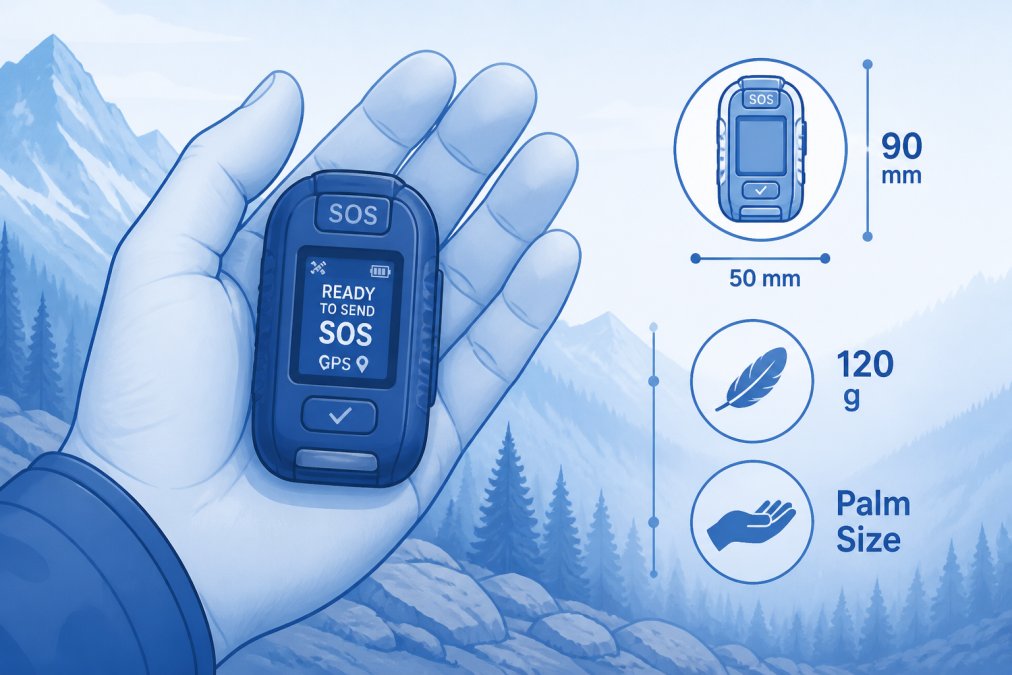
GPS Integration and Location Accuracy
GPS receivers built into modern beacons provide location accuracy within 5-30 metres under clear sky, compared to older satellite-only triangulation methods that could be off by several kilometres. This precision matters: rescue teams can locate you in dense forest, urban canyons, or motorway embankments far faster with accurate coordinates.
However, GPS accuracy degrades significantly in tunnels, dense forest canopy, and urban environments with tall buildings. Many beacons include a hybrid approach: GPS when available, satellite triangulation as fallback. Understand that your device’s stated accuracy is theoretical performance under ideal conditions. Real-world performance in UK weather, overcast skies, rain, dense vegetation, often performs worse.
Satellite Network Compatibility
Different beacons use different satellite networks: Cospas-Sarsat (international search and rescue), Iridium (global coverage, two-way capable), or regional systems. Cospas-Sarsat is the official international distress network monitored by all major rescue services. Iridium messengers offer broader coverage but require commercial subscription.
For UK motorway use, Cospas-Sarsat coverage is comprehensive. However, if you travel to remote European routes or offshore, verify your device’s network compatibility against your destination. Some beacons operate on frequencies that work in Europe but not in North Africa or Asia.
Waterproofing and Durability Standards
Emergency beacons must survive the conditions that cause emergencies: submersion, impact, temperature extremes, and prolonged exposure. Look for IP67 or IP68 waterproofing ratings (submersible to 1 metre for 30 minutes, or deeper for longer periods). A device rated IP65 (water jets only) is insufficient if you’re near water or in heavy rain.
Durability standards also cover impact resistance, battery performance in cold, and antenna integrity after physical stress. Devices meeting military specifications (MIL-STD-810) have been tested for drop, vibration, and thermal shock. This isn’t marketing theatre, it’s the difference between a device that works after your vehicle impacts a barrier and one that doesn’t.
Size, Weight, and Portability
PLBs typically weigh 200-400 grams and fit in a jacket pocket. Satellite messengers weigh 300-600 grams and require a belt pouch or backpack space. For motorists, weight matters less than accessibility: your beacon must be reachable within seconds of a breakdown, not buried in a boot under spare tyres.
Consider whether your beacon will live in your vehicle permanently or travel with you. If permanent, mounting systems and weatherproofing become critical. If portable, ergonomics and pocket fit determine whether you’ll actually carry it. A device you leave at home because it’s inconvenient provides zero protection.
A common mistake is purchasing a beacon and storing it in a vehicle compartment without testing accessibility during a simulated emergency. In actual stress, fumbling with packaging or unfamiliar interfaces costs critical minutes. Practice activation before you need it.
Emergency Beacon Battery Life: What You Need to Know
Battery longevity determines how long your distress signal can transmit if rescue is delayed. PLBs typically broadcast continuously for 24-48 hours, sufficient for most search and rescue operations. However, cold temperatures reduce battery performance significantly, a beacon rated for 48 hours at 20°C may only deliver 30 hours at -10°C.
Satellite messengers require daily or weekly charging depending on usage. A device with two weeks of standby time becomes useless if you’re stranded for three weeks. Some messengers include solar charging panels, though UK winter light levels make solar supplementation marginal rather than reliable.
Battery replacement varies by device type. Some beacons require factory servicing; others allow user replacement. Understand your device’s battery lifecycle before purchase. A beacon with a 5-year battery lifespan that costs £150 to replace is effectively a £30-per-year consumable product.
Check your beacon’s battery expiry date annually and schedule replacement 6 months before expiration. Many rescue services reject activated beacons with expired batteries, treating them as false alarms.
UK Beacon Registry Registration and Compliance
All beacons operating in UK waters and airspace must be registered with the UK Beacon Registry, maintained by the Maritime and Coastguard Agency. Registration links your beacon’s unique identifier to your contact details, enabling rescuers to call you directly rather than launching a full search operation.
Unregistered beacons trigger automatic search and rescue activation when activated, consuming resources and potentially delaying response to genuine emergencies. The registration process takes 10 minutes online and is free. Failure to register is not just inconvenient, it’s irresponsible to other users relying on the same rescue services.
For motorway use, registration is equally critical. Your beacon’s unique code (MMSI for maritime, 15-digit identifier for aviation) must match your registered details. If rescuers cannot confirm your identity, they treat your signal as a potential false alarm and verify before mobilising resources.
If you travel to European routes, understand that different countries maintain separate beacon registries. Some beacons require re-registration when crossing borders; others operate under international protocols. Research your specific device’s requirements before travelling to Spain, France, or other EU destinations.
Subscription Costs vs One-Time Fee Models
PLBs involve no recurring costs: purchase once, register once, and the device operates indefinitely (subject to battery replacement and periodic servicing). This makes PLBs attractive for occasional users or those with limited budgets.
Satellite messengers require subscription to access the satellite network. Subscription costs vary by provider and usage tier. Basic plans typically cover emergency messaging and location sharing; premium tiers add features like weather routing and automated check-ins. Understand that a £300 messenger becomes a £600 device over two years if subscription costs £150 annually.
One-time fee models are rare for messengers because the satellite networks themselves operate on subscription models. Providers pass these costs to users. However, some providers offer lifetime plans or group discounts for fleet operators. If you manage multiple vehicles, bulk subscription may reduce per-device costs significantly.
The real decision isn’t whether to pay upfront or ongoing, it’s whether two-way communication justifies the recurring expense for your use case. A motorist who breaks down twice per decade may find a PLB sufficient. A fleet operator managing 50 vehicles benefits from messengers’ ability to communicate non-emergency status and reduce false alarms.
For UK motorway use, the subscription cost debate is secondary to the core question: do you need two-way communication or just location broadcast? This determines device type before cost enters the equation.
Real-World Performance: What Matters When It Counts
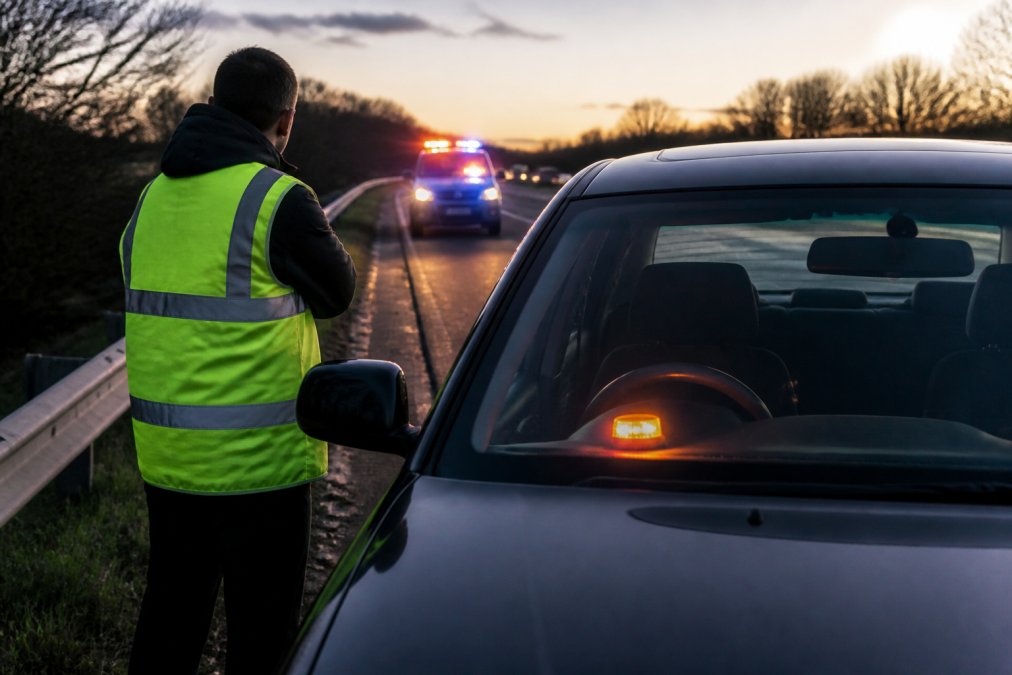
Theoretical specifications mean nothing when your vehicle is stationary on a busy motorway and traffic is passing at 70 mph. Real-world performance depends on factors that benchmark tests rarely capture.
Signal propagation in urban and semi-urban environments (motorway corridors, industrial areas) is degraded compared to open terrain. Buildings, overhead structures, and dense vegetation block satellite signals. A beacon that transmits perfectly in open desert may struggle to achieve full signal strength in a motorway cutting or under a motorway bridge.
Antenna orientation is critical. Many beacons require the antenna to point skyward for optimal signal. If your beacon is mounted horizontally in a vehicle, performance degrades. Some devices compensate with omnidirectional antennas; others require manual repositioning during activation. In a genuine emergency, repositioning may not be your priority.
Confirmation of signal receipt is underrated. You activate your beacon, but you don’t know if it worked. PLB users often activate their device, wait 15 minutes, then activate again because they received no confirmation. This wastes battery and potentially confuses rescuers. Satellite messengers solve this by sending a confirmation message back to your device. This psychological reassurance is as important as the technical capability.
False alarm management differs significantly between device types. If you accidentally activate a PLB, you must wait for rescuers to arrive, confirm it’s a false alarm, and explain the situation. This consumes rescue resources and may result in costs passed to you. Messengers allow you to send "False alarm, device activated accidentally, no assistance required" before rescuers mobilise. This reduces resource waste and eliminates the embarrassment of a full rescue response to a pocket-activated device.
Weather resilience matters more than manufacturers acknowledge. UK winter conditions, rain, wind, cold, stress devices differently than laboratory conditions. Batteries lose capacity in cold. Antenna performance degrades in heavy rain. Touchscreens on messengers become unresponsive when wet. Test your device in actual conditions before relying on it.
A common mistake is purchasing a beacon, reading the manual once, then storing it for years. When you finally need it, you’ve forgotten the activation procedure, the device won’t power on because batteries have degraded, or you can’t remember your device’s registration details. Rescue services recommend quarterly checks: power on, verify battery level, confirm registration details are current.
Conclusion
Emergency beacon selection requires matching device capability to your actual risk environment rather than purchasing the most advanced option available. For UK motorway users, the choice between a Personal Locator Beacon and a satellite messenger depends on whether you value simplicity and cost (PLB) or two-way communication and resource efficiency (messenger).
Roadflash’s multi-award-winning emergency beacons with GPS/Geolocation integration are specifically designed for stationary vehicles on motorways and highways, combining rapid distress alert capability with location accuracy that enables emergency services to locate you quickly. Their DGT 3.0 compliant beacons meet European regulatory standards while delivering the visibility and positioning features that matter when your vehicle is immobilised on a busy road. By integrating high-visibility hazard warning with satellite communication, Roadflash reduces both the collision risk during breakdown and the response time for emergency assistance.
Whichever device you choose, registration with the UK Beacon Registry is non-negotiable, battery maintenance is ongoing, and testing before you need it is essential. Your beacon is insurance: you hope never to use it, but when you do, it must work flawlessly.
Frequently Asked Questions
What are the key features of an emergency beacon?
An effective emergency beacon combines GPS positioning, satellite transmission capability, waterproof construction, and reliable battery performance. The most critical features include accurate location reporting (within metres), compatibility with established satellite networks like Cospas-Sarsat, waterproofing to IP67 standard or better, and battery longevity of at least 48 hours in active transmission. Additional features such as strobe lights, two-way communication capability, and buoyancy improve rescue coordination and visibility.
Do I need to register my emergency beacon with the UK Beacon Registry?
Yes. UK Beacon Registry registration is mandatory for all personal locator beacons (PLBs) and emergency position-indicating radio beacons (EPIRBs) operating in UK waters or airspace. Registration ensures that when your beacon transmits a distress signal, search and rescue services can quickly identify your vessel or aircraft, your contact details, and any medical information. Without registration, rescue coordination centres cannot process your distress alert effectively. Registration is free and takes minutes online.
How long does emergency beacon battery life typically last?
Modern emergency beacon battery life ranges from 48 hours to several years depending on the type. Standalone PLBs typically provide 48-72 hours of continuous transmission, sufficient for most rescue operations. Satellite messengers with regular two-way communication may offer 7-14 days of operation under typical use. Standby battery life (when the device is not transmitting) can extend to 5-10 years for PLBs. Always check manufacturer specifications and test battery condition annually, as cold temperatures and age reduce performance.
What's the difference between a PLB and a satellite messenger for emergency situations?
A personal locator beacon (PLB) transmits a one-way distress signal to search and rescue services via satellite; it cannot receive messages and is designed purely for emergencies. A satellite messenger sends two-way messages, allowing you to communicate with contacts and request help without triggering a full emergency response. PLBs are lighter, cheaper, and require no subscription, making them ideal for occasional outdoor use. Satellite messengers cost more but provide ongoing communication capability and are better suited to extended expeditions or professional operations.
Are emergency beacons waterproof and will they float?
Most modern emergency beacons meet IP67 waterproofing standards, meaning they survive immersion in up to 1 metre of water for 30 minutes. Many PLBs and EPIRBs are buoyant, allowing them to float if dropped overboard. However, buoyancy specifications vary: some devices float with an attached lanyard, whilst others require a flotation pouch. Always verify the IP rating and buoyancy classification for your intended environment. For maritime use, buoyancy is essential; for land-based emergencies, waterproofing alone may suffice.
Do I need a subscription to use an emergency beacon?
Personal locator beacons (PLBs) and EPIRBs require no subscription, they transmit distress signals via the free Cospas-Sarsat satellite network. However, satellite messengers typically require annual or monthly subscriptions to send two-way messages and non-emergency communications. If your only need is emergency distress alerting, a subscription-free PLB is sufficient and more cost-effective. If you want regular check-in capability or two-way communication during extended trips, a satellite messenger subscription becomes worthwhile.
What GPS accuracy should I expect from an emergency beacon?
Modern emergency beacons provide GPS position accuracy within 50-100 metres under clear skies. Accuracy depends on satellite visibility, antenna orientation, and atmospheric conditions. PLBs with integrated GPS are more accurate than those relying solely on satellite network triangulation. Two-way satellite messengers often offer real-time position updates with similar accuracy. In dense forest, canyon, or urban environments with poor satellite visibility, accuracy may degrade to 200+ metres. Always position the antenna vertically and away from obstacles to maximise signal reception and positional accuracy.
What happens if my emergency beacon fails to transmit in a real emergency?
Transmission failure typically stems from antenna obstruction, low battery, or poor satellite visibility. To minimise risk, register your beacon with the UK Beacon Registry so rescue services have your details even if the signal is weak. Carry a backup communication device such as a satellite messenger or mobile phone. Test your beacon annually in a safe environment by activating the test mode (which alerts the registry but does not trigger a full rescue response). Keep your beacon accessible and ensure you know how to activate it quickly under stress. Consider redundancy for critical journeys.
This article was written using GrandRanker