
High Visibility Roadside Safety Equipment Guide
Table of Contents
- Why High Visibility Roadside Safety Equipment Matters
- Legal Requirements for Roadside Safety Equipment
- Essential High Visibility Clothing and Personal Protective Equipment
- DGT 3.0 Compliant Emergency Beacons and Advanced Warning Systems
- Building Your Car Breakdown Safety Kit Checklist
- How to Choose the Right Equipment for Your Needs
- The Psychological Impact of Visibility in Low-Light Conditions
- Conclusion
Last Updated: August 29, 2026
Why High Visibility Roadside Safety Equipment Matters
When your vehicle breaks down on a busy motorway, the first 60 seconds determine whether other drivers see you. A stationary car becomes invisible in darkness, fog, or heavy rain, and invisible means vulnerable. According to Department for Transport collision statistics, breakdowns on high-speed roads account for thousands of incidents annually, many preventable with proper visibility measures.
High visibility roadside safety equipment transforms a dangerous situation into a managed one. When another driver spots your vehicle 500 metres away instead of 50 metres away, reaction time shifts from impossible to manageable. Visibility saves lives.
Legal Requirements for Roadside Safety Equipment
UK Standards and Compliance
In the UK, there’s no single legal requirement to carry specific roadside safety equipment while driving. However, if you break down and fail to warn other traffic adequately, you can be prosecuted under the Road Traffic Act 1988 for causing an obstruction or failing to take reasonable precautions.
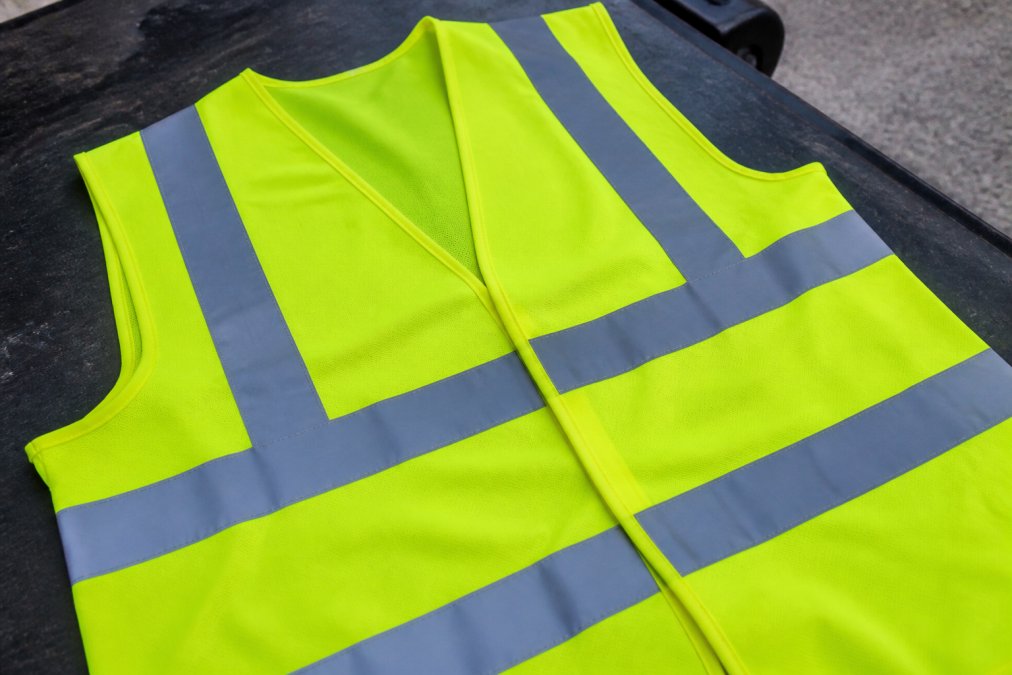
The warning triangle is a de facto standard, not legally mandatory, but universally expected by law enforcement and insurance companies. EN ISO 20471 certification matters for high visibility clothing: this European standard defines the reflective materials, coverage area, and brightness levels that make personal protective equipment legally compliant across most European jurisdictions. A certified hi-vis vest meets this standard; a random fluorescent jacket does not.
The St. John Ambulance Medium Motor Vehicle First Aid Kit (BS 8599-2) demonstrates due diligence if an incident occurs, though not legally required.
European Travel Considerations
If you’re driving in Spain or other European countries, the rules change significantly. Spain’s DGT (Dirección General de Tráfico) mandates specific equipment, and from January 2026, the DGT 3.0 standard became enforceable. This regulation requires emergency beacons with GPS geolocation capabilities, not just passive warning triangles.
DGT 3.0 compliance requirements specify that vehicles must carry beacons capable of transmitting location data to emergency services. DGT 3.0 compliant emergency beacons like Roadflash’s V16 model satisfy this mandate by combining amber warning lights with GPS transmission, ensuring both immediate visual warning and precise location data to responders. France, Germany, and Italy have similar requirements. Non-compliance fines range from €90 to €750 depending on the country and severity.
Essential High Visibility Clothing and Personal Protective Equipment
High-Visibility Vests and EN ISO 20471 Certification
A high-visibility vest is your first line of personal safety when you step out of a stationary vehicle. EN ISO 20471 Class 2 vests (the most common for roadside use) cover the torso and shoulders with retro-reflective strips, making you visible from most angles in daylight and with headlights at night.
The difference between a certified vest and a random fluorescent garment is measurable. Certified vests use retro-reflective tape that bounces light directly back to its source, critical when a car’s headlights hit you at night. When you buy a vest, check the label for EN ISO 20471 certification. Store it in your vehicle, not at home.
Reflective Strips and Retro-Reflective Materials
Retro-reflective materials use tiny glass beads or prismatic structures that reflect light back toward its source. When a car’s headlights hit a retro-reflective surface, the light bounces almost straight back, creating a bright spot visible from far away. Standard reflective paint scatters light in all directions, less effective for roadside safety.
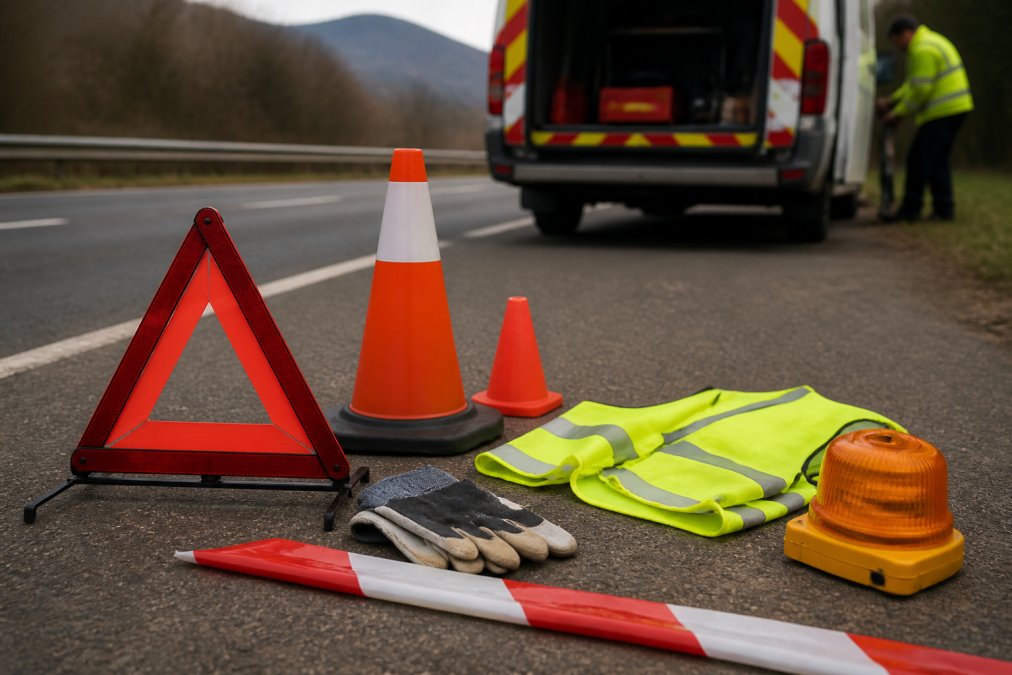
Modern breakdown kits include adhesive reflective strips designed to attach to your vehicle’s rear bumper or boot lid. Warning triangles with reflective collars use retro-reflective materials on all sides, ensuring visibility from approaching traffic in any direction. Placement matters: triangles should be positioned 45 metres behind your vehicle on a motorway, giving approaching drivers time to react.
Quality reflective tape degrades over time. Check your equipment annually, a faded reflective strip creates a false sense of security.
DGT 3.0 Compliant Emergency Beacons and Advanced Warning Systems
How GPS-Enabled Beacons Enhance Hazard Awareness
GPS-enabled emergency beacons alert nearby traffic visually and transmit your exact location to emergency services and traffic management systems in real time. Roadflash’s V16 Emergency Beacon Light DGT 3.0 transmits GPS data to the DGT cloud every 100 seconds, meaning emergency responders know exactly where you are before they leave their station.
In fog, heavy rain, or darkness, a driver might miss a warning triangle. A GPS beacon ensures that even if visual warnings fail, your location is known to the system. When you’re injured, disoriented, or unable to leave your vehicle, manual communication with emergency services becomes difficult. A GPS beacon removes that burden.
DGT 3.0 compliance is becoming the European standard. Investing in a DGT 3.0 compliant beacon future-proofs your safety equipment across borders.
LED Warning Lights and 360-Degree Visibility
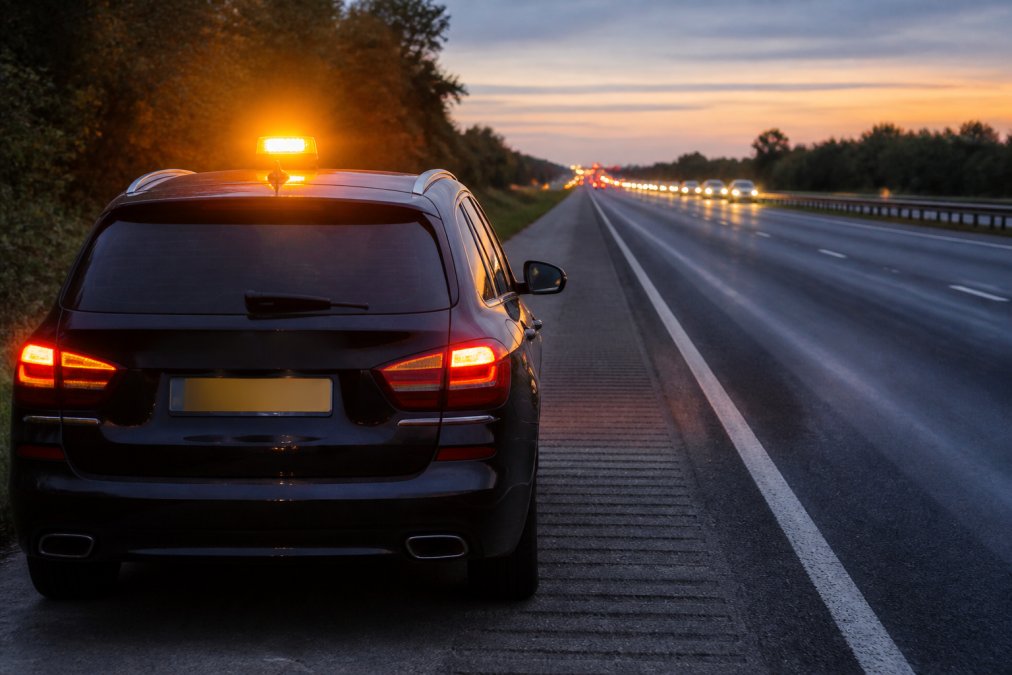
LED warning lights have replaced incandescent bulbs in modern roadside safety equipment: they’re brighter, last longer, and consume less power. A quality LED beacon is visible from up to 1 kilometre away in daylight, and further in darkness.
Multiple flashing modes, steady light, beacon, SOS, allow adaptation to different scenarios. 360-degree visibility means the light is bright from every angle. Magnetic mounting and a built-in hook provide flexible placement options.
Battery life is critical. A LED flare with 20 hours of battery life in flashing mode can run continuously for a full day. Some beacons can be powered from a vehicle’s 12V socket, eliminating battery concerns entirely.
Building Your Car Breakdown Safety Kit Checklist
Essential Components for Every Breakdown Kit
A functional breakdown kit contains items that address the most common roadside scenarios: visibility, communication, and basic repairs.
| Item | Purpose | Why It Matters |
|---|---|---|
| Warning Triangle | Alerts approaching traffic | Visible from 100+ metres away |
| Hi-Vis Vest (EN ISO 20471) | Personal visibility when outside vehicle | Makes you visible to other drivers |
| LED Torch with Batteries | Illumination in darkness | Hands-free lighting for roadside work |
| Jump Leads | Battery assistance | Allows jump-starting from another vehicle |
| Tyre Inflator (12V Digital) | Tyre pressure management | Addresses punctures or under-inflation |
| First Aid Kit (BS 8599-2) | Medical emergency response | Addresses minor injuries from breakdown |
| Reflective Tape or Strips | Additional vehicle marking | Increases visibility beyond triangle |
| Emergency Blanket | Warmth and visibility | Protects from exposure during extended waits |
The AA Breakdown & Emergency Kit provides most of these items at reasonable cost. The RAC Premium Breakdown Kit adds a window hammer and seat belt cutter, useful in rare but critical scenarios.
For drivers in Spain or planning European travel, add a DGT 3.0 compliant emergency beacon. Roadflash’s V16 model replaces the traditional triangle entirely, offering superior visibility and GPS functionality.
Check your kit contents annually. Batteries expire, reflective tape fades, and items get borrowed and not replaced. A breakdown kit is only effective if it’s actually in your vehicle and functional when you need it.
Additional Items for Extended Roadside Stops
Beyond the essentials, consider:
- Spare fuses and bulbs: Electrical failures often have simple fixes.
- Spare engine oil and coolant: Top-ups address common fluid losses.
- Spare fan belt and hose clamps: Temporary repairs can get you to a garage.
- Spare wheel: Many modern vehicles no longer include spares.
- Booster pack or portable power bank: For jump-starting without another vehicle.
- Waterproof gloves and wet wipes: Roadside work is messy.
- High-visibility warning beacon (GPS-enabled if possible): The single most valuable addition to a standard kit.
How to Choose the Right Equipment for Your Needs
Assessing Your Driving Patterns and Risk Factors
Your breakdown kit should match your exposure to risk. Motorway driving at speed means breakdowns happen in high-traffic environments where visibility is critical. Other vehicles approach at 60+ mph. High-visibility equipment isn’t optional, it’s essential.
Rural or low-traffic driving carries different risks. Visibility is less critical when traffic is sparse, but isolation becomes a concern. A GPS-enabled beacon ensures that even on quiet roads, emergency services know where you are.
Weather patterns affect equipment choices. In the UK, fog and rain are common. Retro-reflective materials perform better in these conditions than standard reflective paint. LED lights cut through fog and rain more effectively than incandescent bulbs.
Professional Drivers vs. Occasional Motorists
Professional drivers face regulatory compliance requirements that occasional motorists might not. Many insurance policies for commercial vehicles mandate specific breakdown kit contents. Some require DGT 3.0 compliance for cross-border operations.
For professional fleets, investing in premium equipment like Roadflash’s GPS-enabled beacons becomes economically rational. A single serious incident can result in injuries, fatalities, and massive liability costs.
Occasional motorists can work with standard kits like the AA or RAC options. However, if you’re planning European travel or frequent motorway use, upgrading to include a modern LED beacon and reflective strips is worthwhile.
Underestimating your risk exposure is a common mistake. Equip your vehicle for the worst case, not the expected case. A breakdown kit unused is money well spent; a breakdown kit absent when needed is a catastrophe.
The Psychological Impact of Visibility in Low-Light Conditions
Visibility affects psychology as much as safety. When you’re broken down on a motorway at night, the psychological experience of being unseen is profoundly stressful. Vehicles rush past, their drivers unaware of your presence. That stress impairs judgment and increases the likelihood of dangerous decisions.
Proper visibility equipment transforms this experience. When your vehicle is marked with warning triangles, your vest is bright, and your beacon is flashing, you shift from feeling invisible to feeling present. That shift in perception reduces panic and enables clearer thinking.
Drivers equipped with proper high-visibility gear make better decisions. They stay in their vehicles longer rather than standing in traffic. They wait for professional recovery rather than attempting dangerous repairs. Emergency responders report consistent patterns: drivers with proper equipment handle breakdowns more calmly and safely than those without.
Conclusion
High visibility roadside safety equipment is the difference between a managed breakdown and a dangerous emergency. Build a kit that addresses your actual driving patterns. For motorway commuters, that means warning triangles, EN ISO 20471 certified hi-vis vests, and modern LED lighting at minimum. For European travel, add a DGT 3.0 compliant beacon. Roadflash’s V16 Emergency Beacon Light combines GPS geolocation with 360-degree visibility, transforming your breakdown response from passive warning to active emergency coordination.
Check your kit annually. Replace faded reflective materials. Refresh batteries. Keep it in your vehicle, not at home. The cost of proper equipment is measured in pounds. The cost of being invisible when you need visibility is measured in far larger units.
Frequently Asked Questions
Q: Do I need a high-visibility vest in my car?
A: In the UK, carrying a high-visibility vest is strongly recommended by motoring organisations, though not legally mandatory. However, if you travel to Europe, many countries require at least one hi-vis vest per occupant. EN ISO 20471 certified vests provide the best protection, offering fluorescent material and retro-reflective tape for visibility in low-light conditions and at night. Keeping one in your vehicle ensures you're prepared for breakdowns and compliant with regulations across different regions.
Q: What should be in a car breakdown safety kit checklist?
A: A comprehensive car breakdown safety kit checklist should include: a warning triangle or emergency beacon, at least one high-visibility vest (EN ISO 20471 certified), a torch with spare batteries, jump leads, a tow rope, a first aid kit (BS 8599-2 certified), a footpump with tyre gauge, an emergency blanket, and a mobile phone charger. For extended roadside stops, add booster cables, a window hammer or seat belt cutter, and a warning beacon with GPS capability if you frequently travel on motorways or in Europe.
Q: How do DGT 3.0 compliant emergency beacons improve roadside safety?
A: DGT 3.0 compliant emergency beacons are mandatory in Spain from January 2026 and significantly enhance safety by transmitting your vehicle's exact GPS location to emergency services every 100 seconds. Unlike traditional warning triangles, these beacons emit a powerful flashing amber light visible up to 1 km in all directions, improving hazard awareness in poor weather and at night. The automatic location transmission means emergency services can find you quickly without requiring you to exit the vehicle, reducing exposure to high-speed traffic during a breakdown.
Q: What are the legal requirements for roadside safety equipment?
A: Legal requirements vary by region. In the UK, there is no legal requirement to carry specific equipment, though motoring organisations recommend warning triangles and hi-vis vests. In Europe, many countries mandate warning triangles, high-visibility vests (often multiple), and reflective markers. Spain requires DGT 3.0 compliant emergency beacons from January 2026. France requires two hi-vis vests and a warning triangle. Always check the regulations of countries you plan to visit and carry equipment that meets EN ISO 20471 standards for clothing and relevant safety compliance certifications.
Q: Why is visibility in low-light conditions so critical for roadside safety?
A: Low-light visibility is critical because drivers have reduced reaction times in poor visibility, especially at dawn, dusk, or night. High-visibility clothing with retro-reflective materials and LED warning beacons increase the likelihood that approaching drivers will spot your stationary vehicle in time to slow down or change lanes. Statistics show that reflective and fluorescent equipment can improve visibility by up to 500 metres at night compared to unlit vehicles. This extended warning distance is essential for preventing collisions on motorways where vehicles travel at high speed.
This article was written using GrandRanker