
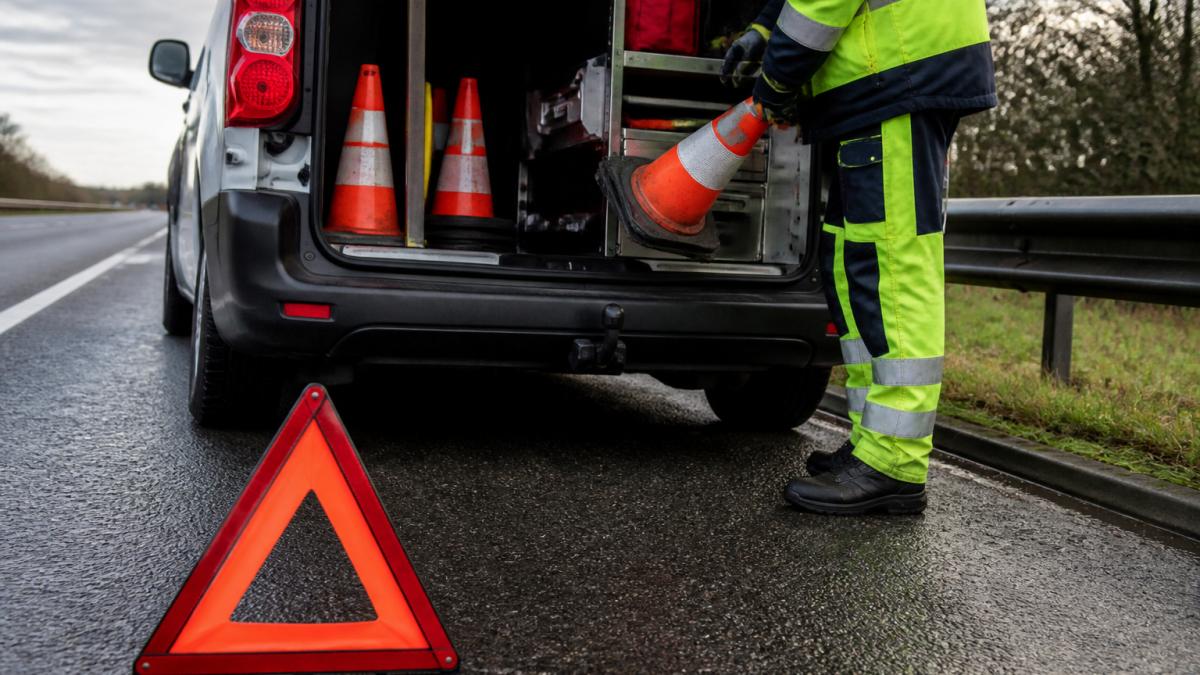
Vehicle Hazard Light Placement: Best Practices
Table of Contents
- Why Hazard Light Placement Matters for Road Safety
- When to Use Hazard Lights on the Road
- Moving to a Safe Location and Positioning Your Vehicle
- Where to Place a Warning Triangle for Maximum Visibility
- Hazard Lights and Emergency Beacons: Layered Warning Systems
- Hazard Light Placement in Low-Visibility Conditions
- Common Mistakes to Avoid When Using Hazard Lights
- Frequently Asked Questions
Last Updated: October 8, 2026
Why Hazard Light Placement Matters for Road Safety
Hazard light placement is one of the most overlooked safety decisions a driver makes during a breakdown. When your vehicle stops unexpectedly, those flashing lights are your first line of defence against rear-end collisions, giving following traffic crucial seconds to react.
But hazard lights alone aren’t always enough. Drivers behind you might not see them until it’s too late, especially in poor visibility or at night, which is where proper placement strategy makes the difference.
Combining hazard lights, vehicle positioning, and visibility aids creates a layered warning system.
Activate your hazard lights BEFORE you stop, not after. This gives following traffic immediate warning that something is wrong ahead.
When to Use Hazard Lights on the Road
Use hazard lights whenever your vehicle becomes a hazard to other road users, not just breakdowns:
- Vehicle breakdown or mechanical failure, your car has stopped and you cannot move it immediately
- Sudden emergency stop, you’ve had to stop suddenly due to an obstruction or hazard ahead
- Accident or collision, your vehicle is damaged and stationary
- Temporary obstruction, you’re stopped briefly to deal with debris, animals, or other road hazards
- Slow-moving traffic, some drivers use hazard lights when moving much slower than surrounding traffic, though this is controversial and not recommended
- Visibility emergencies, during extremely heavy fog, snow, or rain when your vehicle is stationary
The principle is simple: if your vehicle is stopped or moving much slower than traffic flow and creating a hazard, use your hazard lights. They tell other drivers “something is wrong here, be prepared to stop or change course.”
Do NOT use hazard lights while driving normally, even in bad weather. This confuses other drivers about whether you’re stopping or moving. Use dipped headlights and fog lights instead.
Moving to a Safe Location and Positioning Your Vehicle
The moment you realise you need to stop, your first priority is getting your vehicle away from moving traffic; hazard light placement and vehicle positioning work together.
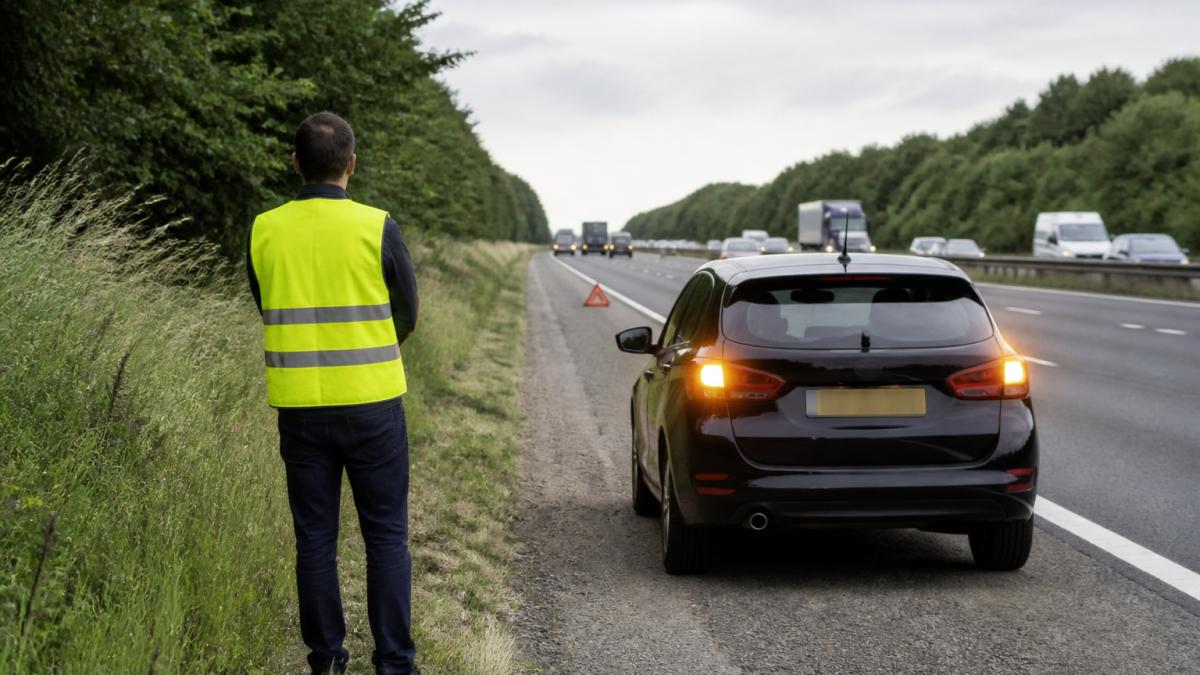
If you’re on a motorway or dual carriageway:
- Activate hazard lights immediately, before you pull over, not after
- Move to the hard shoulder, get completely off the live traffic lanes
- Position your vehicle straight, don’t angle it into traffic; park parallel to the road edge
- Turn off the engine, this reduces fire risk and prevents accidental movement
- Exit on the passenger side, away from moving traffic
- Stand behind your vehicle, on the verge or central reservation, never between your car and traffic
On a single carriageway or residential road, the principle is the same: get as far from traffic as possible. If you cannot reach a safe layby, position your vehicle as far to the side as you can manage.
Your hazard lights are now doing their job, but they’re only part of the picture. Drivers approaching from behind need time to see your vehicle and react.
The safest position is completely off the road on a hard shoulder or verge. If that’s impossible, position your vehicle as far from traffic as the road allows, with hazard lights activated and a warning triangle placed ahead.
Where to Place a Warning Triangle for Maximum Visibility
A warning triangle is your second layer of protection, giving approaching drivers visual warning at a distance where they can still react safely.
Correct placement depends on the road type and speed limit:
On motorways and dual carriageways (70 mph / 112 km/h):
- Place the triangle 45 metres behind your vehicle
- Position it in the centre of your lane or slightly to the left
- This gives drivers at motorway speeds enough time to see it and brake safely
On A-roads and main roads (50-60 mph / 80-96 km/h):
- Place the triangle 30 metres behind your vehicle
On residential roads and lower-speed routes (30 mph / 48 km/h):
- Place the triangle 10-15 metres behind your vehicle
The triangle should be visible from at least 100 metres away in daylight; at night or in poor visibility, this distance shrinks dramatically. That’s why hazard lights and triangles work together: the lights give immediate warning, and the triangle provides a precise visual marker.
Never place your triangle on the verge or grass; it needs to be on the road surface where approaching drivers will see it clearly. Place it quickly without standing in traffic, then return to a safe position off the road.
If you cannot place a triangle safely without stepping into traffic, skip it. Your hazard lights and vehicle position are more important than a triangle if placing it puts you at risk.
Hazard Lights and Emergency Beacons: Layered Warning Systems
Modern road safety relies on layered warnings. Hazard lights are essential but limited: in bright daylight they’re less noticeable, and in fog or heavy rain they may be obscured entirely.
That’s why professional drivers and fleet operators increasingly use emergency beacons alongside hazard lights. An emergency beacon is a high-intensity LED light that flashes at a frequency highly visible even in poor conditions, and some, like those offered by Roadflash, include GPS location technology.
The layered approach works like this:
- Hazard lights activate immediately and are standard on all vehicles
- Warning triangle provides a visual marker at distance
- Emergency beacon adds high-visibility flashing light with potential GPS location data
- Vehicle positioning keeps you and your vehicle away from moving traffic
Each layer serves a purpose, creating a comprehensive warning system that protects you and other road users.
For drivers who frequently use motorways, or commercial fleets on busy routes, a dedicated emergency beacon significantly reduces the risk of secondary collisions. Roadflash’s award-winning beacons combine high-visibility lighting with GPS geolocation.
Hazard Light Placement in Low-Visibility Conditions
Low visibility is when hazard light placement becomes genuinely critical, and it is also where the rules are most often misunderstood. The Highway Code is clear that hazard warning lights should only be used when your vehicle is stationary to warn other drivers of your presence, except on a motorway or unrestricted dual carriageway where you may briefly use them while driving to warn traffic behind you of a hazard ahead (Rule 116). In fog, heavy rain, snow, or darkness, that distinction matters more than ever.
In fog:
- The Highway Code (Rule 235) states you must use headlights when visibility is seriously reduced, generally when you cannot see more than 100 metres. This is approximately 328 feet.
- If your vehicle is stationary, dipped headlights combined with hazard lights improve visibility, but do not leave fog lights on when visibility improves; Rule 236 says you must switch them off to avoid dazzling other drivers.
- Increase your warning triangle distance to around 60 metres if you can place it safely; at 30 mph a typical stopping distance is already 23 metres, and in fog reaction times stretch further.
In heavy rain:
- Spray from lorries and coaches can temporarily obscure hazard lights, so position your triangle further back than the standard distance for the road type.
- Rule 237 advises that in heavy rain you should slow down and leave a bigger gap; if you are stationary, that same logic applies to how much warning you give others.
- Ensure your lights are clean and functioning; a partially obscured hazard light is worse than none because it may be mistaken for an indicator.
In snow:
- Clear snow from around your lights before stopping for an extended period; accumulated snow can mask a hazard light entirely.
- Position your warning triangle where it will not be buried by drifting snow or hidden by a snow bank.
- Use dipped headlights in addition to hazard lights if you are stationary and the battery allows.
At night:
- Hazard lights are more visible at night, but depth perception is harder for approaching drivers, so place your warning triangle further back than the standard distance.
- Rule 275 advises wearing reflective clothing if you have to stand on the road at night; a high-visibility vest or jacket dramatically increases how early you are seen.
- A torch or additional lighting can make you visible when you step out, but never stand between your vehicle and oncoming traffic.
A common pattern in roadside incidents is that drivers assume hazard lights alone are enough in poor weather. They are not. The Highway Code treats hazard lights as one warning tool among several, and in low visibility the combination of correct positioning, dipped headlights, a warning triangle placed at the right distance, and reflective clothing is what actually buys you time.
Do not use rear fog lights as a substitute for hazard lights when stationary, and do not leave fog lights on once visibility improves, Rule 236 requires you to switch them off to avoid dazzling others.
Common Mistakes to Avoid When Using Hazard Lights
Most drivers understand the basic principle of hazard lights, but mistakes in execution create real dangers, and some carry legal consequences.
Mistake 1: Activating hazard lights too late
Many drivers wait until their vehicle has already stopped before turning on hazard lights.
Mistake 2: Relying only on hazard lights
Hazard lights alone do not create a complete warning system.
Mistake 3: Positioning your vehicle in the traffic lane
Some drivers pull over but leave part of their vehicle in the active traffic lane.
Mistake 4: Placing the warning triangle too close
A triangle placed 10 metres behind your vehicle on a motorway gives drivers almost no time to react.
Mistake 5: Standing between your vehicle and traffic
This is one of the most dangerous positions on a motorway. Rule 275 of the Highway Code is explicit: keep well away from the carriageway and hard shoulder, and never attempt repairs on a motorway (The Highway Code – Breakdowns and incidents (275 to 287) – Guidance).
Mistake 6: Leaving hazard lights on for extended periods without checking the battery
If you are broken down and waiting for recovery, hazard lights will drain your battery.
Mistake 7: Using hazard lights while driving in bad weather
This confuses other drivers and, outside the specific motorway exception in Rule 116, is not permitted.
Mistake 8: Assuming hazard lights communicate direction
Hazard lights flash on all four corners simultaneously, so they cannot tell other drivers which way you intend to move.
Mistake 10: Not calling for help from a safe position
If you have a mobile phone, call for assistance once you are safely away from the carriageway.
The most common thread in these mistakes is treating hazard lights as a complete solution. They are one layer of a warning system that also includes vehicle position, warning devices, reflective clothing, and a safe place to wait for help.
Frequently Asked Questions
When should you use hazard lights in a car?
Use hazard lights whenever your vehicle is stationary or moving slowly on a road and poses a hazard to other traffic. This includes breakdowns, accidents, emergency stops, and when warning following traffic about a sudden hazard ahead. In heavy rain, fog, or snow, activate hazard lights if you’re moving significantly slower than surrounding traffic. Always use them during roadside emergencies to increase vehicle visibility and alert other road users to the danger.
How far behind a vehicle should a warning triangle be placed?
Place a warning triangle at least 45 metres behind your vehicle on motorways and dual carriageways, and at least 25 metres on single-carriageway roads. On motorways, position it further back if visibility is poor due to fog, rain, or darkness. The triangle must be clearly visible to approaching drivers so they have adequate time to slow down and change lanes. Always place it on the same side of the road as your vehicle, and ensure it’s not hidden by bends, hills, or other obstructions.
Are hazard lights enough to warn other drivers?
Hazard lights alone are not sufficient, especially on high-speed roads. While they alert drivers to a problem, they don’t provide early enough warning on motorways where vehicles travel at 70 mph or higher. Combine hazard lights with a warning triangle, reflective clothing, and modern emergency beacons with GPS and high-visibility lighting for comprehensive protection.
What should you do if your vehicle breaks down on a motorway?
If your vehicle breaks down on a motorway, switch on hazard lights immediately. Exit the vehicle safely and move to the hard shoulder if possible. Activate your warning triangle at the correct distance behind your vehicle (45 metres minimum). Wear a high-visibility vest and stand well away from traffic, preferably behind a barrier or on the verge. Call emergency services if needed. Use modern warning systems like GPS-enabled emergency beacons to assist responders.