
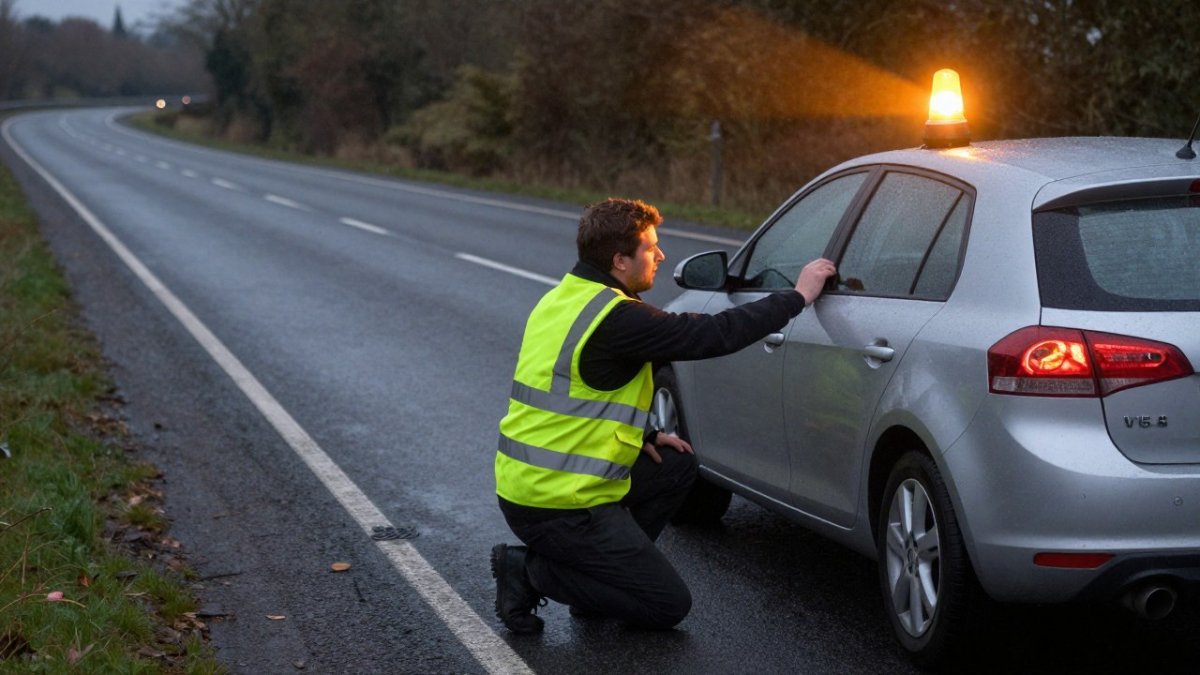
How to Choose the Best V16 Beacon for Private Cars
Last Updated: November 26, 2026
Quick Summary
The best V16 beacon for private cars is a connected, DGT-approved unit with GPS geolocation, not an older non-connected flashing light. Verify the approval reference matches the exact model, confirm 360-degree visibility and a magnetic base that grips a wet roof, and check battery standby, replacement route and connectivity costs before buying.
- Connected beacons transmit their position to traffic systems; non-connected beacons only flash.
- A beacon sold as V16 compatible is not the same as an approved connected device.
- Roof mounting and 360-degree coverage make a beacon visible from further back.
- Check standby period, whether the battery is user-replaceable, and low-power warnings.
- Confirm what the connectivity subscription covers and whether it renews separately.
Table of Contents
- What Private-Car Drivers Need to Know About V16 Beacons
- DGT-Approved V16 Beacon: How to Verify Compliance
- V16 Beacon with Geolocation: How Connectivity Works
- V16 Beacon Visibility and Light Range: What Actually Works
- V16 Beacon Battery Life and Ownership Costs
- Side-by-Side Comparison of Leading V16 Beacons
- What to Check Before You Add a Beacon to Your Basket
- Frequently Asked Questions
What Private-Car Drivers Need to Know About V16 Beacons
A V16 beacon is a portable, battery-powered emergency warning light that replaces the traditional warning triangle on the roof of a broken-down vehicle. For private-car drivers, choosing the best V16 beacon for private cars now means understanding one crucial distinction: connected devices are the current standard, while older non-connected units no longer satisfy the rules that apply to breakdown warning equipment.
At Roadflash, we build DGT 3.0 compliant emergency beacons with GPS and geolocation, and the difference between device types is often overlooked by buyers. Below, we break down what actually matters: approval, connectivity, visibility, battery life and cost.
Connected vs Non-Connected: The Legal Distinction
Connected beacons transmit their position to traffic systems; non-connected beacons only flash. That single difference decides whether a device meets current requirements or belongs to the older generation of warning equipment.
If you already own a non-connected V16 unit, treat it as a light source rather than a compliant warning device. Check the Spanish traffic authority DGT guidance on V16 connected beacons before relying on any beacon during a breakdown, and confirm which generation your device belongs to.
The practical rule for private cars: buy connected, and buy approved. Everything else is a compromise.
DGT-Approved V16 Beacon: How to Verify Compliance
A DGT-approved V16 beacon carries a certification that ties the specific model to the connected-beacon standard, not just to the older flashing-light specification. Verification comes down to paperwork and labelling.
Here is how to check any beacon before buying:
- Find the approval reference on the device or its packaging
- Match the exact model number against the approval listing
- Confirm the device is described as connected, with geolocation
- Check the manufacturer publishes GPS and connectivity specifications
- Keep the receipt and approval documentation with the vehicle
If you want the full process laid out, our guide on how to verify DGT 3.0 compliance walks through each check step by step. Drivers who already own a beacon can use our article on checking whether your V16 beacon is DGT approved to confirm what they have.
Watch out: a beacon sold as “V16 compatible” is not the same as an approved connected device, and that gap is exactly where buyers get caught out.
V16 Beacon with Geolocation: How Connectivity Works
A V16 beacon with geolocation pairs a flashing light with a positioning module that reports where the vehicle has stopped. The light warns nearby traffic; the location data warns the systems behind the traffic.
Inside the unit, a GPS receiver fixes the vehicle’s position and a mobile data connection carries it onward. Coverage depends on the mobile network, so underground car parks and remote stretches can delay a signal.
For a deeper look at how the radio and power side works, our technical guide to V16 beacon connectivity and power covers the detail this section only introduces.
V16 Beacon Visibility and Light Range: What Actually Works
Visibility claims deserve scrutiny. A beacon’s real-world performance depends on light output, flash pattern and how high it sits above the road.
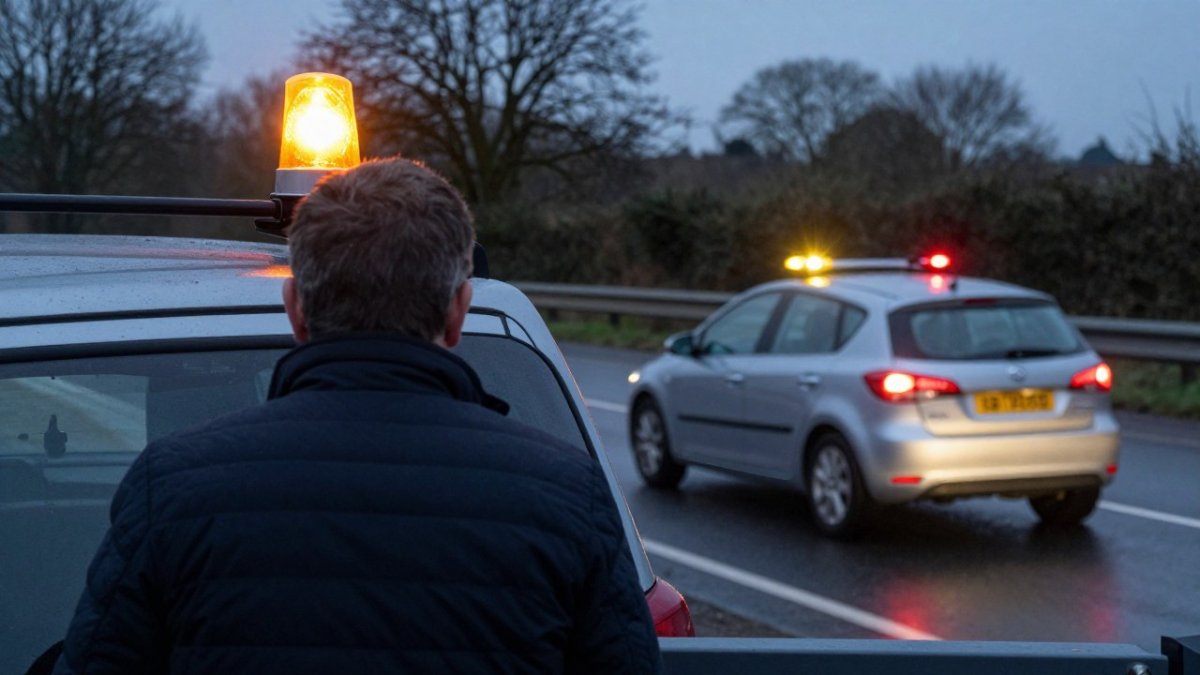
Roof mounting is an important factor. A beacon on the roof can be seen from further back than a triangle sitting at bumper height. 360-degree light coverage also matters, because traffic approaches from more than one direction on a slip road or bend.
A clean, high-mounted flash is more visible than a light buried at road level. Look for 360-degree visibility, a weather-resistant housing and a flash pattern that stays distinct in low-light conditions and heavy rain.
V16 Beacon Battery Life and Ownership Costs
Battery life shapes the true cost of ownership more than the purchase price does. A beacon spends most of its life dormant, so standby drain and cell quality decide whether it works on the night you need it. Check three things: the stated standby period, whether the battery is user-replaceable, and how the device signals low power. A beacon that warns you before it dies is worth more than one with a longer headline figure.
A useful way to compare total cost is to consider the purchase price, any battery replacement, any connectivity period included, and the warranty cover over the expected service life. Connectivity terms are worth checking carefully, as they may renew separately from the initial term.
On running costs, connectivity may involve a data plan or subscription; confirm what is included before buying. Ask whether the subscription has an expiry date, where geolocation coverage actually works, what data is transmitted, and what happens when coverage is unavailable. A beacon that still flashes when the network drops offers a fallback warning if coverage is lost.
Warranty deserves the same scrutiny. Check the term, who honours it, and whether it covers the battery and the connectivity module or only the light. Our guide to battery life on DGT 3.0 beacons explains what drivers should expect over several years of ownership.
Watch out: a beacon with a long headline standby figure but a sealed, non-replaceable cell can become a disposable device once the battery fades, so confirm the replacement route before you buy.
Side-by-Side Comparison of Leading V16 Beacons
Comparing beacons by brand name alone tells you very little. Compare them by approval, connectivity, visibility and battery instead, and add the practical questions a private-car owner actually faces: will it grip a wet or glass roof, can it be reached and placed without leaving the car, and where will it live when not in use.
| Beacon | Connectivity | Visibility | Battery | Best for |
|---|---|---|---|---|
| Roadflash DGT 3.0 beacon | GPS and geolocation | High-visibility roof-mounted light | Rechargeable, user-checkable | Drivers wanting an approved connected beacon |
| HERO DRIVER LED | Geolocation | 360-degree coverage | Not specified in listings | All-round visibility |
| Help Flash IoT | IoT connected | Not specified in listings | Not specified in listings | Connected option to compare |
| OSRAM LEDguardian ROAD FLARE Signal V16 IoT | IoT connected | Not specified in listings | Not specified in listings | Buyers loyal to a lighting brand |
The Roadflash DGT 3.0 compliant beacon with GPS combines approval, geolocation and high-visibility lighting. Its price depends on quantity and delivery, so check the Roadflash website for current prices or a quote.
If you want a repeatable method, our guide on comparing V16 beacons by features gives you a scoring approach.
Practical fit matters as much as the spec sheet. Check the roof material and whether the magnetic base grips it when wet, confirm the beacon can be activated and placed without stepping into traffic, and think about vehicle height and where the unit will be stored so it is reachable in an emergency. A common pattern is a driver buying on price, then discovering the base will not hold on a glass or panoramic roof, or that the unit is buried in the boot under luggage.
Failure scenarios are worth planning for. If the beacon will not attach, the battery is depleted, or the device cannot connect, keep hazard lights on and treat the beacon as one layer of warning rather than the only one. A beacon that flashes without a network signal is still useful; one that depends entirely on connectivity is not.
Watch out: a device sold as “V16 compatible” is not the same as an approved connected unit, so match the exact model against the approval listing before you compare anything else.
What to Check Before You Add a Beacon to Your Basket
Run through this checklist before checkout:
- Approval reference present and matched to the exact model
- Connected, not just flashing, with geolocation stated
- Roof mounting with a magnetic base that grips a wet roof
- 360-degree visibility and a weather-resistant housing
- Battery type, standby period and replacement route
- Connectivity costs and what the subscription covers
- Warranty terms and who honours them
- Torch function for use away from the vehicle
A common mistake is buying on price alone and discovering the device is not a connected unit. Another is skipping the subscription question and meeting it later. Buy once, buy approved.
Breakdowns are rare, which is exactly why the equipment has to work first time. Roadflash builds multi-award-winning early warning systems for stationary vehicles, including DGT 3.0 compliant beacons with GPS and geolocation, high-visibility lighting and a magnetic roof mount designed for quick activation at the roadside. Get started with Roadflash and put an approved connected beacon in your boot before your next motorway journey.
Frequently Asked Questions
Is a V16 beacon mandatory in Spain for private cars?
Spain’s rules on warning equipment for private cars should be checked against the official DGT guidance, which sets out the current requirements for connected beacons. A non-connected beacon or a traditional triangle will not meet the requirement. If you drive a private car in Spain, check the official DGT guidance to confirm the approval status of your device before you rely on it.
How can you check whether a V16 beacon is approved?
Look for the approval marking on the device and packaging, and confirm the approval status against official DGT guidance. A beacon that only claims ‘V16 compatible’ without DGT 3.0 certification may not meet current requirements. Before buying, ask the retailer for the approval reference and test that the device connects and reports its location after purchase.
Does a V16 beacon need geolocation to be legal?
Current requirements for connected V16 beacons should be confirmed against official DGT guidance. Connected beacons with geolocation are designed to share your position with approaching traffic and emergency services. Check the product specification for GPS and IoT connectivity, not just a flashing light.
How long does V16 beacon battery life last and what does it cost to run?
Battery life varies by model and use, so check the stated standby and active-use figures rather than assuming. Most connected beacons use replaceable or rechargeable batteries, and replacement cost depends on the model. Factor in any connectivity subscription or data plan, which some devices require to keep the geolocation link active. Check the Roadflash website for current prices or a quote before you buy.
