
V16 Beacon Connectivity and Power: A Technical Guide
Table of Contents
- What V16 Beacons Do: Connectivity and Power Explained
- V16 Beacon GPS and Geolocation: How Location Reporting Works
- V16 Beacon Mobile Network Connectivity: Data Transmission and Coverage
- V16 Beacon Battery Life: Power Consumption and Operating Duration
- V16 Beacon Coverage Requirements: Network Availability and Signal Strength
- Real-World Performance: Connectivity and Power in Practice
- Troubleshooting Connectivity and Power Issues
- Frequently Asked Questions
Last Updated: October 18, 2026
What V16 Beacons Do: Connectivity and Power Explained
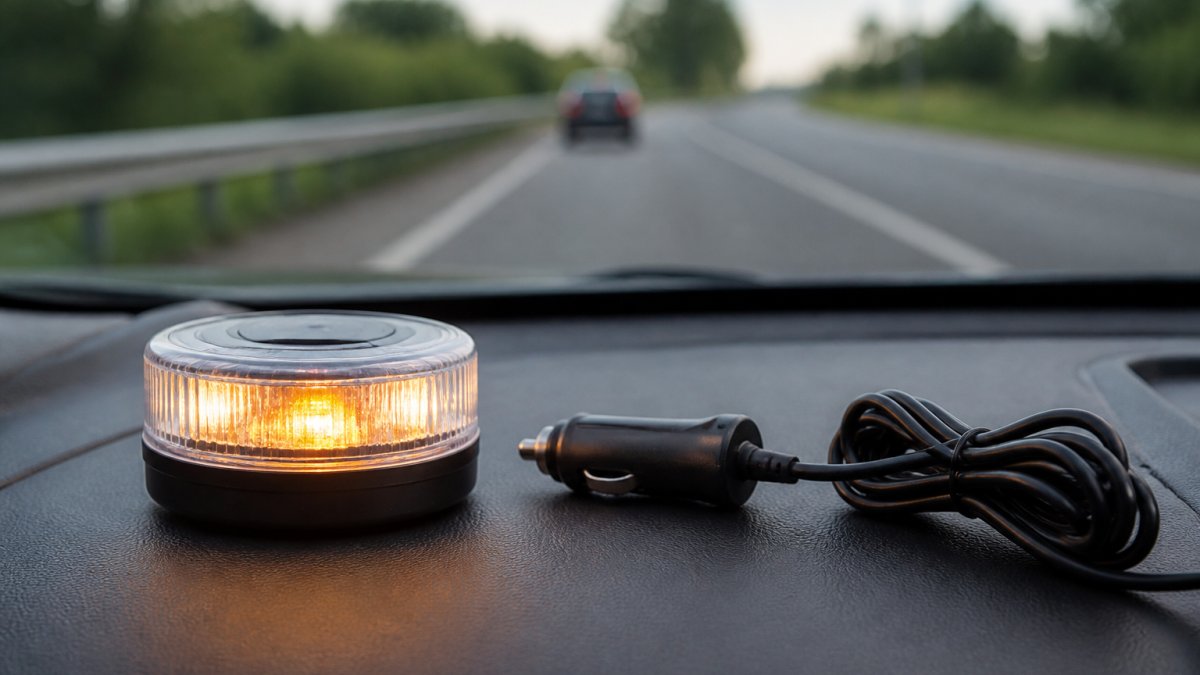
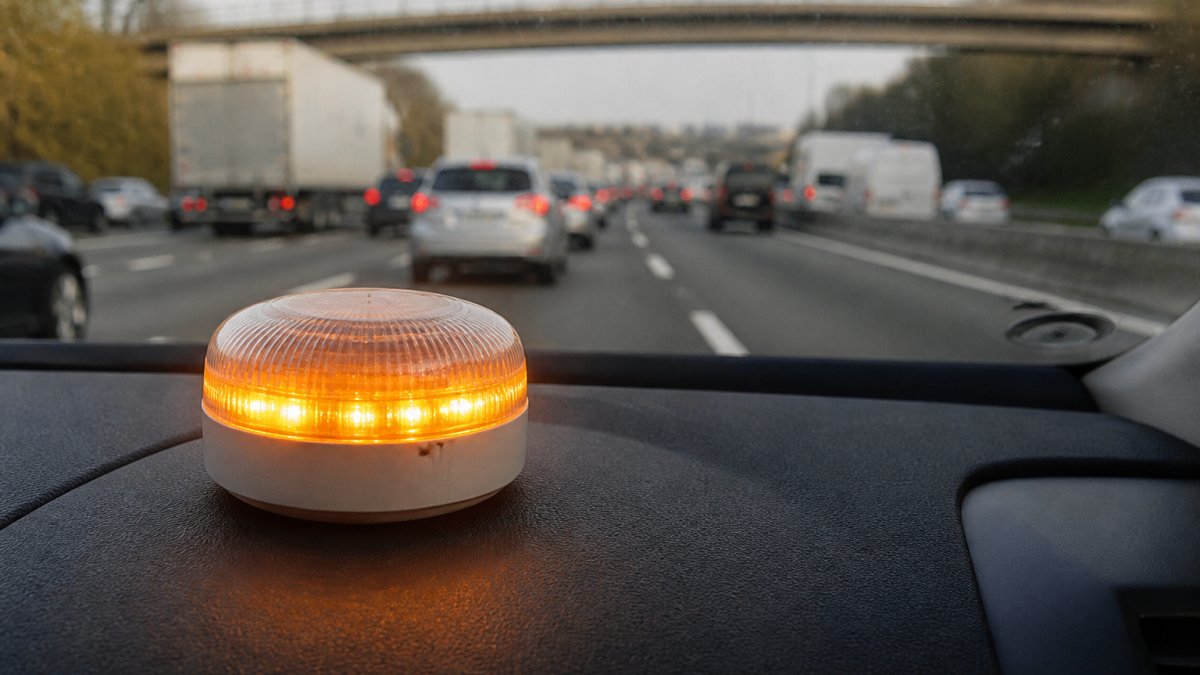
A V16 beacon is a connected emergency warning device combining GPS geolocation, mobile network connectivity, and high-visibility flashing lights to alert road users when a vehicle breaks down on a motorway or highway, with V16 beacon connectivity power optimized for extended operation. Unlike reflective triangles or hazard lights, it transmits your exact location to emergency services and traffic platforms whilst broadcasting a 360-degree amber warning signal.
V16 beacon connectivity and power consumption centres on two simultaneous operations: location reporting and visual hazard warning. The device must stay ready to activate instantly, keep a GPS fix updated, and sustain a bright flashing light for extended periods, all from a single internal battery with no external power source.
This dual demand is the central engineering challenge: the device must run autonomously for hours, potentially in poor signal coverage.
V16 beacons balance these competing demands, prioritising visibility and connectivity without draining the battery excessively during the critical first hours of an incident.
The most common mistake is assuming all V16 beacons perform identically. Power management strategies vary significantly between manufacturers. Some prioritise brightness over battery life. Others throttle the light to extend operating duration. Your choice depends on typical breakdown scenarios you face.
V16 Beacon GPS and Geolocation: How Location Reporting Works
GPS functionality operates continuously once activated, updating location data at regular intervals so responders can locate a stranded vehicle precisely. The internal chip acquires a satellite fix within 30-60 seconds and maintains it whilst powered with a clear view of the sky.
Location accuracy typically falls between 5-10 metres in open conditions. Urban canyons, dense tree cover, and metal structures can degrade accuracy to 15-30 metres or more. Tunnels and underground car parks block GPS entirely, forcing the system to rely on mobile network triangulation as a fallback, a significantly less precise method.
The beacon transmits GPS coordinates through its built-in SIM card over the mobile network, automatically at set intervals (commonly every 30-60 seconds) or manually via the activation button. Each transmission consumes battery power and requires an active mobile signal.
The geolocation data flows to traffic management platforms and emergency service systems. In Spain, V16 beacons certified to DGT 3.0 standards transmit directly to the Spanish traffic authority’s network, enabling rapid dispatch of roadside assistance and traffic control measures.
Real-world performance depends heavily on network availability. When the mobile network drops on rural or remote stretches, the beacon stores location data locally and retransmits once signal returns, preventing data loss but creating a gap in real-time updates.
GPS-only operation without mobile connectivity is useless for emergency response. A device with excellent GPS accuracy but poor mobile signal will fail to transmit your location when you need it most. Always verify coverage maps for your regular travel routes before relying on a V16 beacon in remote areas.
V16 Beacon Mobile Network Connectivity: Data Transmission and Coverage
Mobile network connectivity is the backbone of V16 beacon functionality. The device contains a non-removable SIM card pre-provisioned with a traffic and emergency services profile, ensuring transmissions route to the correct platforms.
The SIM operates on cellular protocols (typically 4G LTE, with newer devices supporting 5G). The beacon maintains a persistent connection when activated, and network handoffs between cell towers add further draw on motorways.
Data transmission occurs in small packets, a typical location update with GPS coordinates, device status, and timestamp consumes under 1 kilobyte. However, the power cost of maintaining the radio link often exceeds the cost of the data itself.
Coverage availability determines whether location data reaches emergency services at all. Most UK motorways and major highways have reliable 4G coverage; secondary roads and rural areas experience gaps where the beacon cannot transmit. Once signal returns, buffered data transmits automatically.
Mobile connectivity also enables two-way communication in newer models: emergency services can acknowledge receipt of the location signal, and some platforms can query the beacon’s status.
IoT protocols (like NB-IoT or LTE-M) offer lower-power alternatives optimised for infrequent transmission and extended battery life, but coverage remains patchy outside major urban areas. Roadflash selected standard LTE to ensure reliable coverage across the UK and European motorway network.
V16 Beacon Battery Life: Power Consumption and Operating Duration
Battery autonomy depends on three variables: internal battery capacity, the power draw of active operation, and the duty cycle (how often the device transmits versus idles).
A typical V16 beacon contains a lithium-ion or lithium-polymer cell rated 2,000-5,000 milliampere-hours (mAh), powering three simultaneous loads: the GPS receiver, the mobile radio, and the flashing LED light.
The LED light consumes the most power. A bright amber LED flashing at full intensity draws 500-800 milliamps, draining a 3,000 mAh battery in roughly 4-6 hours. Most V16 beacons employ duty-cycle reduction: the light flashes for 200-500 milliseconds, then remains dark for 1-2 seconds. This reduces average power draw to 80-150 milliamps, extending battery life to 20-30 hours.
GPS consumes 80-150 milliamps whilst acquiring and maintaining a fix. Mobile radio transmission consumes 200-400 milliamps, but only for brief windows (typically 100-500 milliseconds); between transmissions the radio idles at 10-30 milliamps.
Real-world battery life emerges from combining these loads. A typical scenario:
- LED flashing (duty-cycled): 120 mA average
- GPS receiver active: 100 mA average
- Mobile radio (averaging transmission and idle periods): 40 mA average
- Total draw: approximately 260 mA
A 3,000 mAh battery at 260 mA sustains roughly 11-12 hours. Some beacons employ 4,000-4,500 mAh cells, extending this to 15-18 hours.
Real-world scenarios vary significantly:
- Active transmission mode (every 30 seconds): 300-350 mA average, yielding 8-12 hours
- Reduced-frequency transmission (every 2-3 minutes): 200-220 mA average, yielding 15-20 hours
- GPS-only mode (no mobile transmission): 200-250 mA average, yielding 12-15 hours
- Standby mode (light off, GPS/radio minimal): 5-10 mA average, yielding months of operation
Most V16 beacons enter standby mode when not actively deployed. The internal battery can hold a charge for 12-18 months in standby, allowing the device to activate instantly when needed.
Battery life is not a single number. It depends on your specific usage pattern. A beacon transmitting location every 30 seconds will exhaust its battery faster than one transmitting every 2 minutes. Choose a transmission frequency that matches your expected breakdown duration.
V16 Beacon Coverage Requirements: Network Availability and Signal Strength
Network coverage determines whether a V16 beacon functions at all: the device requires both GPS satellite visibility and mobile network signal.
GPS coverage is near-universal in open-sky environments, and motorways provide excellent satellite visibility. Urban areas, dense forests, and tunnels create blackout zones, though most breakdowns occur where GPS coverage is adequate.
Mobile network coverage is more variable. The UK has comprehensive 4G across motorways and major highways, but gaps persist in rural areas, particularly Scotland, Wales, and remote Northern England. Operator maps show broad coverage, but real-world experience often reveals dead zones and marginal signal.
Signal strength is measured in dBm. A signal of -85 dBm or stronger is good; weaker than -100 dBm is marginal and may cause transmission failures; weaker than -110 dBm typically means complete loss of connectivity.
The beacon’s internal antenna is omnidirectional but not uniformly sensitive. Vehicle body panels and metal structures attenuate signal, a beacon mounted inside a vehicle experiences 5-10 dB signal loss versus the same location outdoors, so mounting position significantly affects performance.
Connectivity during high-speed travel depends on network handoff performance. As a vehicle travels a motorway, the connection transitions between cell towers; poor handoffs cause brief signal loss and potential transmission failures.
Coverage requirements also include redundancy. The beacon should ideally maintain connectivity with multiple network operators simultaneously, falling back to alternative networks if the primary operator’s signal drops. This redundancy significantly improves reliability in borderline coverage areas.
Drivers who frequently travel the same motorway routes should verify coverage on that specific route before purchasing a V16 beacon. Request coverage maps from your chosen beacon manufacturer and cross-reference with your mobile operator’s coverage data. Marginal coverage areas may not support reliable operation.
Real-World Performance: Connectivity and Power in Practice
Laboratory specifications rarely reflect real-world performance. V16 beacons operate in winter cold, summer heat, high humidity, coastal salt spray, and electromagnetic interference.
Cold temperatures significantly impact battery performance. A lithium-ion cell at 0°C delivers roughly 80% of its rated capacity. At -10°C, capacity drops to 60%.
Heat degrades battery longevity over time. Beacons stored in hot vehicles experience accelerated aging. A beacon left in a car during summer heat (interior temperature 50-60°C) ages roughly twice as fast as one stored at room temperature.
Humidity and salt spray corrode electrical contacts and internal components, so beacons used in coastal regions or areas with winter road salt degrade faster.
Electromagnetic interference from nearby transmitters, radar speed cameras, and high-power radio equipment can cause temporary signal disruption or increased power consumption.
Real-world battery life typically falls 10-20% below laboratory specifications, a beacon rated for 15 hours may deliver 12-13. Causes include suboptimal antenna positioning, network congestion driving retries, temperature variations, and age-related battery loss.
Connectivity reliability is generally good on major motorways, with location transmission success rates typically exceeding 95% where coverage is adequate. But this assumes the beacon remains powered, a dead battery guarantees transmission failure regardless of network availability.
The most reliable V16 beacons prioritise V16 beacon connectivity power efficiency by balancing battery longevity over transmission frequency. A device transmitting every 3-5 minutes outlasts one transmitting every 30 seconds by a factor of 3-5.
Troubleshooting Connectivity and Power Issues
When a V16 beacon fails to transmit location data or exhibits poor battery performance, systematic diagnosis identifies the root cause.
Connectivity troubleshooting:
Start by verifying GPS acquisition. Most V16 beacons provide visual or audible feedback when GPS lock is achieved.
Next, verify mobile network signal. Check your mobile operator’s coverage map for your location.
Confirm the SIM card is active. Contact the beacon manufacturer to verify the SIM’s account status and data allowance.
Restart the beacon. Power off completely, wait 10 seconds, then power on.
Power troubleshooting:
Verify battery charge level. Most V16 beacons display charge status via LED colour or digital display. Charge the device fully before expecting extended operation.
Check for power-draining settings. Some beacons offer high-frequency transmission modes or continuous GPS tracking.
Inspect the charging port and cable for corrosion or damage. Corroded contacts prevent proper charging. Clean gently with a dry cloth.
Monitor ambient temperature. Cold conditions reduce battery performance temporarily. Allow the beacon to warm to room temperature and reassess battery performance.
Data transmission verification:
After activating a beacon, verify that location data reaches the emergency platform. Some beacons provide real-time transmission status through a mobile app.
For beacons without app integration, contact the platform operator directly. Provide your beacon’s device ID and activation time.
Most connectivity and power issues resolve through these checks; persistent problems warrant manufacturer support or device replacement.
V16 beacon connectivity and power consumption represent a careful engineering balance. Reliable location transmission demands continuous GPS and mobile radio operation.
Frequently Asked Questions
How does a V16 beacon send its location if I don’t have a mobile phone?
A V16 beacon has a built-in non-removable SIM card and internal GPS chip. When activated, it automatically detects your location using GPS and transmits that data through the mobile network without requiring a phone or app. The beacon operates independently, you simply activate it and the device handles location reporting to emergency services or traffic platforms on its own.
How long does a V16 beacon battery last in active use?
V16 beacon battery life depends on operating mode. In active transmission mode, beacons typically deliver several hours of continuous operation. In standby mode with periodic location updates, the internal battery can maintain connectivity for up to 18 months. Power consumption increases when GPS is actively acquiring signals or when the beacon transmits frequently, so actual duration varies based on network availability and transmission frequency.
Will a V16 beacon work if there’s no mobile signal where I break down?
V16 beacons require mobile network coverage to transmit location data. If you break down in an area with no cellular signal, the beacon cannot send your location to emergency services. However, many beacons are designed to store location data and attempt transmission when coverage returns. Always verify network coverage along routes you frequently travel, and consider the beacon as one layer of safety alongside reflective triangles, hazard lights, and visibility measures.
Does activating GPS drain the V16 beacon battery faster?
Yes, GPS acquisition consumes more power than standby mode. When the beacon first activates, it must lock onto satellites, which draws significant current. Once positioned, power consumption decreases during periodic updates. Mobile data transmission also consumes power. Battery life varies based on how frequently the beacon transmits updates and whether GPS remains active continuously or only during initial activation.