
Battery Life of DGT 3.0 Beacons: What Drivers Need to Know
Table of Contents
- What Is a V16 Emergency Beacon and Why Battery Life Matters
- How Long Does a DGT 3.0 Beacon Battery Last in Active Use
- Shelf Life vs Active Battery Life: What Most Guides Get Wrong
- Types of Batteries Used in DGT 3.0 Beacons: Lithium vs Alkaline
- DGT 3.0 Connectivity Requirements and How They Affect Power Use
- V-16 Emergency Light Maintenance: Keeping Your Beacon Ready
- Battery Degradation in Extreme Temperatures and Real-World Performance
- How to Check If Your Beacon Is Approved and When to Replace It
- Frequently Asked Questions
Last Updated: September 15, 2026
What Is a V16 Emergency Beacon and Why Battery Life Matters
A V16 emergency beacon is a portable, homologated warning light that replaces the traditional reflective triangle for roadside breakdowns, and its DGT 3.0 beacon battery must transmit its location to traffic authorities through the DGT 3.0 platform. Battery life matters because the device has to work on the one occasion you actually need it, potentially years after purchase.
This guide from Roadflash covers what the battery life of DGT 3.0 beacons actually looks like in practice, why the figure on the box rarely matches real-world use, and how to keep your unit ready for inspection and emergencies.
The short answer: most approved V16 IoT beacons deliver around 2.5 hours of continuous emergency mode runtime, while standby and shelf life stretch into years. Confusing those two numbers is the single most common mistake drivers make.
How Long Does a DGT 3.0 Beacon Battery Last in Active Use
Active use means the beacon is flashing and transmitting. In emergency mode, most DGT 3.0 certified beacons run for approximately 2.5 hours of continuous operation, which comfortably exceeds the minimum period a driver is likely to remain stationary on a hard shoulder (dgt.es).
Some models advertise longer runtimes, which suits drivers who want a wider safety margin or who travel long distances between services.
The figure that matters for regulatory compliance is much shorter: a beacon must maintain its connection to the DGT 3.0 platform for at least the first 30 minutes after activation. Every approved unit clears that bar with room to spare.
Emergency Mode vs Standby Mode: The Real Difference
Emergency mode draws heavily on the power cell: the LED array flashes at high intensity while the integrated SIM maintains a live data connection to the DGT 3.0 platform.
Standby mode is the resting state. The beacon is off, the radio is dormant, and current draw drops to a trickle so the battery holds its charge between journeys. A device left in standby for months should still activate on demand, provided the cell has not degraded.
Shelf Life vs Active Battery Life: What Most Guides Get Wrong
Shelf life and active battery life measure two different things, and conflating them leads drivers to replace perfectly good beacons or, worse, trust a dead one.
Active battery life is how long the beacon runs once switched on. Shelf life is how long the stored cell retains enough charge to deliver that runtime after sitting unused in a boot or glovebox. A beacon can have a five-year shelf life and still only manage 2.5 hours of emergency illumination.
The figure that causes the most confusion is the operational guarantee. Most approved V16 IoT beacons carry an 18-month operational guarantee, and that number is not a shelf-life claim (dgt.es). It is a manufacturer’s assurance that the sealed cell will still deliver the required minimum runtime and connectivity window after 18 months of typical in-car storage. It is calculated from accelerated ageing tests that model self-discharge, parasitic drain from the dormant SIM module, and average seasonal temperature cycling. It is not a promise that the battery will be at full capacity on day 547.
Three mechanisms erode a stored cell:
- Self-discharge. Every cell loses charge slowly even when disconnected. Alkaline cells typically self-discharge at a faster rate than lithium cells, which is why sealed lithium packs hold their operational guarantee for longer.
- Parasitic drain. A dormant beacon is never truly off. The SIM module and connectivity circuitry draw a small standby current to preserve network registration, and that trickle adds up over months.
- Temperature-driven capacity loss. Heat accelerates the chemical reactions inside the cell and permanently reduces capacity; this is the single largest variable in real-world shelf life and the one most guides ignore.
Judging readiness by shelf life alone is the mistake that strands drivers. A beacon can be well within its storage window and still fail on the hard shoulder if the cell has degraded through heat exposure or a slow parasitic drain. Test the unit, do not assume.
The practical takeaway: treat the 18-month operational guarantee as the point at which you should verify performance, not the point at which the device is guaranteed to work. A beacon that passes a full emergency mode test at 17 months is likely fine; one that has sat on a sunny dashboard for two summers may fail well before the guarantee expires.
Types of Batteries Used in DGT 3.0 Beacons: Lithium vs Alkaline
Two power source families dominate the market: replaceable alkaline cells and sealed lithium packs, and the choice affects maintenance more than it affects performance.
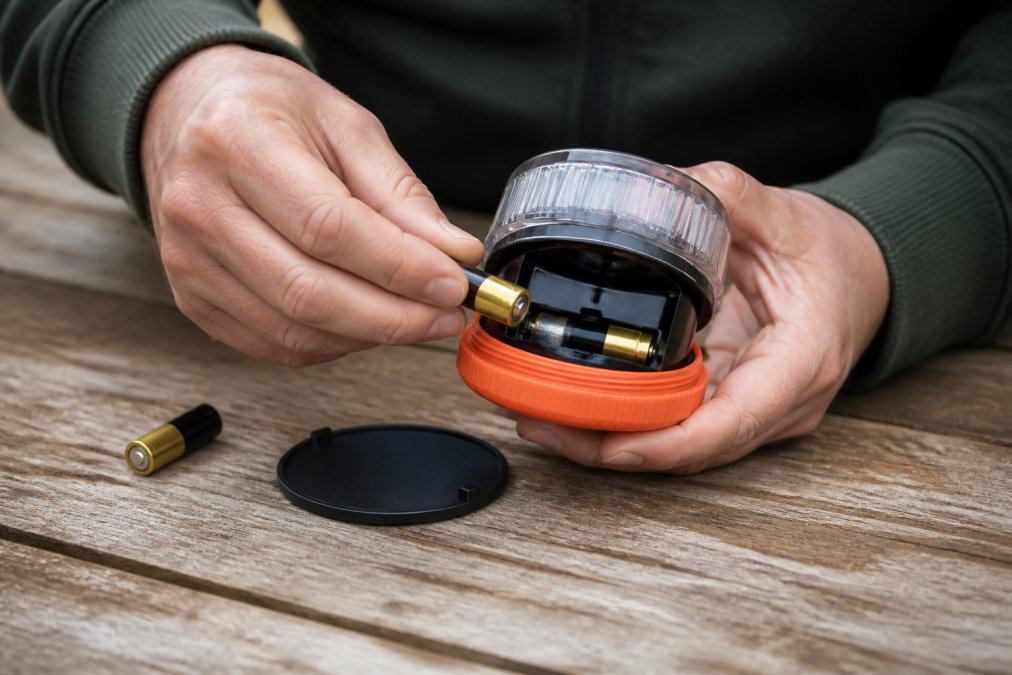
Alkaline models typically use a 9V block (6LR61) or four AA cells. The advantage is obvious: replacements are cheap and available at any supermarket or petrol station.
Lithium models seal the cell inside the housing. The Roadflash IoT Beacon uses a non-replaceable lithium battery designed for a multi-year operational lifespan, which removes the need for periodic battery swaps but means the whole device is replaced once the cell expires.
| Power Source | Typical Runtime | Replacement | Best For |
|---|---|---|---|
| 9V alkaline (6LR61) | ~2.5 hours | User-replaceable | Drivers who want easy maintenance |
| 4x AA alkaline | ~2.5 hours | User-replaceable | Budget-conscious owners |
| Sealed lithium pack | Multi-year lifespan | Device replacement | Maintenance-free compliance |
Store spare alkaline cells in the car, not the house. A beacon that dies mid-breakdown is useless if the replacements are in a kitchen drawer 40 miles away, and alkaline cells cope with boot temperatures better than most drivers expect.
DGT 3.0 Connectivity Requirements and How They Affect Power Use
DGT 3.0 connectivity requirements are the hidden drain on any beacon battery. The device must hold a live connection to the platform through its integrated SIM, and that radio link consumes power continuously while the beacon is active.
The DGT 3.0 platform documentation sets the baseline: an approved beacon must transmit its real-time location for a minimum period after activation. In practice, the cellular module is the second-largest consumer after the LED array, which is why manufacturers tune transmission intervals to balance compliance against runtime.
This is also why a beacon with a weak signal struggles. In poor coverage, the SIM works harder to hold the connection, and the battery drains faster than the rated figure suggests. If you regularly park in underground car parks or rural dead zones, factor that into how often you check the unit.
V-16 Emergency Light Maintenance: Keeping Your Beacon Ready
V-16 emergency light maintenance comes down to three habits: check the charge indicator monthly, test the emergency mode quarterly, and replace or retire the unit before the cell reaches the end of its useful life.

A simple routine keeps most units compliant:
Store spare alkaline cells in the car, not the house. A beacon that dies mid-breakdown is useless if the replacements are in a kitchen drawer 40 miles away, and alkaline cells cope with boot temperatures better than most drivers expect.
The beacons that fail are almost never the ones that were used too much. They are the ones that sat untouched for two years and were never tested. Monthly checks take under a minute and are the cheapest insurance you can buy.
Battery Degradation in Extreme Temperatures and Real-World Performance
A beacon stored on a sunny dashboard for two summers can lose a meaningful share of its capacity even if it has never been switched on. Keep the unit in the glovebox or a shaded compartment, never on display in direct sun.
How to Check If Your Beacon Is Approved and When to Replace It
To check a beacon:
Frequently Asked Questions
How long does a DGT 3.0 compliant beacon battery typically last?
Active emergency mode runtime for DGT 3.0 beacons is usually around 2.5 hours for most certified models, with some high-capacity versions offering up to 6 hours. Standby and shelf life vary widely: some lithium-powered devices retain 90% charge after five years of storage, while alkaline models may need battery changes every one to two years. Always check the manufacturer’s stated operational guarantee and replace batteries before they expire.
Do DGT 3.0 beacons use rechargeable or replaceable batteries?
Both designs exist. Some models use a non-replaceable lithium battery built for multi-year service, meaning the whole unit is replaced once the cell expires. Others use standard 9V alkaline or 4 AA batteries that you can swap yourself. Replaceable batteries make routine checks easier, but non-replaceable lithium packs often deliver longer shelf life and fewer maintenance tasks. Choose based on how hands-on you want to be.
Does the GPS connectivity in DGT 3.0 beacons drain the battery faster?
Yes, active DGT 3.0 connectivity, including geolocation and signal transmission to the platform, draws more power than a simple flashing light. However, the impact is minimal during standby because the device only powers the SIM and GPS module when activated in emergency mode. The 2.5-hour average runtime already accounts for full connectivity, so battery drain during an actual breakdown is predictable and manageable.
What happens to the battery life if the beacon is left in the car for long periods?
Heat is the main enemy. Leaving a beacon in a hot car for months can accelerate battery degradation, especially in alkaline cells. Lithium batteries handle temperature swings better and often retain 90% charge after five years of storage. To protect shelf life, store the beacon in a cool, dry place when not in use, or choose a model with a battery protection tab that isolates the cell until first activation.
Are there specific battery standards for V-16 connected beacons?
DGT 3.0 approval requires the beacon to maintain connectivity for at least 30 minutes in emergency mode, which sets a minimum power requirement. Beyond that, manufacturers choose their own battery specifications. Some use 9V cells for reliable long-term storage, others use standard AA or 6LR61 alkaline batteries. Always verify the device carries the official DGT 3.0 certification mark and check the stated battery type before buying replacements.
Battery life is the specification drivers overlook until the moment it matters, and the difference between a beacon that works and one that does not usually comes down to maintenance rather than manufacturing. Roadflash builds DGT 3.0 compliant beacons with integrated geolocation, high-visibility LED lighting, and a multi-year operational lifespan, so the unit is ready when you are. Browse the range and add to basket to keep your vehicle compliant and your roadside stops safer.