
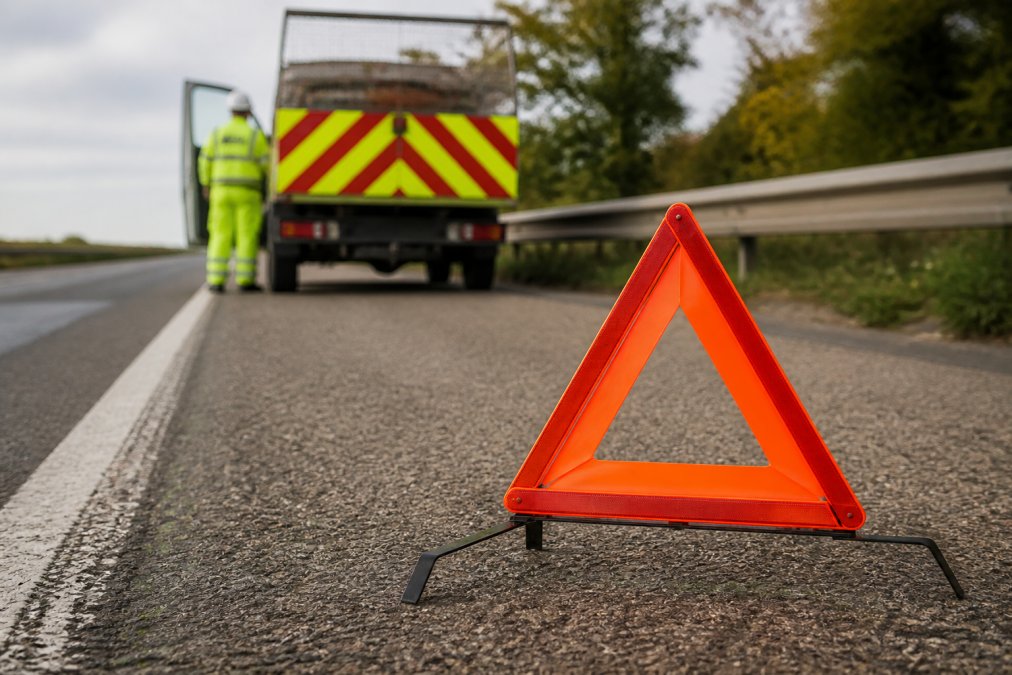
Best Warnlight Alternatives for Drivers
Table of Contents
- Why Drivers Choose Warnlight Alternatives
- Roadflash: GPS-Enabled Emergency Beacons for Motorway Safety
- LED Warning Lights: High-Visibility Options for Roadside Breakdowns
- Multi-Function Emergency Tools and Beacon Systems
- Legal Requirements for Mobile Phone Use While Driving
- Best Practices for Using Driving Apps and Hazard Alerts
- How to Choose the Right Alternative for Your Needs
- Conclusion
Last Updated: August 15, 2026
Why Drivers Choose Warnlight Alternatives
When your vehicle breaks down on a busy motorway, you have approximately 60 seconds before high-speed traffic arrives. Traditional reflective triangles and hazard lights often fail to capture attention in poor visibility, heavy rain, or bright daylight. Warnlight alternatives address this gap with high-visibility LED technology, rechargeable batteries, magnetic mounting, and in some cases, GPS-enabled emergency location features.
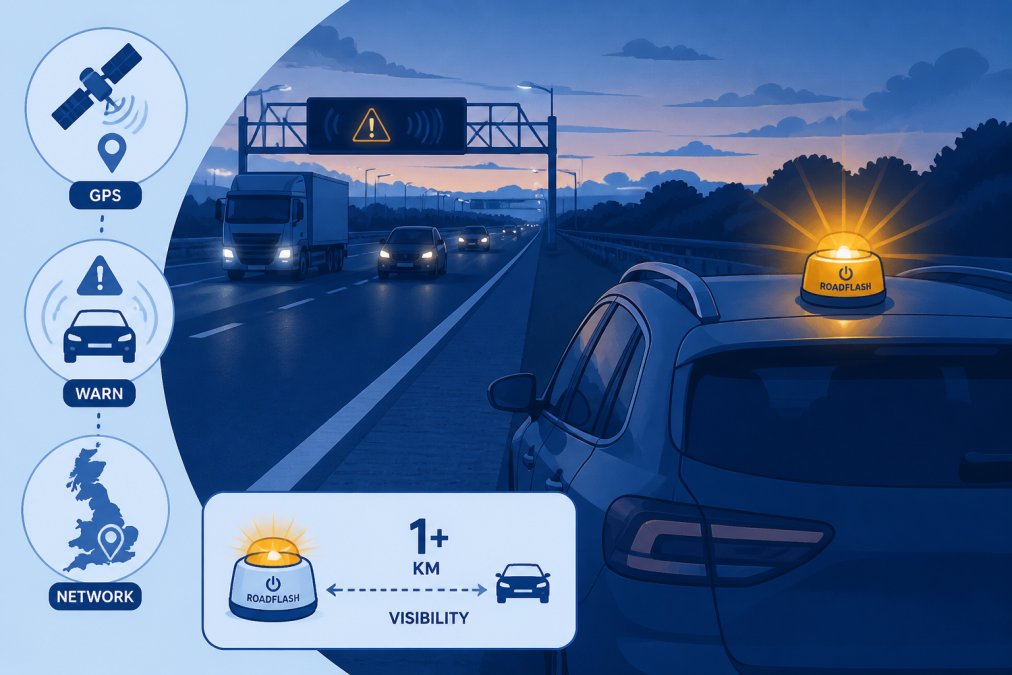
Modern alternatives serve different needs: compact magnetic lights for occasional breakdowns, multi-function devices for professional drivers, and advanced beacon systems for those prioritising maximum visibility and emergency response integration. Roadflash, a UK-based innovator in motorway safety, has developed specialised early warning systems that go beyond traditional approaches. Their DGT 3.0 compliant emergency beacons with GPS and geolocation capabilities represent the premium end of Warnlight alternatives, designed specifically to prevent collisions on stationary vehicles during breakdowns.
Below, we’ll explore the range of alternatives available to UK drivers, from budget-friendly LED options to advanced beacon systems, and help you understand which solution matches your driving patterns and safety priorities.
The most effective warning system combines immediate visibility (LED lights) with reliable communication (either through brightness or GPS integration). Consider pairing a high-visibility light with a backup option.
Roadflash: GPS-Enabled Emergency Beacons for Motorway Safety
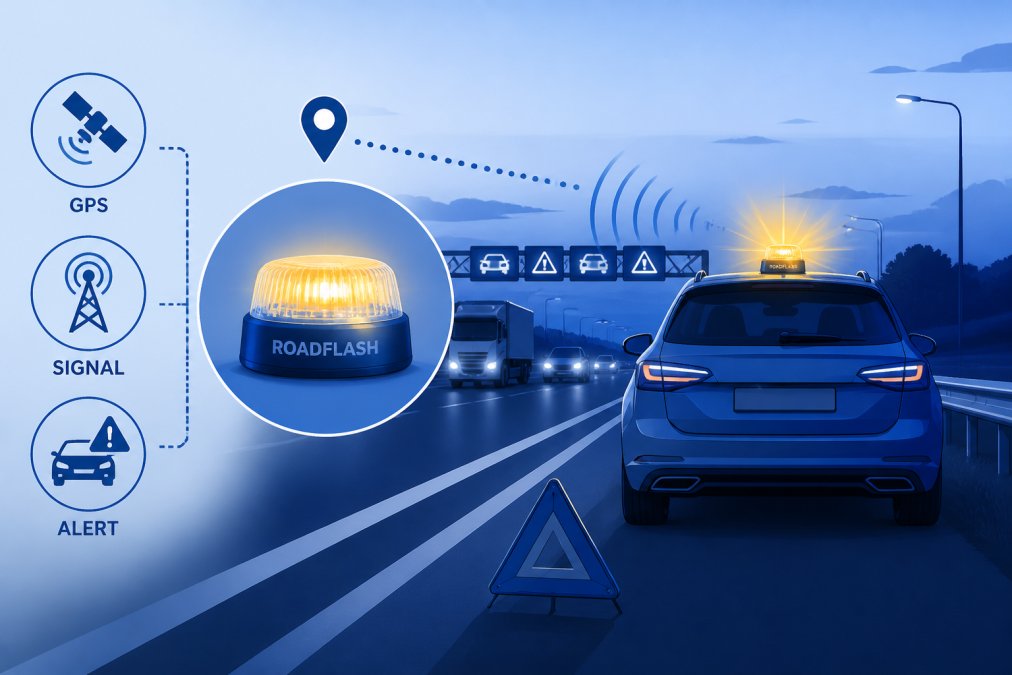
Roadflash combines high-visibility hazard warning with GPS geolocation and emergency alert integration. The Roadflash Hazard Warning Breakdown Light uses paint-friendly suction cups to attach directly to your vehicle’s body or window, deploying in seconds without tools. The unit features multiple flashing modes that adapt to different visibility conditions.
The rechargeable lithium cell battery (3.7V 750mAh) delivers 9 to 50 hours of running time depending on the flashing mode selected, eliminating the need to carry spare batteries. Recharging via USB means you can top up at home, in the office, or in your vehicle using a car charger.
What separates Roadflash from simpler LED alternatives is GPS and geolocation integration. When you activate the beacon, your precise location is transmitted to emergency services and traffic management systems. For drivers stranded in poor visibility or on unfamiliar stretches of motorway, this feature directly reduces emergency response times. Roadflash products carry multi-award recognition for road safety innovation, reflecting independent validation of their design and effectiveness.
LED Warning Lights: High-Visibility Options for Roadside Breakdowns
LED warning lights form the core of most Warnlight alternatives because they solve the fundamental problem: making your stationary vehicle visible to approaching traffic in all conditions. Unlike passive reflective triangles, LEDs generate their own light and can strobe or pulse to capture attention even in daylight or heavy rain. A bright strobing light is harder to miss than a reflective surface, especially when drivers are fatigued or distracted.
BriteAngle LED Road Safety Warning Triangle
BriteAngle delivers high-intensity LEDs combined with an ultra-reflective surface, creating dual visibility. The unit is visible at distances up to 300 metres, giving traffic approaching at motorway speeds genuine time to react. The foldable, compact design stores easily in a vehicle boot, and the supplied suction bracket allows attachment to trailers, caravans, or motorhomes. The unit runs on four AA commercial-grade batteries with an 8-year shelf life.
Kraser KR400V16 Emergency Light
The Kraser KR400V16 prioritises compactness and versatility. This magnetic LED light produces a 360-degree strobing orange light visible in daylight and poor conditions. The magnetic base attaches to any metal surface on your vehicle in seconds. The integrated torch function adds practical value for inspecting damage or working on your vehicle after dark.
Nightsearcher Pulsar AAA
Nightsearcher Pulsar AAA offers budget-conscious drivers a compact, durable option at under £12. The unit is visible at 500 metres, providing adequate warning distance for motorway speeds. The compact design fits gloveboxes easily, and the strong construction withstands rough handling. The torch function and magnetic base provide flexibility in deployment.
LED warning lights [outperform passive reflective triangles](/emergency-beacons-vs-triangles-safety-comparison/) in visibility across all lighting conditions. Choose based on budget and deployment frequency: premium options for frequent drivers, budget options for occasional use.
Multi-Function Emergency Tools and Beacon Systems
Beyond standalone warning lights, several Warnlight alternatives combine hazard warning with additional emergency tools.
AA 3-in-1 Emergency Beacon
The AA 3-in-1 combines a red strobe light warning beacon with a seatbelt cutter and glass hammer, tools designed to help you escape a vehicle in serious accidents. The integrated torch provides work light for inspections. This approach acknowledges that breakdowns aren’t the only roadside emergencies drivers face. At under £15, it’s competitively priced against premium LED-only alternatives.
Nightsearcher HazStar Rechargeable Roadside Hazard Work Light
The HazStar combines a rear red hazard light with removable magnetic hazard lights, a front work light with 2000 lumen output, and a power bank to charge mobile devices. The rear hazard light delivers 100 metres visibility with 9 hours runtime. The removable magnetic lights allow flexible positioning on the road surface in a triangle pattern. The power bank feature addresses a genuine driver need: mobile phone battery depletion during extended breakdowns. The IP65 water resistance and IK07 shockproof rating indicate strong construction designed for professional use.
EVAQ8 Magnetic Wireless Vehicle Warning Beacon
The EVAQ8 beacon targets emergency responders and professionals requiring rapid deployment. The rechargeable lithium-ion battery (7.4V, 2,600mAh) delivers 6 hours of operation, with magnetic mounting tested to 70 mph wind speeds. The key differentiator is seven distinct flash patterns, including single, double, triple flashes, and rotational modes. Different flash patterns communicate different hazard types to approaching traffic and emergency personnel. The polycarbonate lens and IP67 water resistance rating indicate design for harsh conditions.
| Alternative | Type | Best For | Key Feature |
|---|---|---|---|
| Roadflash | GPS Beacon | Motorway drivers, emergency response | GPS geolocation integration |
| BriteAngle | LED Triangle | Towed vehicles, all-weather use | 300m visibility, weather-resistant |
| Kraser KR400V16 | Magnetic LED | Compact storage, quick deployment | 360° strobing light + torch |
| AA 3-in-1 | Multi-tool | Comprehensive emergency prep | Escape tools + warning light |
| Nightsearcher HazStar | Multi-function | Professional/extended breakdowns | Work light + power bank |
| EVAQ8 | Professional Beacon | Emergency responders, traffic ops | 7 flash patterns, wireless |
| Nightsearcher Pulsar | Budget LED | Occasional drivers, cost-conscious | Affordable, 500m visibility |
Legal Requirements for Mobile Phone Use While Driving
Using your mobile phone to call for help after a breakdown is legally permitted only when stationary and safe to do so. The Road Traffic Act 1988 prohibits handling a phone while driving. Once you’ve stopped, you can use your phone to contact emergency services or roadside assistance.
GPS-enabled alternatives like Roadflash’s beacon system provide genuine legal and safety advantage by automatically transmitting your location to emergency services, removing reliance on your ability to describe your location verbally. When you do use your phone after stopping, ensure you’re positioned safely away from traffic and your vehicle is switched off.
The UK government’s official guidance on mobile phone use while driving
For professional drivers operating under the Driver and Vehicle Standards Agency’s regulations on working hours and rest periods, communication protocols may be more restrictive. Check your employer’s or insurance provider’s specific requirements.
Best Practices for Using Driving Apps and Hazard Alerts
Modern driving apps like Waze and Google Maps integrate user-reported incidents, including breakdowns and accidents. These warnings give you time to slow down, change lanes, or divert before encountering stationary vehicles. Mount your smartphone securely on your dashboard or use a head-up display projection. Voice-guided navigation reduces the need to glance at the screen.
Hazard alert features allow drivers to report breakdowns immediately, even before deploying your warning light. This is particularly valuable on motorways where app penetration among drivers is high. The limitation of driving apps is reliance on mobile signal and driver attention.
Never interact with a driving app while your vehicle in motion. Set your route, adjust volume, and configure alerts before you start driving. Glancing at a screen for even 2 seconds at motorway speed means travelling blind for approximately 60 metres.
How to Choose the Right Alternative for Your Needs
Selecting the right Warnlight alternatives depends on three factors: your driving patterns, budget, and the specific hazards you prioritise.
Driving Frequency: Drivers who commute on motorways weekly or more benefit from premium options like Roadflash or the Nightsearcher HazStar. Occasional drivers can choose budget LED options without significant risk.
Breakdown Likelihood: Professional drivers and those driving older vehicles face higher breakdown probability. Multi-function tools and rechargeable systems reduce the operational burden of managing batteries. Casual drivers with reliable vehicles can prioritise simplicity and cost.
Visibility Priorities: If you drive frequently in poor visibility, heavy rain, or at night, prioritise brightness and 360-degree visibility. LED options with high lumen output outperform passive reflective triangles. If you drive primarily in daylight on clear roads, a basic LED alternative provides adequate protection.
Emergency Response Integration: If rapid emergency service location is a priority, GPS-enabled systems like Roadflash justify premium pricing. The geolocation feature eliminates the need to communicate your location verbally, a significant advantage if you’re injured or disoriented.
Professional Use: Verify that your chosen alternative meets fleet safety protocols, commercial insurance requirements, or professional standards. Some insurers mandate specific warning light types or visibility standards.
Budget Constraints: The Nightsearcher Pulsar delivers genuine functionality at the lowest price point (under £15). The Kraser KR400V16 adds torch functionality at £20-30. Pricing for premium options (£50+) depends on quantity, dates, and delivery. Direct readers to Roadflash’s website for current prices or a quote.
| Factor | Budget Option | Mid-Range | Premium |
|---|---|---|---|
| Price | Under £15 | £20-40 | Pricing depends on quantity, dates, and delivery |
| Best For | Occasional drivers | Regular commuters | Professional/frequent drivers |
| Battery Type | Disposable | Rechargeable/Disposable | Rechargeable |
| Additional Features | Torch only | Multi-function | GPS/Advanced capabilities |
| Visibility Range | 300-500m | 300-500m+ | 300m+ with advanced location |
Conclusion
Warnlight alternatives range from simple LED lights to sophisticated GPS-enabled beacon systems, each addressing different driver needs and budgets. All LED-based options solve the fundamental requirement of making your stationary vehicle visible to approaching traffic. Differentiation comes from additional features, reliability, and integration with emergency response systems.
For drivers prioritising maximum safety and emergency response speed, Roadflash’s GPS-enabled beacon systems represent the most advanced option. The combination of high-visibility lighting and automatic geolocation to emergency services addresses the two critical failure points in traditional warning systems: visibility and location communication. Add to basket on the Roadflash website to secure multi-award-winning protection for your next motorway journey.
Frequently Asked Questions
What makes Warnlight alternatives better than traditional reflective triangles?
Modern Warnlight alternatives use LED technology and strobing lights to provide visibility up to 300-500 metres, even in daylight and adverse weather. Traditional reflective triangles rely on ambient light reflection and are far less visible during heavy rain, fog, or bright sunlight. LED-based alternatives also alert other drivers to hazards more effectively through movement and colour, reducing collision risk on busy motorways significantly.
Are traffic alert apps and hazard warning apps legal to use while driving?
Using mobile apps while driving is strictly regulated. In the UK, you cannot hold a phone in your hand whilst driving, even at traffic lights. You can use a hands-free device or a secure dashboard mount, but you must not interact with the screen while moving. Many Warnlight alternatives include integrated hazard alert systems that work with mounted devices, allowing you to receive notifications safely without touching your phone.
What are the best practices for using driving apps to complement warning lights?
Mount your phone securely on the dashboard before driving begins. Enable voice-guided alerts so you can respond to hazards without glancing at the screen. Use apps that integrate with your vehicle's telematics or OBD-II data to provide real-time engine management light warnings alongside hazard alerts. Keep your phone charged and ensure your app has offline functionality for areas with poor connectivity, particularly on remote motorways.
Do LED warning lights and beacons work effectively in daylight?
Yes. High-quality LED alternatives like BriteAngle and Kraser models use strobing patterns and high-intensity LEDs that are visible in daylight conditions. The strobing effect catches drivers' attention through movement rather than relying solely on brightness, making them effective at any time of day. Products rated for 300+ metre visibility typically perform well in both daylight and darkness.
Which Warnlight alternative is best for occasional motorway drivers versus professional fleet operators?
Occasional motorway drivers benefit from compact, affordable options like the Nightsearcher Pulsar AAA or AA 3-in-1 Emergency Beacon, which offer essential hazard visibility and additional tools. Professional fleet operators and emergency responders should consider rechargeable systems like the Nightsearcher HazStar or EVAQ8 Magnetic Beacon, which offer longer runtimes, multiple flash patterns, and durability for frequent deployment across multiple vehicles.
Roadflash’s specialised early warning systems for stationary vehicles significantly reduce collision risk on busy highways and motorways. Their DGT 3.0 compliant emergency beacons with GPS and geolocation capabilities provide the comprehensive protection that casual LED lights cannot match. Get started with Roadflash and gain genuine peace of mind knowing that both approaching traffic and emergency services receive immediate, precise notification of your location.
This article was written using GrandRanker