
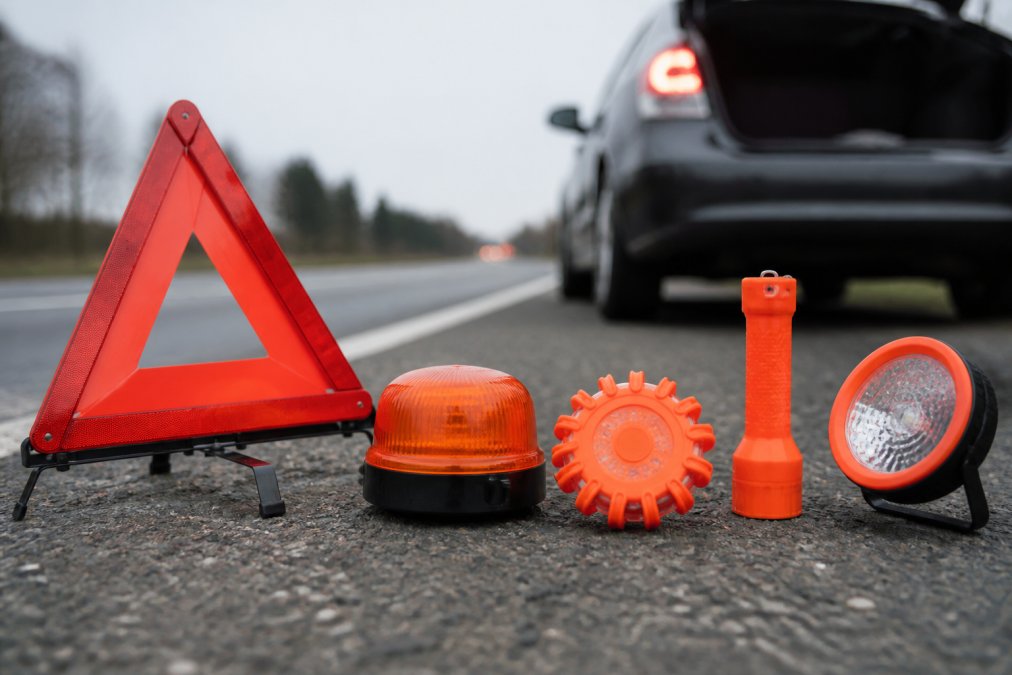
Best Emergency Warning Lights for Cars
Table of Contents
- Quick Comparison: Emergency Warning Lights at a Glance
- Roadflash V16 Emergency Beacon Light: DGT 3.0 Compliant Emergency Beacons with GPS
- Wagan Emergency LED Flare 3-Pack: Versatile Multi-Mode Warning Lights
- Legal Requirements for Amber Warning Lights in the UK
- How to Use Emergency Breakdown Lights Safely and Effectively
- What to Look for When Choosing Emergency Warning Lights
- Other Top Emergency Warning Light Options
- AA 3-in-1 Emergency Beacon
- Streetwize 12/24V Magnetic Amber LED Warning Flash Beacon
- Ring Automotive RCV2214 Strobe Light
- Vision Alert Magnetic Rotating Amber Light
- Wolfteeth Warning Triangle with LED Lights
- LBUK Wireless Magnetic Trailer Hazard Warning Strobe Light Set
- Powerlantz Car Emergency Breakdown Kit
- Conclusion
Last Updated: August 25, 2026
Quick Comparison: Emergency Warning Lights at a Glance
When your vehicle breaks down on a busy motorway, visibility is everything. A stationary car becomes a hazard within seconds, and without proper warning, drivers approaching at high speed may not have time to react. Emergency warning lights transform a dangerous situation into a managed one, giving approaching traffic clear, unmistakable notice that something is wrong ahead.
The market offers options ranging from simple magnetic beacons to sophisticated GPS-enabled systems. The right choice depends on how often you drive, where you travel, and what level of visibility and compliance matters most.
| Product | Type | Key Strength | Best For |
|---|---|---|---|
| Roadflash V16 DGT 3.0 | GPS-enabled beacon | Built-in geolocation for emergency response | Drivers travelling in Spain; those seeking advanced safety features |
| Wagan LED Flare 3-Pack | Multi-mode LED flares | 10 lighting patterns; 1-mile visibility | Versatile roadside emergencies; portable storage |
| AA 3-in-1 Emergency Beacon | Multi-tool beacon | Combines strobe light, seatbelt cutter, glass hammer | Budget-conscious drivers wanting all-in-one functionality |
| Streetwize 12/24V Magnetic Beacon | Direct-power amber light | Simple plug-and-play operation | Drivers preferring direct vehicle power over batteries |
| Ring Automotive RCV2214 | Hardwired strobe | 19 flash patterns; IP69K waterproofing | Commercial fleets; permanent vehicle installation |
Roadflash V16 Emergency Beacon Light: DGT 3.0 Compliant Emergency Beacons with GPS
Roadflash’s V16 represents a significant step forward in emergency warning technology. The standout feature is built-in GPS geolocation. Every 100 seconds, the V16 transmits your vehicle’s exact location to traffic monitoring systems, enabling emergency services to locate you without waiting for a 999 call (peer-reviewed research). For drivers in Spain, this becomes mandatory from January 2026 under DGT 3.0 regulations, but the technology benefits anyone on a motorway breakdown.
The beacon emits a powerful flashing amber light visible up to 1 kilometre in all directions, far exceeding the visibility of a traditional warning triangle. Deployment is straightforward: the universal magnetic and suction mounting system works on metal, plastic, and glass surfaces without leaving your vehicle. The integrated SIM card means no additional setup or subscription fees, with connectivity included until at least 2038.
For drivers who travel between the UK and mainland Europe, or who want the most advanced early warning system available, Roadflash delivers professional-grade safety without complexity. As a Nottingham-based company with a track record of multi-award-winning road safety products, Roadflash has engineered this system specifically for breakdown scenarios on high-speed roads.
If you travel to Spain regularly, the DGT 3.0 compliance alone justifies [the investment](/are-emergency-beacons-worth-the-investment/), it becomes a legal requirement from January 2026, and Roadflash’s solution handles both compliance and advanced safety in one device.
Wagan Emergency LED Flare 3-Pack: Versatile Multi-Mode Warning Lights
The Wagan 3-pack offers portability and flexibility. Rather than a single fixed beacon, you get three independent LED flares, each with 10 different lighting modes. This allows you to position multiple lights around your vehicle, create specific warning patterns, or keep spares in different vehicles.
The lighting modes span practical scenarios: spotlight for roadside repairs, steady on for continuous visibility, various blink patterns for attention-grabbing warnings, SOS Morse code for distress signalling, and rotating effects for maximum visibility. Each flare delivers 360-degree lateral coverage with visibility up to 1 mile at night.
Construction is strong, with durable housing that withstands vehicle weight and carries IP55 or IP67 waterproof ratings. The strong magnetic backing allows quick attachment to your vehicle’s hood or any metal surface. Battery operation uses standard AAA cells, requiring spares in your emergency kit.
Where Wagan excels is flexibility. Three separate units give you options: deploy one forward, one rear, and keep one as backup. For drivers who own multiple vehicles or prefer portable solutions that don’t require vehicle power or permanent installation, this approach offers practical advantages.
Drivers who own multiple vehicles, travel frequently, or prefer a portable solution that doesn’t require vehicle power or permanent installation.
Legal Requirements for Amber Warning Lights in the UK
Under UK law, when a vehicle is stationary on a motorway or major road, you must display a warning triangle placed at least 45 metres behind your vehicle. However, warning triangles alone have limitations in poor visibility, darkness, or bad weather, precisely when breakdowns become most dangerous.
Amber warning lights are not legally mandatory in the UK, but they significantly enhance safety and are strongly recommended by breakdown recovery organisations and the Department for Transport. Roadside visibility standards suggest amber lights should be visible from at least 150 metres away in daylight and 300 metres at night (gov.uk).
For drivers travelling in Spain, the landscape changes dramatically. From January 2026, DGT 3.0 compliant emergency beacons become mandatory, not optional (europa.eu). These must be capable of GPS transmission and meet specific brightness and flash-pattern requirements.
The practical takeaway: UK law doesn’t force you to buy emergency warning lights, but safety best practices, and cross-border travel regulations increasingly expect them.
Driving in Spain without a DGT 3.0 compliant beacon from January 2026 constitutes a legal violation and can result in fines and vehicle impoundment. If you travel to Spain, verify compliance before departure.
How to Use Emergency Breakdown Lights Safely and Effectively
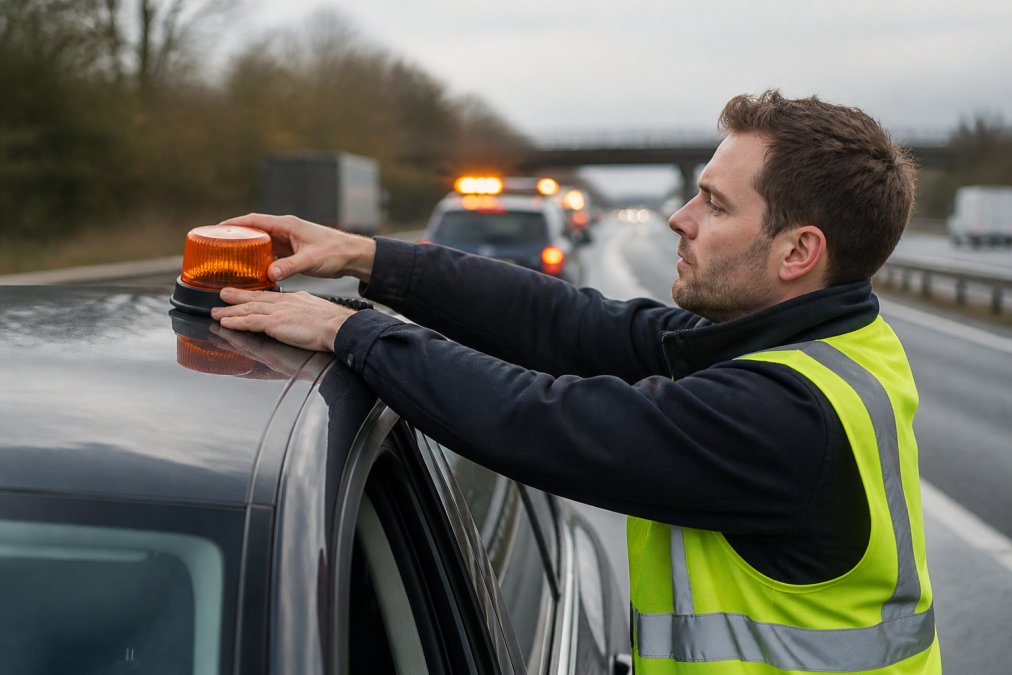
Deploying a warning light correctly is as important as having one. Place your light on the highest point of your vehicle, typically the roof or bonnet, where it has 360-degree visibility and won’t be obscured by the vehicle’s body or passing traffic. For magnetic-mount beacons, ensure the surface is clean and dry to guarantee secure adhesion.
Activate the light immediately after stopping, before exiting the vehicle. If your beacon has multiple flash patterns, select the most attention-grabbing option, typically a fast strobe or rotating pattern. Position yourself safely while deploying the light. If you must exit the vehicle, do so on the side away from traffic, wearing a high-visibility vest.
For multi-unit systems like the Wagan 3-pack, position one beacon forward of your vehicle (at least 45 metres ahead), one directly on your vehicle, and optionally one behind. Keep your hazard lights activated throughout the breakdown. The combination of hazard lights plus emergency warning beacons creates redundancy, if one system fails, traffic still receives a warning.
If your vehicle has GPS-enabled beacons like Roadflash’s system, verify that the device has activated and is transmitting before you settle in. Check that the LED is flashing and confirm the location transmission if possible. Remain in your vehicle with doors locked unless emergency services arrive or traffic flow allows safe exit.
Test your beacon system before you need it. Deploy it in your driveway, verify all lighting modes work, and check that magnetic mounts hold securely on your vehicle’s surfaces.
What to Look for When Choosing Emergency Warning Lights
Selecting the right warning light depends on five key criteria: visibility distance, durability, power source, ease of deployment, and compliance requirements.
Visibility Distance: Look for specifications stating visibility range in daylight and at night. Most quality amber beacons claim 300-1000 metres visibility. Brightness is measured in lumens; higher lumen output means greater visibility in fog, rain, and darkness.
Durability and Weather Resistance: Check the IP (Ingress Protection) rating. IP67 means dust-proof and submersible to 1 metre; IP69K is the highest rating, indicating resistance to high-pressure water jets and extreme conditions. For UK motorway use, IP67 is the practical minimum.
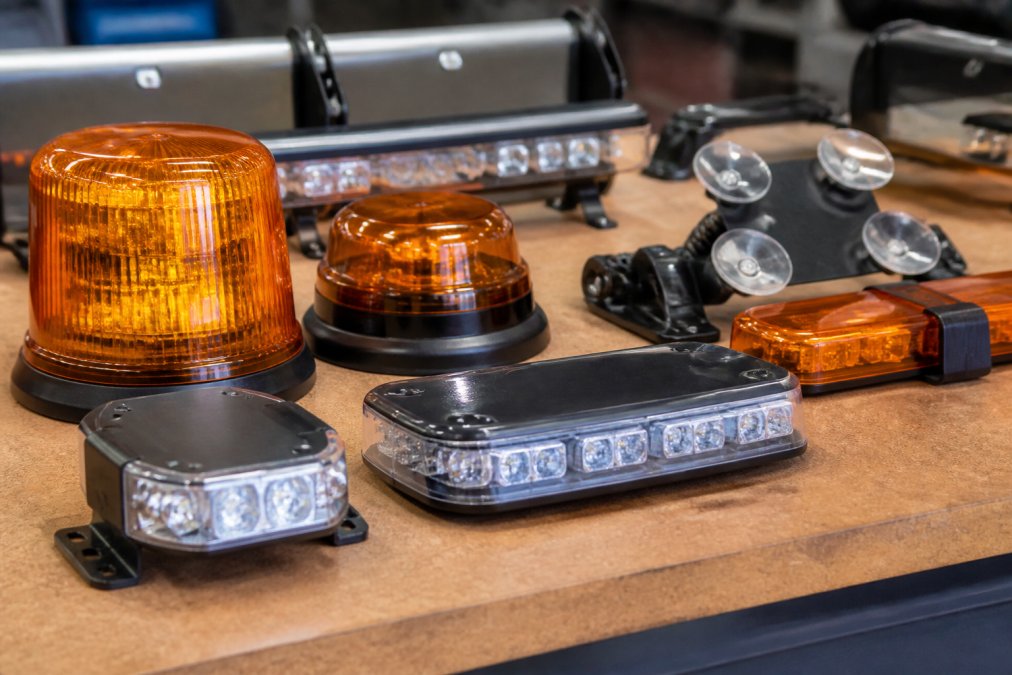
Power Source: Battery-operated systems offer portability but require spare batteries. Direct-power systems that plug into your vehicle’s 12V or 24V socket eliminate battery concerns but are useless if your electrical system is compromised. GPS-enabled systems like Roadflash’s V16 include integrated connectivity and don’t rely on vehicle power for geolocation.
Deployment Speed: In a breakdown scenario, you want activation and positioning to take seconds, not minutes. Magnetic-mount beacons with simple on/off switches are faster than systems requiring screwdriver access or complex wiring.
Regulatory Compliance: If you travel to Spain, France, Germany, or other European countries, verify that your chosen light meets those markets’ regulations. DGT 3.0 compliance is mandatory for Spain from January 2026.
Other Top Emergency Warning Light Options
AA 3-in-1 Emergency Beacon
The AA’s offering combines three safety tools into a single glovebox-sized device: a red strobe light, integrated seatbelt cutter, and glass hammer. The magnetic base allows quick placement on your vehicle, and the torch function provides practical illumination for roadside repairs.
The limitation is brightness. A single red strobe doesn’t match the visibility of dedicated amber beacon systems, particularly in daylight. The device also relies on AA batteries, requiring spares in your emergency kit.
Streetwize 12/24V Magnetic Amber LED Warning Flash Beacon
Streetwize’s offering prioritises simplicity. The 12V/24V compatibility works with virtually any vehicle’s auxiliary socket, and the plug-and-play design requires no installation. The super-bright amber LED delivers clear visibility, and the magnetic base allows quick roof mounting.
The trade-off is dependency on vehicle power. If your electrical system is compromised, the light won’t function. It also lacks the portability of battery-operated systems.
Ring Automotive RCV2214 Strobe Light
Ring’s slimline strobe is engineered for commercial and professional use. The 4x 0.5W LEDs deliver efficient illumination across 19 selectable flash patterns. The 10V-33V voltage range accommodates everything from motorcycles to HGVs, and the IP69K rating withstands high-pressure water jets and extreme dust conditions.
This is a permanently mounted system requiring surface installation, suitable for recovery vehicles and commercial fleets rather than casual breakdown coverage.
Vision Alert Magnetic Rotating Amber Light
Vision Alert’s rotating amber light combines magnetic mounting convenience with a distinctive rotating flash pattern that captures attention effectively, particularly at night. Confirm whether your model requires 12V vehicle power or operates on batteries before purchasing.
Wolfteeth Warning Triangle with LED Lights
This product bridges traditional warning triangles and modern LED technology. The integrated red flashing or static LED lights enhance visibility beyond a standard triangle alone, and the two-phase central torch provides practical illumination. It’s affordable and satisfies the traditional legal requirement while adding modern visibility enhancements.
The trade-off is bulk. Warning triangles are larger than beacon systems and require more storage space.
LBUK Wireless Magnetic Trailer Hazard Warning Strobe Light Set
LBUK’s wireless system targets agricultural and commercial applications. The ECE R65 approval indicates compliance with stringent European safety standards. The ultra-bright LEDs and IP65 weatherproofing make it suitable for demanding environments. The wireless design eliminates cable clutter, and magnetic mounting allows quick deployment.
This system is optimised for commercial and agricultural use rather than personal vehicle breakdowns.
Powerlantz Car Emergency Breakdown Kit
Powerlantz combines multiple light patterns with practical torch functionality. The strobing effect captures attention in daylight, while the rotating pattern works well at night. The 1.5-kilometre visibility claim is competitive with dedicated beacon systems, and the multiple light patterns offer flexibility.
The battery dependency (AA cells) requires spare batteries in your emergency kit.
Conclusion
Choosing the right emergency warning light depends on how you drive, where you travel, and what level of safety you prioritise. For motorway commuters in the UK, any amber beacon system significantly outperforms a warning triangle alone. For drivers travelling to Spain, DGT 3.0 compliance becomes mandatory from January 2026, making Roadflash’s GPS-enabled V16 the only solution that combines legal compliance with advanced emergency response capabilities.
Roadflash’s multi-award-winning approach to road safety combines visible amber lighting with GPS geolocation and integrated connectivity. The V16’s ability to transmit your exact location to emergency services, combined with its 1-kilometre visibility and universal mounting system, addresses the core risk: preventing collisions with stationary vehicles and ensuring rapid response when help is needed.
=== FAQ ANSWERS (audit these too, same rules) ===
[1] Q: Are flashing amber emergency warning lights legal for private cars in the UK?
A: Amber flashing lights are permitted for temporary warning purposes during roadside breakdowns, but they must not be confused with emergency service lights. The Road Vehicles (Lighting) Regulations 1989 governs vehicle lighting. Amber beacons and strobe lights are legal for stationary vehicles on motorways and dual carriageways when deployed during an emergency. However, they must be removed or switched off when driving. Always check current regulations, as rules can change. DGT 3.0 compliant beacons meet international standards and are particularly important if you travel in Spain.
[2] Q: How do LED emergency warning lights improve safety on motorways?
A: LED warning lights increase visibility significantly compared to traditional reflective triangles alone. Modern LED beacons produce high-intensity amber or red light visible up to 1 kilometre away, even in daylight, fog, or heavy rain. Strobe and flash patterns grab driver attention more effectively than static light. This gives approaching motorists critical extra seconds to react and slow down, reducing collision risk for stationary vehicles. GPS-enabled beacons like the Roadflash V16 transmit location data, allowing emergency services to respond faster and coordinate hazard warnings with traffic management systems.
[3] Q: What are the benefits of using GPS-enabled emergency beacons?
A: GPS-enabled beacons transmit your vehicle’s exact location to emergency services and traffic monitoring centres automatically. This is especially valuable if you’re disoriented after an accident or breakdown. The Roadflash V16, for example, sends location updates every 100 seconds to traffic authorities, ensuring rapid response and better coordination of emergency services. DGT 3.0 compliant beacons with GPS are mandatory in Spain from January 2026 and increasingly recommended across Europe for enhanced safety on high-speed roads.
[4] Q: What should I look for when buying emergency warning lights for cars?
A: Prioritise visibility distance (aim for at least 1 kilometre in all directions), brightness measured in lumens, and waterproof ratings (IP65 or higher). Check mounting options: magnetic bases suit temporary deployment, while permanent fixtures work for commercial vehicles. Consider power source, battery-operated lights offer portability, while 12V/24V options suit vehicles with auxiliary sockets. For motorway use, choose strobe or flash patterns over solid light. If you travel in Spain or Europe, verify DGT 3.0 or ECE R65 compliance. Finally, ensure the light colour matches regulations: amber for warning, red for emergency services only.
Frequently Asked Questions
Are flashing amber emergency warning lights legal for private cars in the UK?
Amber flashing lights are permitted for temporary warning purposes during roadside breakdowns, but they must not be confused with emergency service lights. The Road Vehicles (Lighting) Regulations 1989 governs vehicle lighting. Amber beacons and strobe lights are legal for stationary vehicles on motorways and dual carriageways when deployed during an emergency. However, they must be removed or switched off when driving. Always check current regulations, as rules can change. DGT 3.0 compliant beacons meet international standards and are particularly important if you travel in Spain.
How do LED emergency warning lights improve safety on motorways?
LED warning lights increase visibility significantly compared to traditional reflective triangles alone. Modern LED beacons produce high-intensity amber or red light visible up to 1 kilometre away, even in daylight, fog, or heavy rain. Strobe and flash patterns grab driver attention more effectively than static light. This gives approaching motorists critical extra seconds to react and slow down, reducing collision risk for stationary vehicles. GPS-enabled beacons like the Roadflash V16 transmit location data, allowing emergency services to respond faster and coordinate hazard warnings with traffic management systems.
What are the benefits of using GPS-enabled emergency beacons?
GPS-enabled beacons transmit your vehicle's exact location to emergency services and traffic monitoring centres automatically. This is especially valuable if you're disoriented after an accident or breakdown. The Roadflash V16, for example, sends location updates every 100 seconds to traffic authorities, ensuring rapid response and better coordination of emergency services. DGT 3.0 compliant beacons with GPS are mandatory in Spain from January 2026 and increasingly recommended across Europe for enhanced safety on high-speed roads.
What should I look for when buying emergency warning lights for cars?
Prioritise visibility distance (aim for at least 1 kilometre in all directions), brightness measured in lumens, and waterproof ratings (IP65 or higher). Check mounting options: magnetic bases suit temporary deployment, while permanent fixtures work for commercial vehicles. Consider power source, battery-operated lights offer portability, while 12V/24V options suit vehicles with auxiliary sockets. For motorway use, choose strobe or flash patterns over solid light. If you travel in Spain or Europe, verify DGT 3.0 or ECE R65 compliance. Finally, ensure the light colour matches regulations: amber for warning, red for emergency services only.
Get started with Roadflash and ensure your vehicle is visible to approaching traffic and locatable by emergency services, even before you make a call. Add the V16 to your breakdown kit today and drive with genuine peace of mind.
This article was written using GrandRanker