
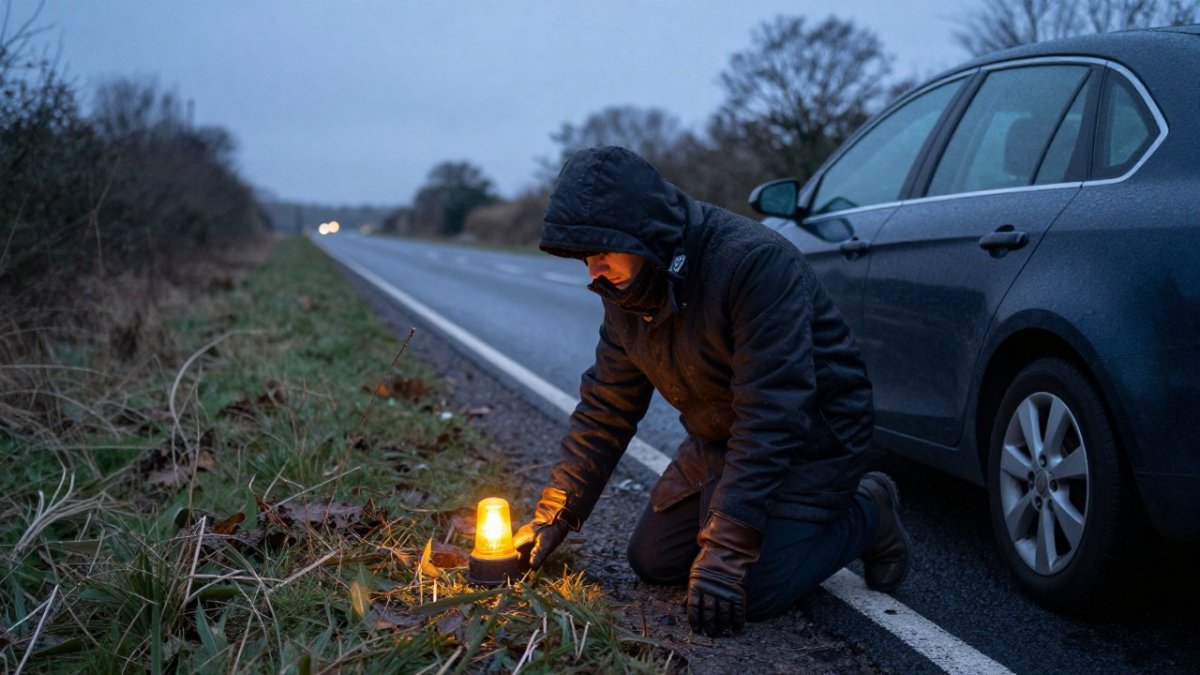
Essential Winter Driving Safety Gear for Emergencies
Quick Summary
Essential winter driving safety gear for emergencies covers four priorities: visibility equipment such as an LED beacon or warning triangle, warm clothing and blankets for every occupant, power and communication tools like a charged power bank and a written contact list, and snow and ice tools including a shovel, traction mats and jump leads. Winter breakdowns are more dangerous than summer ones, so this gear should keep you visible, warm and connected.
- Visibility comes first, so carry an LED beacon or reflective triangle and check it before winter.
- Cold batteries lose starting power, so carry jump leads or a portable jump starter.
- Keep warm clothing, emergency blankets and hand warmers for every occupant, not just the driver.
- Check the exhaust for snow regularly, since a blocked pipe can let carbon monoxide into the cabin.
- Stay inside with seatbelts fastened unless the car is on fire or in danger of being struck.
Table of Contents
- Why Winter Breakdowns Need a Different Kit
- Priority One: Visibility and Warning Equipment
- Priority Two: Warmth for You and Your Passengers
- Priority Three: Power, Light and Communication
- Priority Four: Snow, Ice and Getting Unstuck
- How to Stay Safe During a Motorway Breakdown
- Building and Checking Your Winter Car Breakdown Kit Checklist
- Ordering Your Beacon Before the Next Cold Snap
- Frequently Asked Questions
Why Winter Breakdowns Need a Different Kit
Winter breakdowns can be more dangerous than summer ones, so your winter driving safety gear in the boot should reflect that.
The standard breakdown kit often misses these needs. A basic set of jump leads and a warning triangle helps with a flat battery on a dry afternoon.
At Roadflash, we focus on the first of those jobs, because it is where much of the risk sits.
Priority One: Visibility and Warning Equipment
Visibility comes first because it protects you before anything else happens. If other drivers cannot see your vehicle, the rest of your kit does not matter.
Many drivers carry a reflective warning triangle as part of their winter driving safety gear. Triangles work, but their effectiveness depends on placement, lighting and the driver’s ability to walk onto the carriageway, which may not be safe in heavy traffic.
When choosing warning equipment, check these points:
- Brightness and visibility range. Look for a light that remains visible at a useful distance in poor weather.
- Battery life and cold performance. Lithium cells generally handle low temperatures better than standard alkaline ones. Check the stated operating range.
- Mounting and placement. A beacon should be quick to set up without leaving you in the path of traffic.
Why LED Beacons Outperform Basic Triangles
LED beacons are easier to see at night and in bad weather than a reflective triangle, which depends on another vehicle’s headlights to show up. For a direct safety comparison of the two options, see LED Warning Light vs Reflective Triangle: Which Is Safer?
Keep in mind that beacons need charging or fresh batteries. A dead beacon is worse than none, so check it before winter sets in.
The table below sums up the main points to check when choosing visibility and warning equipment for winter.
| Factor | What to check | Why it matters |
|---|---|---|
| Brightness and visibility range | Visible at a useful distance in poor weather | Helps approaching traffic spot a stopped car early |
| Battery life and cold performance | Stated operating range; lithium handles cold better | Cold reduces battery performance |
| Mounting and placement | Quick to set up without entering traffic | Keeps you out of the path of vehicles |
| Compliance | Meets rules where you drive | Ensures legal emergency warning equipment |
Priority Two: Warmth for You and Your Passengers
Cold is one of the most immediate threats to anyone stranded in a car. Once the engine is off, the cabin cools quickly. Passengers, children and older adults feel the cold faster than the driver, so plan for everyone in the car.
Your warmth supplies should cover clothing, blankets and body heat retention:
- Spare warm clothing for each occupant. Include a hat, gloves and a waterproof outer layer. Cotton holds moisture and loses warmth, so wool or synthetic layers work better.
- An emergency blanket or two. Foil-style blankets are light and compact and reflect body heat.
- Hand and body warmers. Single-use warmers add useful heat and take up little space.
Check these supplies at the start of each winter. Clothing that has been left damp or in a hot boot may no longer be usable.
Priority Three: Power, Light and Communication
Once you have made the vehicle visible and kept everyone warm, you need light and a way to call for help. A torch with spare batteries lets you work on the car or check the surroundings after dark.
A reliable kit in this category includes:
- A torch or flashlight with spare batteries. A headlamp leaves both hands free for work on the vehicle.
- A portable charger or power bank. Keep it charged, and remember that cold reduces its capacity.
- A wind-up or battery radio. Radio updates on road closures and weather help you decide whether to wait or move.
- A written list of emergency contacts. Do not rely on your phone alone, since the battery may fail.
For longer journeys, a compact emergency communication device can give you a backup when mobile signal is weak. If you are planning power and communication gear for a winter kit, see Emergency Communication Devices for Long-Distance Road Trips for guidance.
Priority Four: Snow, Ice and Getting Unstuck
The final group of items deals with the vehicle itself. Snow and ice can trap a car, block the exhaust and obscure the windows. Getting the car moving again, or at least clearing it safely, often depends on the right tools.
Useful items include:
- An ice scraper and a de-icer. Clear every window before driving, including the rear and side windows, and the lights and number plate.
- A snow shovel or folding shovel. A compact collapsible model fits in the boot and can clear the wheels and the path ahead.
- Traction mats. These give grip under spinning wheels on ice or in shallow snow, though they may not work in deep, compacted drifts.
- A stiff brush and a small broom. These clear snow from the roof and exhaust pipe.
Clearing the exhaust pipe matters. A blocked exhaust can allow carbon monoxide into the cabin, so always check it after the car has been snowed in.
How to Stay Safe During a Motorway Breakdown
A motorway breakdown in winter involves three separate decisions: whether to stay in the vehicle, how to make the car visible, and what to tell the people who will come to help. Getting each one right matters more than any single item in the boot.
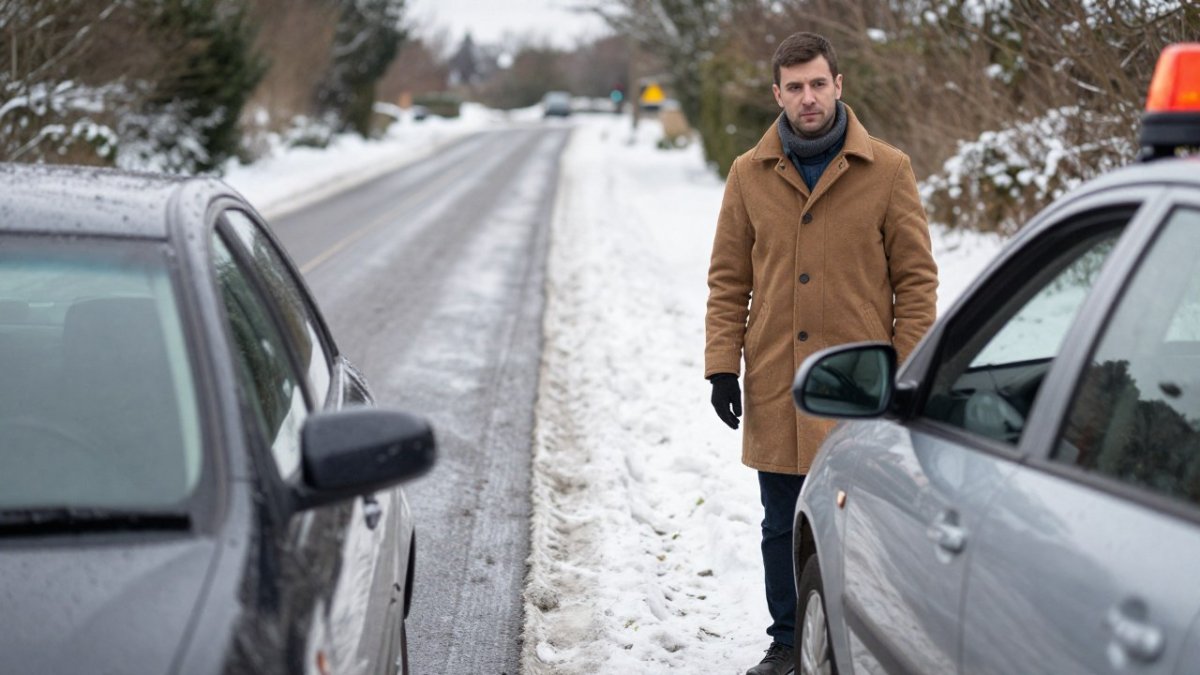
Decide Whether to Stay Inside or Get Out
In most cases the safest place for occupants is inside the vehicle with the seatbelts fastened, on the side away from the traffic, until the emergency services or your breakdown provider advise otherwise. If you must leave the vehicle, having essential emergency supplies within reach can help you stay safer while waiting for assistance, and Carmart Perth offers a useful next step in preparing for a breakdown.
Using a Warning Beacon or Triangle Safely
If you have a beacon, activate it inside the car and place it on the hard shoulder or verge at a safe distance behind the vehicle, only if you can do so without stepping into the lane. Keep your hazard lights on. For a reflective triangle, the traditional placement is at a distance behind the car so that approaching drivers have time to react, but the exact distance depends on the speed limit and the road conditions.
Only place a warning device when you can reach the verge or shoulder without crossing traffic.
Information to Give Responders
When you call for help, have the following ready so that responders can find you quickly:
- The motorway name and direction of travel.
- The nearest junction or the number on the nearest marker post, and any emergency telephone number on that post.
- Whether anyone is injured, and how many people are in the vehicle.
- Whether the car is on the hard shoulder, in a lane, or in an emergency refuge area.
If you cannot give an exact location, describe what you can see, such as a bridge, a service area sign or the colour of the nearest lamp post, and stay on the line if the operator asks you to.
Staying Warm While You Wait
While you wait, run the engine only for short periods to warm the cabin, and keep the exhaust clear of snow, since a blocked exhaust can allow carbon monoxide into the car. Keep the windows cracked slightly to ventilate the cabin if the engine is running. Ration your phone battery, use your power bank sparingly, and keep warm with blankets, hats and hand warmers rather than relying on heating for long periods.
Building and Checking Your Winter Car Breakdown Kit Checklist
A kit only works if the items are present, working and in date.
Scenario 1: Breakdown on a fast road or in traffic. Visibility and personal safety come first.
Scenario 2: Stuck in snow or on ice. Carry a folding snow shovel, traction mats, a stiff brush, an ice scraper and a de-icer.
Scenario 5: Injury or medical need. Carry a first-aid kit and make sure it includes any personal medication that a passenger needs.
The items in each scenario are a minimum.
Restocking and Seasonal Checks
A simple schedule keeps the kit ready without becoming a chore:
- Start of winter. Replace any battery that has been in service for more than a year, and test the beacon, torch and radio. Check that jump leads are undamaged and that the jump starter holds a charge.
- Monthly during the season. Charge the power bank and any rechargeable beacon, and look over the food and water for damage or freezing.
- Before every long journey. Confirm that the phone is charged, the de-icer is not frozen or leaking, and the blankets and clothing are dry.
- End of winter. Remove food, water and any perishable first-aid items that have passed their expiry date. Clean and dry the blankets, clothing and shovel before storage.
Air out damp blankets or clothes before putting them away, as they can lose insulating value in a sealed boot.
Storage Guidance
Store items where they will survive temperature swings. Batteries lose capacity in the cold, and food or water left in a hot boot in summer can spoil. Keep heavier items such as the shovel secured so they do not shift in a collision. Keep the warning beacon and torch somewhere you can reach from the driver’s seat, not buried under luggage.
Ordering Your Beacon Before the Next Cold Snap
Winter arrives quickly, and visibility equipment is the first item to get right. Roadflash designs DGT 3.0 compliant emergency beacons with GPS and geolocation. Pricing depends on quantity, delivery and your specific requirements, so check the Roadflash website for current prices or request a quote before you buy. Add the beacon to your basket now, so your kit is ready before the first frost.
Frequently Asked Questions
What should I keep in my car for winter emergencies?
Keep warm layers, a blanket, a torch with spare batteries, water, non-perishable snacks, a phone charger or power bank, an ice scraper, a snow shovel, and high-visibility clothing. Pack items you can reach without unloading the boot. Check the kit each autumn and again in midwinter, replacing batteries and food that has expired. Adjust the list for longer journeys or for passengers such as children or older adults who may feel the cold more quickly.
Are LED road safety beacons better than traditional warning triangles?
A warning triangle needs to be placed on the road behind your vehicle, which can mean walking into traffic in poor light or snow. A beacon can be activated and placed without stepping into the carriageway. Roadflash beacons are DGT 3.0 compliant for drivers in Spain and include GPS/geolocation. Check your local rules on which warning devices are required, as some drivers still need a triangle.
How do I prepare my vehicle for winter driving conditions?
Check tyre tread depth and pressure, since cold weather reduces pressure. Confirm your battery is holding charge, because cold reduces its output. Top up screenwash with a winter-rated mix, test your lights, and inspect wiper blades. Keep the fuel tank above half to avoid freezing issues and to have fuel if you are delayed. Store your breakdown kit where it can be reached quickly.
What should be in a basic car breakdown kit?
A basic winter car breakdown kit checklist includes jump leads or a portable jump starter, a warning beacon or triangle, high-visibility clothing, a first-aid kit, a torch, warm clothing and a blanket, an ice scraper and de-icer, drinking water and snacks, and a charged phone with a car charger. Add a snow shovel and traction mats if you drive in heavy snow. Prices for individual items vary, so check current prices directly with retailers.
