
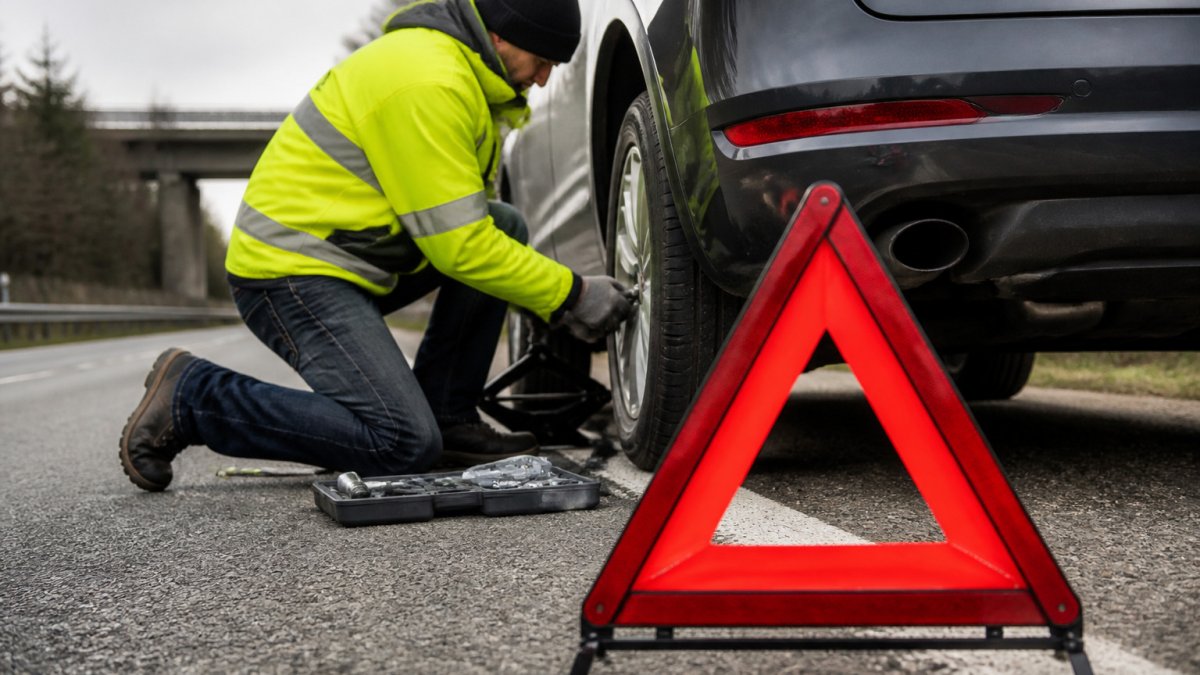
How to Handle Roadside Vehicle Repairs Safely
Quick Summary
Safe roadside repairs start with judging the risk before you touch the vehicle, since traffic, road surface, weather and visibility all matter. On a motorway, the safest choice is usually to stay inside the car with your seatbelt on until help arrives, unless smoke, fire or danger forces you out.
- Check the speed of nearby traffic and whether the hard shoulder is wide enough to stop safely.
- On a motorway, stay in the vehicle with your seatbelt on unless smoke, fire or danger inside the car forces you out.
- Rain reduces grip and makes other drivers slow to react, so plan actions carefully in wet conditions.
- Dusk and night breakdowns are harder to spot from behind, so keep a torch handy and check hazard lights work.
- Check your phone battery before a long journey, since you will need it to call for help and share your location.
Table of Contents
Assess the Risk Before You Touch the Vehicle
Last Updated: November 2, 2026
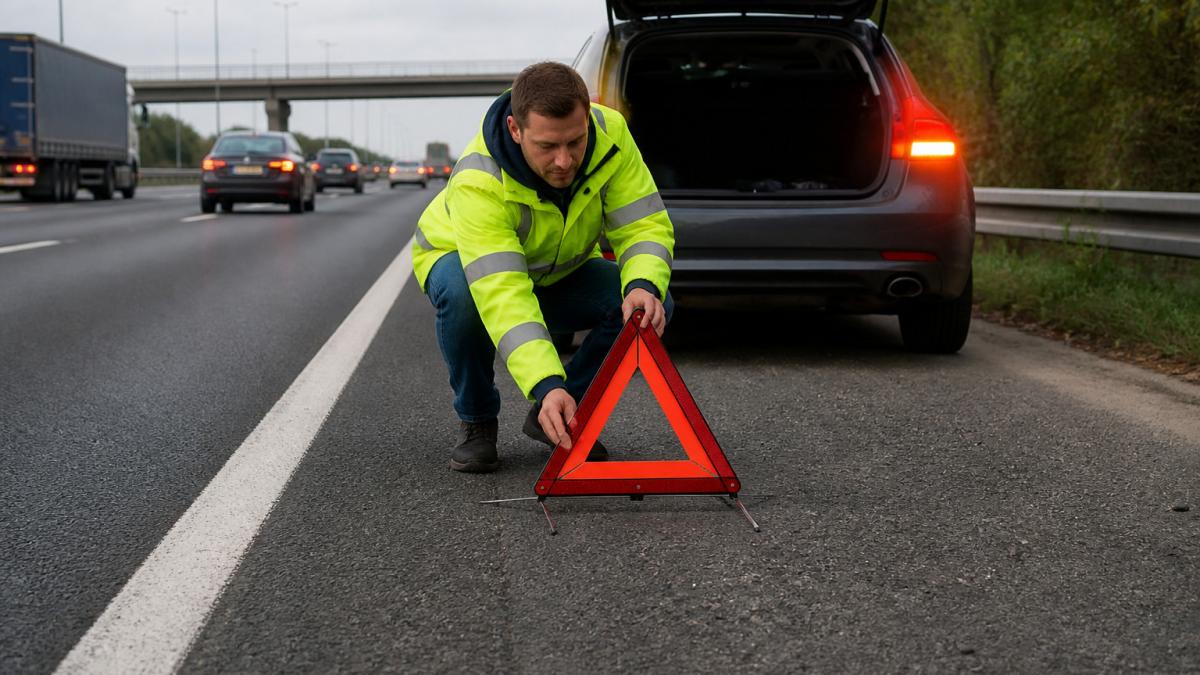
A breakdown on a motorway is one of the most dangerous moments a driver can face. Before you touch a single bolt or open the bonnet, you need to judge the risk. Learn how to use motorway emergency phones correctly before deciding whether to stay put or act. Drivers often rush out of the car to fix a problem that could have been handled from inside the cabin. Taking a few minutes to assess the situation can keep you alive.
Roadside repairs are not just about the vehicle. They are about the traffic, the road surface, the weather and your own visibility. Get those four things right before you attempt any roadside repairs. Once traffic, road surface, weather and visibility are under control, changing a tire safely still depends on keeping clear of moving vehicles and choosing a stable place to work.
Hazard identification on motorways versus local roads
Motorways and A-roads carry fast, heavy traffic. Vehicles on a motorway are often travelling at speed, and a driver who has not seen you can close the gap in seconds.
Local roads are different. Speeds are lower, but there are more blind bends, parked cars and junctions. Visibility can be poor.
Use this quick checklist to spot the main hazards: Learn how to prevent secondary collisions after a breakdown.
- Speed of the nearest traffic
- Whether the hard shoulder is wide enough to stop safely
- Blind bends, slopes or crests that hide your car
- Junctions or slip roads nearby
- Debris, glass or loose objects on the road edge
On a motorway, the safest choice is almost always to stay in the vehicle with your seatbelt on until help arrives, unless smoke, fire or danger inside the car forces you out (The Highway Code – Breakdowns and incidents (275 to 287) – Guidance).
Environmental hazards: cold, rain and low light
Weather changes the risk fast. Rain reduces grip and makes other drivers slow to react (The Highway Code – Driving in adverse weather conditions (226 to 237) – Guidance). Fog and darkness shrink the distance at which others can see you.
Cold matters too. If you are stuck for a long time in winter, your body can lose heat quickly, so keep warm clothing and a blanket in the car.
Low light is a major risk. Dusk and night breakdowns are harder to spot from behind, so plan your actions before you leave the car. Keep a torch handy and make sure your hazard lights work.
Quick tip: Check your phone battery before a long journey. You will need it to call for help and share your location.
Frequently Asked Questions
What should you do first if your vehicle breaks down at the roadside?
Switch on your hazard lights, steer the vehicle as far onto the hard shoulder or verge as is safe, and apply the handbrake. Before you open a door, check mirrors and traffic. If you can, leave the vehicle through the passenger side away from moving traffic, wait behind the barrier where one exists, and call your breakdown provider. Keeping the vehicle stationary for as short a time as possible reduces the risk to you and to other road users.
Is it safe to repair a car on the hard shoulder?
Generally, no. The hard shoulder on a UK motorway is for emergencies and is a live traffic environment, so carrying out repairs there exposes you to passing vehicles at speed. Where possible, get the vehicle to a place of safety or wait for recovery. Only attempt a minor, quick task such as changing a wheel if you have assessed the risk, have warning devices deployed and are wearing high-visibility clothing.
When should you call a breakdown recovery service instead of attempting a repair?
Call a recovery service whenever the fault is not a simple, quick fix, when you are on a motorway or fast road, when visibility or weather is poor, or when you are alone and feel unsafe. If you are unsure whether the work can be done safely, treat that uncertainty as your answer. Your breakdown provider can also advise on wait times so you can plan where you will stand while you wait.
What safety equipment should you carry for a roadside repair?
Carry a warning triangle, a high-visibility vest or jacket, a torch with spare batteries, gloves, a first aid kit and a fully charged mobile phone. A portable power bank and a warm layer help in cold conditions. Roadflash offers emergency beacons and high-visibility lighting designed to make a stationary vehicle easier to see; check the Roadflash website for current product details and a quote, as prices depend on quantity and delivery.
