
How do you maintain engine coolant levels?
Last Updated: October 24, 2026
Quick Summary
To maintain engine coolant levels, check your reservoir at least once a month when the engine is cold, ensuring the level sits between the minimum and maximum marks. Top up with the correct coolant type specified in your vehicle manual, using premixed coolant for convenience or concentrate mixed with distilled water.
- Check coolant at least once a month, or more frequently before long motorway journeys
- Always let the engine cool for at least 15 minutes before opening the coolant reservoir
- Use only the coolant type specified in your vehicle manual to avoid corrosion and clogging
- Watch for warning signs like puddles under the car, sweet smells, or temperature gauge climbing into the red zone
- A coolant level dropping from MAX to MIN within one journey indicates a serious leak requiring immediate mechanic attention
Table of Contents
- Why maintaining engine coolant levels matters
- How to check coolant levels safely
- How to top up engine coolant correctly
- How often to check coolant levels
- Recognising low coolant symptoms
- What to do when coolant keeps dropping
- Staying safe during a coolant emergency on the motorway
- Frequently Asked Questions
Why maintaining engine coolant levels matters
Your engine needs coolant to stay cool. Without it, your engine overheats and stops working.
Overheating happens fast. Once your temperature gauge climbs into the red zone, damage occurs within minutes.
Maintaining engine coolant levels is one of the simplest preventative checks you can do. It takes five minutes. It costs almost nothing.
At Roadflash, we focus on both prevention, through guides like this, and protection during emergencies with our multi-award-winning early warning systems designed to prevent vehicle collisions.
The good news: most cooling system problems are avoidable with regular checks. Let’s walk through exactly how to maintain engine coolant levels safely and effectively.
How to check coolant levels safely
Checking your coolant is straightforward, but the order matters. Never open the radiator cap or coolant reservoir when the engine is hot. Pressurized coolant can spray out and cause severe burns.
Wait for the engine to cool
Always let your engine cool for at least 15 minutes after driving. Better yet, check coolant when the engine is completely cold, first thing in the morning before starting the car.
Why? When the engine runs, coolant heats up and expands. The cooling system pressurizes. If you open the cap on a hot engine, pressurized coolant escapes and you get a false reading. You also risk scalding yourself.
If you must check a warm engine, wrap a thick cloth around the radiator cap before opening it. Turn it slowly to let pressure escape gradually. Never unscrew it completely until the engine is cold.
Locate your coolant reservoir
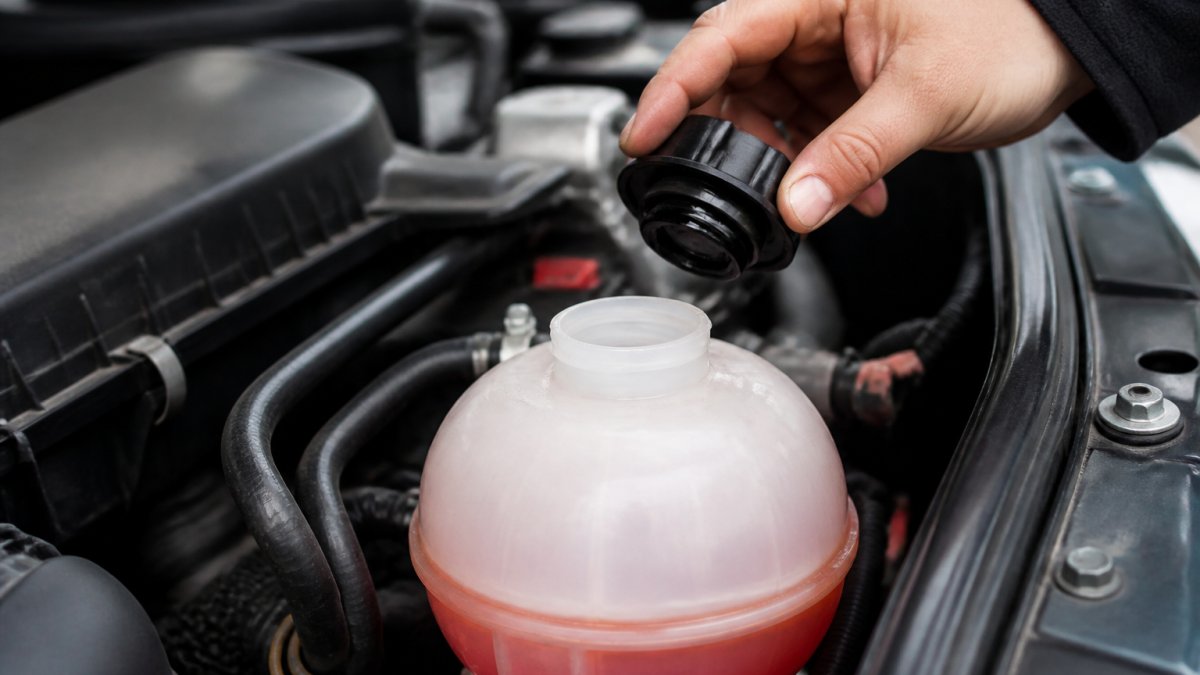
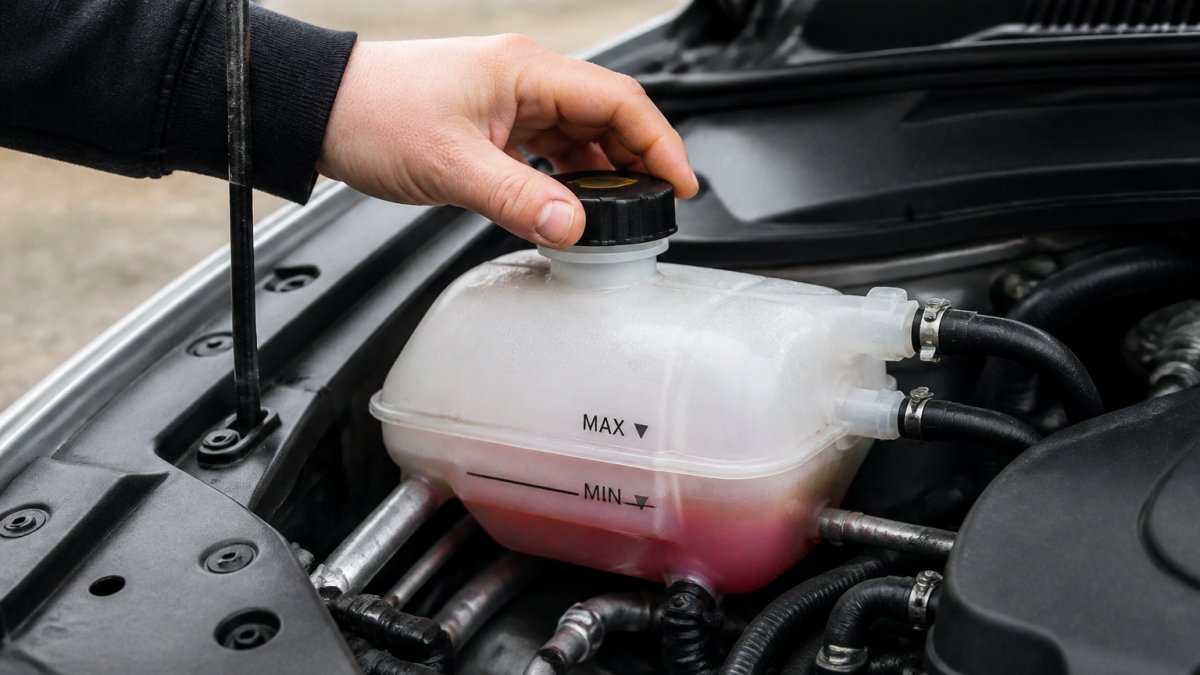
Pop your bonnet and look for the coolant reservoir. It’s a translucent plastic tank, usually white or clear, mounted on the side of the engine bay.
Don’t confuse it with the radiator cap. The radiator sits beneath the reservoir. You want the separate expansion tank, the smaller plastic container.
Some older vehicles don’t have a separate expansion tank. In those cases, you check the radiator itself. Consult your vehicle owner’s manual to confirm which one applies to your car.
Read the level markings
Look at the side of the reservoir. You’ll see two lines: a minimum mark (often labelled “MIN” or shown in red) and a maximum mark (labelled “MAX” or shown in green).
Your coolant level should sit between these two marks. Ideally, it’s closer to the maximum when the engine is cold. As the engine warms up during normal driving, the coolant expands slightly, this is normal and expected.
If the level is below the minimum mark, your cooling system is losing coolant. Top it up immediately. If it’s consistently dropping, you may have a leak in the hoses, clamps, or seals.
How to top up engine coolant correctly
Adding coolant is simple, but using the wrong type causes problems. Mixing incompatible coolants can clog your cooling system and reduce its effectiveness.
Choose the right coolant type
Your vehicle owner’s manual specifies exactly which coolant to use. Different engines require different formulations. Some use traditional green antifreeze. Others need modern long-life coolants in orange, pink, or blue.
Using the wrong type can cause corrosion inside your cooling system. It reduces heat transfer efficiency. In worst cases, it clogs the radiator and causes overheating.
If you don’t have your manual handy, contact your vehicle manufacturer or a mechanic. Don’t guess. A bottle of coolant costs a few pounds. Engine damage costs thousands.
Premixed coolant versus concentrate
You have two options when buying coolant:
Premixed coolant comes ready to pour. It’s already diluted with water in a 50/50 mixture. Just open the bottle and add it to your reservoir. No measuring, no mixing. This is the easiest option for most drivers.
Concentrate requires you to mix it with distilled water before adding it to your reservoir. A typical 50/50 mixture means equal parts coolant and water. You’ll need a container to mix it in and distilled water on hand.
Premixed is more convenient. Concentrate is cheaper per litre but requires extra steps. For most drivers, premixed coolant is worth the small premium because it eliminates the risk of mixing the wrong ratio.
Never use tap water to dilute concentrate. Tap water contains minerals that can damage your cooling system over time. Always use distilled water.
How often to check coolant levels
Check your coolant level at least once a month. More frequently if you drive long distances or tow a trailer.
Also check coolant before long motorway journeys. A pre-journey check takes five minutes and can prevent a breakdown hundreds of miles from home. Learn more about preparing your car for long motorway journeys to ensure your cooling system is in top condition.
If your coolant level drops between checks, you have a leak. Small leaks develop slowly. Large leaks mean you’re losing coolant rapidly, possibly during a single journey.
Watch for these warning signs:
- Coolant level dropping noticeably between checks
- Puddles of coloured fluid under your car (coolant is usually green, orange, pink, or blue)
- A sweet smell coming from your engine bay
- Your temperature gauge creeping higher than normal
Any of these signals a problem that needs attention soon.
Check your coolant regularly and watch for these warning signs of a problem.
| Warning Sign | What It Means | Action Required |
|---|---|---|
| Coolant level drops between checks | Possible leak in system | Investigate for leaks soon |
| Puddles of coloured fluid under car | External coolant leak | Seek mechanic attention |
| Sweet smell from engine bay | Coolant escaping or internal issue | Check system immediately |
| Temperature gauge higher than normal | Engine running hotter than usual | Monitor closely and check level |
Recognising low coolant symptoms
Your car will warn you when coolant runs critically low. The earlier you spot these signs, the faster you can pull over safely.
The most obvious warning is your temperature gauge climbing into the red zone. This happens when coolant can’t absorb and dissipate heat properly.
Your dashboard may also show a coolant warning light. It looks like a thermometer or a car with steam rising from it.
You might also smell something sweet or notice steam coming from under the bonnet. These are emergency signals.
Understand the broader signs of car trouble before a motorway breakdown to catch cooling system problems early and avoid emergencies.
What to do when coolant keeps dropping
A single low reading after months of normal driving is usually nothing more than normal evaporation from the expansion tank. Coolant that needs topping up every week or two is a different problem: you have a leak, and topping up only hides it.
Distinguish a one-off low level from a persistent leak
Use a simple log. Note the date and the level on the reservoir (cold engine, between MIN and MAX). Check again after 500 miles or one month, whichever comes first. A drop of a few millimetres over that distance is normal.
A useful confirmation test is to park over a clean sheet of cardboard overnight. Coloured spots in the morning, green, orange, pink, or blue depending on your coolant, tell you the system is losing fluid externally. A dry sheet with a falling level suggests an internal leak, which is more serious.
Where leaks commonly start
- Hoses and clamps: Rubber hoses harden and crack with heat cycles. Squeeze each hose when the engine is cold; a hose that feels brittle or leaves black residue on your fingers is due for replacement. Check that clamps are tight and free of corrosion.
- Radiator and its seals: Look for crusty white or coloured deposits around the radiator core and end tanks. These are dried coolant trails.
- Water pump: A failing pump often leaks from a small weep hole on its shaft housing. A faint squeal or rumble from the front of the engine is a secondary clue.
- Thermostat housing and gaskets: Seepage around the housing shows as dampness or staining at the joint.
- Expansion tank cap: A cap that no longer holds pressure lets coolant escape as vapour. A replacement cap is inexpensive and worth trying before assuming a bigger fault.
When to stop driving and seek a mechanic
Stop driving and arrange recovery if any of the following apply:
- The temperature gauge moves into the red zone, or a red coolant temperature warning light appears.
- Steam or visible vapour comes from under the bonnet.
- The coolant level falls from MAX to MIN within a single journey.
- You smell a strong sweet odour inside the cabin, this can indicate coolant entering the heater matrix or, worse, the engine.
- The engine oil looks milky or frothy on the dipstick, which suggests coolant mixing with oil.
A pressure test at a garage takes minutes and pinpoints leaks that are invisible from above. Fixing a hose or clamp is a small cost; ignoring a leak until the engine overheats can turn a £50 repair into a four-figure bill.
Do not rely on topping up alone. A leak that is small today can become a sudden failure on a motorway, where a breakdown is far more dangerous than a driveway repair.
Staying safe during a coolant emergency on the motorway
If your temperature gauge climbs into the red zone while you’re on the motorway, act quickly but calmly.
First, turn off the air conditioning. This reduces the load on the engine and helps it cool slightly.
Next, turn on your hazard lights immediately. Other drivers need to know you’re in trouble.
If you’re in the middle lanes, signal and move toward the hard shoulder as soon as it’s safe.
Once you’re on the hard shoulder, turn off the engine.
Stay in your vehicle with your seatbelt fastened if traffic is moving fast.
Get immediate guidance on staying safe during a motorway breakdown to know exactly what to do in a coolant emergency and how to protect yourself and your passengers.
This is where products like Roadflash’s emergency beacons make a real difference.
Frequently Asked Questions
How do I check my engine coolant level safely?
Always allow the engine to cool for at least 15 minutes before opening the coolant reservoir. Locate the translucent plastic tank under the bonnet, it’s usually white or translucent with red or blue coolant inside. Check that the liquid sits between the minimum and maximum level markings. Never open the radiator cap itself, as pressurised coolant can cause severe burns. If the level is low, top up with the correct coolant type specified in your vehicle owner’s manual.
Why am I losing coolant but there is no visible leak?
Coolant loss without visible leaks often points to internal engine issues. A failing head gasket can allow coolant to seep into the combustion chamber, where it burns away. Hairline cracks in the engine block or cylinder head may leak coolant internally. Occasionally, a leak occurs in the heater hose or a seal inside the engine that isn’t visible from outside. If your coolant level drops repeatedly despite topping up, have a mechanic inspect the cooling system for pressure loss or internal contamination.
Can I use water instead of engine coolant?
Water alone is not suitable for engine cooling systems. Engine coolant contains additives that prevent corrosion, raise the boiling point, and lower the freezing point, water lacks these protections. In an emergency, diluted water might temporarily prevent overheating, but it will damage internal engine components over time. Always use the coolant type specified in your vehicle manual. If you’re stranded without coolant, contact roadside assistance rather than risk engine damage.
How often should you check your engine coolant level?
Check your coolant level monthly as part of routine vehicle maintenance, or before long journeys. Most vehicles require a full coolant flush and replacement every 30,000 to 100,000 miles, depending on the coolant type and manufacturer recommendations, consult your service schedule. Check more frequently if you’ve noticed recent coolant loss, live in very hot climates, or tow regularly. Warning lights on your dashboard indicate immediate attention is needed; do not ignore them.
