
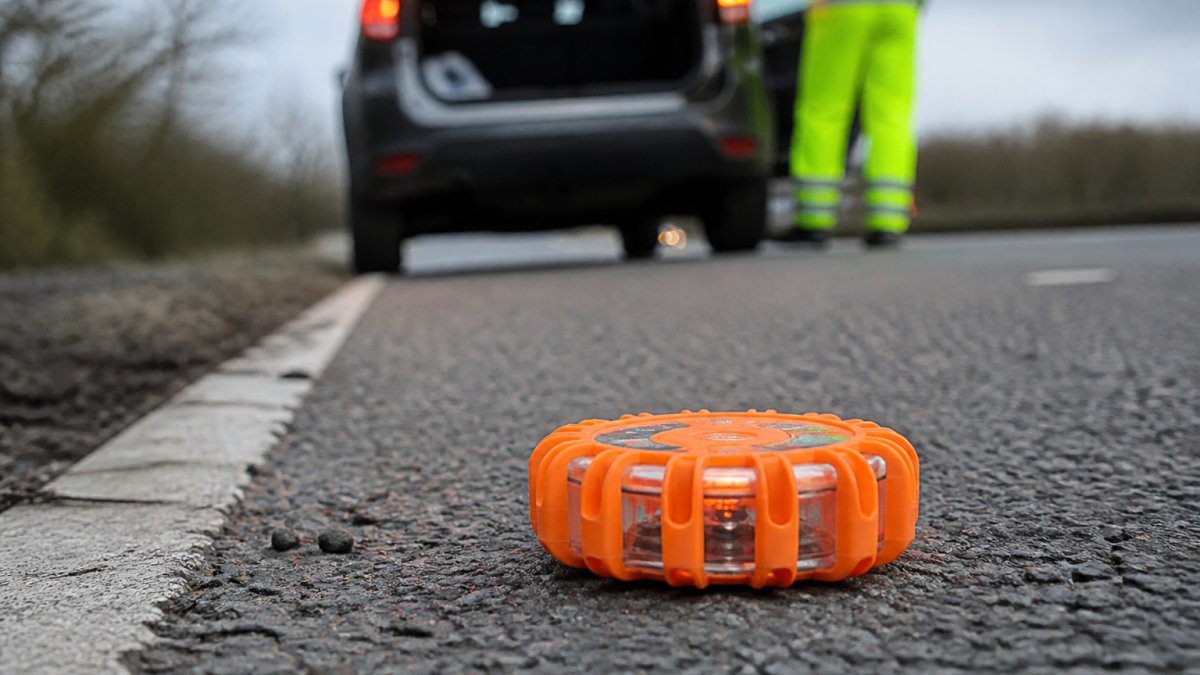
How to Choose a Reliable Roadside Safety Beacon
Table of Contents
- What Makes a Roadside Safety Beacon Reliable
- Roadside Safety Beacon Visibility: What to Look For
- Choosing the Right LED Emergency Beacon for Your Car
- Power, Runtime, and Charging Options
- GPS Emergency Beacon Features and When They Matter
- Mounting, Portability, and Weather Resistance
- Legal Requirements and Safe Use
- Conclusion
- Frequently Asked Questions
Last Updated: October 12, 2026
What Makes a Roadside Safety Beacon Reliable
A roadside safety beacon is a portable warning light that makes a broken-down or stationary vehicle visible to approaching traffic. Reliability comes down to three things: brightness, power, and build quality.
Roadflash is dedicated to enhancing motorist safety by providing multi-award-winning early warning systems designed to prevent vehicle collisions, especially for stationary vehicles on busy highways and motorways.
The Three Reliability Factors That Matter
- Visibility: Can other drivers see it in daylight, rain, and fog?
- Power: Does it still work when you need it, months after you last charged it?
- Durability: Will it survive being thrown in a boot, dropped on tarmac, and rained on?
A beacon that fails any one of these can’t be trusted.
A reliable roadside safety beacon is one that stays bright, stays charged, and stays intact. If a product can’t prove all three, keep looking.
Roadside Safety Beacon Visibility: What to Look For
Visibility is the single most important feature of any warning beacon, but ‘high visibility’ on a product page tells you almost nothing. Judge a beacon on four measurable things: brightness, viewing angle, flash pattern, and performance in poor conditions.
Brightness: Look for Candela, Not Lumens
Lumens measure total light output in every direction. Candela measures intensity in a specific direction, which is what matters for a warning light aimed at approaching traffic. A beacon can have impressive lumen figures and still be weak on axis.
When comparing beacons:
- Ask for the peak intensity in candela (cd). A beacon intended for daylight motorway use needs a high on-axis figure; a low-power unit for car parks needs far less.
- Check the effective intensity, not just the peak. Flash patterns that pulse briefly produce a lower effective intensity than a steady source of the same peak, so a fast strobe can look brighter than it measures.
- Be sceptical of ‘lumens’ alone. If a maker only quotes lumens and never candela or viewing distance, they are likely hiding a weak optical design.
Viewing Angle and Off-Axis Performance
A beacon is rarely viewed head-on. Approaching drivers see it at an angle, and adjacent lanes see it from the side, so a narrow beam that looks brilliant from directly behind can be almost invisible 30 degrees off axis.
Look for:
- A stated horizontal viewing angle. A wide figure (approaching or exceeding 180 degrees) means the beacon stays visible as drivers approach at an angle.
- Optical design, not just LED count. A well-designed lens or reflector spreads light evenly; a bare cluster of LEDs creates hot spots and dark zones.
- Vertical spread. A beacon that only throws light horizontally can be missed by drivers in high vehicles or on a downhill approach.
Flash Pattern: Why It Matters More Than You Think
Flash pattern determines how quickly a driver registers the warning and whether the light is confused with something else.
- Flash rate: Very slow flashes are easy to miss; very fast strobes can blur together and lose definition. A rate in the region of one to four flashes per second is a common compromise between conspicuity and clarity.
- Single vs. double vs. rotating: Single flashes read as a simple warning; double or triple bursts read as more urgent; rotating or sweeping patterns mimic traditional beacons and can be easier to judge distance from.
- Synchronisation: If you run more than one beacon, synchronised or alternating patterns avoid a confusing mess of light.
Daylight, Rain, and Fog Performance
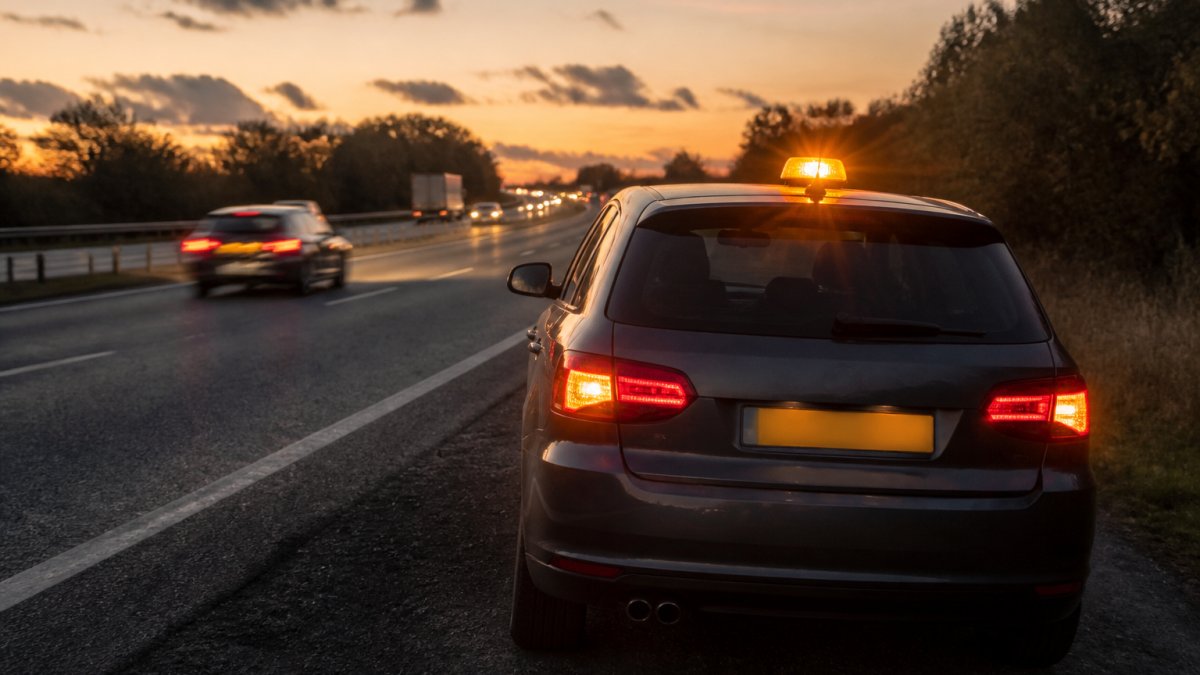
Daylight is the hardest test: a beacon that looks impressive in a dark garage can disappear in bright sun, and rain or fog scatter light so a narrow beam loses reach quickly.
- Daylight: Only a genuinely high-intensity beacon with good optics stays visible against bright backgrounds. Test or buy from a maker who publishes daylight visibility figures.
- Rain and spray: Water on the lens and in the air reduces contrast. A wider beam and a higher flash rate help, but no beacon is fully immune.
- Fog: Fog reflects light back at the source, so an extremely bright narrow beam can create glare for the driver it is meant to warn. A broader, slightly less intense pattern often performs better.
A Practical Visibility Checklist
Before buying, check the spec sheet for:
- Peak intensity in candela, or a stated effective viewing distance.
- Horizontal viewing angle.
- Flash rate and pattern options.
- Any stated daylight or all-weather performance.
- Lens or optic design, not just LED count.
If a product cannot answer these, treat its visibility claims as marketing.
Brightness is not a number you can trust from a product page. Ask for candela, viewing angle, and flash rate, and judge a beacon on how it performs in daylight and bad weather, not in a dark garage.
Choosing the Right LED Emergency Beacon for Your Car
The right LED emergency beacon for your car depends on how and where you drive: a town commuter has different needs from someone on the motorway twice a week.
Start with these questions:
- Where do you drive most? Motorways and fast A-roads demand higher visibility.
- What vehicle do you drive? Cars, vans, and support trucks have different roof and mounting options.
- How often do you travel? Frequent motorway drivers get more value from a premium beacon.
For most drivers, a rechargeable LED beacon with a magnetic base covers the basics. If you drive abroad, check local rules before you buy. Spain, for example, requires a DGT 3.0 compliant beacon with geolocation for roadside warnings.
| Driver Type | Best Beacon Type | Key Feature |
|---|---|---|
| Occasional town driver | Basic rechargeable LED beacon | Magnetic base, long battery life |
| Regular motorway commuter | High-output LED beacon | Daylight visibility, wide viewing angle |
| Solo or night driver | GPS emergency beacon | Geolocation for emergency services |
| Fleet or support vehicle | Heavy-duty beacon or light bar | Durability, multiple mounting options |
Power, Runtime, and Charging Options
Power is where reliability is won or lost: a beacon with a dead battery is useless, no matter how bright it is. Here is what actually matters.
The Three Power Sources and Their Real Trade-Offs
Rechargeable (usually lithium-ion or LiFePO4)
- Best for regular use and the most common choice for portable roadside beacons.
- Runtime depends heavily on brightness setting and flash pattern: full intensity may last only a few hours, while a lower setting or slower flash can run overnight.
- Charging typically takes a few hours via USB-C or a dedicated dock; fast-charge claims usually apply only to the first part of the cycle.
Replaceable batteries (AA, AAA, or specialist cells)
- Good as a backup or for infrequent use, because you can carry spares.
- Runtime is usually shorter than a good rechargeable unit, and cold weather sharply reduces alkaline performance.
- Watch for leakage if the beacon sits unused for long periods.
Vehicle power (12V or 24V socket)
- Reliable while the engine runs and ideal for permanent or semi-permanent installations.
- Useless if the vehicle battery is flat, which is exactly the situation many breakdowns create.
- Cabling can be a trip hazard if routed carelessly around a stopped vehicle.
Runtime: What to Expect and How to Judge It
No single runtime figure applies to all beacons, because it depends on brightness, flash pattern, and temperature. Judge the claim instead:
- Look for a stated runtime at a stated brightness. ‘Up to 20 hours’ means nothing without knowing whether that is at full or minimum output.
- Assume real-world runtime is lower than the headline figure. Cold weather, ageing cells, and frequent flashing all reduce it.
- Match runtime to your use case. A beacon for occasional roadside use needs enough for one breakdown and a top-up; a beacon for a work zone or fleet vehicle may need to run for a full shift.
Charging, Storage, and Battery Health
- Charge before you need it. A beacon bought, stored, and never checked until a breakdown will have drained or degraded.
- Top up every few months if not in regular use, and store it somewhere temperature-stable rather than a hot or freezing boot.
- Use the charger the maker specifies. Wrong voltage or a cheap charger can shorten cell life or damage the unit.
A beacon left uncharged for months can fail exactly when you need it. Set a reminder to top it up every three months, or keep a spare set of batteries in the glovebox.
A Power Checklist
- Does the maker state runtime at a specific brightness setting?
- How long does a full charge take, and what connector does it use?
- Is there a low-battery warning?
- Can you carry spare batteries or a power bank as backup?
- Will it still work if your vehicle battery is flat?
Test the runtime once, at home, before you rely on it. Run the beacon on your usual setting and time how long it lasts. That single test tells you more than any spec sheet.
GPS Emergency Beacon Features and When They Matter
A GPS emergency beacon shares your location with emergency services when you break down.
Here’s when GPS is worth paying for:
- You drive alone, especially at night or on rural roads.
- You commute on motorways where breakdowns happen fast and traffic is heavy.
- You want emergency services to find you quickly without a long phone call.
The National Highways guidance on breakdown safety stresses getting yourself and your passengers to safety first. A GPS beacon supports that by speeding up the response.
If you rarely leave town and always have phone signal, GPS is a nice extra. If you’re a motorway regular, it’s close to essential.
Mounting, Portability, and Weather Resistance
Mounting and weather resistance decide whether a beacon works when it counts: one that falls off the roof at speed or fills with water in a downpour can’t be relied on.
Look for these build features:
- Magnetic base: Strong magnets hold the beacon on the roof at motorway speeds.
- Non-slip feet: Useful for dashboards and flat surfaces.
- Sturdy casing: A tough outer shell survives drops and knocks.
A heavy-duty beacon with a sealed case will outlast a cheap one that cracks in the cold.
Test the magnet before you rely on it. Stick the beacon to your roof and give it a firm tug. If it shifts easily, it won’t hold at motorway speed.
Legal Requirements and Safe Use
Roadside warning equipment is regulated, and rules vary by country, so check what applies where you drive before you buy.
In the UK, the Highway Code on breakdowns and warning devices sets out what to do if you break down. The key points:
- Move to a safe place, like the hard shoulder or a service area, if you can.
- Put on your hazard warning lights.
- Place a warning device only if it’s safe to do so.
Rules differ abroad. Some countries require a specific type of beacon, and some ban warning triangles on motorways entirely. Check the rules for every country you drive through. A compliant beacon, like Roadflash’s DGT 3.0 models, takes the guesswork out of cross-border driving.
Safety comes first, every time. No warning device is worth standing in live traffic for. Get to safety, then worry about the beacon.
Conclusion
Choosing a reliable roadside safety beacon comes down to three things: visibility, power, and durability. Nail those and you have a beacon you can trust when it matters most.
At Roadflash, we build multi-award-winning early warning systems designed to prevent collisions and protect drivers during breakdowns. Our beacons combine high-visibility lighting, GPS/Geolocation, and DGT 3.0 compliance.
Add to basket
Frequently Asked Questions
What should I look for when choosing a roadside safety beacon?
Focus on four things: visibility (daylight-rated LEDs with a wide viewing angle), power (rechargeable batteries with at least 8-10 hours of runtime), mounting (magnetic or adhesive bases that hold at motorway speeds), and durability (IP-rated weather resistance and sturdy casing). A reliable roadside safety beacon should also have multiple flashing patterns and be compact enough to store in your boot.
How bright should an LED roadside safety beacon be?
Brightness is measured in lumens or candela, but for roadside use the practical measure is viewing distance. A good beacon should be visible from at least 300 metres in daylight and up to 1 kilometre at night. Look for beacons with high-intensity LEDs and a focused lens that concentrates light rather than scattering it.
Are GPS-enabled emergency beacons worth buying?
A GPS emergency beacon is worth buying if you regularly drive on motorways, rural roads, or anywhere with poor mobile signal. The GPS function shares your exact location with emergency services, which can cut response times significantly when you are injured or disoriented. For occasional urban drivers, a standard high-visibility beacon may be sufficient. If you need DGT 3.0 compliance for driving in Spain, a GPS-enabled beacon is mandatory, so check certification before purchase.
How long should a roadside safety beacon last on one charge?
Most rechargeable LED beacons run for 6 to 12 hours on a single charge, depending on the flashing pattern and brightness setting. Lower-intensity or slower flash patterns extend battery life, while constant-on or high-intensity strobe modes drain faster. For breakdown use, aim for at least 8 hours so the beacon stays lit through a full recovery operation. Some beacons also accept disposable batteries as a backup, which is useful if you forget to recharge before a long journey.
What do the different colours of vehicle beacons mean?
In the UK, amber beacons are used on vehicles that are slow-moving or stationary, such as recovery trucks, road maintenance vehicles, and tractors. Blue beacons are reserved for emergency services including police, fire, and ambulance. Red beacons are used by fire and rescue and some medical responders. Green beacons are used by doctors on emergency calls. For personal roadside safety, an amber beacon is the correct choice for indicating a hazard or breakdown.