
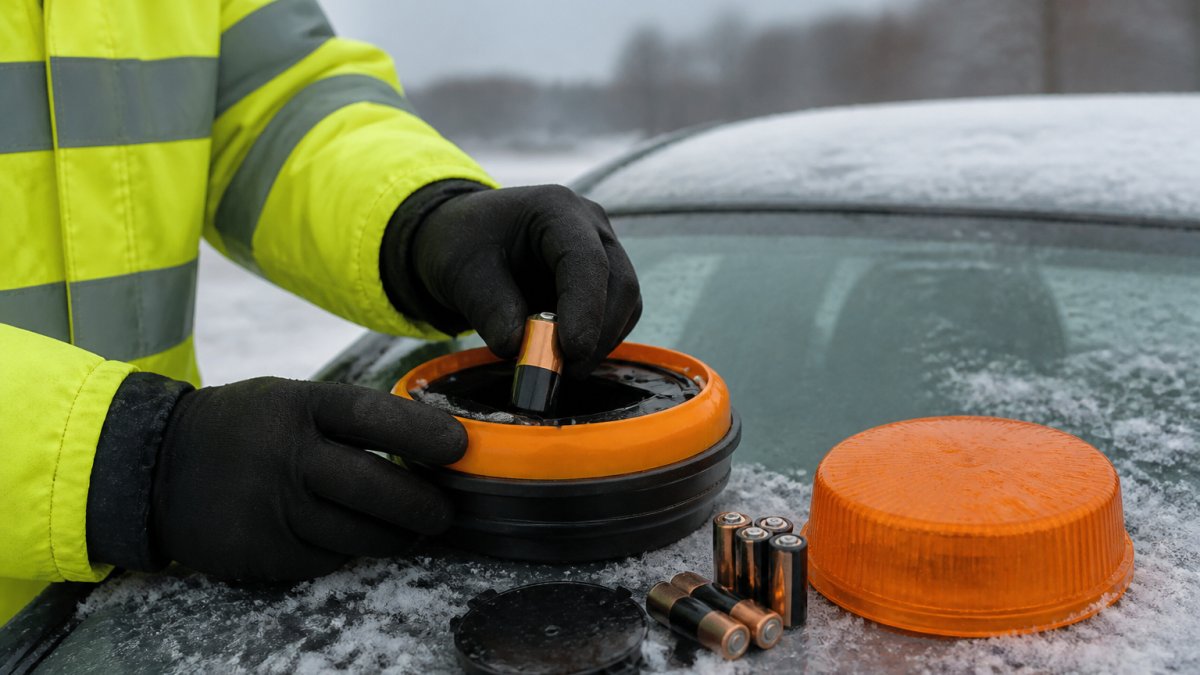
Emergency Beacon Battery Maintenance for Winter
Table of Contents
- Why Winter Battery Maintenance Matters for Emergency Beacons
- Understanding How Cold Temperatures Affect Battery Performance
- Step-by-Step Guide to Preparing Your Emergency Beacon Battery
- Emergency Beacon Testing and Readiness Checks
- Emergency Beacon Battery Life in Cold Weather
- Proper Battery Storage Temperature and Methods
- Vehicle Emergency Kit Checklist for Winter
- Common Winter Battery Mistakes to Avoid
- Frequently Asked Questions
Last Updated: October 10, 2026
Why Winter Battery Maintenance Matters for Emergency Beacons
Winter brings hidden dangers to emergency beacons. Cold temperatures drain battery power faster than any other season. A beacon that works perfectly in summer may fail when you need it most during a winter breakdown on a busy motorway.
Your emergency beacon battery maintenance for winter isn’t optional, it’s survival. When your vehicle breaks down in freezing conditions, you have minutes to activate a warning system before traffic bears down on you. A dead or weakened battery means no light, no alert, no protection.
Proper preparation takes less than an hour and prevents catastrophe.
This guide covers everything you need to know about keeping your emergency beacon operational through the coldest months. We’ll walk you through battery checks, storage methods, and testing procedures that work in practice, not just in theory.
Check your emergency beacon battery now, before winter weather arrives. A battery that works in October may fail in December without warning.
Understanding How Cold Temperatures Affect Battery Performance
Cold temperatures are brutal to batteries. Chemical reactions inside the battery slow down dramatically when the temperature drops. This means less power flows out, and the battery drains faster.
Lithium-ion batteries, which power many modern emergency beacons, lose capacity at freezing temperatures. Alkaline batteries perform even worse. A battery rated for 8 hours of runtime at room temperature might deliver only 3-4 hours in sub-zero conditions.
The problem gets worse the colder it gets. At minus 10 degrees Celsius, battery performance drops sharply. At minus 20 degrees, many batteries struggle to deliver any usable power at all.
Here’s what happens inside the battery: the electrolyte thickens. Ions move more slowly between the positive and negative terminals. The internal resistance increases, which means the battery can’t push as much current through your beacon’s circuits. Your light dims. Your GPS signal weakens.
The real danger is that the battery might appear dead when it’s actually just cold. Bring that same battery indoors and warm it up, and it springs back to life.
Do not assume a cold battery is permanently dead. A battery that won’t work at minus 15 degrees might work again at plus 5 degrees. But in an emergency, you cannot wait for warming, you need full power immediately.
Step-by-Step Guide to Preparing Your Emergency Beacon Battery
Preparation is where winter safety begins. Follow these steps before the cold weather arrives.
Check Battery Condition Before Winter Arrives
Start by testing your beacon’s battery while the weather is still mild. Activate your beacon and observe the light output. A healthy beacon produces a bright, steady light. A weakening battery produces a dim or flickering light.
Check the battery’s charge level if your beacon displays it. Most emergency beacons should show a full or near-full charge. If your beacon has been sitting unused for months, the battery has likely lost some charge naturally.
Look at the battery’s manufacturing date if it’s visible on the device. Batteries age even when not in use.
Inspect Terminals and Clean Corrosion
Battery terminals are where power flows out of the battery into your beacon. Corrosion on these terminals blocks that power flow. Even a fully charged battery can’t work if the terminals are corroded.
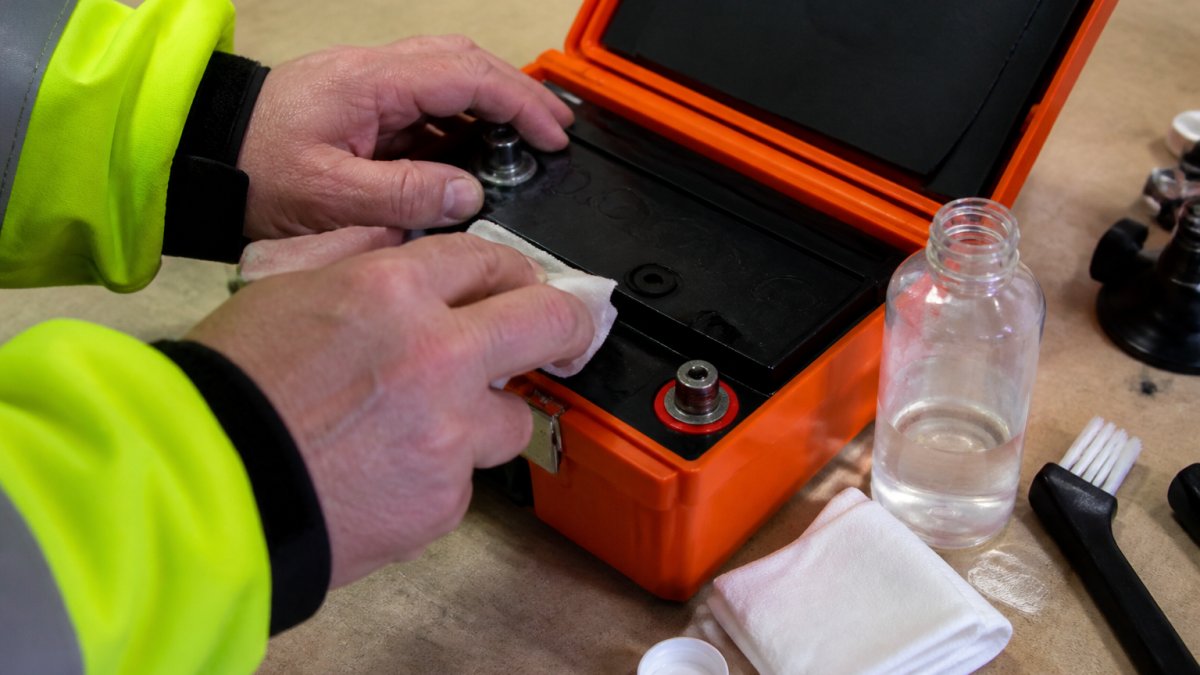
Remove your beacon’s battery carefully. Look at both the positive and negative terminals. Clean terminals are shiny metal. Corroded terminals are covered with a white, blue, or green crusty coating.
Clean corroded terminals with a soft cloth and distilled water. Never use tap water, minerals in tap water can cause more corrosion. Dip the cloth in distilled water and gently wipe each terminal until the crust is gone.
For heavy corrosion, mix distilled water with a small amount of baking soda. This mild abrasive removes stubborn deposits without damaging the metal. Apply the paste with a soft cloth, rub gently, then rinse with distilled water and dry thoroughly.
Check the battery compartment contacts inside your beacon too. These metal springs or strips should be clean and shiny. Wipe them with a dry cloth to remove any dust or corrosion.
Maintain an Adequate Charge Throughout Winter
A fully charged battery performs better in cold weather than a partially charged one. Before winter arrives, charge your beacon completely. Leave it charging for the full recommended time, usually 4-8 hours depending on the model.
During winter, check your beacon’s charge level monthly. Cold weather causes slow power drain even when the beacon isn’t activated. A beacon that sits in a cold vehicle for weeks will lose charge gradually.
Recharge your beacon indoors at room temperature whenever possible. Cold charging damages lithium-ion batteries and slows the charging process. Bring your beacon inside, let it warm to room temperature, then charge it fully.
Store your fully charged beacon in a warm location. A vehicle parked outdoors in winter loses heat quickly. Your beacon battery will stay warmer if stored in your home, office, or an insulated garage rather than in the car.
Emergency Beacon Testing and Readiness Checks
Testing your beacon before winter proves it will work when you need it. This step catches problems while you can still fix them.
Activate your beacon in a safe location and observe the light output. The light should be bright and steady. If it flickers or dims, the battery needs replacement or the beacon needs service.
Check that your beacon’s GPS or geolocation feature activates if your model includes it. This feature may take 30-60 seconds to acquire a signal, especially if it’s been off for a while.
Test your beacon’s self-test function if it has one. Many modern beacons include a built-in diagnostic that checks battery health and light output. Run this test monthly throughout winter. If the self-test fails, replace the battery or service the beacon before relying on it.
Keep a record of when you last tested your beacon. Write the date on a label and stick it to the beacon or store the date in your phone. This helps you remember when the next monthly check is due.
A beacon that’s never been tested is a beacon you cannot trust. Test it now, test it monthly, and replace the battery if any test shows weakness.
Emergency Beacon Battery Life in Cold Weather
Battery life in winter is shorter than in summer. Plan for this reality when deciding whether to carry spare batteries.
A beacon with a 12-hour runtime at room temperature might deliver only 6-8 hours in freezing conditions. This shorter runtime means your battery depletes faster if you’re using the beacon continuously.
However, emergency beacon batteries are designed for short bursts of use, not continuous operation. In a real breakdown situation, you activate your beacon for 15-30 minutes while traffic passes and emergency services arrive. You’re not running it for hours on end.
The real risk is leaving your beacon activated and forgotten. If you activate it during a breakdown and then forget to turn it off, the battery will drain completely in cold weather much faster than you expect.
Spare batteries become important in winter. Carry at least one spare battery in your vehicle, stored indoors (in your glove box or a warm bag) rather than in the cold trunk.
Proper Battery Storage Temperature and Methods
Storage temperature matters as much as operating temperature. A battery stored in a freezing vehicle loses charge and degrades faster than one stored in a warm location.
Store your beacon indoors during winter months. Your home, office, or a heated garage keeps the battery warm and maintains its charge. A beacon stored indoors at room temperature will be ready to work immediately when you need it.
If you must store your beacon in your vehicle, keep it in an insulated bag or case.
Never store your beacon in the boot where temperatures drop lowest. The cabin of your vehicle is warmer than the boot, but still cold. The best storage location is indoors.
For long-term storage over winter (more than a month without use), store your beacon at room temperature with a full charge. This maintains battery health better than storing it cold and partially discharged.
Check stored beacons monthly. Activate them briefly to confirm they still work. A beacon that’s been sitting for weeks may have lost enough charge to fail when you need it.
Vehicle Emergency Kit Checklist for Winter
Your emergency beacon is one part of a complete winter emergency kit. This checklist ensures you’re prepared for breakdown situations.
Essential items:
- Emergency beacon with fully charged battery
- Spare battery for your beacon, stored indoors
- Reflective warning triangle (backup to your beacon)
- High-visibility vest or jacket
- Torch with spare batteries
- First aid kit
- Phone charger or power bank
- Blanket or emergency shelter
- Water and emergency food
- Basic tools (screwdrivers, pliers, adjustable wrench)
Winter-specific additions:
- Ice scraper and snow brush
- De-icer spray
- Jumper cables or portable jump starter
- Traction aids (sand, gravel, or traction mats)
- Extra warm clothing
- Hand warmers or heat packs
Store this kit in your vehicle year-round, but check it monthly during winter. Replace any used items immediately. Test your beacon battery monthly as part of this kit check.
Keep your beacon at the top of your emergency kit where you can reach it quickly. In a breakdown situation, you want to activate it within seconds, not dig for it at the bottom of a packed boot.
Common Winter Battery Mistakes to Avoid
Learning from others’ mistakes saves you from dangerous failures.
Mistake 1: Assuming a cold battery is dead. A battery that won’t work at minus 15 degrees might work fine at plus 5 degrees.
Mistake 2: Storing your beacon in the cold vehicle boot. The boot is the coldest part of your car. Store your beacon indoors or in an insulated bag inside the cabin.
Mistake 3: Skipping monthly checks. Winter is long. A battery that worked in November may fail by February without warning. Monthly testing catches problems before they become emergencies.
Mistake 4: Forgetting to turn off your beacon after use. A beacon left running drains its battery completely in cold weather.
Mistake 5: Carrying only one battery. Winter batteries fail without warning. A spare battery stored indoors gives you a backup. Carry at least one spare.
Mistake 6: Using tap water to clean terminals. Minerals in tap water cause more corrosion. Always use distilled water.
Mistake 7: Charging your beacon in cold conditions. Cold charging damages lithium-ion batteries and slows the charging process.
Winter emergency beacon battery maintenance protects you when breakdowns happen. Roadflash emergency beacons with GPS and high-visibility lighting give you that protection with multi-award-winning reliability. Road safety guidance from the Department for Transport confirms that early warning systems significantly reduce accident risk during vehicle breakdowns.
Frequently Asked Questions
How should I check an emergency beacon battery before winter?
Inspect the battery terminals for corrosion or loose connections, clean any buildup with distilled water and a soft cloth, and verify the battery holds a full charge. Most lithium-ion and rechargeable batteries perform best when fully charged before storage. Test the beacon’s light output and any GPS/geolocation features to ensure readiness.
Does cold weather reduce an emergency beacon battery’s performance?
Yes, cold temperatures significantly reduce battery capacity and output. Chemical reactions inside the battery slow in cold, temporarily lowering voltage and runtime. Most rechargeable batteries lose 20-50% of their effective capacity at freezing temperatures. However, this loss is usually temporary; performance recovers as the battery warms. Storing your beacon indoors and keeping the battery fully charged before winter helps offset this effect and ensures reliable operation during emergencies.
What should I include in a vehicle emergency kit checklist for winter?
Include a fully charged emergency beacon with spare batteries, a charger suitable for your vehicle’s power supply, a reflective triangle or high-visibility markers, a torch with extra batteries, jumper cables, a first-aid kit, and a blanket. For emergency beacons with GPS/geolocation, confirm the device is activated and has adequate signal. Keep all items in an accessible location and check batteries monthly during winter months to ensure they remain charged and functional.
How often should I test my emergency beacon during winter?
Test your emergency beacon at least monthly during winter to verify battery charge level, light output, and any electronic features like GPS activation. Monthly checks help catch battery degradation early and ensure the beacon will function when needed. After testing, recharge the battery fully if the charge has dropped. If your beacon shows warning indicators or reduced brightness, replace or recharge the battery immediately rather than waiting until an emergency occurs.