
Best Emergency Breakdown Kits for UK Drivers in 2026
Table of Contents
- Quick Comparison: Top Breakdown Kits for UK Motorists
- What to Do If You Break Down on a Motorway: Safety First
- RAC Comprehensive Breakdown Kit: The Professional Standard
- Noco Boost Plus GB40: The Modern Jump Start Solution
- AA Winter Car Essentials Kit: Essential Car Safety Items for Winter
- DGT 3.0 Compliant Beacons: Advanced Warning for Stationary Vehicles
- Budget vs Premium: What Should You Pay for a Breakdown Kit?
- Conclusion
- Frequently Asked Questions
Last Updated: September 6, 2026
Quick Comparison: Top Breakdown Kits for UK Motorists
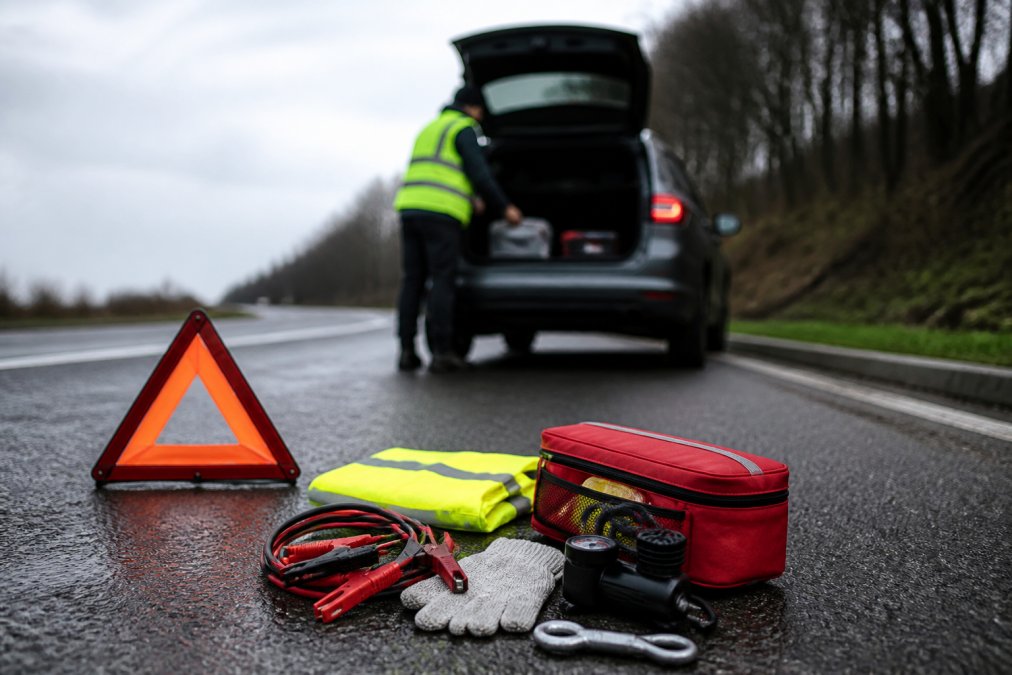
The best emergency breakdown kits for UK drivers combine legal essentials, practical tools, and modern safety technology. Roadflash specialises in early warning systems designed to prevent collisions with stopped cars.
A breakdown kit is a collection of safety and recovery items stored in your vehicle to help you manage roadside emergencies, protecting yourself and signalling your presence to other road users.
| Kit | Price | Core Contents | Best For |
|---|---|---|---|
| Roadflash Early Warning Beacons | Check website | DGT 3.0 compliant beacons, GPS/Geolocation, high-vis lighting | Preventing collisions with stationary vehicles |
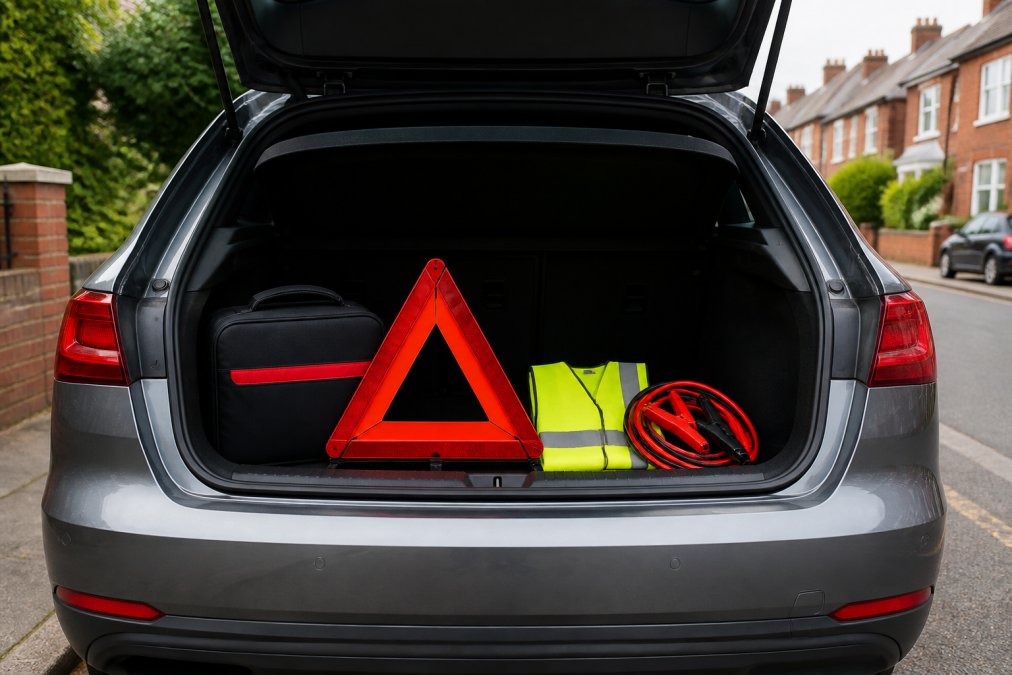
| RAC Comprehensive Kit | £35.00 | Jump leads, hi-vis vest, warning triangle, carry bag | Standard motorway breakdowns |
| Noco Boost Plus GB40 | £99.95 | 1000-amp jump starter, LED flashlight, USB charging | Solo drivers with battery failure |
| AA Winter Kit | £24.99 | Ice scraper, de-icer, foil blanket, hi-vis vest | Winter driving conditions |
| 13-in-1 Europe Travel Kit | £22.50 | Tow rope, jump leads, emergency hammer, first aid | Affordable all-in-one travel |
What to Do If You Break Down on a Motorway: Safety First
Breaking down on a motorway demands an immediate, specific response because the risks differ from rural roads. Get yourself and your passengers to safety behind the barrier if possible, then contact breakdown or emergency services with your location details.
The official guidance from the National Highways motorway safety advice is unambiguous: do not attempt repairs on the hard shoulder or live lane, and only exit your vehicle when it is safe to do so. If you are in the left-hand lane or on the hard shoulder, exit through the left-hand doors and wait behind the safety barrier if there is one. Keep your hazard lights on to alert approaching traffic.
Traditional warning triangles are useful on slower roads, but on a motorway placing one requires walking along the carriageway. Modern alternatives, such as DGT 3.0 compliant beacons with GPS/Geolocation from Roadflash, let you activate a highly visible warning signal from a safe position.
Never attempt to place a warning triangle on a motorway if it means walking on the carriageway or crossing live lanes. The risk of being struck by passing traffic outweighs the benefit. Use a device you can activate from a safe position instead.
The Electric Vehicle Dimension
An EV that has lost all traction battery charge cannot simply be pushed to the hard shoulder, and towing it with a standard rope can severely damage the regenerative braking system or motor. Most manufacturers, including Tesla, Nissan, and Hyundai, specify recovery using a flatbed or wheel-lift tow truck with the driven axle raised. Your kit should include a card with your vehicle’s specific recovery requirements.
What to Carry for an EV Breakdown
For EV drivers, standard kit contents need adjustment. Jump leads are irrelevant if the 12-volt auxiliary battery is flat, as you cannot safely jump-start an EV without following the manufacturer’s procedure. Instead, consider a portable jump starter rated for the EV’s 12-volt system, which powers lights and hazard systems. A type 2 to type 2 charging cable helps only near a public charger. The most practical addition is a high-capacity power bank to keep your phone charged for calling recovery and sharing your GPS location.
The Fire Risk Consideration
A specific EV concern is thermal runaway from lithium-ion battery damage. If your EV has been in a collision or you notice smoke or a burning smell from the battery pack, evacuate immediately and move at least 15 metres away (gov.uk). A standard car fire extinguisher is not designed for a lithium-ion battery fire. Call the fire service immediately and provide your exact location; a connected beacon with GPS/Geolocation can transmit your precise position without you describing your surroundings.
RAC Comprehensive Breakdown Kit: The Professional Standard
The RAC Comprehensive Breakdown Kit provides a solid, verified baseline from a trusted motoring organisation, including heavy-duty jump leads, a high-visibility vest, a warning triangle, and a durable carry bag.
The components meet standard safety expectations, and brand verification adds confidence. It is best suited to drivers wanting reliable essentials without researching individual components, though it lacks medical supplies and food and water rations for longer journeys.
What most reviews miss is that this kit covers the basics but does nothing to address the modern visibility gap. A warning triangle and vest are passive tools; they only work if an approaching driver sees them in time.
Noco Boost Plus GB40: The Modern Jump Start Solution
The Noco Boost Plus GB40 replaces traditional jumper cables with a compact lithium-ion power station delivering 1000 amps of peak discharge for petrol and diesel engines. It includes a USB charging port, an LED flashlight with SOS strobe modes, and spark-proof technology with reverse polarity protection.
For solo drivers, this is arguably the most helpful single item you can carry. A flat battery is the most common breakdown cause, and this unit resolves it without waiting for another vehicle or recovery truck. It is compact enough for a glovebox and performs reliably in cold weather, when batteries most often fail.
The GB40 requires regular recharging to maintain its battery health. Add a reminder to your calendar to top it up every three months, or it may be flat when you need it most.
The one drawback is maintenance. Unlike passive tools that sit in your boot for years, this device needs periodic attention; if you are not the type to keep electronics charged, traditional quality jump leads may serve you better.
AA Winter Car Essentials Kit: Essential Car Safety Items for Winter
The AA Winter Car Essentials Kit addresses winter driving challenges with a professional-grade ice scraper and de-icer, a high-visibility vest, a warning triangle, and an emergency foil blanket.
These items are invaluable when frost, snow, and low visibility create hazardous conditions. The de-icer and scraper clear your windscreen legally and safely, while the foil blanket retains body heat while waiting for recovery in cold temperatures.
The kit lacks mechanical tools, but that is not its purpose. If you already own a general breakdown kit, this is a sensible winter addition; if starting from scratch, combine it with other items.
DGT 3.0 Compliant Beacons: Advanced Warning for Stationary Vehicles
DGT 3.0 compliant beacons represent a significant advancement over traditional warning triangles, particularly for drivers travelling in Europe. The DGT 3.0 regulation, enforced by Spain’s traffic authority, requires vehicles to carry a V-16 connected emergency beacon that automatically transmits the vehicle’s GPS position to emergency services when activated (dgt.es).
These beacons are not just for Spanish motorways. The GPS/Geolocation feature means that if you are injured or disoriented after a breakdown, emergency services can locate your vehicle precisely without relying on your description.
Roadflash offers DGT 3.0 compliant emergency beacons with GPS/Geolocation and high-visibility lighting, increasing hazard awareness and improving vehicle visibility at the roadside. For fleet operators or frequent travellers, broadcasting your location automatically is a step change in roadside safety.
A DGT 3.0 beacon does two jobs at once: it warns approaching traffic with high-visibility lighting, and it transmits your exact location to emergency services. No other single item in a breakdown kit offers this combination.
The price reflects their advanced capability. They contain electronics, GPS modules, and cellular connectivity, justifying the investment for regular motorway or European travel.
Budget vs Premium: What Should You Pay for a Breakdown Kit?
The real question isn’t just what you pay, but whether you buy a pre-assembled box or build your own kit. The right choice depends on your vehicle, your driving habits, and your willingness to maintain the contents.
The Case for Pre-Assembled Kits
Pre-assembled kits, like the RAC Comprehensive Kit at £35 or the AA Winter Kit at £24.99, offer a verified baseline with brand assurance that components meet basic safety standards. For a new driver or someone wanting a set-and-forget solution, this is a sensible starting point, though these kits rarely include a first aid kit meeting the Health and Safety (First-Aid) Regulations 1981 for workplace vehicles, nor do they address electric vehicle needs.
The Case for a DIY Kit
Building your own kit lets you allocate budget to items that matter for your specific risk profile. A common pattern is to start with a mid-range mechanical kit and supplement it with higher-quality safety items, such as investing £20 in a larger, BS EN 2300-compliant triangle visible from a greater distance, or a recovery strap with a breaking strain rated for your vehicle’s gross weight, a critical distinction for heavier SUVs and vans.
A Neutral Cost Breakdown
To illustrate the difference, consider a DIY kit built for a typical family hatchback:
| Item | Budget Option | Quality Option | Why the Upgrade Matters |
|---|---|---|---|
| Warning Triangle | £5 (Basic) | £15 (BS EN 2300) | Larger reflective area is visible sooner on dark roads. |
| Hi-Vis Vest | £3 (Single) | £10 (Two, Class 2) | A spare vest for a passenger is a legal and practical necessity. |
| Jump Leads | £10 (4m, 25mm²) | £25 (6m, 35mm²) | Thicker cable delivers more current, starting larger engines reliably. |
| First Aid Kit | £8 (Basic) | £20 (BS 8599-1 Compliant) | The British Standard includes a foil blanket and eye dressing, items often missing from budget kits. |
| Tow Rope | £8 (Rope) | £18 (Recovery Strap) | A strap with a 2,500kg breaking strain is safer for controlled recovery than a stretchy rope. |
| Torch | £5 (Basic) | £15 (Rechargeable, 500 lumens) | A bright torch with a strobe function doubles as a signalling device. |
| Total | £39 | £103 | The premium DIY kit is still under the cost of a single breakdown call-out charge. |
The Hidden Cost of Maintenance
A critical factor product pages ignore is the maintenance schedule. First aid supplies have expiration dates, typically three to five years from manufacture, and adhesive degrades over time. Similarly, a torch or jump starter with a lithium-ion battery loses its charge over six to twelve months of storage. If you are not willing to check these items every quarter, a cheaper kit with replaceable batteries might be more practical.
The Verdict
For most drivers, a hybrid approach is the most cost-effective: buy a mid-range mechanical kit for the tools, then invest savings in a BS 8599-1 compliant first aid kit and a high-quality warning triangle. The premium tier only makes sense for fleet vehicles or regular driving in remote areas where self-recovery is the only option.
Conclusion
Building the right breakdown kit means matching your purchases to how and where you drive, not just buying the cheapest box of tools. Basic recovery tools and a first aid kit form your foundation, but connected warning technology addresses the risk that actually causes serious harm: being hit while stationary.
Roadflash specialises in multi-award-winning early warning systems that prevent vehicle collisions, with DGT 3.0 compliant beacons offering GPS/Geolocation and high-visibility lighting. These products significantly increase hazard awareness and improve vehicle visibility at the side of roads, protecting drivers and passengers during breakdowns. Add to basket and equip your vehicle with the same early warning technology used by safety professionals to ensure you are seen, located, and protected when it matters most.
Frequently Asked Questions
Is it a legal requirement to carry a breakdown kit in the car?
No, in the UK it is not a legal requirement to carry a breakdown kit. However, the Highway Code advises carrying certain items for motorway safety. While you won’t face a fine for not having one, a basic kit with a warning triangle and high-visibility vest is strongly recommended. If you drive abroad, particularly in Spain, you must carry DGT 3.0 compliant beacons and specific safety equipment to meet local road safety regulations.
What is the most important item to include in a winter breakdown kit?
For winter driving, a high-visibility vest and warning triangle are essential for signalling to other road users. Beyond visibility, a de-icer and ice scraper are practical essentials. A thermal foil blanket and warm clothing are critical for staying warm while waiting for recovery. If your battery is prone to failing in cold weather, a portable jump starter like the Noco Boost Plus is a wise investment for essential car safety items for winter.
How can I improve my visibility if I break down on a smart motorway?
If you break down on a smart motorway, your priority is to get out of the vehicle and behind the barrier. Hazard lights should be on, but for a stationary vehicle, a DGT 3.0 compliant beacon with GPS provides a much stronger early warning signal than hazard lights alone. These beacons increase hazard awareness for approaching traffic, giving drivers more time to slow down and move over, which is vital where there is no hard shoulder.
Do I need a warning triangle and a high-visibility vest in my kit?
Yes, a warning triangle and high-visibility vest are the core components of any breakdown kit. On a motorway, you should only use a warning triangle if it is safe to do so, placing it at least 45 metres behind your vehicle. A high-visibility vest ensures you are seen by other drivers when you exit your car. While not required by UK law, they are considered essential items for basic roadside safety and are often required when driving in Europe.
Get started with Roadflash and give yourself the peace of mind that comes from knowing your stationary vehicle is visible to approaching traffic, whether you are commuting on a motorway or driving abroad.