
5 Best High Visibility Vests for Roadside Emergencies
Table of Contents
- Quick Comparison: 5 Best High Visibility Vests
- How We Evaluated These High Visibility Vests
- 1. Roadflash: Best for Integrated Emergency Warning Systems
- 2. A-SAFETY High Visibility Vest: Best for Tool Storage
- 3. JKSafety Surveyor Safety Vest: Best for Comfort
- 4. Neiko 53941A Reflective Vest: Best Budget Option
- 5. GoxRunx Reflective Vest: Best for Night-time Visibility
- EN ISO 20471 Standards for Motorists
- How to Stay Safe During a Motorway Breakdown
- Frequently Asked Questions
Last Updated: September 19, 2026
Quick Comparison: 5 Best High Visibility Vests
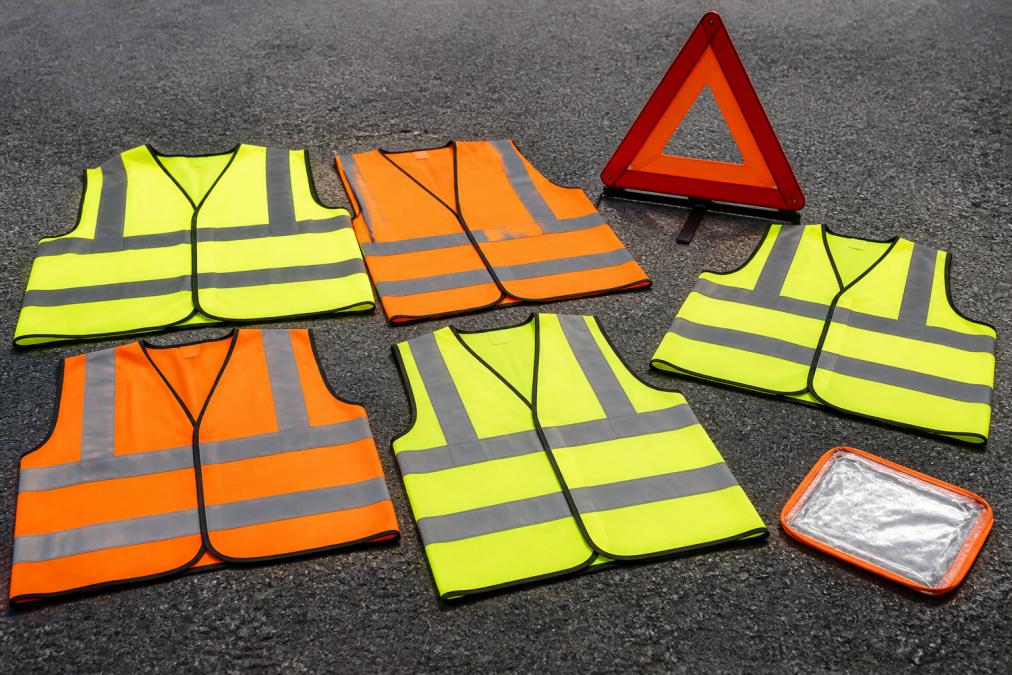
A high visibility vest is a fluorescent garment with retro-reflective tape that makes the wearer stand out to drivers in daylight and headlights. For regular drivers, keeping one in the boot is one of the cheapest safety decisions you will ever make. This guide from Roadflash compares five vests, from budget spares to integrated warning systems.
| Vest | Best For | Key Feature | Price |
|---|---|---|---|
| Roadflash | Integrated warning systems | DGT 3.0 beacon with GPS | See site |
| A-SAFETY | Tool storage | Multiple utility pockets | £12.99 |
| JKSafety Surveyor | Comfort | Breathable unisex fit | £15.50 |
| Neiko 53941A | Budget | Lightweight mesh | £8.99 |
| GoxRunx | Night-time visibility | 360-degree reflectivity | £10.50 |
How We Evaluated These High Visibility Vests
We scored each vest on visibility performance, comfort and fit, storage, and durability. Visibility standards came first, because a vest that fails recognised reflectivity requirements offers false confidence.
1. Roadflash: Best for Integrated Emergency Warning Systems
Roadflash approaches roadside safety as a system rather than a single garment. Its multi-award-winning early warning products include DGT 3.0 compliant emergency beacons with GPS and geolocation, designed for stationary vehicles on busy motorways.
Pros and Cons
Pros:
- Multi-award-winning road safety products
- Early warning systems designed for stationary vehicles
- DGT 3.0 compliant beacons with GPS and geolocation
- UK-based support
Cons:
- A system purchase rather than a simple vest, so it costs more than a basic garment
- Best value for drivers who want full roadside protection, not just clothing
If you drive the motorway even occasionally, an integrated warning system earns its place. The moment you are stationary in a live lane or on a hard shoulder, the beacon does the job your hazard lights cannot: it warns traffic approaching from a distance.
2. A-SAFETY High Visibility Vest: Best for Tool Storage
Storage is the reason to choose the A-SAFETY vest. It carries multiple utility pockets plus an integrated radio mic loop, useful for keeping tools, a phone, or a torch on you rather than on the ground.
Pros and Cons
Pros:
- Excellent storage capacity
- Strong zipper design
- Radio mic loop for communication
Cons:
- Heavier than basic mesh alternatives
- Overkill if you only need a spare for emergencies
3. JKSafety Surveyor Safety Vest: Best for Comfort
Comfort over long periods is where the JKSafety Surveyor vest wins. The breathable fabric and unisex fit make it wearable for extended stints, and the enhanced reflective piping adds visibility without stiffness.
Pros and Cons
Pros:
- High durability for long-term storage
- Comfortable for extended wear
- Enhanced reflective piping
Cons:
- Sizing can run large
- Pricier than basic alternatives
4. Neiko 53941A Reflective Vest: Best Budget Option
The Neiko 53941A does the essential job for £8.99. Lightweight mesh, high-intensity reflective tape, and a hook and loop closure mean it folds flat, stores anywhere, and costs little enough to keep one in every vehicle.
Pros and Cons
Pros:
- Very affordable price point
- Lightweight and easy to store
- Machine washable
Cons:
- Less durable than heavy-duty work vests
- Hook and loop closure wears faster than a zipper
5. GoxRunx Reflective Vest: Best for Night-time Visibility
Night-time reflectivity is the GoxRunx vest’s whole purpose. Its 360-degree visibility range and reflective material visible up to a significant distance make it the strongest pick if you may need to walk along an unlit roadside after dark.
Pros and Cons
Pros:
- Superior night-time reflectivity
- Highly adjustable fit
- Minimalist design for high mobility
Cons:
- Lacks storage pockets
- Not designed for carrying tools
EN ISO 20471 Standards for Motorists
EN ISO 20471 is the recognised standard for high visibility clothing, grading garments by the amount of fluorescent and retro-reflective material they carry. For motorists, the key point is that daytime conspicuity and nighttime reflectivity are two separate jobs, and a vest needs both.
- Class 1, the lowest coverage, typically a tabard or waistcoat with a single band. Fine for low-risk, low-speed environments, but thin protection on a fast road.
- Class 2, the common intermediate class, usually a full waistcoat with two bands of retro-reflective tape around the torso. This is the sensible minimum for anyone standing near live traffic.
- Class 3, the highest class, covering the torso and sleeves, with the largest area of fluorescent and reflective material. This is what you see on motorway maintenance crews.
Check a few label details before you buy:
- The class number should be printed on the garment label, alongside the standard reference.
- The reflective tape should be continuous around the torso, not stitched in short segments that leave gaps.
- The fluorescent colour should be a recognised shade, fluorescent yellow or fluorescent orange, rather than a generic yellow that fades quickly.
Never store a high-visibility vest under heavy tools or in direct sunlight for long periods. Fluorescent fabric fades and reflective tape cracks, and a faded vest can look fine in the boot while offering far less visibility on the road. Check it before every long journey.
Class 2 is the sensible minimum for roadside use. Class 1 is a false economy on a fast road, and Class 3 is the safest choice if you often drive at night.
How to Stay Safe During a Motorway Breakdown
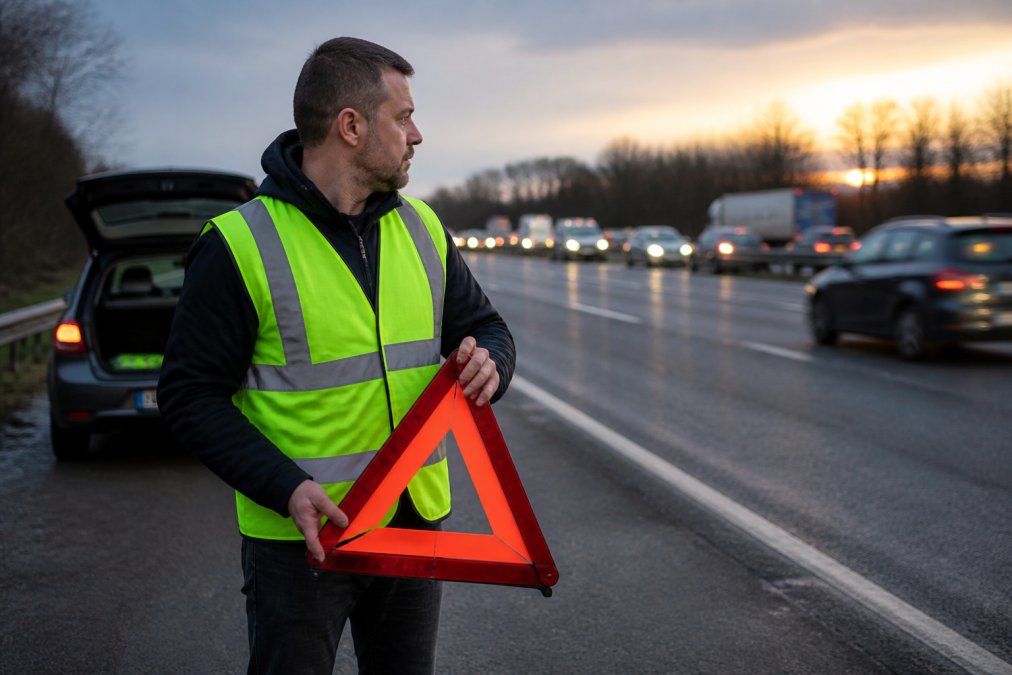
Staying safe during a motorway breakdown comes down to three things: getting out of the traffic flow, making yourself visible, and warning others early. National Highways advises moving to the left, exiting on the left where safe, and waiting behind the barrier rather than beside the car.
Where to store vests so they are actually reachable
Most guides tell you to keep a vest in the boot and leave it at that. In practice, a vest under a suitcase is one you will not put on before stepping into a live lane. A few storage patterns work better:
- Door pocket, the fastest option. You can reach it from the driver’s seat without opening the boot, which matters when you are stopped in a live lane.
- Glovebox, good for a folded spare, but check it does not crush the reflective tape against the latch.
- Under the driver’s seat, a flat pouch or mesh bag keeps the vest clean and within arm’s reach.
- Boot, in a dedicated pouch, acceptable if the boot is otherwise empty, but not if you routinely carry luggage or tools on top of it.
One vest per occupant, not one per car
A common pattern is one vest per vehicle, which leaves passengers unprotected if everyone has to exit. Keep one vest for every person who regularly travels in the car, stored together so nobody has to search. A mesh bag with a vest per seat position makes that habit stick. Children’s vests come in smaller sizes, and a vest that fits properly is more visible than an adult vest hanging off a child’s shoulders.
Cleaning without killing the reflectivity
Reflective tape is not indestructible. Most vests are machine washable, but check the label first. Wash at a low temperature without fabric softener, which can coat the tape and reduce performance, and air dry rather than tumble drying. Avoid biological detergents and fabric conditioners, and do not iron the tape; heat can crack the retro-reflective coating.
When to replace a vest
High visibility vests do not carry a formal expiry date, but the materials degrade. Fluorescent dye fades with UV exposure, and reflective tape loses performance as it cracks, peels, or dulls. A vest that has lived in a sunny boot for three summers may look yellow but reflect far less than when new.
Store one vest per seat position in a mesh bag in the door pocket or under the driver’s seat. It costs little, takes seconds to reach, and means nobody is standing at the roadside in dark clothing.
Frequently Asked Questions
What is the best high-visibility vest for roadside use?
A vest for roadside use meets EN ISO 20471 Class 2 or 3, offering high visibility in all light conditions. For safety, consider a vest with 360-degree reflectivity and a comfortable fit for wearing over clothing. Options like the GoxRunx Reflective Vest can provide night-time visibility, and the Roadflash system includes high-visibility lighting for breakdown situations.
Do I need to keep a high-visibility vest in my car by law?
UK law does not require private motorists to carry a high-visibility vest in their car. However, many European countries mandate them for drivers. For your own safety during a breakdown, especially on motorways, carrying a vest is strongly recommended. It ensures you are visible to other traffic when exiting your vehicle.
What is the difference between a Class 1 and a Class 2 high-visibility vest?
EN ISO 20471 Class 1 provides the minimum visibility for low-risk environments, while Class 2 offers higher visibility for medium-risk situations like roadside work. Class 3 is for high-risk environments and includes sleeves. For motorway breakdowns, Class 2 or 3 is advisable. Always check the garment label for the certification.
What EN ISO 20471 standards should I look for in a vest?
Look for EN ISO 20471 certification, which specifies the required amount and placement of fluorescent and retro-reflective material. For roadside emergencies, aim for Class 2 or 3. The standard ensures the vest is visible in both daylight and darkness. Check that the vest has the correct reflective tape configuration for your intended use.
What are the essential items for a roadside breakdown safety kit?
A roadside breakdown safety kit should include a high-visibility vest, a warning triangle, a torch, and a first-aid kit. For motorway breakdowns, a portable warning light or beacon, like the Roadflash system, increases visibility. Also carry a reflective triangle and ensure your mobile phone is charged. These essentials help you stay safe until help arrives.
Roadside breakdowns are unpredictable, and the equipment you carry determines how exposed you are when one happens. Sales’s Organization builds multi-award-winning early warning systems, including DGT 3.0 compliant beacons with GPS and geolocation, designed to warn approaching traffic before it reaches a stationary vehicle. If you want protection that goes beyond a vest alone, explore the Sales’s Organization range and add integrated hazard warning to your vehicle.