
Is a DGT 3.0 Beacon Worth It for Tourists? (2026 Guide)
Table of Contents
- What Is a DGT 3.0 Beacon and Why Does It Matter?
- DGT 3.0 Connectivity Explained: How the System Works
- V16 Beacon Requirements for Rental Cars: What You Need to Know
- Is a Warning Triangle Still Legal? The Mandate Change
- How We Evaluated DGT 3.0 Beacons for Tourists
- Comparing Top DGT 3.0 Beacons: Roadflash vs. Alternatives
- Is a DGT 3.0 Beacon Worth the Cost for Tourists?
- Conclusion: Your Decision Framework
- Frequently Asked Questions
Last Updated: September 8, 2026
If you are planning to drive in Spain, the question of whether a DGT 3.0 compliant beacon is worth it for tourists is no longer hypothetical. The traditional warning triangle has been phased out for new vehicle registrations, and the connected V16 beacon is becoming the standard for roadside emergency signalling. A DGT 3.0 beacon is a connected, GPS-enabled device that transmits your vehicle’s precise location to traffic authorities automatically when activated, replacing the need to walk onto a live carriageway to place a triangle. We have analysed the practical implications for international visitors, because the rules differ significantly depending on whether you drive your own vehicle or a rental car.
Most guides focus on the mandatory compliance deadline, but that misses the bigger question for visitors: does this technology genuinely improve your safety, and is it practical for a two-week holiday? The answer depends on your vehicle situation, how often you drive on Spanish motorways, and whether you want to rely on rental company equipment or carry your own certified device. Below, we break down the connectivity, the legal requirements, and the real-world cost considerations so you can decide with confidence before you travel.
What Is a DGT 3.0 Beacon and Why Does It Matter?
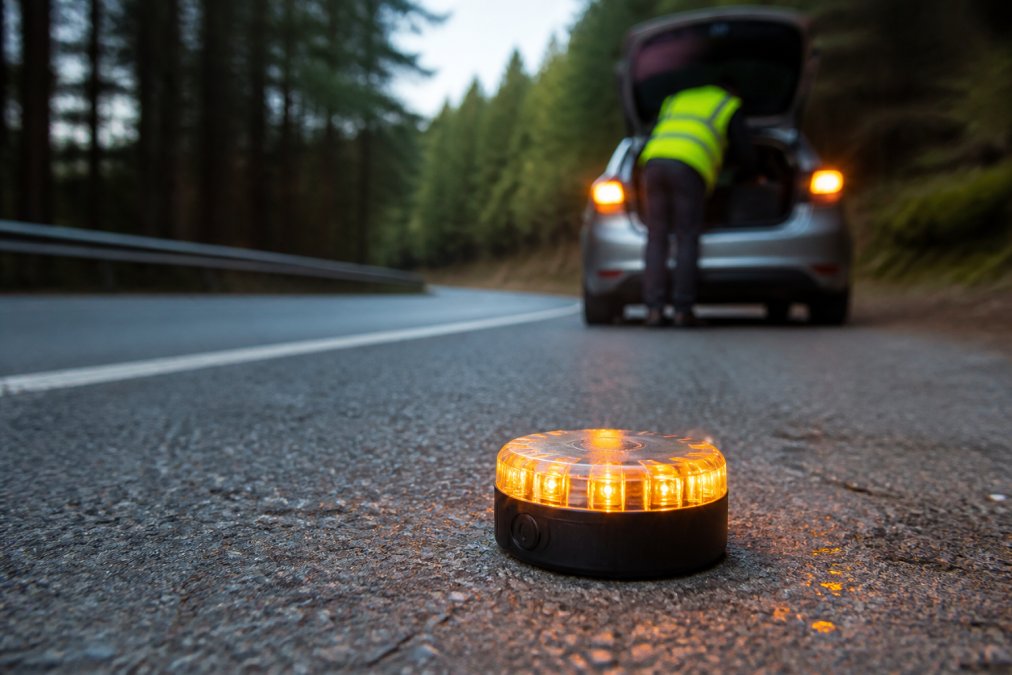
A DGT 3.0 beacon is a compact, magnetic emergency light that connects wirelessly to the Spanish traffic authority’s platform. When activated, it sends a geolocated alert with your exact position to the DGT 3.0 system, which then relays that information to other drivers through connected vehicles and real-time traffic data services. This is a significant upgrade over a passive reflective triangle because it removes the need for you to exit your vehicle and walk along the roadside, which is where many secondary accidents occur.
The device matters because it aligns with broader road safety regulations that prioritise autonomous connectivity. The Spanish authorities have been working toward a fully connected traffic management system, and the V16 beacon is the first mandatory piece of consumer equipment to feed into it. For tourists, the practical benefit is that emergency services can locate you faster, even if you are disoriented after a breakdown or cannot accurately describe your position on a remote stretch of motorway.
DGT 3.0 Connectivity Explained: How the System Works
The DGT 3.0 platform is a cloud-based traffic management system developed to collect and distribute real-time road incident data. A compliant V16 beacon contains a built-in SIM card and a GPS module. When you switch it on, the device transmits your vehicle’s coordinates and a unique identifier to the DGT servers using the mobile telecommunications network. The system then publishes a geolocated alert so that approaching drivers using connected navigation apps or vehicles receive an early warning of your presence.
Connectivity is the defining feature that separates an approved V16 beacon from a simple emergency light. The device must transmit data autonomously without requiring you to pair it with a smartphone or press additional buttons. Certification requires that the beacon connects to the DGT 3.0 platform within a short window after activation, and it must continue transmitting for a minimum period so that the alert remains live while you wait for assistance. This is why older, non-connected warning lights are not accepted under the new rules.
Official guidance from the Spanish Directorate General of Traffic on V16 connected beacons
V16 Beacon Requirements for Rental Cars: What You Need to Know
Rental car requirements are where most tourist confusion begins, and for good reason. If you hire a car in Spain, the rental company is responsible for equipping the vehicle with the legally required safety items, which now includes a V16 beacon for newer vehicles. In practice, you should check the glovebox on collection and ask the rental desk directly if you cannot find one. Most major rental fleets have updated their equipment, but smaller local operators may lag behind, so confirming before you drive away is the only reliable approach.
If you plan to drive your own vehicle into Spain from the UK or elsewhere in Europe, the situation differs. Cross-border implications mean you must carry a compliant device if your vehicle falls under the mandatory implementation rules, and a UK-purchased triangle will not satisfy the requirement. Carrying your own certified V16 beacon gives you certainty that the equipment is present, functional, and approved, regardless of what the rental company provides. It also means you are not reliant on a device that may have been dropped, damaged, or left with a depleted battery by a previous renter.
When collecting a rental car in Spain, test the V16 beacon before leaving the car park. Activate it once to confirm the LED flashes and the device powers on, then switch it off. A faulty unit is far easier to swap at the rental desk than on a motorway hard shoulder.
Is a Warning Triangle Still Legal? The Mandate Change
The warning triangle is being phased out as the primary signalling device, but the transition is not instant for every vehicle. The mandatory implementation date for the connected V16 beacon is January 1, 2026, meaning new vehicles registered from that point must carry a compliant beacon rather than a triangle (dgt.es). Existing vehicles registered before this date may still use the triangle until January 1, 2026, after which the connected beacon becomes the only acceptable device for new registrations.
This creates a two-tier system that confuses many tourists. If you are driving an older rental car that was registered before the cut-off, it may legally still carry a triangle, but if the fleet operator has updated to newer vehicles, you will find a beacon instead. The safest assumption for any visitor is that the connected beacon is now the expected standard, and relying on a triangle that you carry from home is risky. Non-compliance penalties can be issued if you are stopped and your vehicle does not meet the current regulatory requirements, so checking what is actually in the car is essential.
How We Evaluated DGT 3.0 Beacons for Tourists
To answer the question of whether a DGT 3.0 compliant beacon is worth it for tourists, we assessed devices against four criteria that matter specifically to visitors rather than to daily commuters. First, we examined certified specifications and whether the device holds official regulatory approval from the Spanish traffic authority. Second, we considered ease of deployment, since a tourist may be unfamiliar with the device and needs something intuitive that works without reading a manual on a busy roadside. Third, we weighed connectivity reliability, including the quality of the built-in SIM card and the device’s ability to transmit from remote areas. Finally, we compared the total cost of ownership against the frequency with which a typical tourist actually drives in Spain.
What most reviews miss is that tourists face a unique dilemma that locals do not. A resident driving weekly has a clear cost-benefit calculation, but a visitor driving for one week per year must decide whether the upfront cost justifies the occasional use. That calculation changes completely if you are a frequent European road-tripper or if you drive a hire car for business several times a year. We also factored in the safety benefit of avoiding roadside exposure, which has value regardless of how often you drive.
Comparing Top DGT 3.0 Beacons: Roadflash vs. Alternatives
For tourists who decide the investment is worthwhile, the market offers several certified options, each with slightly different strengths. The table below summarises the leading connected beacons available to UK buyers.
| Beacon | Approx. Price | Key Features | Best For |
|---|---|---|---|
| Roadflash V16 Connected | Contact for pricing | GPS/Geolocation, 360-degree lighting, multi-award-winning design | UK motorists driving frequently to the continent |
| Help Flash IoT | £45-£60 | Integrated eSIM, magnetic base, automatic activation | Tourists driving their own vehicles |
| FlashLED SOS | £40-£55 | IP54 weather-resistant, compact design | Drivers prioritising glovebox storage |
| PF Led ONE V16 | ~£50 | Visible up to 1km, strong build for extreme temperatures | High-speed motorway driving |
For UK-based tourists, the Roadflash V16 Connected, developed in Nottingham, offers high-visibility 360-degree lighting to improve vehicle visibility at the side of roads, and GPS/Geolocation transmission for autonomous connectivity. Its multi-award-winning design reflects a focus on preventing collisions with stationary vehicles, addressing a core concern for motorists breaking down on unfamiliar motorways.
The Help Flash IoT is a strong alternative if you want a device with a track record and a one-time purchase model. Its integrated eSIM handles the DGT 3.0 transmission automatically, and the magnetic base makes roof mounting straightforward. The FlashLED SOS wins on compactness, fitting neatly into a glovebox, while the PF Led ONE V16 offers the longest visual range for high-speed roads. All four meet the certified specifications, so your choice comes down to price, build quality, and whether you want a UK-designed product.
Is a DGT 3.0 Beacon Worth the Cost for Tourists?
The honest answer is that a DGT 3.0 compliant beacon is worth it for tourists who drive in Spain more than once, and it is arguably essential if you drive your own vehicle across the border. For a single week-long holiday in a rental car, the practical answer is different: check that the rental company provides a compliant device, and you may not need to buy your own. The device only delivers value if it is in the vehicle when you break down, so a beacon sitting at home in the UK offers zero protection.
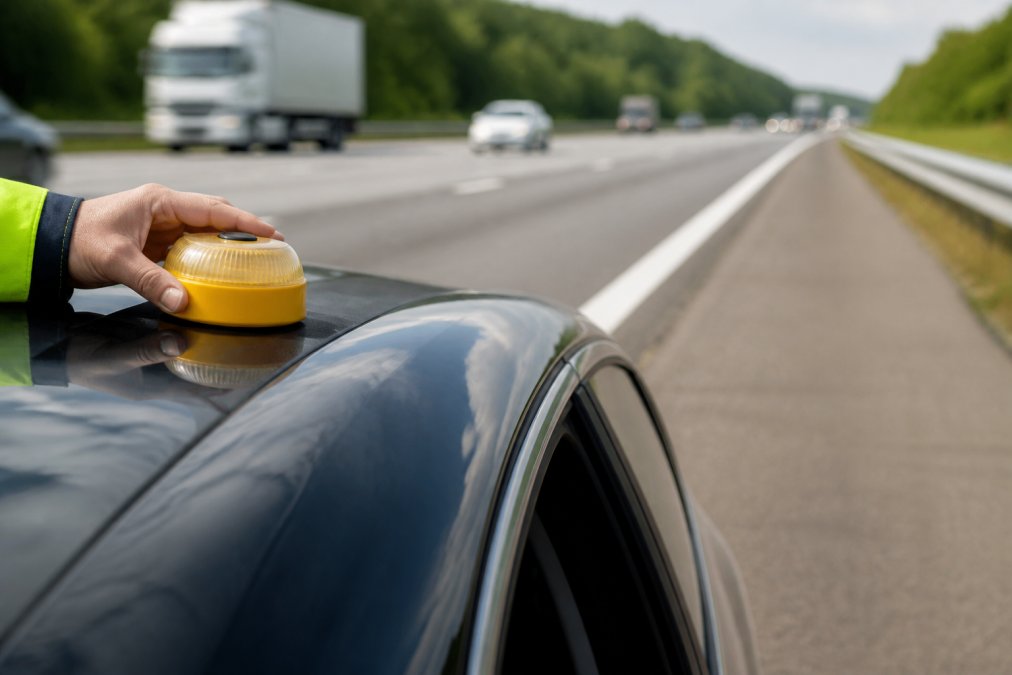
That said, the cost argument shifts when you consider the alternative. A basic warning triangle costs a few pounds, but using it correctly requires you to walk 50 metres along the hard shoulder to place it, exposing you to high-speed traffic. The connected beacon removes that risk entirely because you activate it from the driver’s seat and place it on the roof, which is a meaningful safety improvement that no price comparison fully captures. For motorists who drive the motorway regularly, even a few times per year, the investment is justified by the reduction in roadside risk alone.
European Commission guidance on in-vehicle emergency call and safety systems
Do not assume a rental car in Spain includes a compliant V16 beacon. Smaller local operators have been slower to update their fleets, and some still rely on older vehicles registered before the mandate. If you are fined for non-compliance, the rental company is unlikely to cover the penalty, so verifying the equipment before you drive is your responsibility.
Conclusion: Your Decision Framework
Deciding whether a DGT 3.0 compliant beacon is worth it for tourists comes down to three questions. Do you drive your own vehicle in Spain? If yes, buy a certified beacon before you travel. Do you rent cars in Spain more than twice a year? If yes, owning your own device guarantees compliance and consistency regardless of fleet variability. Are you a one-time visitor relying on a rental? If yes, simply confirm the rental car includes a compliant beacon at the desk, and skip the purchase.
For drivers who fall into the first two categories, the Roadflash V16 Connected offers a UK-designed solution with GPS/Geolocation transmission, high-visibility 360-degree lighting, and a proven focus on preventing collisions with stationary vehicles. It increases hazard awareness for approaching drivers and protects you and your passengers during a breakdown, which is the outcome that matters most. Check the current pricing and availability on the Roadflash website, and make sure your next trip to the continent starts with the right safety equipment.
Driving in Spain is changing, and the days of stepping onto a live motorway to place a warning triangle are ending. A connected V16 beacon removes that dangerous exposure and ensures emergency services can find you quickly, but only if you actually have one in the vehicle. Roadflash builds multi-award-winning early warning systems designed to prevent collisions with stationary vehicles, including DGT 3.0 compliant beacons with GPS/Geolocation and high-visibility lighting. Add a Roadflash V16 Connected to your basket and drive with greater peace of mind on your next European journey.
Frequently Asked Questions
Do I need a V16 beacon if I am driving a rental car in Spain?
Yes, from January 1, 2026, all vehicles circulating in Spain, including rental cars, must carry a DGT 3.0 compliant V16 beacon. Rental companies are expected to provide one, but confirm with your provider before departure. If the car lacks one, you risk a fine of up to €200. Carrying your own certified beacon ensures compliance and peace of mind, especially when driving outside major cities where rental fleets might not be fully updated.
What is the difference between a standard V16 beacon and a DGT 3.0 compliant model?
A standard V16 beacon (the yellow light) meets basic visibility requirements and is valid until December 31, 2025. A DGT 3.0 compliant beacon goes further: it includes a built-in SIM card and GPS to send your precise location to the DGT 3.0 platform automatically when activated. This geolocated alert helps traffic authorities and emergency services reach you faster, and it is the only type that will be legal from January 1, 2026.
How does the DGT 3.0 geolocation feature work?
When you activate a DGT 3.0 beacon, it connects to the DGT 3.0 platform via its built-in SIM card. The beacon transmits your vehicle’s GPS coordinates, which are then shared with the traffic management system. This allows authorities to see your exact breakdown location in real time, even if you cannot describe it. The signal is sent autonomously, so you do not need to use your phone or rely on mobile coverage, making it especially useful in remote areas.
Can I use a traditional warning triangle instead of a V16 beacon?
No, the traditional warning triangle is no longer legal for new vehicles sold in Spain from January 1, 2021, and from January 1, 2026, it will be completely banned for all vehicles. The DGT has phased out triangles because they require you to exit the vehicle and walk along the road, which is dangerous. A V16 beacon can be placed on the roof from inside the car, keeping you safer. For tourists, carrying a DGT 3.0 beacon is the only way to ensure compliance.