
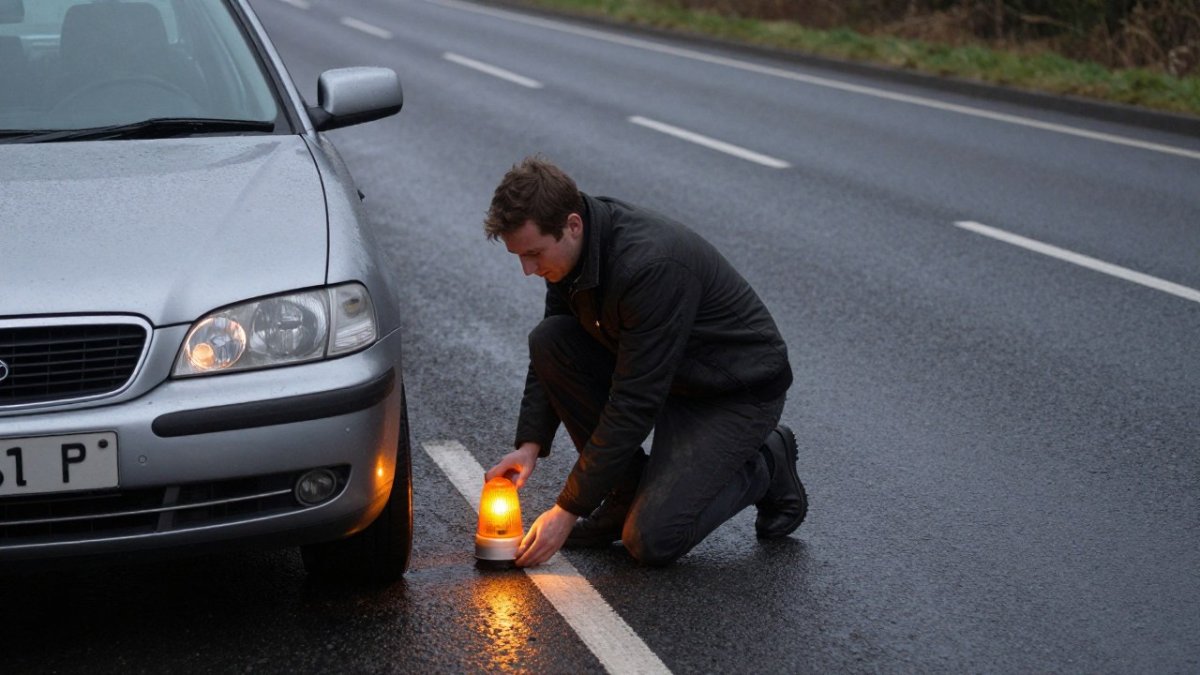
Rechargeable vs Disposable Warning Lights: Which to Carry
Last Updated: November 6, 2026
Quick Summary
Rechargeable warning lights cost more upfront but can be cheaper to run over time, while disposable lights cost less to buy but must be replaced once their cells are spent. The better choice depends on how often you drive, how you store your kit and how much you want to manage batteries.
- Rechargeable lights suit drivers who want a light that stays ready and is charged via USB.
- Disposable lights lose charge while sitting unused, so check their cells at regular intervals.
- Check a rechargeable light’s charge level every few months and recharge it before long journeys.
- Runtime in practice is shorter than the box figure, since flash mode, brightness and cold reduce it.
- Recycle spent cells and rechargeable batteries at a battery or electrical waste point, not household bins.
Table of Contents
- Rechargeable Versus Disposable Roadside Warning Lights: The Core Difference
- Types of Roadside Warning Lights and Flares on the Market
- Rechargeable LED Warning Lights: Runtime, Charging and Battery Degradation
- Battery-Powered Roadside Warning Lights: Disposable Cells, Shelf Life and Cost
- Lifecycle Cost, Reliability and Disposal Compared
- Visibility, Flash Modes and Performance in Wet Weather
- Choosing the Right Warning Light for Your Car Breakdown Kit
- Frequently Asked Questions
Rechargeable Versus Disposable Roadside Warning Lights: The Core Difference
Rechargeable warning lights typically cost more upfront but can cost less to run over time, while disposable lights cost less to buy but must be replaced once their cells are spent. Drivers often choose between the two based on how often they expect to use them. The right choice depends on how much you drive, how you store your kit and how much you want to think about batteries.
The core difference is how power is supplied. A rechargeable light stores energy in a built-in battery that you top up from a USB charger or car socket. A disposable light runs on replaceable cells and is thrown away when they fail. Both types are designed to do the same job: make a stopped vehicle visible to oncoming traffic.
Highway Code guidance on warning devices and hazard lights
Types of Roadside Warning Lights and Flares on the Market
Most roadside warning products fall into a few groups. LED warning beacons are the most common, usually mounted on the roof, dashboard or ground. Road flares burn for a set time and produce smoke and heat, so they suit some situations but not others. Multi-colour and flashing-mode lights give more options for signalling.
Each group comes in rechargeable or battery-operated versions. Choose by how the light is powered, how bright it is and how easily you can deploy it in a hurry. Look at the flash modes and the sealing against rain, since both affect how well the light works in bad weather.
Rechargeable LED Warning Lights: Runtime, Charging and Battery Degradation
Rechargeable LED lights suit drivers who want a light that is ready to use. Charge it, store it in the kit and recharge it when the indicator falls low. Over time the internal battery loses capacity, so a light that ran for many hours when new will run for less after several years of use. The rate of that loss depends on how the battery is treated: frequent full discharges, high heat and long periods stored flat all shorten its useful life, while partial top-ups and cool, dry storage help it last longer.
Charging is usually done through USB, which makes it easy to top up from a car charger or power bank. Check the recharge time and the runtime on the specification before you buy, as these vary between models and flash modes. For a closer look at connectivity and power consumption, read our technical guide. Follow the maker’s guidance on charging and storage, as charging methods vary between models. If the light has a charge indicator, use it rather than guessing, and top up before long journeys rather than waiting for the light to fail.
How Long Does Battery Life Hold Up in Practice?
Battery life in practice is shorter than the figure on the box, because runtime depends on flash mode, brightness and temperature. A steady-on setting drains a battery faster than a flashing mode, and a high-brightness setting drains it faster still. Cold weather also reduces usable capacity, so a light that runs for many hours in a warm room may run for noticeably less on a cold night at the roadside. Plan for a shorter runtime than the specification suggests, and recharge after each use.
Testing your light in the conditions you expect to meet it in can help you judge how long it runs on the mode you would use, which may be more useful than the manufacturer’s stated figure.
Watch out: a rechargeable light left uncharged in a cold boot can be useless when you need it most, so check its charge level every few months and recharge it before long journeys.
Battery-Powered Roadside Warning Lights: Disposable Cells, Shelf Life and Cost
Disposable battery-powered lights have a lower purchase price, which makes them attractive as a spare or for a kit you rarely use. Their weakness is the cells themselves. They lose charge while sitting unused, so a light stored for a year may not work when you need it.
Replacement cells add to the running cost over time. For occasional use, a disposable light can still be a sensible choice, provided you check the cells at regular intervals.
Lifecycle Cost, Reliability and Disposal Compared
Comparing only the purchase price misses most of the picture. A rechargeable light has a higher upfront cost but avoids repeated cell purchases. A disposable light costs less at the start but adds cost each time its cells are replaced. Over several years, the gap between the two depends on how often you use the light and how long each type actually lasts.
A useful way to compare is to build a simple lifecycle cost for your own pattern of use. Start with the purchase price of each light. For a disposable light, add the cost of replacement cells multiplied by the number of changes you expect over the period you keep it. For a rechargeable light, add the electricity or power-bank cost of charging, which is small per charge, plus the cost of eventual battery replacement or the price of a new unit if the battery is not replaceable. Then divide by the number of years you expect to keep it. Most drivers find the rechargeable light becomes cheaper once they use it regularly, while the disposable light stays cheaper for a kit that is rarely touched.
Reliability is the other half of the comparison, and it cuts both ways. A rechargeable light is reliable only if it is kept charged; a light left flat in a cold boot for months may not switch on when you need it. A disposable light is reliable only if its cells are still good; cells lose charge while sitting unused, so a light stored for a year may not work. Neither type is maintenance-free, and the maintenance each needs is different: a rechargeable light needs a periodic top-up, while a disposable light needs its cells checked and replaced on a schedule. Our page on how to maintain LED warning beacons for longevity covers this in more detail.
There is a further readiness trade-off worth knowing. If your vehicle battery is flat, an in-car charger may not be able to top up a rechargeable light, so charge it while the engine is running or carry a separate power bank. A disposable light does not depend on the vehicle at all, provided its cells are good, which can make it the more dependable option in a breakdown where the car’s electrical system is already compromised.
Disposal also differs. Spent cells should go to a battery recycling point rather than household waste, and you should check your local council’s guidance for the battery type, since rules and collection points vary. You can also read our guide to keeping emergency beacon batteries in good condition through winter. A rechargeable light’s built-in battery has a longer service life but still reaches end of life eventually, and it should be recycled through a battery or electrical waste point rather than binned. The environmental comparison is not simply disposable versus rechargeable: it depends on how many disposable cells one rechargeable battery replaces over its life, and on whether both are recycled properly.
Watch out: a rechargeable light left flat for a long period may not work when you need it, so check its charge level regularly.
The table below summarises how the two types compare on cost, reliability and disposal, as covered in this section.
| Factor | Rechargeable | Disposable |
|---|---|---|
| Upfront cost | Higher | Lower |
| Running cost | Charging, plus eventual battery replacement | Replacement cells each time they are spent |
| Main reliability risk | Left flat for a long period | Cells lose charge while unused |
| Works if vehicle battery is flat | Only if charged separately | Yes, provided cells are good |
| Disposal | Recycle via battery or electrical waste point | Recycle cells at a battery recycling point |
Visibility, Flash Modes and Performance in Wet Weather
Visibility depends on brightness, colour and how the light is mounted. Flashing modes draw attention more effectively than steady light, but they also use more energy. Rain, spray and fog reduce how far a light can be seen, so choose a model with a weather-resistant rating if you drive in poor conditions.
Testing your light before you need it can help you check how far away it can be seen from the road.
Choosing the Right Warning Light for Your Car Breakdown Kit
For a motorist who drives often on motorways, a rechargeable LED light is usually the better choice, because it stays ready and costs less to run. For an occasional driver who wants a low-cost spare, a disposable light can be enough, as long as you replace the cells on a schedule.
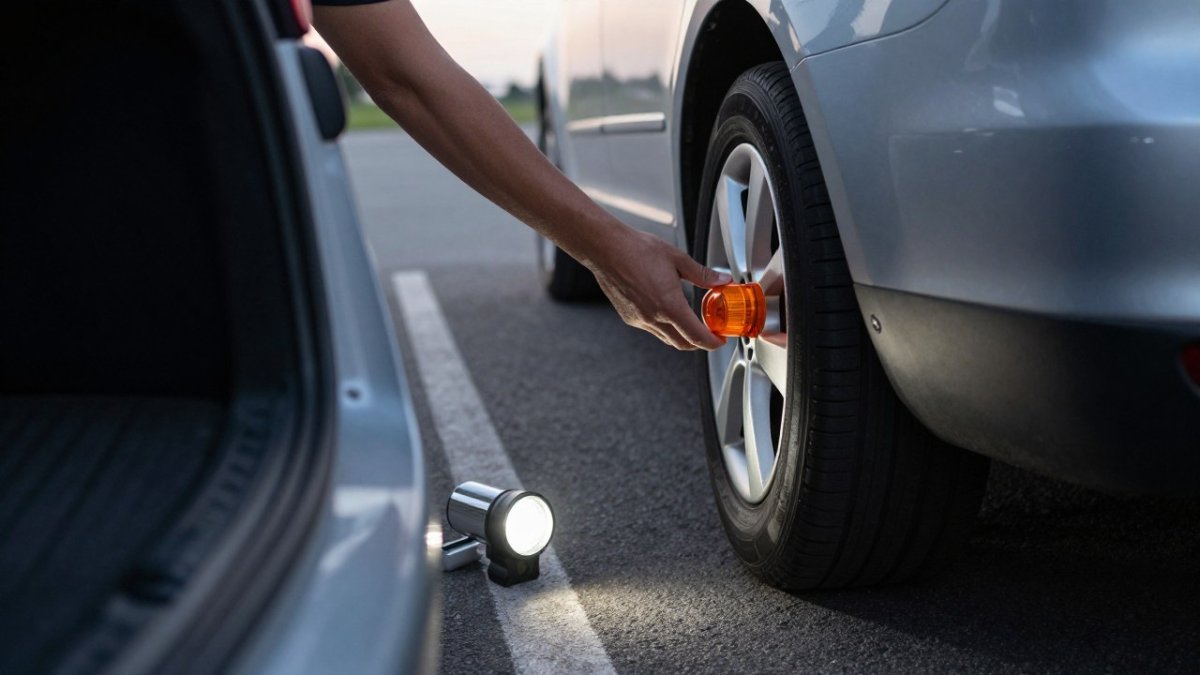
Roadflash makes DGT 3.0 compliant emergency beacons with GPS and geolocation, and multi-award-winning road safety products designed for stationary vehicles on busy roads. Browse the range to find a light that suits how you drive, or visit the Roadflash website for current prices or a quote.
Frequently Asked Questions
Are rechargeable roadside warning lights better than disposable ones?
For most drivers who carry a light in the car permanently, a rechargeable model is the better choice because it stays ready without buying new cells each time. Disposable lights remain useful as a backup, since they do not depend on the charge level of a device you may have forgotten to top up. The right choice depends on how often you use the light, how often you check it, and whether you can keep a charging cable in the vehicle. Check the runtime and recharge time against your own habits before deciding.
How long do rechargeable roadside warning lights last on a charge?
Runtime varies widely between models and depends on the flash mode selected. Steady-burn modes use more power than flashing modes, so a flashing setting will generally last longer on one charge. Check the manufacturer’s stated runtime for each mode, and test the light occasionally to see how it performs as the battery ages. Battery capacity usually falls over repeated charge cycles, so the runtime you get after several years may be shorter than when the light was new.
What should I look for when choosing an emergency warning light for my car?
Look at visibility, brightness, flash modes, and how quickly the light can be set up on the road. Check how the light is powered, whether it charges by USB or uses replaceable batteries, and how it stores in your vehicle. Weather resistance matters if you drive in wet conditions. Compare the price of the light with its expected lifespan and running costs. Pricing for Roadflash products depends on quantity, dates, and delivery, so check the Roadflash website for current prices or a quote.
Can roadside warning lights be used in wet weather?
Many roadside warning lights are rated for outdoor use, but the degree of protection varies. Look for a stated weather or ingress rating on the product rather than assuming it will cope with heavy rain. Keep the light dry and stored in its case between uses, and check that the charging port or battery compartment seals properly. If a light has been exposed to water, check it before relying on it.
