
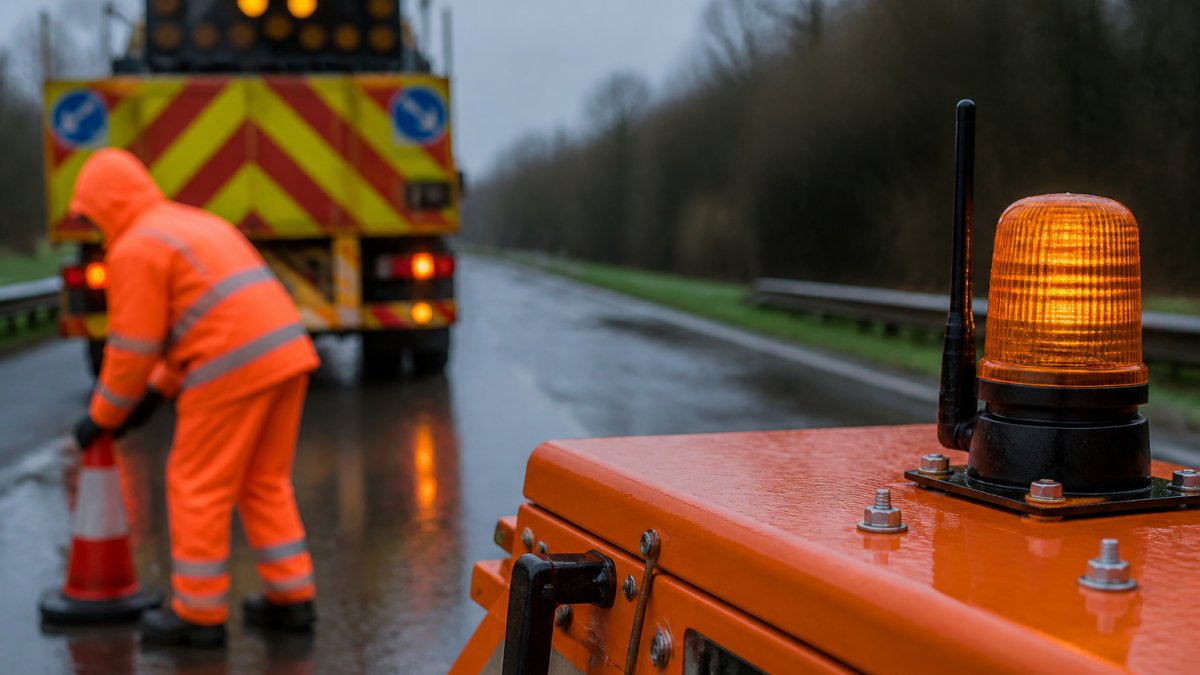
IP Ratings for Outdoor Maintenance Equipment
Table of Contents
- What Is an IP Rating?
- What Does the First Digit in an IP Rating Mean
- The Second Digit: Protection Against Liquids
- IP65 vs IP67 for Outdoor Tools
- Recommended IP Ratings for Outdoor Use
- Choosing Weather-Resistant Safety Beacons
- Real-World Failure Scenarios and Maintenance
- Frequently Asked Questions
Last Updated: September 30, 2026
What Is an IP Rating?
An IP rating is a standardised classification system that defines how well electrical enclosures and equipment resist ingress from solid foreign objects and liquid intrusion. The acronym stands for Ingress Protection, governed by IEC 60529. Every IP rating consists of two digits: the first indicates protection against solids like dust and debris, the second measures resistance to liquids such as water and moisture. Understanding IP ratings outdoor equipment is essential when selecting tools, beacons, or safety devices that will face harsh environmental conditions.
The rating system provides concrete, testable specifications rather than vague marketing claims about “weatherproofing.”
What Does the First Digit in an IP Rating Mean
The first digit describes protection against solid foreign objects, ranging from 0 (no protection) to 6 (completely dust-tight). A 4 rating blocks objects larger than 1 mm. A 5 provides partial dust protection. A 6 means the enclosure is completely dust-tight.
The Second Digit: Protection Against Liquids
The second digit measures protection against liquid intrusion, ranging from 0 (no protection) to 9K (high-pressure steam jets). A 5 withstands water jets from a nozzle at low pressure. A 6 handles powerful water jets. A 7 allows temporary immersion up to 1 metre for 30 minutes. A 9K resists high-pressure steam and jets at temperatures up to 80°C.
For outdoor maintenance equipment exposed to rain, road spray, and pressure washing, a minimum of 5 is advisable; a 6 or 7 rating ensures moisture won’t degrade seals or corrode internal connections.
IP65 vs IP67 for Outdoor Tools
IP65 means the enclosure is dust-tight and can withstand water jets from a nozzle at low pressure from any direction, sufficient for equipment exposed to rain, spray, and occasional pressure washing.
IP67 adds temporary immersion protection: the device can be submerged in water up to 1 metre deep for up to 30 minutes without water entering the enclosure. This is valuable for equipment that might fall into water or be stored in damp conditions.
IP67 is the safer choice for roadside safety beacons, as breakdowns often occur in wet conditions. The cost difference is minimal, making IP67 pragmatic where failure could compromise motorist safety.
Recommended IP Ratings for Outdoor Use
For IP ratings outdoor equipment, the recommended minimum is IP65, but IP67 is preferable for stationary roadside devices. Equipment exposed to pressure-washing should aim for IP66 or higher.
Choosing Weather-Resistant Safety Beacons
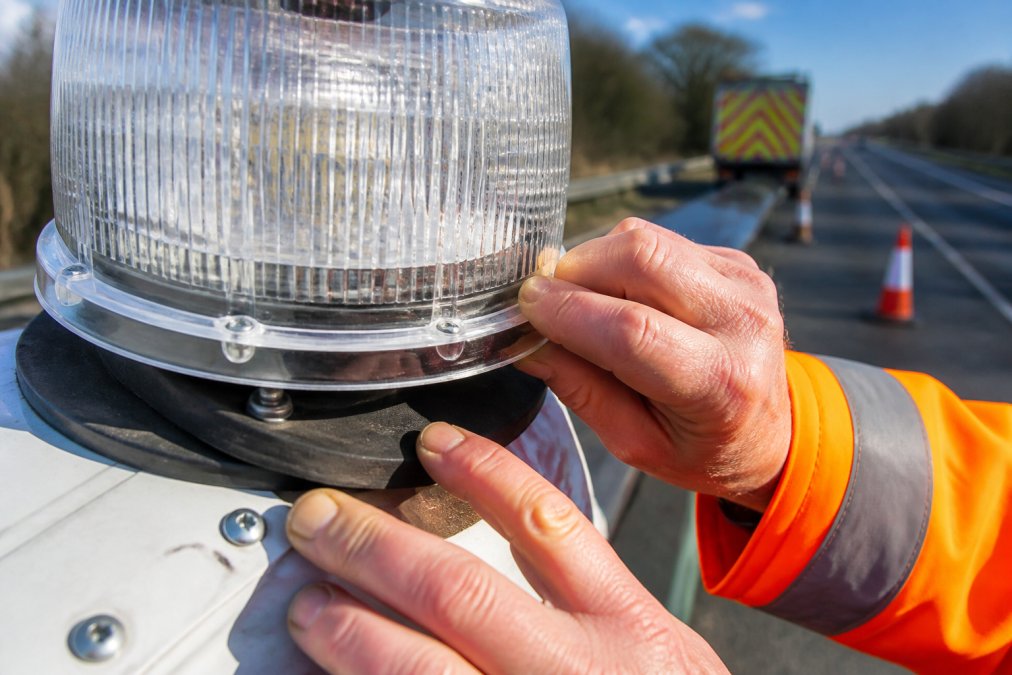
Weather-resistant safety beacons must balance durability with visibility. Look for equipment that combines high IP ratings with strong optical design, lenses that remain clear under condensation and weatherproofing that doesn’t reduce light transmission. Real-world exposure is harsher than laboratory conditions: road salt, thermal cycling, UV exposure, and vibration all stress seals over time.
IP Ratings vs NEMA Ratings: Clarifying the Overlap
IP ratings (international standard IEC 60529) and NEMA ratings (North American standard NEMA 250) are not directly equivalent. NEMA ratings define enclosure protection in North America, covering solid objects, moisture, corrosion, and environmental hazards. Test methods and severity levels differ from IP standards. NEMA ratings range from NEMA 1 (basic indoor) to NEMA 6P (submersible, corrosion-resistant).
Key differences between IP and NEMA standards:
- Test methodology: IP ratings use standardised water spray and immersion tests (IEC 60529). NEMA ratings use hose-down and salt-fog corrosion testing, which don’t always align with IP conditions.
- Dust protection: IP ratings specify exact object sizes (1 mm, 2.5 mm). NEMA ratings are less granular.
- Corrosion resistance: NEMA ratings explicitly address corrosion (NEMA 4X is stainless steel; NEMA 6P includes salt-fog testing). IP ratings do not address corrosion.
- Immersion: IP67 specifies up to 1 metre for 30 minutes. NEMA 6P allows up to 2 metres prolonged submersion.
| IP Rating | Approximate NEMA Equivalent | Key Difference |
|---|---|---|
| IP54 | NEMA 3, NEMA 4 (partial) | NEMA 4 offers more corrosion resistance |
| IP65 | NEMA 4 | NEMA 4 includes salt-fog corrosion testing |
| IP66 | NEMA 4X (partial) | NEMA 4X is stainless steel; IP66 does not specify material |
| IP67 | NEMA 6 (partial) | NEMA 6 allows deeper immersion; IP67 is more specific on duration |
| IP69K | NEMA 6P (approximate) | NEMA 6P includes salt-fog; IP69K focuses on high-pressure jets |
Optical Performance Under Adverse Conditions
The optical design of a safety beacon determines whether it remains visible in rain, fog, and spray. Look for beacons with:
- Anti-fog lens coatings: These hydrophobic or hydrophilic coatings prevent water droplets from adhering to the lens surface, maintaining light transmission even in heavy rain or fog.
- Ventilation design: Some beacons use passive ventilation (small vents with hydrophobic membranes) to allow air circulation and prevent internal condensation without compromising the IP rating.
- Lens material: Polycarbonate lenses are more impact-resistant and less prone to fogging than acrylic, though they cost more. For roadside deployment where impact from debris is possible, polycarbonate is the better choice.
- Light source type: LED beacons maintain brightness in cold weather better than older halogen or incandescent designs, which dim as temperature drops. For year-round reliability, LED is essential.
Real-World Failure Scenarios and Maintenance
Water ingress is the most frequent failure mode: moisture enters through degraded gaskets, corrodes internal connections, and causes short circuits or intermittent failures. In a safety beacon, even intermittent failure is catastrophic.
Environmental Degradation Factors Most Guides Ignore
UV exposure and material brittleness. Gaskets and seals degrade when exposed to ultraviolet light. After 12-18 months of continuous outdoor exposure, many gasket materials lose elasticity and become brittle. A seal that passed IP67 testing may no longer compress properly to create a watertight barrier. Roadside beacons mounted in full sun experience accelerated UV degradation.
Maintenance Checklist: Preserving IP Rating After Installation
To ensure your outdoor maintenance equipment maintains its IP rating throughout its service life, implement this inspection and maintenance protocol:
Monthly visual inspection (5 minutes):
- Examine gaskets and seals for cracks, hardening, or discolouration.
- Check for water stains, corrosion spots, or salt deposits.
- Verify mounting hardware is tight and the enclosure hasn’t shifted.
- Look for internal condensation; internal moisture indicates seal failure.
Quarterly detailed inspection (15 minutes):
- Inspect the seal surface for debris, dirt, or salt buildup. Rinse with fresh water and dry thoroughly.
- Check that cable entry glands are tight; vibration can loosen these over time.
- Inspect gasket compression: if you can easily insert a thin tool between gasket and enclosure, the seal is degraded and should be replaced.
- Test for water ingress by checking for moisture on internal components.
Annual maintenance (30 minutes):
- Replace gaskets and seals if they show hardening, cracking, or permanent deformation.
- Clean all metal components inside the enclosure with a dry cloth.
- In coastal or high-salt environments, apply silicone-based corrosion inhibitor to metal connectors (not oil-based products).
- Re-test seal integrity with low-pressure water spray (garden hose) to all sides.
Replacement triggers:
- Replace gaskets immediately if visibly cracked, hardened, or permanently deformed.
- If condensation appears inside despite dry external conditions, the seal has failed; take equipment out of service.
- If equipment is more than 3 years old in coastal or high-UV environments, replace gaskets proactively even if they appear intact.
Pressure Washing and Seal Damage
Pressure washing can force water past seals if pressure exceeds the equipment’s rating. An IP65 beacon can handle low-pressure spray (12.5 litres per minute at 100 kPa) but will fail under a high-pressure washer (1,400-2,100 kPa). Exceeding those pressures voids protection and causes immediate water ingress.
Salt Spray and Coastal Deployment
Salt spray from winter road treatments and coastal environments accelerates corrosion of metal components and degrades gasket materials. Equipment deployed in coastal areas or regions using heavy salt treatment should be inspected every 6 months and replaced sooner. IP ratings protect against water ingress but do not prevent corrosion if salt-laden water enters through a degraded seal.
| Failure Mode | Cause | Prevention | Inspection Frequency |
|---|---|---|---|
| Water ingress | Degraded gaskets | Monthly visual + quarterly detailed inspection | Every 3 months |
| Thermal cycling stress | Heat/cold cycles | Quality gasket materials; replace every 3 years in extreme climates | Annually |
| Pressure washing damage | Excessive water pressure | Hand-rinsing only; never use pressure washer | Before each cleaning |
| Salt corrosion | Road treatment chemicals; coastal spray | Stainless hardware; synthetic gaskets; 6-month inspection in coastal areas | Every 6 months (coastal) |
| UV degradation | Sunlight exposure | Protective covers; gasket replacement every 18 months in high-UV regions | Every 6 months |
| Condensation buildup | Temperature swings; seal failure | Ventilation design; seal replacement if internal moisture appears | Monthly visual check |
Frequently Asked Questions
What IP rating is best for outdoor maintenance equipment?
IP65 or higher is recommended for outdoor maintenance equipment exposed to variable weather. IP65 provides dust-tight protection and can withstand water jets from any direction. For equipment subject to immersion or heavy pressure washing, IP67 or IP68 offers superior liquid intrusion resistance. The choice depends on your specific exposure conditions: roadside operations in wet climates benefit from IP67 minimum, whilst equipment in drier regions may perform adequately at IP65.
How do IP ratings protect maintenance equipment from dust and debris?
The first digit of an IP rating indicates protection against solid foreign objects and particulate matter. A rating of 6 means dust-tight protection, no dust ingress is possible. For outdoor maintenance equipment on motorways, this prevents debris, road salt, and fine particles from damaging internal components. Combined with the second digit’s liquid protection, this dual safeguarding extends equipment lifespan and ensures reliability during critical safety operations.
Is IP55 sufficient for heavy rain exposure?
IP55 provides water jet protection from low-pressure spray but is not ideal for heavy rain or prolonged wet conditions. The second digit (5) means water projected by a nozzle has limited penetration. For outdoor maintenance equipment regularly exposed to heavy rainfall or pressure washing, IP65 or IP67 is more appropriate. IP65 handles water jets effectively, whilst IP67 adds immersion protection, making it the safer choice for unpredictable motorway conditions.
Why is an IP rating critical for safety equipment used on motorways?
Motorway safety equipment must function reliably in harsh, uncontrolled environments with thermal cycling, condensation, and exposure to moisture and road debris. IP ratings ensure gasket integrity and environmental sealing prevent seal failure caused by weatherproofing breakdown. Equipment with inadequate IP protection risks malfunction during emergencies when visibility and communication are essential. Proper IP ratings guarantee your safety beacons and hazard warning systems remain operational when drivers need them most.