
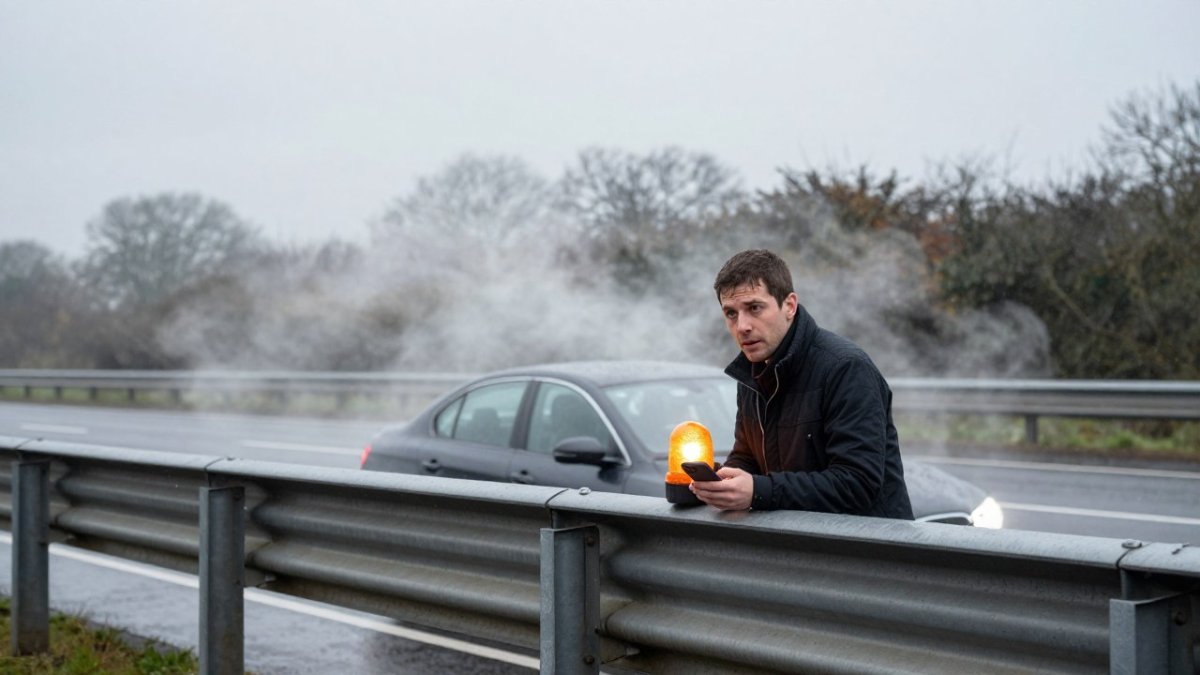
How to Handle an Overheating Car on the Motorway
Last Updated: November 23, 2026
Quick Summary
If your overheating car starts to show warning signs on the motorway, turn off the air conditioning, switch the heater on full, and keep your speed low and steady. Use your hazard lights and pull onto the hard shoulder or next exit as soon as it is safe to do so.
- Turn off the air conditioning first, since it adds load to the engine.
- Switch the heater on full with the fan on high to draw heat away from the engine.
- Keep speed steady and as low as is safe, and do not coast in neutral.
- Never open the bonnet while the engine is hot, as steam and coolant can cause burns.
- Wait at least 30 minutes before checking the coolant once the engine has cooled.
Table of Contents
- Spotting the Signs Your Engine Is Overheating
- What to Do Immediately When Your Car Overheats on the Motorway
- What Not to Do With an Overheating Engine
- Highway Versus City Protocols for Overheating
- Checking the Coolant Safely Once You Have Stopped
- Motorway Breakdown Safety Once the Car Has Stopped
- Keeping Roadside Safety Equipment in Your Boot
- Planning Your Next Step After an Overheating Incident
- Frequently Asked Questions
Your car starts to overheat on the motorway, and the temperature needle is climbing into the red, which is the classic warning of an overheating car. A steaming engine is an emergency on a fast road, not a fault you can nurse to the next junction.
This guide covers what to do if your car overheats on the highway, from the first warning sign to the steps after you are safely stopped.
Spotting the Signs Your Engine Is Overheating
The temperature gauge is your earliest clue. If the needle moves past the midpoint and keeps climbing, the cooling system is struggling. A dashboard warning light means the same thing: stop soon.
Other signs of an overheating engine include:
- Steam or a sweet smell coming from under the bonnet
- A loss of power, especially when you climb a hill
- A ticking or knocking noise from the engine
Coolant carries heat away from the engine block and through the radiator. Find out what other warning signs of car trouble to watch for before a motorway breakdown.
What to Do Immediately When Your Car Overheats on the Motorway
Act in this order. Each step buys you time and reduces the risk of further damage.
- Turn off the air conditioning. The A/C puts extra load on the engine, so switching it off removes strain straight away.
- Turn the heater on full, with the fan on high. The heater core pulls heat away from the engine, which can keep the temperature down long enough to reach a safe place.
- Keep your speed steady and as low as is safe. Staying slow reduces engine load. Do not coast in neutral, because you lose the engine’s own help in moving the car.
- Put on your hazard lights and pull over. Move to the hard shoulder as soon as it is safe to do so.
Turn off the air conditioning and use the heater
Many drivers reach for the A/C first because it feels like the obvious fix. On a hot motorway, it makes the problem worse. Turning it off and switching the heater on full is a quick, free step that helps an overheating car shed heat while you look for a place to stop.
Pull over safely using the hard shoulder
Use the hard shoulder only in an emergency, and only when you can reach it safely (The Highway Code – Breakdowns and incidents (275 to 287) – Guidance).
Watch out: Do not stop in a live lane or on a slip road where other vehicles cannot see you.
The steps below put the priorities in order, so you can reduce the load on the engine and get off the carriageway as quickly as is safe.
| Step | What to do | Why it helps |
|---|---|---|
| 1 | Turn off the air conditioning | Removes extra load from the engine |
| 2 | Turn the heater on full, fan on high | Pulls heat away from the engine |
| 3 | Keep speed steady and as low as is safe | Reduces engine load |
| 4 | Hazard lights on, pull over | Moves you out of traffic |
What Not to Do With an Overheating Engine
Some well-meaning reactions make the situation more dangerous. Avoid these:
- Do not open the bonnet while the engine is hot. Steam and boiling coolant can cause serious burns.
- Do not pour cold water onto a hot engine. The sudden change can crack the engine block.
- Do not keep driving until the engine seizes or the temperature warning turns into a red alarm.
Driving with an overheated engine can cause serious and costly damage, including a cracked cylinder head or a blown head gasket. The repair bill can be far higher than a breakdown recovery call.
Highway Versus City Protocols for Overheating
Most guides treat an overheating engine the same whether you are on a motorway or a residential street. The environment changes the correct sequence of actions, and on a fast road the difference can be the gap between a controlled stop and a collision.
On a motorway or dual carriageway
Your priority is to keep the car moving and get it off the live carriageway, not to stop as quickly as possible.
- Aim for the next exit rather than the hard shoulder if the car will still run. Coasting or driving at a low, steady speed to a slip road takes you to a place with lower traffic speeds, a verge, and usually a petrol station or lay-by nearby. A common pattern is that drivers stop on the hard shoulder when they could have reached an exit half a mile ahead.
- If you must use the hard shoulder, stop as far left as possible and turn the wheels away from the carriageway. Leave the hazard lights on and do not open the bonnet while the engine is hot.
- Do not stop on a slip road merge or within a live lane. If the car loses power entirely, keep it rolling as far left as you can and put the hazard lights on immediately.
Watch out: on a smart motorway, the hard shoulder may be a live running lane. Check the overhead gantries before you pull onto it, and if it is open to traffic, treat it as a live lane and keep moving to the next exit or emergency refuge area.
In a town or on a low-speed road
You have more options, and the priority shifts to finding a safe place to stop without blocking a junction or a bus stop. Pull into a side street, a car park or a petrol station forecourt. Traffic is slower, so the risk to others is lower, but a sudden stop in a busy junction is still a hazard. Put the hazard lights on early and choose a spot where you can get clear of the carriageway.
The judgement call at speed
The hardest decision is whether to stop now or push on to the next exit. If the temperature gauge is climbing but the engine is still running smoothly, a steady low speed to the next exit is usually the safer choice. If you see steam, hear knocking, or lose power, stop as soon as you can reach a safe place off the live carriageway.
Checking the Coolant Safely Once You Have Stopped
Wait at least 30 minutes before you check the coolant. The engine and the cooling system stay dangerously hot for a long time, and coolant can spray out under pressure.
When the engine is cool, follow these steps:
- Look at the coolant reservoir, the translucent tank near the radiator. Check the level against the marks on the side.
- Look for leaks on the ground under the car, and check hoses for splits or swelling.
- Check the level only. If the reservoir is empty or very low, do not drive the car further than you need to. Read more on how to maintain engine coolant levels.
If you have water or coolant with you, you can top up the reservoir once the engine is cool. Do not open the radiator cap while the engine is warm.
Motorway Breakdown Safety Once the Car Has Stopped
Staying safe after you stop matters as much as the steps you took to get there. Many motorway injuries happen when people get out of the car on the wrong side or stand too close to live traffic.
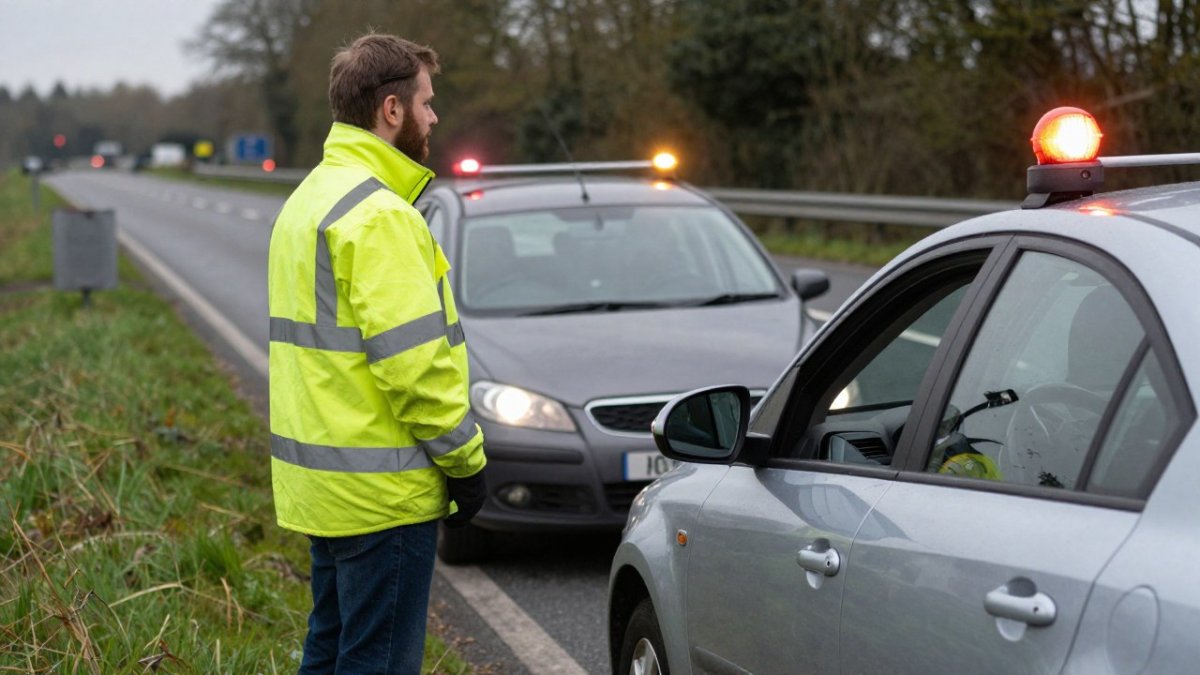
Follow these rules:
- Keep your hazard lights on, and leave the car’s engine off unless you need to move it. Check the legal rules for breakdowns under the Highway Code.
- Get out of the car on the side away from the traffic, and wait behind the crash barrier if one is present (The Highway Code – Breakdowns and incidents (275 to 287) – Guidance).
- Stay well away from the carriageway. Do not stand between the car and the traffic. Read a fuller guide to staying safe during a motorway breakdown.
Psychological safety matters too. Breakdowns are stressful, and fear can lead to rushed decisions. Take a few deep breaths, stay calm, and focus on one step at a time.
Keeping Roadside Safety Equipment in Your Boot
A small kit can make a breakdown much easier to manage. High-visibility roadside safety equipment helps other drivers see your car sooner, and that gives you more time to stay safe.
Useful items to keep in the boot include:
- A high-visibility jacket for everyone in the car
- Warning triangles or an emergency beacon, checked for working batteries
- A torch with spare batteries
Roadflash makes early warning systems and high-visibility lighting designed to help stationary vehicles stand out on busy roads.
Insurance and breakdown cover also deserve a look before you need them. Check whether your policy includes motorway recovery, and note the emergency number in your phone.
Planning Your Next Step After an Overheating Incident
Once you are safe and the car has been recovered, the next step is to find out why it overheated, not simply to top up the coolant and carry on. A cooling system that boiled once is likely to do it again, and the second time may be on a motorway at speed.
Diagnose the root cause before you drive again
A mechanic will usually work through the cooling system in a set order. Knowing what they look for helps you describe the symptoms and question the quote.
- Coolant level and leaks. A slow leak from a hose, the radiator or the water pump is the most common cause. Look for crusty white or coloured deposits around hose joints and under the radiator.
- Thermostat. A thermostat stuck closed stops coolant circulating. A common pattern is that the engine overheats quickly and the top hose stays cool.
- Radiator fan. If the fan does not cut in when the engine is hot and stationary, the car will overheat in traffic but may seem fine at speed.
Ask the garage to pressure-test the cooling system and to confirm the fan operates. A pressure test finds leaks that a visual check misses.
Warranty and insurance implications
Driving on after the temperature warning can affect both your warranty and your insurance, and the position depends on the cause and on your policy terms.
- Manufacturer warranty. Most warranties require you to act on a warning light and to keep the car serviced to schedule. Continuing to drive with the engine overheating can be treated as neglect, which may give the manufacturer grounds to decline a claim for the resulting damage. Keep your service records and note the date and mileage of the incident.
- Insurance. A mechanical breakdown is not usually covered by a standard motor policy, but consequential damage may be covered if it follows an insured event such as a collision or a fire. Check your policy wording rather than assuming.
- Breakdown cover. Check whether your cover includes motorway recovery and whether it pays for a second recovery if the car cannot be driven after a temporary fix.
Records that help a claim
Keep a short note of the time, the speed, the warning signs you saw and the steps you took. Photograph the dashboard warning and any visible leak or steam. A clear record of what happened can also help you judge the steps to take and when to call a tow if the warning returns before the car reaches a garage.
Preventive checks after the repair
Once the fault is fixed, check the coolant level weekly for the first month and look for fresh leaks under the car. Have the cooling system serviced as the manufacturer recommends, and replace hoses that are soft, swollen or cracked.
Watch the signs early, stay calm, and get off the motorway as soon as it is safe. For high-visibility roadside safety equipment that helps other drivers see your stationary vehicle, explore the Roadflash range.
Frequently Asked Questions
What should I do first if my car overheats while driving?
Turn off the air conditioning and switch the heater and fan to full blast. This pulls heat away from the engine into the cabin. Then, if it is safe, signal and move to the hard shoulder or the nearest safe place to stop. Turn on your hazard lights and switch off the engine once you have stopped. Do not open the bonnet straight away. Steam and hot coolant can cause serious burns, so wait until the engine has cooled for at least 30 minutes before checking anything.
Should I keep driving if my car temperature gauge is rising?
No. A rising temperature gauge means the engine is running too hot, and continuing to drive can cause severe damage such as a warped cylinder head or a failed head gasket. These repairs can be very expensive. If the gauge is climbing into the red zone or a warning light is showing, pull over as soon as it is safe to do so. Driving a short distance to reach a services or exit is only sensible if you can do it without further heating the engine.
How long should I wait before opening the bonnet after my car overheats?
Wait at least 30 minutes after switching off the engine. The coolant and the pressurised system remain extremely hot for a long time, and releasing the pressure cap while hot can spray scalding steam and fluid. Even after waiting, place a thick cloth over the cap and turn it slowly to release any remaining pressure before removing it fully. If you are on a motorway, stay behind the barrier and well away from traffic while you wait.
Can I pour cold water on an overheating engine?
No. Pouring cold water onto a hot engine can crack the engine block or cylinder head because the metal contracts quickly and unevenly. It can also create a large cloud of steam that may scald you. Let the engine cool naturally. If you need to top up coolant later, use the correct coolant mixture once the engine is cool enough to touch safely.
