
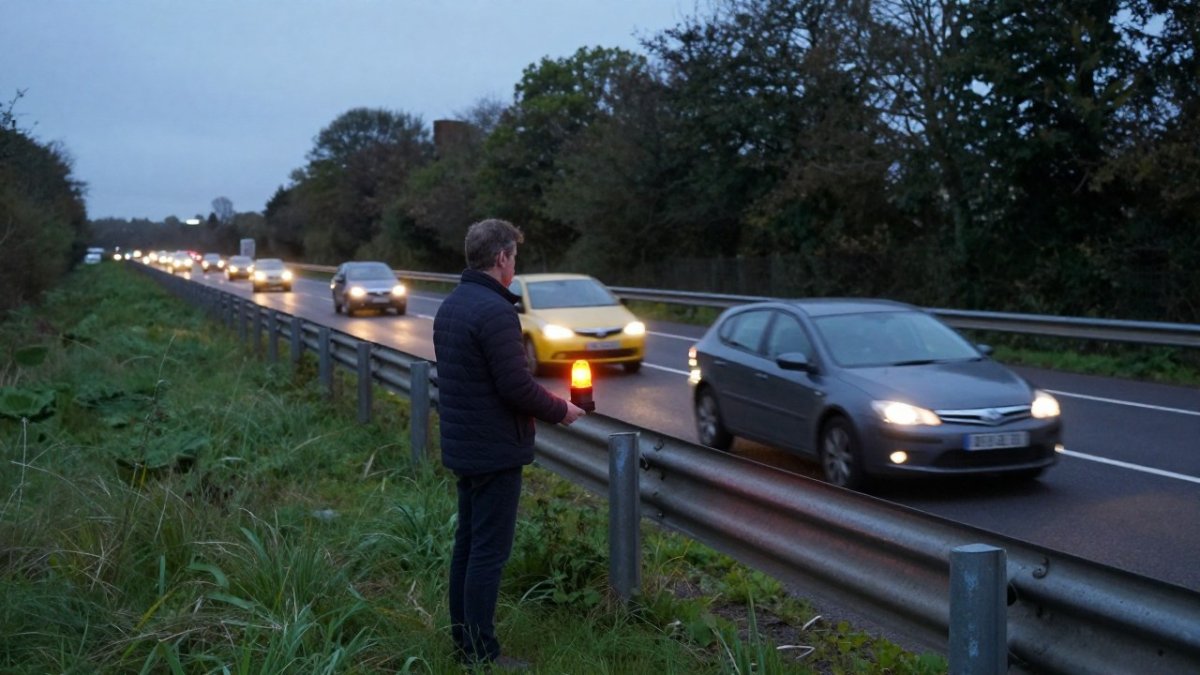
Where Is the Safest Place to Stop in a Motorway Emergency?
Table of Contents
- Why Choosing the Right Place to Stop Matters on a Motorway
- What to Do if Your Car Breaks Down on a Motorway
- Emergency Refuge Areas: The Safest Place to Stop
- Using the Hard Shoulder Safely
- Stopping Decision Tree: Choosing a Safe Location
- Where to Wait After a Car Breakdown
- Roadside Breakdown Safety Equipment and Your Next Step
- Frequently Asked Questions
Last Updated: November 25, 2026
Why Choosing the Right Place to Stop Matters on a Motorway
Stopping in the wrong place on a motorway is one of the most dangerous things a driver can do, which is why knowing the right safe place stop matters so much. Early warning equipment for stationary vehicles can help you get seen and stay safe while you wait for help. Knowing the safe places to stop during a highway emergency can make the difference between a minor breakdown and a serious collision.
A stationary car on a fast road is hard for approaching drivers to judge. Speed, distance and lane changes all happen quickly. That is why the first decision you make, where to stop, matters as much as anything you do next.
Keep these points in mind:
- Stop as far from live traffic as you safely can
- Avoid stopping on a bend, crest or slip road where drivers cannot see you coming
- Get the car onto a hard shoulder or refuge area whenever possible
- Never stop in a live lane unless there is no other option
What to Do if Your Car Breaks Down on a Motorway
The moment you realise something is wrong, act early. Do not wait for the car to fail completely in a lane. Signal, check your mirrors and move steadily toward the left. The basic sequence is the same whatever has gone wrong: hazard warning lights on, signal left, check mirrors and blind spot, move to the hard shoulder or nearest emergency refuge area, and get everyone out away from the road. If you cannot reach the hard shoulder, keep moving slowly and stay calm. Stopping in a live lane is a last resort.
What changes is how much time you have and what you should do first. Use the scenario below that matches your situation.
Mechanical failure (loss of power, warning light, strange noise). You usually have warning. Ease off the accelerator, keep the car rolling, and aim for the next emergency refuge area or hard shoulder rather than stopping where you are. Do not switch the engine off until you are off the carriageway, because you will lose power steering and brake assistance.
Tyre blowout or sudden deflation. Grip the wheel firmly with both hands and do not brake hard. Let the car slow naturally, steer a straight line, and pull left once you have control. A hard brake on a deflated tyre can spin the car across lanes.
Medical emergency. If you or a passenger becomes unwell, stop as soon as you can reach a refuge area, hard shoulder or exit. If someone is unconscious or not breathing, call 999 immediately and give the location from the nearest marker post. Do not attempt to drive on to a service area.
Collision. If vehicles are driveable and no one is injured, move them off the carriageway to a refuge area or hard shoulder before exchanging details. If the carriageway is blocked or anyone is hurt, call 999, switch on hazard lights, and get people behind the barrier if it is safe to do so.
Fire or smoke. Stop as soon as possible, get everyone out and move well away from the vehicle, and call 999. Do not open the bonnet if you suspect an engine fire, because the rush of air can make it worse.
Low fuel or running out. Aim for the next exit or service area rather than the hard shoulder. A hard shoulder stop for fuel is avoidable and puts you in a dangerous position for no reason.
Severe weather. If visibility drops or the surface becomes treacherous, reduce speed and leave more space. If you must stop, use a refuge area or exit rather than the shoulder, and keep hazard lights on while you wait.
Watch out: in any scenario, never stand between your vehicle and live traffic, and never attempt a repair on the carriageway side of the barrier (The Highway Code – Breakdowns and incidents (275 to 287) – Guidance).
Emergency Refuge Areas: The Safest Place to Stop
An emergency refuge area, sometimes called an ERA, is a marked bay on the left-hand side of a smart motorway. These bays are built for exactly this situation. They give you space to get fully clear of moving traffic. Once you are safely in an emergency refuge area, you can consider the next steps for motorway breakdowns without standing close to moving traffic.
Look for the blue markers with a white SOS telephone symbol, which show the direction and distance to the next refuge area. Use them when you can. They are the safest place to stop on a smart motorway, because the hard shoulder is not always available.
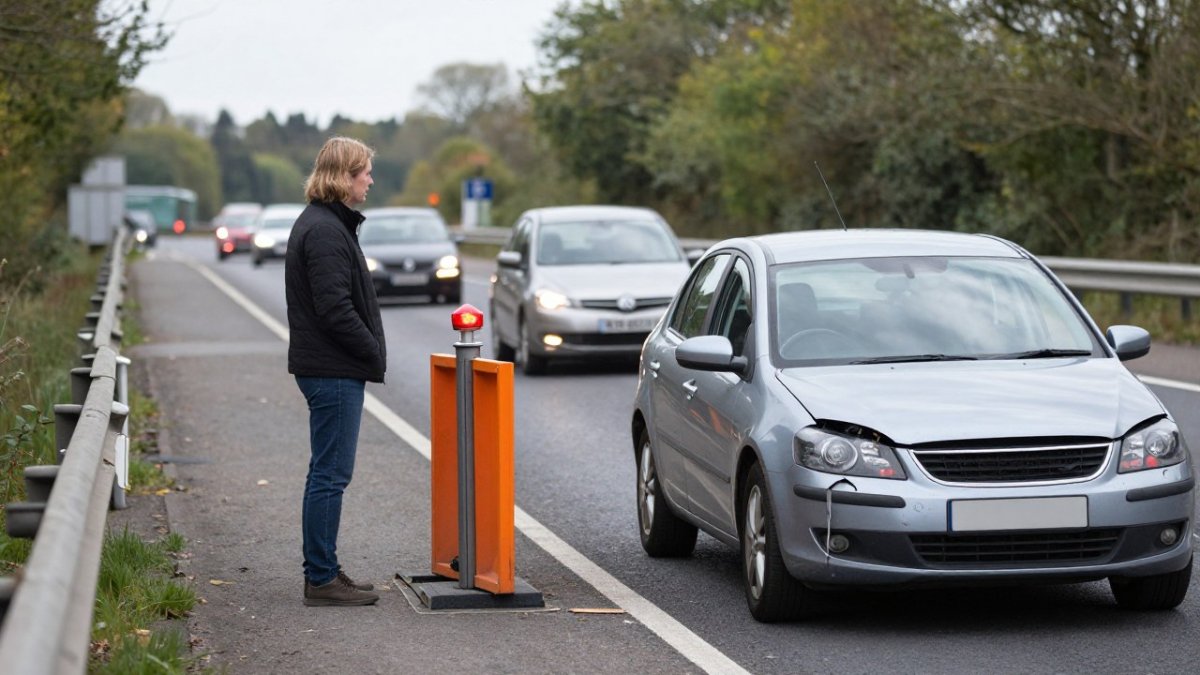
According to National Highways guidance on breakdowns, drivers should use refuge areas where they are available and call for help from the emergency telephone provided.
The table below sums up the main places to stop on a motorway and when each one applies.
| Stopping place | Best for | Key point |
|---|---|---|
| Emergency refuge area | Any breakdown on a smart motorway | Safest choice; marked by blue SOS markers |
| Hard shoulder | Conventional motorway, no refuge area nearby | Stop as far left as possible |
| Next exit or service area | Low fuel, or unsafe shoulder | Avoids a dangerous shoulder stop |
| Live lane | Only when no other option exists | Hazard lights on; stay in vehicle with seatbelt on |
Using the Hard Shoulder Safely
The hard shoulder is the next best option on a conventional motorway. It is meant for emergencies only, so do not use it to overtake or to check your phone.
When you pull onto the shoulder, stop as far left as you can. Leave enough room for other vehicles to pass. Once stopped, keep your hazard lights on and get everyone out on the left, away from the carriageway.
Watch out: never stand between your car and the traffic. Stay behind the safety barrier or well up the bank (Driving on motorways).
Stopping Decision Tree: Choosing a Safe Location
Use this simple guide to decide where to stop:
- Can you reach an emergency refuge area? Use it. It is the safest choice.
- Is there a hard shoulder and no refuge area nearby? Stop as far left as possible.
- Is the shoulder blocked or unsafe? Keep moving slowly toward the next safe place.
- Are you stuck in a live lane with no other option? Turn on hazard lights, stay in the vehicle with your seatbelt on, and call for help.
Unsafe zones include bends, hills, slip roads and lanes with fast-moving traffic close behind you.
Where to Wait After a Car Breakdown
Once you have stopped in a safe place, wait for help from behind the safety barrier if one is available. For more practical guidance on staying safe while you wait, see safety tips for stranded motorists. If you are on the bank and it is safe to do so, move well away from the carriageway. Stay with the vehicle only if you are in a refuge area or on a quiet, wide shoulder with good visibility. Keep a phone charged, and note the nearest marker post so you can give responders an exact location.
What to tell responders. When you call for help, give the details in this order so the operator can find you quickly:
- The road and direction of travel, for example the northbound carriageway
- The nearest marker post number, exit number or junction, and the distance to the next one
- Your vehicle make, model, colour and registration
- What has happened and whether anyone is injured
- Any hazard, such as a vehicle in a live lane, spilled fuel or smoke
Waiting safely. Keep everyone behind the barrier and well up the bank, away from the carriageway. Do not stand between the vehicle and traffic, and do not sit in the car on the hard shoulder. Keep children and pets close and under control, and put a high-visibility vest on before you get out if you have one. If you are in a refuge area, stay within the bay and behind the barrier rather than wandering along the verge.
Rejoining traffic. Only return to the carriageway when you are sure it is safe and the vehicle is fit to drive. Build up speed on the hard shoulder or refuge area slip road before merging, use your mirrors and indicator, and match the speed of traffic in the left lane. If the vehicle cannot be moved, or you are unsure whether it is safe to drive, stay behind the barrier and wait for recovery rather than attempting to rejoin the carriageway.
Watch out: do not rejoin from a refuge area without checking that the merge lane is clear, because approaching drivers will not expect a slow-moving vehicle to pull out.
Roadside Breakdown Safety Equipment and Your Next Step
Good preparation makes a roadside breakdown far less frightening. Keep a high-visibility vest, a warning triangle or warning light, a torch and a fully charged phone in the car. Our high visibility roadside safety equipment guide explains which items are worth carrying and why. Roadflash products are designed to improve hazard awareness and make your vehicle easier to see at the side of the road. Pricing depends on quantity, dates and delivery, so check current prices and stock on our website before you buy.
Stay visible, stay behind the barrier, and call for help as soon as you are safe. If you want to be ready for your next journey, visit the Roadflash website and add your chosen equipment to the basket.
Frequently Asked Questions
Where is the safest place to stop if your car breaks down on a motorway?
The safest place is an emergency refuge area, a marked lay-by on the left-hand side of the carriageway, usually placed at intervals along smart motorways. If one is not reachable, stop on the hard shoulder as far left as possible, away from the lane markings. Keep well clear of the live lanes, switch on your hazard warning lights and, where you can do so safely, move everyone out of the vehicle and behind the barrier while you wait for help.
What should you do if your car breaks down in a live lane?
Leave the vehicle immediately if you can do so safely, and move everyone to the side of the road behind a barrier, away from traffic. Do not try to push the car to the hard shoulder if that puts you at risk. Use your hazard warning lights, call National Highways or 999 if needed, and do not stand between your car and oncoming traffic. Only attempt to walk to a refuge area if you can see it is close and the route is clearly safe.
Should you stay in your car or get out during a motorway breakdown?
In most cases, get everyone out of the vehicle and move behind the safety barrier, provided this can be done without stepping into traffic. Staying in a car on a busy motorway puts occupants at risk of being struck by passing vehicles. If getting out is unsafe, for example because you are in a live lane, stay belted in with seatbelts on, keep doors shut and call for help. Keep pets in the vehicle only if they can be kept safely restrained.
What should you do if you cannot reach a motorway emergency area?
If the refuge area is too far to reach safely, stop on the hard shoulder as close to the left-hand edge as you can, and keep your hazard warning lights on. Turn your wheels away from the traffic, and wait behind the barrier if there is one. Call National Highways on the number shown on the nearest emergency roadside telephone or dial 999, and tell the operator your exact location, which you can find on the nearest marker post.
