
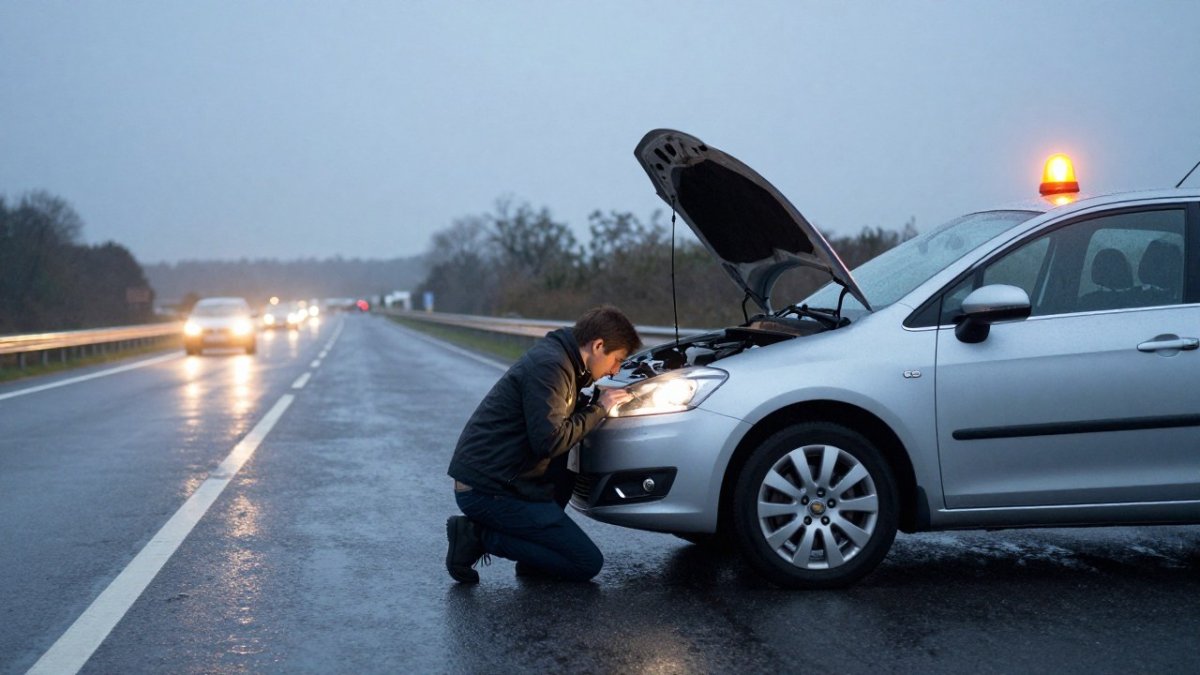
European Breakdown Cover: Single-Trip vs Annual Compared
Last Updated: November 13, 2026
Quick Summary
European breakdown cover is a policy that pays for roadside assistance, recovery and related costs when your vehicle breaks down in another country. Most UK standard policies end at the border, so drivers taking a car abroad should check their cover before they travel. Choose between single-trip cover for one journey or annual cover for several trips a year.
- Many standard UK breakdown policies end at the border, so check before you travel.
- Single-trip cover suits occasional travellers; annual cover suits those driving abroad several times a year.
- Check the maximum trip length, as some annual policies cap each journey at 30 or 60 days.
- Repatriation is usually the largest single cost in a European claim, so read its conditions closely.
- Call the assistance line before arranging any repair, as unauthorised repairs may not be reimbursed.
Table of Contents
- Single-Trip vs Annual European Breakdown Cover
- What Does European Breakdown Cover Include?
- Countries Covered, Vehicle Eligibility and Policy Limits
- Repatriation Cover for Vehicles
- Comparing Providers Side by Side: Cover Limits, Age Rules and Value
- Claims in Practice and Choosing Your Cover Before You Travel
- Frequently Asked Questions
Choosing European breakdown cover is one of the simplest ways to avoid a costly roadside problem abroad. Many drivers make the same mistake every summer: they assume their UK breakdown policy will follow them across the Channel. It usually won’t, so understanding what European breakdown cover is comes first.
European breakdown cover is a policy that pays for roadside assistance, recovery and related costs when your vehicle breaks down in another country. Most policies cover the car, its occupants and sometimes a hire vehicle, but the exact terms vary widely between providers.
Who needs it? Anyone taking a vehicle outside the UK should check their cover. That includes holidaymakers driving to the continent, business travellers making regular trips, and people relocating with a car. If you drive an older vehicle, a leased car or a van, read the vehicle eligibility rules closely before you buy.
Watch out: many standard UK policies end at the border, so drivers assume they are covered when they are not.
Single-Trip vs Annual European Breakdown Cover
The main choice is between a single-trip policy and an annual multi-trip policy. A single-trip policy covers one journey for a fixed number of days. An annual policy covers every trip you make within a year, up to a set maximum length per journey.
Single-trip cover suits occasional travellers. Annual cover usually works out better if you drive abroad several times a year. Check the maximum trip length, because some annual policies cap each journey at 30 or 60 days.
Working out your likely number of trips before comparing prices is a sensible first step. Quotes change depending on trip length and how many journeys you plan to make.
What Does European Breakdown Cover Include?
Most European breakdown policies include roadside assistance, on-the-spot repairs where possible, and recovery to a garage if the car cannot be fixed at the roadside. Many also include vehicle repatriation, alternative transport and accommodation if the car is off the road for a long time.
Read the benefit limits closely. A policy may state a maximum amount for hire cars, hotel costs or onward travel. A higher headline figure means little if the limits are too low for your trip.
Common add-ons include personal cover for the driver and passengers, and cover for trailers or caravans. Check whether these are included or cost extra.
Countries Covered, Vehicle Eligibility and Policy Limits
Providers list the countries they cover, and this list is not always the same across policies. Some include the whole of Europe, while others exclude certain territories or islands. Check the map or list before you travel, particularly if your route includes Spain, Portugal or Eastern Europe.
Vehicle eligibility rules matter too. Policies may limit cover based on the car’s age, mileage, weight or type. Motorhomes, hire cars and vans often need separate cover.
Policy limits can also restrict how much a provider will pay for recovery, repairs and hire costs. Make sure you understand the cap on each benefit before you buy.
Vehicle Age Limits and Who Is Covered
Many providers set a maximum vehicle age, so older cars may not qualify. Some policies have no age restriction at all, which is worth knowing if your car is more than ten years old.
Cover can also depend on who is driving. Some policies cover only the named driver, while others include any licensed driver on the journey. Check whether passengers are covered as well.
Repatriation Cover for Vehicles
Repatriation cover pays to bring your vehicle back to the UK if it cannot be repaired abroad. It is one of the most expensive parts of a breakdown, so the limits here deserve close attention.
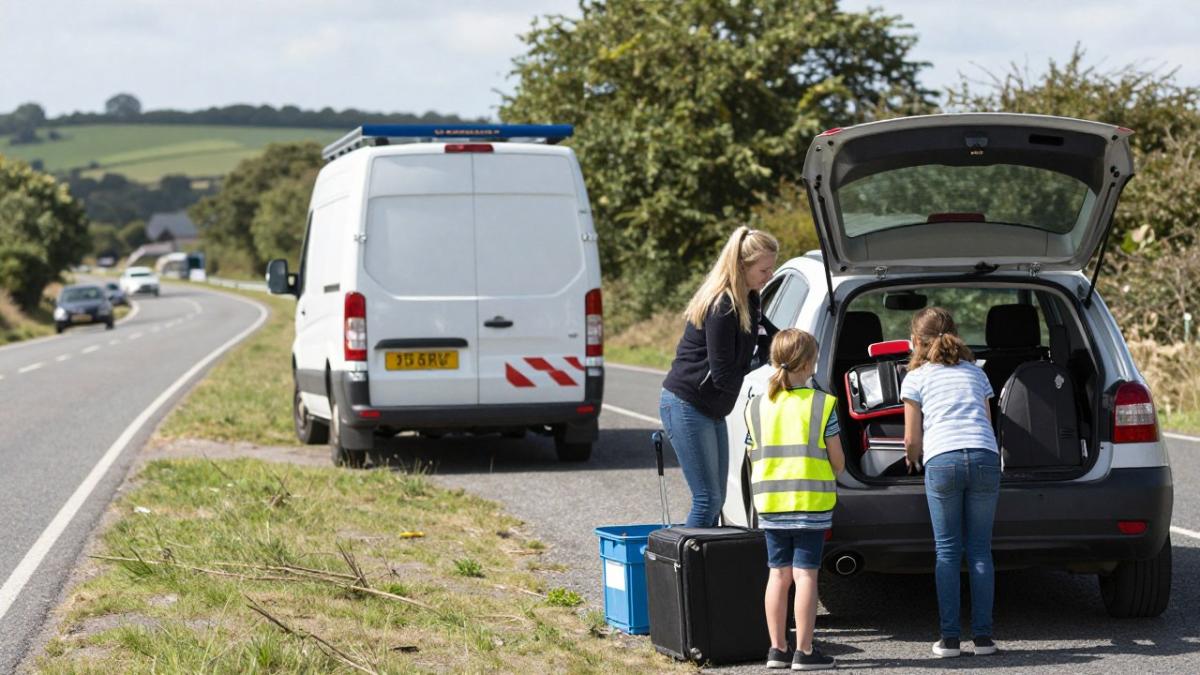
Some policies pay the full cost of recovery and transport home. Others cap the amount or only cover repatriation after a set number of days. Check whether the policy covers repatriation for any vehicle or only for cars under a certain age.
A family loading luggage into a car at a roadside lay-by on a sunny continental road, with a breakdown recovery vehicle parked just behind. The family is British. All four are British.
Comparing Providers Side by Side: Cover Limits, Age Rules and Value
Most comparison pages stop at the headline premium and a short list of benefits. That is not enough to judge a European breakdown policy, because two policies at the same price can differ sharply on recovery distance, repatriation conditions, excesses and what counts as a covered breakdown.
Start with the benefit that matters most on a long trip: recovery distance. Some policies recover your vehicle to the nearest garage only, while others will take it to a garage of your choice within a set radius or to a destination further along your route. Check the distance in miles or kilometres and whether the cap applies per incident or per journey.
Next, compare repatriation conditions. Repatriation is usually the largest single cost in a European claim, so the wording matters more than the headline limit. Look for whether repatriation is triggered only when the repair cost exceeds a set proportion of the vehicle’s value, whether it applies only to vehicles under a certain age, and whether it covers the vehicle only or also passengers and luggage.
Then compare excesses. A low premium often carries a higher excess per claim, and some policies apply a separate excess for repatriation or for claims involving a trailer. Add the excess to the premium to see the real first-claim cost. If you drive an older car, a high excess can make a modest repair uneconomic to claim for, which changes the value of the policy entirely.
Use the table below as a framework for your own comparison. Fill it in from each provider’s policy wording and IPID rather than from marketing copy.
| Factor to compare | What to record | Why it matters |
|---|---|---|
| Premium for your exact trip dates | Total price in GBP including any add-ons | The headline price is only the starting point |
| Excess per claim | Amount in GBP, and whether separate excesses apply | A low premium with a high excess can cost more on the first claim |
| Roadside assistance limit | Amount in GBP or number of call-outs | Some policies cap the number of assistance calls per journey |
| Recovery distance | Miles or kilometres, and whether to nearest garage or garage of choice | Determines whether you pay for a second tow |
| Repatriation conditions | Trigger, vehicle age limit, destination | The largest single cost in many European claims |
| Onward travel and accommodation | Amount in GBP per person and total cap | Matters most if the vehicle is off the road for days |
| Hire car | Daily rate in GBP, maximum days, vehicle class | A low daily cap may not cover a family-sized car |
| Vehicle eligibility | Age, weight, modifications, trailer or caravan cover | An ineligible vehicle means no cover at all |
| Countries covered | Full list, including islands and territories | Route-specific exclusions are common |
| Claims authorisation | Whether you must call before arranging repairs | Repairs arranged without authorisation may not be reimbursed |
Value is not the same as the lowest premium. A policy with a generous recovery distance, clear repatriation terms and a moderate excess is often better value than a cheaper policy that recovers only to the nearest garage and excludes vehicles over a certain age.
Read the exclusions section of the policy wording before you buy, as a policy that looks comprehensive on the summary page may still exclude the benefit you need.
Claims in Practice and Choosing Your Cover Before You Travel
A breakdown policy is only as good as the claim process behind it. Before you buy, read the claims section of the policy wording and the IPID, and check four things: the assistance number, whether you must call before arranging any repair, what information you will be asked for, and what evidence you must keep. These details determine whether a claim is paid smoothly or disputed later.
When you call the assistance line, expect to provide your policy number, the vehicle registration, your location (a road name, junction or what3words reference is more useful than a vague description), the nature of the fault, and the number of people travelling. Keep a record of the call, including the time, the reference number and the name of the person you spoke to.
Authorisation is the point where many claims go wrong. Most policies require you to contact the assistance line before any repair or recovery is arranged, and repairs carried out without authorisation may not be reimbursed. If you are approached by a roadside recovery operator who is not acting for your provider, call the assistance line first. The same applies if a garage recommends work beyond the immediate breakdown; check whether the provider will authorise it before you agree.
Keep evidence as you go. Retain receipts for any costs you pay yourself, such as emergency accommodation or a hire car, and ask the garage for a written diagnosis and invoice. Photographs of the vehicle, the fault and the location can help if the cause of the breakdown is later questioned. If the vehicle is repatriated, keep the transport documents and note the condition of the vehicle on collection.
Distinguish guaranteed benefits from service expectations. A policy guarantees the benefits and limits set out in the wording, such as a stated recovery distance or a set amount towards accommodation. Response times are usually service expectations rather than guarantees, so check the policy wording rather than assuming a fixed recovery time.
Before you travel, confirm your vehicle is eligible, check the countries on your route against the policy list, and make sure the benefit limits suit your plans. If you are planning a trip, read our guide on what to do when a car breaks down in Spain: Car Breaks Down in Spain: Step-by-Step Safety Guide. Drivers heading to Spain should also check what Spain requires for warning devices on a breakdown, and our guide on whether a DGT 3.0 beacon is worth it for tourists explains how it fits alongside breakdown cover.
Frequently Asked Questions
Do I need separate breakdown cover for driving in Europe?
Standard UK breakdown cover often does not extend to driving abroad, so it is worth checking your policy wording before you travel. Many providers sell European breakdown cover as a separate product or an add-on. Check whether the policy covers the countries you will drive through, the vehicles you will take and the trip length. If your UK cover does not extend abroad, buying dedicated European cover is the simplest way to be protected on the road.
What is the difference between single-trip and annual European breakdown cover?
Single-trip European breakdown cover protects you for one journey, usually for a set number of days. Annual multi-trip cover covers every trip you make within a year, which is usually better value if you travel abroad several times. Single-trip cover can be cheaper for one holiday, while annual cover suits frequent travellers. Compare the trip duration limits and the number of journeys each option allows before deciding.
Does my standard UK breakdown policy cover me in Europe?
Some UK breakdown policies include limited European assistance, but many do not. Read the policy’s territorial limits, cover levels and any age or vehicle restrictions. Check whether recovery, repatriation and onward travel costs are included, as these vary widely. If the policy does not clearly state European cover, contact the provider before you travel to confirm what applies.
Is repatriation included in standard European breakdown policies?
Repatriation is not always included, and it is one of the main differences between policies. Repatriation covers the cost of returning your vehicle to the UK after a breakdown or accident abroad. Some policies include it in full, others set a cost limit, and some offer it only as an optional upgrade. Check the repatriation limit and whether it covers the whole recovery distance before you buy.
