
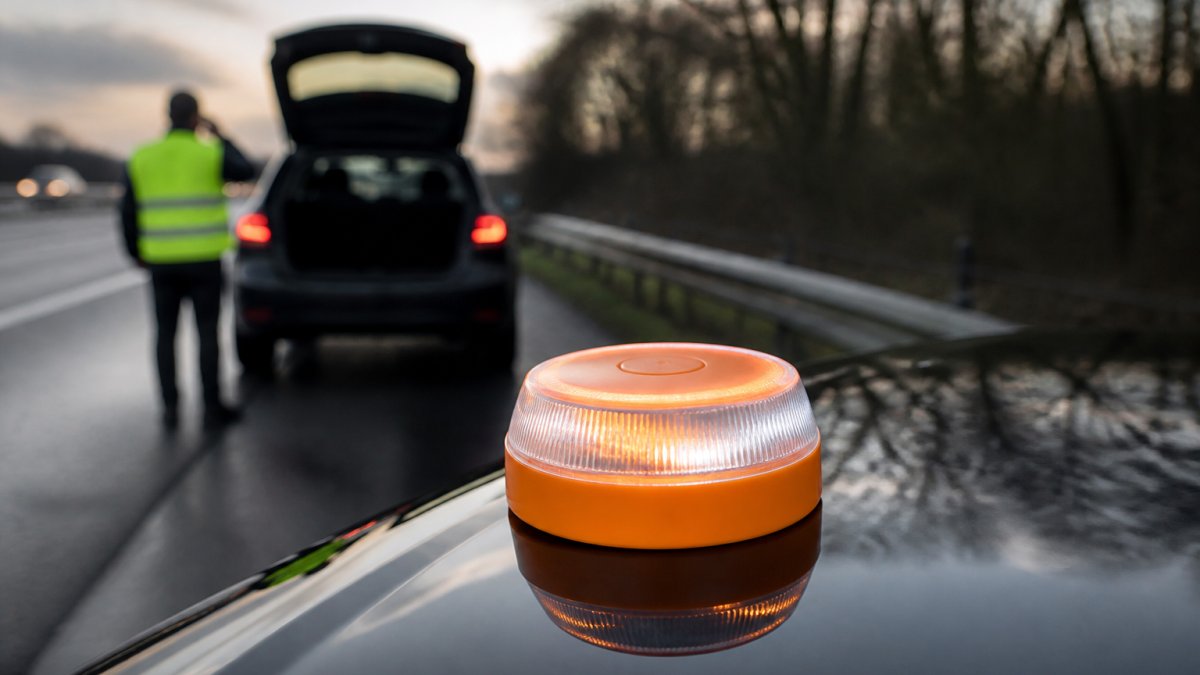
Is My V16 Beacon DGT Approved? How to Check
Table of Contents
- What DGT Approval Actually Means for a V16 Beacon
- How to Check Your V16 Beacon Approval Number
- DGT-Approved V16 Beacon List: How to Verify Your Model
- DGT 3.0 Connected V16 Beacon Requirements Explained
- Non-Connected V16 Beacon Legality: What Still Works in 2026
- Device Approval vs Seller Claims: How to Tell the Difference
- Rules for UK-Registered Vehicles and Visitors
- Frequently Asked Questions
Last Updated: October 14, 2026
What DGT Approval Actually Means for a V16 Beacon
A DGT-approved V16 beacon is a warning light that Spain’s Directorate General of Traffic has officially certified for use as an emergency warning device.
The rules matter because from 1 January 2026, a connected V16 beacon replaces the old warning triangles for vehicles on Spanish roads.
Roadflash provides DGT 3.0 compliant emergency beacons with GPS/Geolocation, and we spend a lot of time explaining this distinction. Here is the short version: approval is granted to a specific model, by a specific certification body, and it can be withdrawn.
This guide shows you exactly how to check your own device, what the codes on it mean, and what to do if your model has been delisted.
How to Check Your V16 Beacon Approval Number
Checking your V16 beacon approval number takes about two minutes if you know where to look. The number is printed on the device itself, and it must match an entry on the official approved list.
You cannot verify a beacon from the packaging alone. Boxes are easy to copy. The device and the official record are what count.
Where to Find the Certification Code on Your Device
Look on the base or underside of the beacon, usually on a label next to the battery compartment. You are looking for a certification code that identifies the manufacturer and the approved model.
If there is no code, or the label is a generic sticker with no certification reference, treat the device as unapproved until you can prove otherwise.
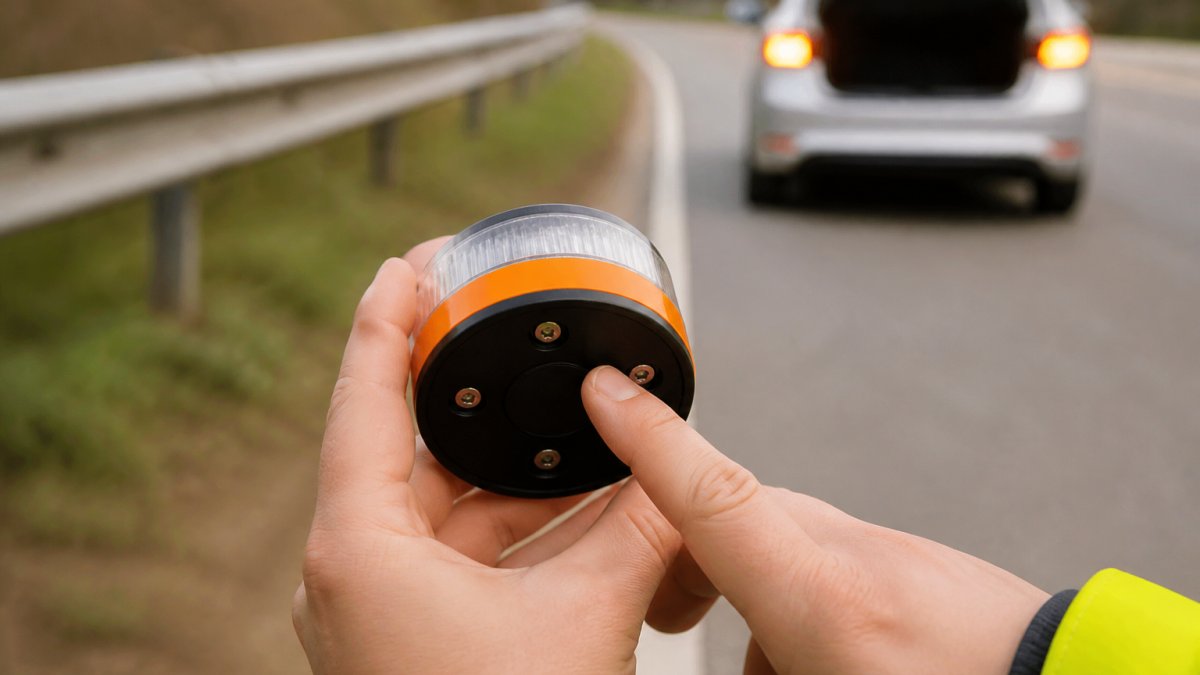
What LCOE and IDIADA Identifiers Tell You
Two names come up constantly in V16 certification: LCOE and IDIADA. LCOE is the Spanish official laboratory that tests and certifies vehicle lighting and warning devices. IDIADA is an independent automotive testing and engineering organisation that carries out approval testing.
A genuine approval reference will trace back to one of these bodies. If a seller cannot tell you which laboratory tested the device, that is a red flag.
Photograph the certification label before you install the beacon. If the model is later delisted, you have proof of what you bought and when.
DGT-Approved V16 Beacon List: How to Verify Your Model
The only reliable way to verify your model is to check it against the official approved list published by the Directorate General of Traffic. Seller websites, marketplace listings and review pages are not the list.
This is the step most drivers skip, and it is the one that matters.
Checking the Official Approved List Step by Step
Work through it in this order:
- Find the certification code on your device
- Open the official approved list from the traffic authority
- Search for the manufacturer name, then the model
- Confirm the code on the list matches the code on your device exactly
- Check the list date to make sure it is current
- Save a screenshot of the entry for your records
If your model is not there, it is not approved, regardless of what the box says.
What to Do If Your Model Has Been Delisted
Approval status changes. A model that was certified can be removed from the list if it fails to meet requirements or the manufacturer stops maintaining compliance.
A delisted beacon is no longer valid for road use. Replace it rather than risk a fine or, worse, a device that fails when you actually need it.
Buying a beacon because it is cheap and looks identical to an approved model is the most common mistake we see. Two devices can look the same and carry completely different approval status.
DGT 3.0 Connected V16 Beacon Requirements Explained
A DGT 3.0 connected beacon does more than flash. It sends its position to the traffic authority’s platform so other drivers and emergency services can see the hazard. That connectivity is what separates a compliant device from a simple flashing light.
The requirements are straightforward once you strip away the marketing.
GPS, Mobile Connectivity, and the SIM Card Inside
A compliant connected beacon needs three things working together:
- Integrated geolocation using GPS to fix your position
- Mobile connectivity through an embedded SIM card
- Data transmission to the DGT 3.0 platform
The SIM is built in, so there is nothing to set up. The device connects automatically when you switch it on. Location data is sent only while the beacon is active.
If you are concerned about privacy, that is a fair question. The data exists to place your hazard on the map, and it is tied to the warning, not to tracking your journeys.
Non-Connected V16 Beacon Legality: What Still Works in 2026
A non-connected V16 beacon is not compliant for the 2026 requirement. It may still flash, and it may still be visible, but it does not meet the connected standard the rules now demand.
Plenty of older beacons are still in gloveboxes. If yours has no connectivity and no geolocation, it does not satisfy the requirement.
The practical test is simple:
| Check | Connected Beacon | Non-Connected Beacon |
|---|---|---|
| DGT approval for 2026 | Yes | No |
| GPS geolocation | Built in | None |
| SIM card and data link | Embedded | None |
| Valid for road use | Yes | No |
If you are unsure, replace it. A compliant beacon is a small cost next to a roadside fine.
Device Approval vs Seller Claims: How to Tell the Difference
Device approval is granted by the certification body to a specific model, identified by a specific code. Seller claims are marketing language applied to a product listing, a box, or a website. They are not the same thing, and the gap between them is where drivers get caught out.
The tricky part is that a seller claim can be technically true and still not mean your exact beacon is approved. “DGT 3.0 compatible” may describe the technology the device uses. It does not confirm that this particular model, with this particular code, appears on the official list.
Phrases That Do Not Prove Approval
Watch for these, because none of them establish that the model is certified:
- “Meets DGT standards”, a self-assessment, not a certification
- “Compatible with DGT 3.0”, describes the platform the device can talk to, not its approval status
- “Certified technology”, the technology may be certified; the finished device may not be
- “Approved design”, a design can be approved in principle without the manufactured unit being listed
- “DGT registered”, registration is not the same as approval, and the term is often used loosely
A further trap is the brand-level claim. A manufacturer may have one approved model and several unapproved ones. A listing that says “[Brand] is DGT approved” tells you nothing about the specific unit in the box.
The Three-Question Test for Any Seller
Before you buy, put these three questions to the seller in writing. A supplier with a genuinely approved product will answer all three without hesitation:
- What is the certification code for this exact model? The answer must be a specific code, not a brand name or a general reference.
- Which body carried out the approval testing? The answer should name the testing organisation, not a vague reference to “European standards”.
- Can you confirm this model currently appears on the official approved list? The answer should be an unqualified yes, and the seller should be willing to point you to the list entry.
If any of the three answers is evasive, generic, or refers you back to the packaging, treat the device as unapproved until you can verify it yourself against the official list.
Why the Packaging Cannot Be Trusted
Boxes are cheap to print and easy to copy. A generic sticker with a certification-looking reference, a flag, or a shield logo proves nothing. The only evidence that counts is the code on the device itself matching an entry on the official list, checked by you, on the day you check it.
This is also why buying from a marketplace listing with no named manufacturer is risky. If you cannot identify who made the device and which laboratory tested it, you have no way to trace its approval status, and no recourse if it turns out to be unlisted.
Ask the seller for the certification code before you pay, not after. A supplier who cannot supply it in advance is unlikely to be able to supply it later, when you need it most.
What a Genuine Approval Looks Like in Practice
A genuinely approved beacon will have:
- A certification code printed on the device itself, not only on the box
- A traceable link to the testing body that carried out the approval
- A current entry on the official list, which you can find by searching the manufacturer and model
- A seller who is willing to confirm all of the above in writing before purchase
Anything less is a claim, not an approval. The distinction matters because the requirement is enforced against the device in your car, not against the marketing that sold it to you.
Rules for UK-Registered Vehicles and Visitors
If you drive a UK-registered vehicle into Spain, the same requirement applies to you. The rule follows the road, not the registration plate. British drivers heading south for a holiday or a work trip need a compliant beacon in the car.
The same goes for vans, motorhomes and trucks. If the vehicle is on a Spanish road and it breaks down, the warning rules apply.
A few things worth knowing before you travel:
- Buy a compliant beacon before you cross, not at the roadside
- Keep it somewhere you can reach without unpacking the boot
- Check the certification code yourself rather than trusting the shop
- Remember that a warning triangle alone no longer meets the requirement
Approval is about the specific model on the official list, not the brand on the box. Check the code, check the list, and keep the proof.
Frequently Asked Questions
How can I check whether my V16 beacon is DGT-approved?
Look for the certification code printed on the device or its packaging. Cross-reference this code against the official approved list published by the Spanish Directorate General of Traffic. If your model appears on that list with a matching certification code, it is DGT-approved. If the code is missing or the model does not appear, treat the device as unapproved until you can confirm otherwise with the manufacturer or a reputable supplier.
Does a V16 beacon need DGT 3.0 connectivity to be approved?
From 1 January 2026, new V16 beacons sold must have DGT 3.0 connectivity, which means integrated GPS and mobile data transmission to the DGT 3.0 platform. Non-connected V16 beacons that were approved under earlier rules may still be legal for existing owners to use, but they will not meet the new connected requirements. If you are buying a new beacon now, choose a DGT 3.0 connected model to stay compliant.
Will a V16 beacon without geolocation connectivity meet the requirements?
A V16 beacon without geolocation cannot meet the DGT 3.0 connected requirements that apply to new devices from 2026. The connected system sends your location to the DGT 3.0 platform so other drivers and emergency services know exactly where you are. Without GPS and mobile connectivity, the beacon still works as a visible warning light but does not fulfil the connected-beacon legal requirement for new sales.
Can I check an approved V16 beacon model against an official list?
Yes. The DGT maintains an official list of approved V16 beacon models. You can search this list by the model name or certification code found on your device. If your model is not on the list, it is not approved for use. Always verify before buying, and keep a record of the approval code in case you need to show it during a roadside inspection.
Breakdowns do not wait for a convenient moment, and the last thing you want at the side of a motorway is doubt about whether your kit is legal. Roadflash builds multi-award-winning DGT 3.0 compliant emergency beacons with GPS geolocation and high-visibility lighting, designed to make your vehicle visible and your position known the moment you switch it on. Every unit is built for the connected standard, so you can fit it and forget it. Add to basket and drive with one less thing to worry about.