
Best Car Breakdown Cover for Motorway Journeys Compared
Last Updated: November 21, 2026
Quick Summary
The best car breakdown cover for motorway journeys is the policy that recovers your car to a destination you choose, with a realistic callout allowance and a clear recovery distance. Judge covers on those motorway-specific terms rather than headline price, and read the policy wording before you buy.
- Motorway breakdowns often end in recovery rather than a roadside repair, so check recovery terms first.
- National recovery removes the distance cap but usually costs more than a nearest-garage policy.
- Ask whether a motorway recovery counts as a separate callout from a later garage repair.
- Confirm that older, modified, electric or hybrid vehicles are covered before you buy.
- Ask each provider to describe what happens if your car cannot be repaired 150 miles from home.
Table of Contents
- Why Motorway Journeys Need Different Breakdown Cover
- What to Do If Your Car Breaks Down on a Motorway
- Roadside Assistance and Recovery: What the Difference Means
- Personal Breakdown Cover vs Vehicle Cover
- Comparing the Leading UK Providers for Motorway Cover
- Onward Travel and Passenger Cover on a Motorway Journey
- Choosing Motorway Breakdown Cover for Your Next Journey
- Frequently Asked Questions
Why Motorway Journeys Need Different Breakdown Cover
Breaking down on a motorway is not the same as breaking down on a quiet B-road. Traffic moves fast, the hard shoulder offers little protection, and recovery can take longer. That is why the best car breakdown cover for motorway journeys needs to be judged on motorway-specific terms, not just headline price. Motorists who commute on busy roads know that their cover choice matters as much as the equipment they carry in the boot.
Many drivers assume any policy will do. A standard policy may still cover a motorway breakdown, but the detail of response times, recovery destinations and roadside repair rules can differ, so finding the best car breakdown cover for motorway journeys means reading the policy wording before you commit and checking how the provider handles incidents on the hard shoulder.
What to Do If Your Car Breaks Down on a Motorway
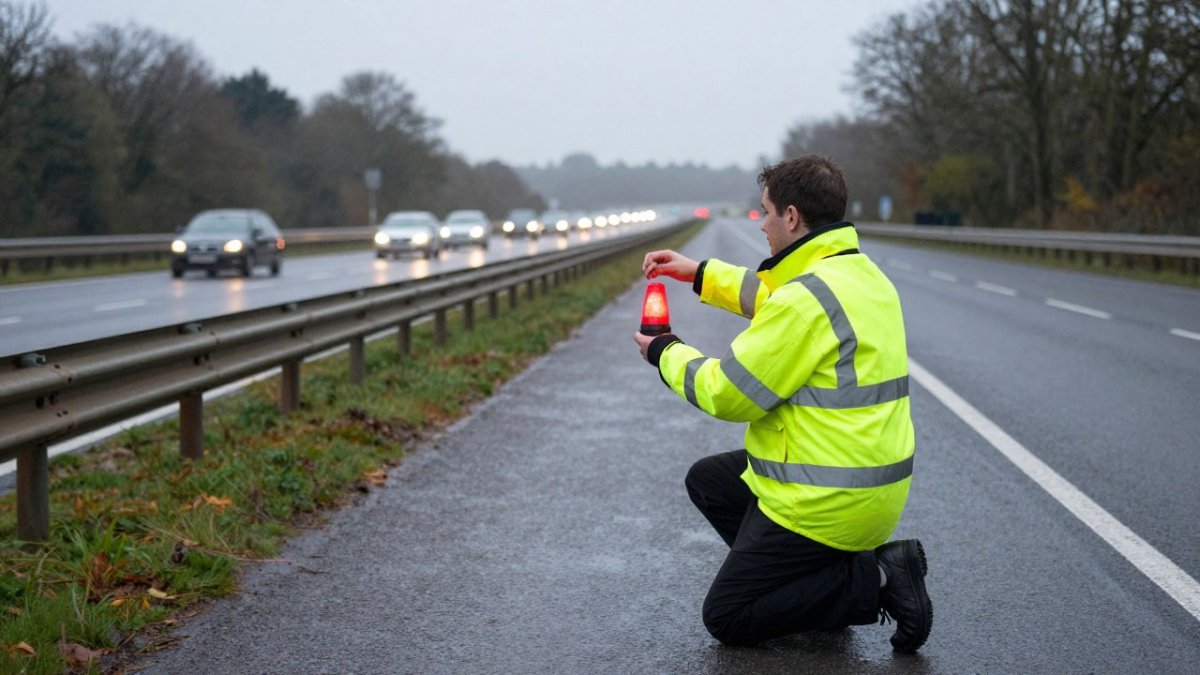
The first priority is getting your vehicle and passengers away from live traffic. Move to the hard shoulder or a emergency refuge area if you can do so safely, switch on your hazard lights, and stay behind the crash barrier (The Highway Code – Breakdowns and incidents (275 to 287) – Guidance). Call your breakdown provider from a safe position, and give your location as precisely as you can, using the marker posts or emergency telephone numbering on the motorway.
Keep your cover details and the provider’s roadside number saved on your phone, so you can call without searching when you need to respond quickly. Warning equipment placed well behind the car gives approaching drivers more time to react, which is why hazard lights and high-visibility warning devices matter so much on fast roads.
Safety Steps Before Help Arrives
Stay in the vehicle with your seatbelt on if the hard shoulder feels unsafe, and keep passengers, particularly children, on the side away from the traffic (The Highway Code – Breakdowns and incidents (275 to 287) – Guidance). If you must get out, exit on the side away from the carriageway and walk to the crash barrier, never into the lane.
A common mistake is changing a tyre on the hard shoulder without warning traffic. Unless you are trained and the spot is clearly safe, wait for recovery. Check the safe method for changing a flat tyre on the motorway. Place warning lights or a triangle well behind the vehicle, and check that your provider will attend a motorway incident before you assume it will.
Roadside Assistance and Recovery: What the Difference Means
Roadside assistance means an engineer attends and tries to fix the fault where the car has stopped. Recovery means the vehicle is transported onward, either to a garage or to a destination you choose. Most policies include both, but the motorway context changes what is realistic: a technician cannot safely carry out many repairs on a live carriageway, so a motorway callout often becomes a recovery job even when the policy is sold as roadside assistance.
That distinction matters because the two benefits are usually governed by different limits. A typical policy will specify a call-out limit per year, a recovery distance in miles, and whether recovery is to the nearest garage or to a destination of your choice. A policy that recovers only to the nearest suitable garage may leave you far from home on a long motorway trip, while a national recovery benefit will take the car to a nominated address. Check which one applies before you buy, because the difference only becomes obvious on the day.
How a motorway callout usually unfolds
When you call a provider from a motorway, the sequence is normally: the call handler logs your location using marker posts or the emergency refuge area number, dispatches a patrol or a recovery agent, and decides whether the job is a roadside repair or a recovery. On smart motorways and conventional motorways alike, the priority is moving the vehicle off the live carriageway, so a patrol may recover the car to a safe place first and diagnose afterwards. That is why the time to reach a safe location matters more than the time to complete a repair.
Watch out: some policies count a motorway recovery as a separate callout from a later roadside repair at the garage, which can use up two of your annual callouts for a single incident. Ask the provider how a motorway job is logged before you assume one breakdown equals one callout.
The limits that actually bite on a motorway
- Callout limits. Many policies allow a set number of callouts per year, and a motorway incident that requires both recovery and a follow-on attendance can consume more than one.
- Recovery distance. A common structure is recovery to the nearest participating garage within a set mileage, with a per-mile charge beyond that. National recovery, where offered, removes the distance cap but usually costs more.
- Vehicle eligibility. Older vehicles, modified cars, and vehicles above a certain weight or length are often excluded or surcharged, and a motorway recovery may need a larger recovery vehicle.
- Pre-existing faults. A fault that was present before the journey, or a vehicle that has been poorly maintained, can be excluded, so keep service records.
- Waiting periods. New policies often impose a waiting period before cover starts, which is no help if you break down on the way home from buying the policy.
Matching the cover to the journey
For regular motorway driving, the practical priority is national recovery rather than the cheapest roadside-only tier, because a motorway breakdown frequently ends with the car needing transport rather than a repair at the roadside. Pair that with a realistic callout allowance and check the recovery distance in miles. If you drive an electric or hybrid vehicle, confirm that the policy covers a depleted battery and that the recovery agent has the equipment for your vehicle, since not every patrol can move a heavy electric car.
A simple test before buying: ask the provider to describe, step by step, what happens if your car cannot be repaired on the hard shoulder 150 miles from home. The answer tells you more about the policy than the headline price.
Personal Breakdown Cover vs Vehicle Cover
Personal breakdown cover follows you, so it can help when you drive a different car, a hire car or a friend’s vehicle. Vehicle cover is tied to one registered car and usually costs less for that one vehicle. For frequent motorway drivers who share a car or drive several vehicles, personal cover may suit better. For a single car used mainly for commuting, vehicle cover is often the simpler choice.
Read the eligibility rules carefully. Some personal policies exclude certain vehicle types, and some vehicle policies only apply when the named driver is present.
Comparing the Leading UK Providers for Motorway Cover
The main names most drivers consider include Green Flag, RAC, The AA and Start Rescue. The comparison that matters for motorway journeys is not the starting price but how each provider handles dispatch, recovery distance, callout limits and onward travel, so compare the published policy terms directly and ask each provider the same motorway-specific questions.
A motorway-focused comparison method
Rather than ranking providers on price alone, score each one against the criteria that decide the outcome of a motorway breakdown:
- Recovery destination. Does the policy recover to the nearest garage or to a destination of your choice, and is national recovery included or an add-on?
- Recovery distance. What mileage is included, and what is charged per mile beyond it?
- Callout limit. How many callouts per year, and does a motorway recovery count separately from a roadside repair?
- Response commitment. Does the provider publish a target attendance time, and does it apply on motorways?
- Onward travel. Are passengers moved on, and is accommodation covered if the repair takes overnight?
- Vehicle eligibility. Are older, modified, electric or hybrid vehicles covered, and are there weight or length limits?
- Price. The annual premium for your vehicle and chosen cover level, quoted in pounds.
What each provider is known for
Those are useful starting points, but none of them tells you how the policy behaves on a motorway, so the policy document is the deciding evidence when identifying the best car breakdown cover for motorway journeys.
| Provider | Best For | Motorway Point to Check |
|---|---|---|
| Green Flag | 24/7 assistance and online quotes | Recovery destination and national recovery terms |
| RAC | Recognised provider comparison | Callout limits and recovery distance |
| The AA | Well-known national name | Roadside repair policy on motorways and onward travel |
| Start Rescue | Highly rated in a reported survey | Exclusions, vehicle eligibility and recovery distance |
Getting a quote that reflects your journey
Request a quote for your own vehicle, since pricing depends on the car, the cover level and your details. Ask for the policy document at the same time, and read the sections on recovery, callouts and exclusions before you compare prices. A cheaper premium that recovers only to the nearest garage can cost more in practice than a slightly higher premium with national recovery.
Watch out: introductory prices often apply to the first year only, so check the renewal premium and the terms that apply after the introductory period before you commit.
Onward Travel and Passenger Cover on a Motorway Journey
A breakdown on a long motorway trip raises questions beyond the car itself. Can your passengers be taken on to their destination? Is there help with accommodation if the repair takes overnight? Many policies offer onward travel or passenger assistance as an add-on, and these benefits differ widely, so check the limits.
If you regularly drive long distances, plan ahead. Keep your policy documents accessible, and confirm before travelling whether your cover includes European assistance if your route crosses the Channel.
Choosing Motorway Breakdown Cover for Your Next Journey
Start by deciding whether you need personal or vehicle cover, then compare the motorway-specific terms rather than the starting price. Ask each provider about roadside repair, recovery distance, call-out limits and onward travel. Keep your cover details saved, pair the best car breakdown cover for motorway journeys with proper warning equipment in the car. At Roadflash’s DGT 3.0 compliant emergency beacons and high-visibility warning lights are designed to make a stranded car easier to see from a distance, which is an important part of staying safe while you wait for help.
Frequently Asked Questions
What is the best breakdown cover for motorway journeys?
The best option depends on how often you drive on motorways, whether you need recovery to a specific destination and your budget. Look for cover that explicitly includes motorway recovery and roadside repair, check response time commitments and read the policy exclusions. Quotes from Green Flag, RAC, The AA and Start Rescue vary, so compare current prices directly with each provider rather than relying on starting figures.
Does standard breakdown cover include motorway recovery?
Many standard policies include roadside assistance on motorways, but the recovery terms differ between providers and cover levels. Some basic policies only cover roadside repair and not recovery to a garage. Check the policy document for motorway wording, any mileage or distance limits, and whether you can be recovered away from the hard shoulder.
Does breakdown cover include onward travel?
Onward travel, such as a train ticket, taxi or hotel stay, is available on some higher cover levels but not all. It is usually offered only when a vehicle cannot be repaired on the day. Check whether passengers are included and whether there are limits on the amount or number of nights covered before you buy.
Is personal or vehicle breakdown cover better for regular motorway driving?
Vehicle cover is tied to a specific car and suits drivers who use one vehicle most. Personal cover follows you across different cars, which can suit people who drive frequently for work or borrow vehicles. For regular motorway commuting in one car, vehicle cover is often the simpler option, but check the exclusions for your particular situation.
