
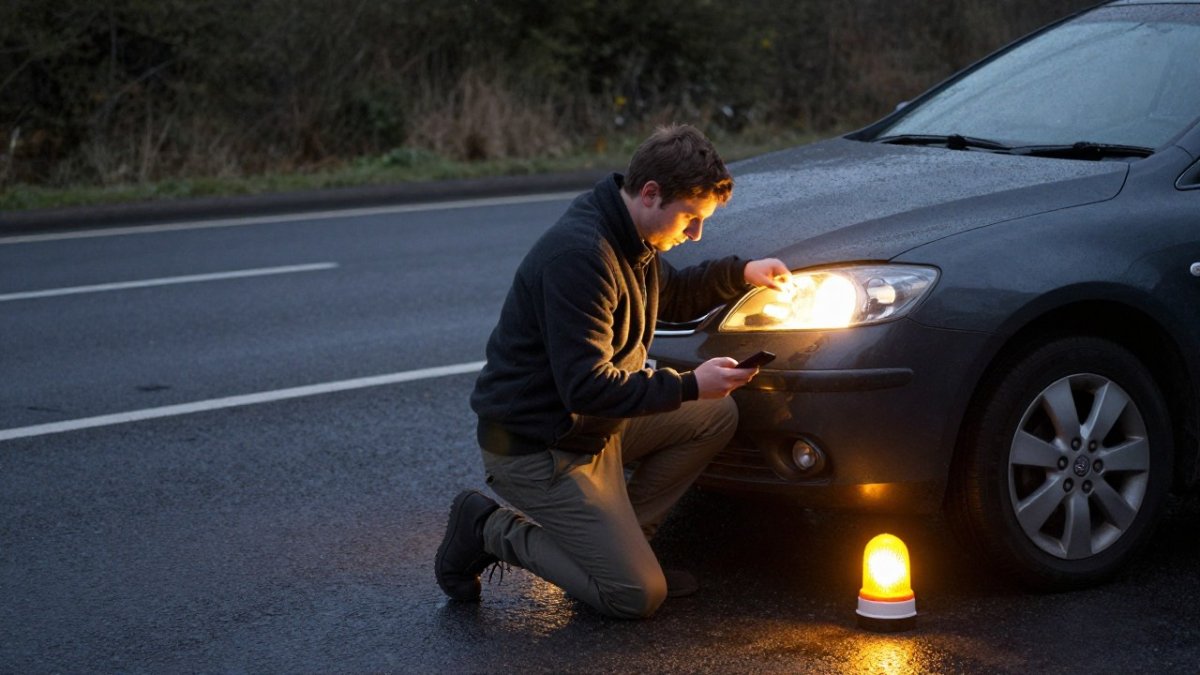
Emergency Beacon vs Mobile Phone for Remote Travel
Last Updated: November 7, 2026
Quick Summary
An emergency beacon sends a distress signal through satellites, so it does not depend on a mobile network, while a phone can only call for help when it picks up a network. The beacon needs a reasonably clear view of the sky, and a phone is better for two-way conversation. Many drivers carry both.
- A personal locator beacon transmits on 406 MHz to the Cospas-Sarsat satellite system.
- A beacon is one-way, so it sends an alert but cannot receive replies.
- A phone can call 999 or 112 on any mobile network, even one you do not subscribe to.
- Keep the beacon clear of tunnels, deep cuttings and heavy tree cover where possible.
- In the UK, a 406 MHz beacon should be registered with the Maritime and Coastguard Agency.
Table of Contents
- Emergency Beacon vs Mobile Phone: How Each Sends a Distress Alert
- Coverage Compared: Cellular Networks, Satellites and Remote Areas
- Emergency Beacon Without Mobile Signal: Where It Still Works
- Satellite Communicator vs PLB: Two-Way Messaging and Cost
- How to Call for Help With No Signal, Step by Step
- Choosing Between a Beacon, a Phone or Both for Your Journeys
- Frequently Asked Questions
Emergency Beacon vs Mobile Phone: How Each Sends a Distress Alert
Choosing a reliable way to call for help starts with knowing how an emergency beacon differs from a mobile phone. An emergency beacon sends a distress signal that does not depend on a cell tower. A phone needs a mobile network to reach anyone at all. That single difference shapes everything else in this guide.
Both devices can summon help, but through different channels and with different limits. Below, this guide compares how each sends an alert, where each works, and what to choose before a journey.
How personal locator beacons work
A personal locator beacon, usually called a PLB, transmits a distress signal on the 406 MHz frequency (Register a UK 406 MHz beacon).
Because the signal goes straight to satellites, a PLB does not need a mobile network. It works in remote areas, on mountains and at sea, provided the device has a clear view of the sky.
A PLB is a one-way device. It sends a distress alert but usually cannot receive replies or hold a conversation. Rescuers respond through their own channels, so you should not expect messages back from the beacon itself.
How mobile-phone emergency features work
A phone can call 999 or 112 when it picks up any mobile network, even one you do not subscribe to.
The weakness is coverage. Without a signal, the phone cannot place a call or send an alert. Signal strength also varies with weather, buildings and distance from the nearest mast.
Phones are good at two-way conversation. They tell a rescuer what happened, how many people are involved and what injuries exist. Conversation is useful once a call connects, though connecting is the hard part in remote places.
Coverage Compared: Cellular Networks, Satellites and Remote Areas
Coverage decides which device is more useful on a given journey, but the comparison is not simply ‘towers versus satellites’. The two systems fail in different ways, and understanding those failure conditions separates a useful plan from a hopeful one.
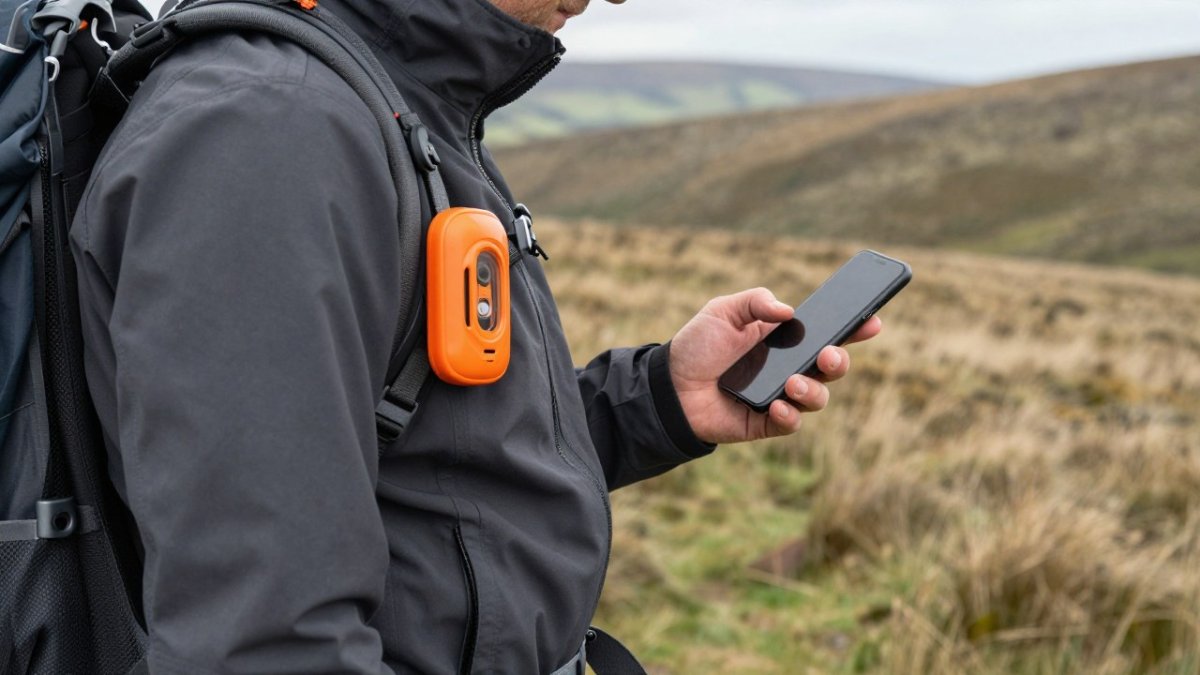
How cellular coverage actually behaves
Cellular networks cover most populated areas, but signal drops off quickly on rural roads, in valleys, in deep cuttings and in some hill country.
A common pattern is that coverage on major routes is good, coverage on minor rural roads is patchy, and coverage in remote upland or coastal areas is unreliable or absent. That is why a phone alone is a weak plan for remote travel.
How satellite coverage actually behaves
A PLB sends its signal on 406 MHz to the Cospas-Sarsat satellite system, which does not depend on cell towers.
A satellite communicator has similar sky-visibility requirements, plus its own dependencies: a charged battery, an active plan and, on some models, a paired smartphone. If any of those fail, the communicator fails with them.
Watch out: a beacon left inside a metal vehicle body or under a seat may not reach the satellites, so keep it accessible and near a window or the roof if the situation allows.
What happens after the alert is sent
Coverage is only half the story. The other half is what happens once the signal leaves the device.
A PLB alert goes to the Cospas-Sarsat system, which relays it to the relevant search and rescue authority. The beacon’s registration details tell rescuers who you are and who to contact, and the GPS coordinates narrow the search area.
A satellite communicator alert goes through the provider’s response centre first, which confirms the alert, may message you back to check whether it is genuine, and then contacts the relevant rescue authority.
Regional and terrain realities
Satellite SOS availability and beacon registration requirements differ between countries. In the UK, PLB registration with the MCA is required, and the 999 and 112 emergency numbers both work. If you travel abroad, check local registration rules and whether your communicator’s SOS service covers the country you are visiting.
Terrain matters as much as country. A coastal path with open sky is very different from a wooded valley or a city street between tall buildings.
The table below sums up how each option behaves across the conditions that matter most on remote journeys.
| Factor | Mobile phone | Emergency beacon (PLB) |
|---|---|---|
| Needs a mobile network | Yes, any network | No, uses satellites |
| Sky view required | No | Yes, reasonably clear view |
| Two-way conversation | Yes | No, one-way alert |
| Typical ownership cost | Phone plus contract | One-off purchase, registration |
| Battery replacement | Not stated | Every 5-7 years |
| Registration in the UK | Not stated | Required with MCA |
Emergency Beacon Without Mobile Signal: Where It Still Works
A beacon is designed for the moment a phone fails. If you break down on a stretch of road with no reception, a PLB can still send your location to rescue services.
Limits still apply. A beacon needs a view of the sky to reach satellites. Stay clear of deep cuttings, tunnels and heavy tree cover when you can.
A beacon also does not replace common sense. Staying visible while you wait matters too, so find out how to choose reliable roadside warning lights. Only activate it for a genuine emergency.
Satellite Communicator vs PLB: Two-Way Messaging and Cost
The choice between a satellite communicator and a PLB often comes down to whether you need to talk back. A satellite messenger lets you exchange messages with family or a support centre, while a PLB only sends an alert. That difference drives the cost structure, the registration rules and the way rescuers respond.
What each device actually does
A personal locator beacon transmits a distress signal on the 406 MHz frequency to the Cospas-Sarsat satellite system, which relays it to search and rescue authorities. Most modern beacons include GPS or GNSS, so the alert carries your coordinates.
A satellite communicator, by contrast, is a two-way device. It connects to a commercial satellite network and lets you send and receive text messages, share a live location, and in some cases trigger an SOS routed to an emergency response centre. Some models pair with a smartphone and use an app; others have their own screen and keypad.
The cost picture in pounds
A standard PLB is typically a one-off purchase.
A satellite communicator works differently. You pay for the device, then a monthly or annual plan to use the satellite network, with plans differing by message allowance, location-sharing frequency and SOS features.
Watch out: a communicator with an expired or unpaid plan may not be able to send an SOS, so check your plan status before you travel, not on the day.
Registration and UK rules
In the UK, a 406 MHz PLB should be registered with the Maritime and Coastguard Agency (MCA) (Be ready in 15 minutes for new Personal Locator Beacon registration requirements). Registration links the beacon’s unique identifier to your details, so rescuers know who is in trouble and can contact your emergency contacts.
Satellite communicators are not registered in the same way. Your provider holds your account details and emergency contacts, and the SOS is routed through the provider’s response centre, which then coordinates with the relevant rescue authority.
Which suits which journey
A PLB suits people who want a dedicated, one-purpose emergency device with no ongoing cost and no dependence on a subscription.
A satellite communicator suits people who want ongoing contact, families checking in, support teams tracking progress, or groups coordinating over several days. It is also useful for sending a non-emergency message to say you are delayed, which can prevent an unnecessary rescue call.
Many people carry both: a phone for everyday calls, a communicator for routine messaging and a PLB as the dedicated last-resort alert.
How to Call for Help With No Signal, Step by Step
If you are stranded with no mobile signal, work through these steps in order.
- Check for any network. Try your phone and the emergency number. Any network can carry a 999 or 112 call, even one you do not subscribe to.
- Move to higher ground or open sky. Signal and satellite reception both improve away from valleys and buildings.
- Use a motorway emergency phone if you are on a motorway (The Highway Code – Breakdowns and incidents (275 to 287) – Guidance). These are placed at regular intervals and connect directly to a control centre. See our guide on using motorway emergency phones correctly for the full steps.
- Activate your personal locator beacon. Hold it upright with a clear view of the sky and leave it on until help arrives. Make sure it is registered to you before you travel. Our guide on registering a personal locator beacon in the UK explains the process.
- Send a text through a satellite messenger if you have one. Include your location, the number of people with you and any injuries.
- Stay with your vehicle and keep warm and visible. Use warning lights so passing drivers and responders can see you.
For a broader route-specific plan, read our guide on calling for help when broken down on the M6.
Choosing Between a Beacon, a Phone or Both for Your Journeys
For most motorists, the answer is to carry a phone and a dedicated beacon.
Whatever you choose, test your devices before setting off, keep batteries charged and register any beacon in your name.
Roadflash: Early warning and emergency beacon systems for UK motorists. Visit the website to find the right beacon for your journeys.
Frequently asked questions
Does an emergency beacon work without a phone signal?
Yes.
Can a mobile phone call 999 with no signal?
Only if it can pick up some mobile network.
Frequently Asked Questions
Can an emergency beacon work without mobile phone coverage?
Yes. A personal locator beacon transmits a 406 MHz distress signal to the Cospas-Sarsat satellite system, so it does not rely on cell towers. Once activated, the signal carries your registered details and GPS location to the relevant rescue coordination centre. Mobile phones, by contrast, need a cellular network or, on some models, a satellite emergency feature that only works in certain places. For journeys where you expect no signal, a beacon is the more reliable single-purpose option. Register the device in the UK and check the battery expiry date before each trip.
Can you call the emergency services with no mobile signal?
Sometimes. Many phones will still attempt an emergency call on any available network, and in some areas a different operator’s signal can carry the call even when your own network is absent. Coverage is not guaranteed, though. If you have no signal at all, a phone cannot place a call, and a text or call may fail even with one bar. A personal locator beacon or a satellite communicator does not depend on those networks, which is why many people carry one for remote walking, sailing or motorway breakdowns.
What is the difference between a personal locator beacon and a mobile phone?
A personal locator beacon is a dedicated device whose only job is to send a one-way distress alert with your location. It works anywhere with a view of the sky and does not need a subscription to activate. A mobile phone is a general communication tool. It can make calls and send messages, but it depends on cellular coverage, battery life and, for emergency location, its own features. The beacon is simpler and more dependable in an emergency. The phone is better for everyday two-way conversations and for finding help once you have signal.
Does a personal locator beacon need a subscription?
A basic personal locator beacon does not require a subscription to send an emergency alert, but you must register it so rescuers can identify you. Some beacons and satellite messengers do charge ongoing service fees, particularly for two-way messaging or location tracking features. Pricing depends on the model, the features you need and whether you buy a device, a plan or both, so check current prices on the Roadflash website before buying.
