
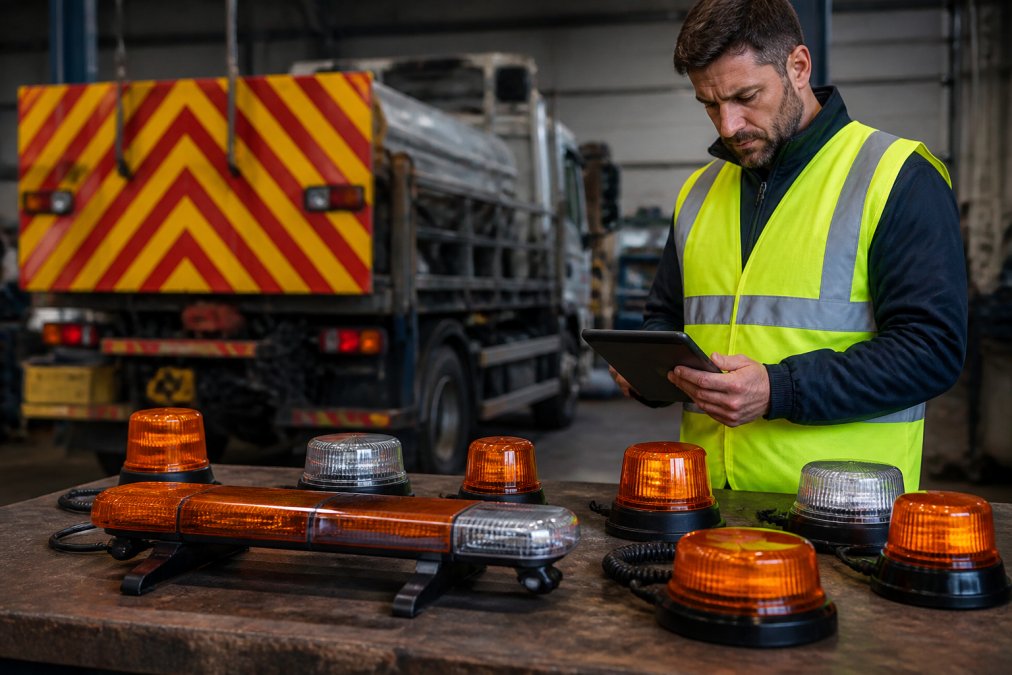
Emergency Light Requirements for Fleet Managers: 2026 Guide
Table of Contents
- Understanding Emergency Light Requirements for Fleet Managers
- Legal Framework: Statutory Duties and Regulatory Standards
- Technical Specifications: Light Intensity, Flash Patterns and Visibility
- Best Practices for Fleet Roadside Safety
- DGT 3.0 Compliance for UK Fleets
- Maintenance Schedules for Fleet Emergency Lights
- Retrofitting vs. New Installation: Choosing the Right Approach
- Fleet Manager Operational Responsibilities
Last Updated: August 26, 2026
Understanding Emergency Light Requirements for Fleet Managers
Emergency light requirements for fleet managers represent a critical safety infrastructure that prevents collisions and protects drivers during roadside incidents. These are regulatory mandates that vary by jurisdiction and operational context. Understanding what your vehicles must carry and how those systems must function directly impacts your legal compliance, insurance coverage, and driver safety.
Regulatory bodies across Europe have tightened visibility standards, introduced new certification pathways, and begun enforcing stricter penalties for non-compliance. This guide covers the legal framework, technical specifications, maintenance protocols, and operational responsibilities that define emergency light requirements for fleet managers in 2026.
The most common mistake fleet managers make is treating emergency lighting as a checkbox exercise rather than a safety system. Compliance matters, but understanding WHY each requirement exists transforms how you approach fleet safety.
Legal Framework: Statutory Duties and Regulatory Standards
Your statutory duty as a fleet manager extends beyond vehicle maintenance. You’re responsible for ensuring that every vehicle in your fleet meets the regulatory standards applicable to its operating environment. These standards fall into two primary categories: building-based emergency lighting standards that apply when your fleet operates near facilities, and vehicle-mounted lighting standards that govern what’s mounted on the vehicles themselves.
BS 5266-1 and BS EN 50172 Standards
BS 5266-1 and BS EN 50172 define emergency escape lighting for buildings and workplaces. While these standards primarily address facility-based lighting systems, they become relevant when your fleet operates in or near commercial premises, particularly for maintenance crews, delivery operations, or emergency response teams working in warehouses, factories, or large commercial sites.
BS EN 50172 specifies performance requirements for emergency lighting systems, including illumination levels (measured in lux), duration of operation, and maintenance schedules (peer-reviewed research). The standard requires that emergency lighting provides sufficient visibility for safe evacuation during power loss. For fleet operations, this matters when your drivers or crew members are working in environments where facility lighting may fail or be inadequate.
If your fleet provides its own lighting equipment (portable beacons, work lights, or task-specific lighting), those systems must align with the illumination requirements outlined in BS EN 50172.
ECE R65 Certification for Vehicle-Mounted Lighting
ECE R65 is the regulatory standard that governs vehicle-mounted emergency warning lights. This regulation specifies technical requirements for hazard warning lamps, including light intensity, flash patterns, colour specifications, and photometric properties. If your fleet vehicles carry roof-mounted beacons, dash-mounted lights, or any amber or red warning lights, those devices must meet ECE R65 certification.
The regulation defines critical parameters: light output (measured in candela), flash frequency (typically 1.5 Hz for amber beacons), colour purity (amber must fall within specific chromaticity coordinates), and visibility distance (the distance at which the light is visible to approaching traffic). A certified ECE R65 beacon ensures that approaching drivers can detect your stationary vehicle from sufficient distance to take evasive action.
Not all warning lights are created equal. A cheap, uncertified beacon may produce light, but it won’t meet the photometric requirements that make it visible in daylight, rain, or fog. ECE R65 certification guarantees that the device has been tested and verified to meet minimum visibility standards under defined conditions.
ECE R65 certification is the international standard that ensures your vehicle-mounted warning lights will be visible to approaching traffic. Without it, you’re operating with equipment that may not meet legal requirements or provide adequate protection.
Technical Specifications: Light Intensity, Flash Patterns and Visibility
The technical specifications that define emergency light requirements exist to ensure that approaching drivers can see your stationary vehicle and react in time.
Lux Illumination and Light Output Requirements
Lux illumination measures the intensity of light falling on a surface. BS EN 50172 specifies minimum lux levels based on area type: general areas require 5 lux, escape routes require 1 lux, and high-risk task areas require 10% of normal working illumination (with a minimum of 5 lux) (peer-reviewed research).
Vehicle-mounted beacons measure performance in candela (cd), which quantifies light output in a specific direction. A typical ECE R65-certified amber beacon produces between 250 and 500 candela, depending on the design. This output level is calculated to be visible from at least 300 metres in daylight conditions and from significantly greater distances at night.
A beacon with higher candela output remains visible in bright sunlight and poor weather. Lower-output devices may fade into the background on sunny days or in heavy rain. When evaluating beacon options for your fleet, candela rating should be one of your primary specifications.
For fleet operations involving roadside work or maintenance in areas where facility lighting is inadequate, supplementary lighting systems should meet the illumination requirements outlined in BS EN 50172. This typically means portable work lights that deliver 50-100 lux in the task area.
Amber Beacons and Hazard Warning Systems
Amber beacons signal to approaching traffic that a vehicle is stationary or moving slowly, that work is being conducted on or near the roadway, or that a hazard exists. The amber colour is distinct from red (which signals stop/danger) and is visible across many lighting conditions.
The flash pattern, typically 1.5 Hz (1.5 flashes per second), is standardised because human perception studies show this frequency is most attention-grabbing without causing disorientation (unece.org). A steady light or irregular flash pattern is less effective at capturing driver attention.
For professional fleets operating on busy motorways or in high-risk environments, the combination of hazard lights plus a certified beacon provides redundancy and significantly improves visibility. Hazard lights are visible from behind and to the sides, while a roof-mounted beacon provides 360-degree visibility and is visible from greater distances, particularly in daylight.
Ensure your fleet’s beacon colour aligns with your jurisdiction’s regulations and your vehicle’s classification. Amber is standard for warning and hazard purposes. Red is reserved for emergency service vehicles. Using the wrong colour can create legal liability and confuse other road users.
Best Practices for Fleet Roadside Safety
Roadside safety extends beyond the equipment you carry. It encompasses the procedures your drivers follow, the training they receive, and the systems you implement to protect them when they’re stationary or working near traffic.
Escape Route Lighting and Anti-Panic Provisions
When your fleet operates in commercial environments or near facilities, escape route lighting becomes a critical safety component. Escape routes must be clearly marked and adequately illuminated so that occupants can exit safely in an emergency.
BS EN 50172 specifies that escape route lighting must provide a minimum of 1 lux at floor level along the entire escape route. The lighting must operate for a minimum of one hour after mains power loss. Emergency lighting fixtures must be positioned to eliminate shadows and ensure that exit signs and directional indicators are clearly visible.
Anti-panic provisions require that escape routes be free from obstacles and that doors open without requiring keys or special knowledge. When your team sets up roadside operations, establish a perimeter with clearly visible warning lights, position personnel at safe distances from traffic, and ensure that escape routes from the work area are marked and lit.
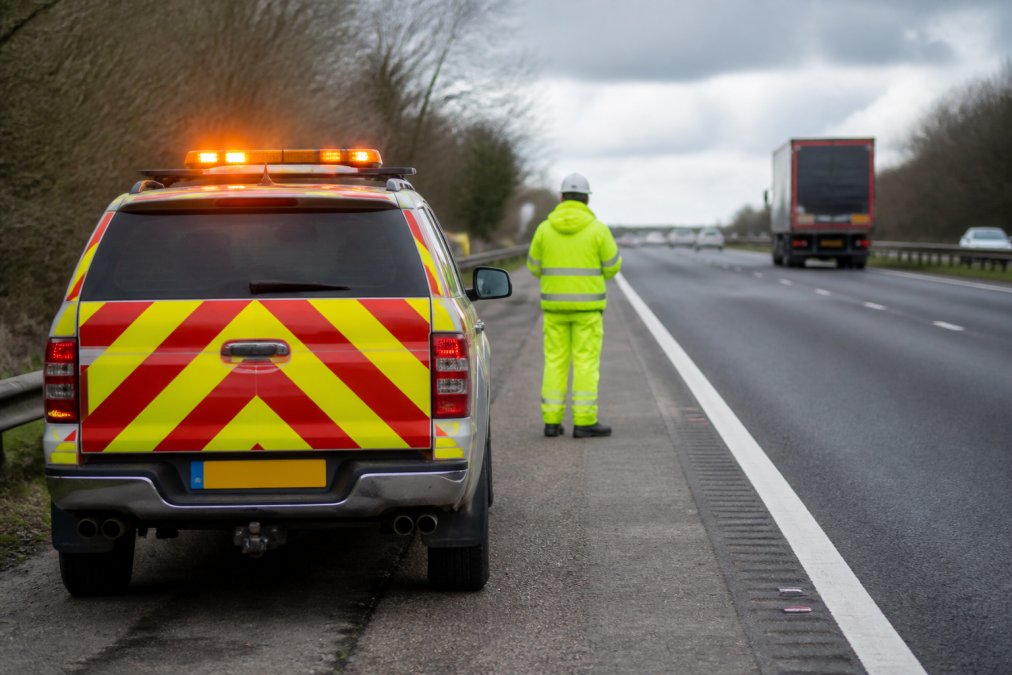
High-Risk Task Area Lighting During Roadside Operations
High-risk task areas are environments where poor visibility could lead to accidents, injuries, or errors. For fleet operations, this includes roadside maintenance work, vehicle recovery operations, or emergency response activities conducted on or near active roadways.
BS EN 50172 specifies that high-risk task areas must maintain illumination at 10% of normal working levels, with a minimum of 5 lux. Portable work lights, mounted on vehicles or tripods, are the standard solution. These lights deliver focused illumination on the task area while also alerting approaching traffic that work is underway.
The most dangerous moment in roadside operations is when crew members are focused on the task and lose awareness of approaching traffic. Adequate lighting reduces this risk by making both the task and the traffic environment visible.
DGT 3.0 Compliance for UK Fleets
DGT 3.0 is the Spanish regulation for emergency warning devices used on vehicles. While it’s a Spanish standard, it’s increasingly recognised across Europe and is relevant for UK fleets that operate in Spain or that carry equipment that may be used across borders.
DGT 3.0 specifies requirements for hazard warning lights, including photometric properties, durability, and operational reliability. For fleet managers operating internationally, DGT 3.0 compliance ensures that your equipment meets the standards of multiple jurisdictions.
If your fleet operates only within the UK, DGT 3.0 compliance is not a legal requirement. However, if you operate across Europe or anticipate cross-border operations, specifying DGT 3.0 certified equipment ensures compatibility and regulatory adherence across multiple jurisdictions.
Maintenance Schedules for Fleet Emergency Lights
Emergency lighting systems require regular maintenance to ensure they function when needed. A beacon that hasn’t been tested in months may fail when your driver needs it most.
Annual Inspection and Certification Protocols
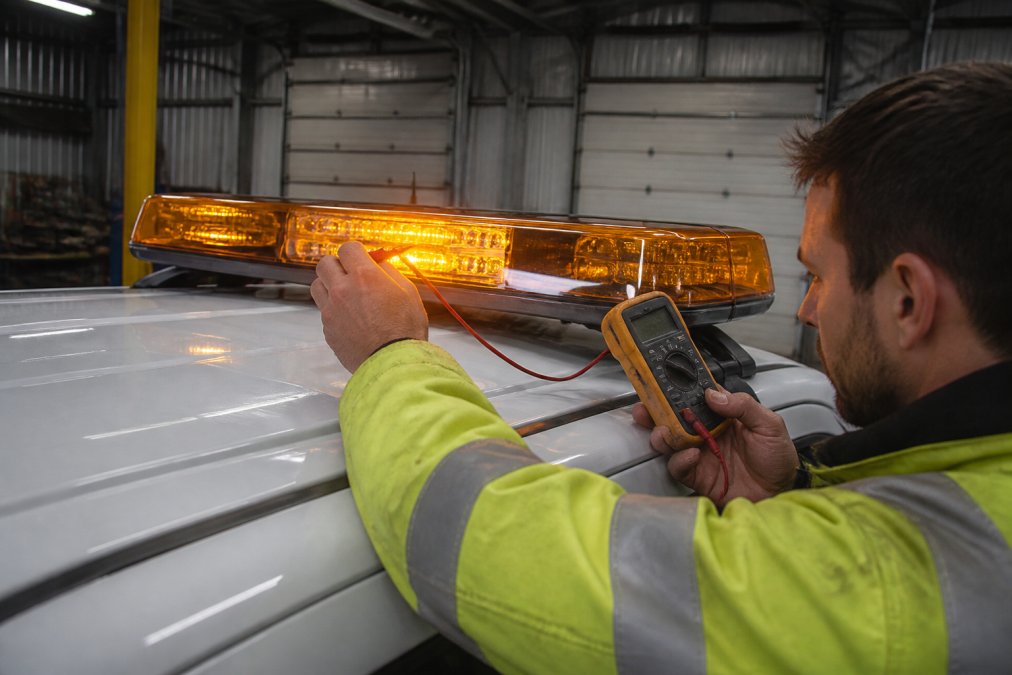
Annual inspection of emergency lighting systems should be comprehensive and documented. For vehicle-mounted beacons, this includes visual inspection for damage, lens clarity, and proper mounting. Functional testing should verify that the beacon activates, maintains correct flash frequency, and produces the expected light output.
Use a simple checklist: visual inspection (look for cracks, corrosion, loose connections), functional test (activate the beacon and confirm operation), and documentation (record the inspection date, condition, and any repairs). This basic approach catches most problems before they become safety issues.
For facilities where your fleet operates, emergency lighting systems should be tested quarterly (monthly testing of at least one circuit, with all circuits tested annually). A qualified electrician should conduct these tests and provide documentation.
Maintain records of inspections and testing. These records demonstrate that you’re taking maintenance seriously and provide evidence of due diligence if an incident occurs.
Documentation and Compliance Records
Documentation is the evidence that your maintenance program exists and is being followed. For fleet emergency lights, maintain records that show: inspection date, vehicle or equipment ID, condition assessment, functional test results, any repairs or replacements, and the name of the person who conducted the inspection.
This documentation demonstrates compliance with regulatory requirements, provides a maintenance history that helps identify recurring issues, and creates a defensible record if your fleet is involved in an incident. Insurance companies and regulatory inspectors will expect to see these records.
Many fleet managers use fleet management software that tracks maintenance schedules and records. This approach is more reliable than manual tracking and provides easy access to historical data.
Retrofitting vs. New Installation: Choosing the Right Approach
When updating your fleet’s emergency lighting systems, you face a choice: retrofit existing vehicles or purchase new equipment.
Retrofitting involves adding or upgrading beacons and lighting systems on existing vehicles. This approach is cost-effective when your current vehicles are otherwise sound but lack adequate emergency lighting. Retrofitting allows you to upgrade to newer, more reliable equipment without replacing entire vehicles.
The challenge with retrofitting is ensuring compatibility. Older vehicles may have electrical systems that aren’t designed for modern high-output beacons. Professional installation is essential to avoid electrical problems or equipment failure.
New installation on new vehicles allows you to specify emergency lighting systems from the outset. You can choose beacons that integrate seamlessly with the vehicle’s electrical architecture and that meet your specific operational requirements.
For most fleet managers, retrofitting existing vehicles is the practical approach because it spreads costs and allows gradual fleet modernisation. Ensure that retrofitting is done by qualified technicians who understand both the vehicle’s electrical system and the requirements of the beacon being installed.
Fleet Manager Operational Responsibilities
Your role as a fleet manager extends beyond purchasing equipment. You’re responsible for ensuring that your fleet operates safely and in compliance with applicable regulations.
Driver training should cover the purpose of emergency lighting systems, when and how to activate beacons, and the importance of positioning vehicles safely during roadside incidents. Training that emphasizes the safety function of these systems improves compliance and outcomes.
Operational procedures should define how drivers respond to breakdowns or incidents. This includes positioning the vehicle away from traffic, activating hazard lights and beacons, and positioning themselves safely. Written procedures that drivers acknowledge create accountability and consistency.
Incident response procedures should address what happens when an emergency lighting system fails or when a driver is injured during a roadside incident. Clear procedures ensure that help is summoned quickly and that the scene is managed safely.
Documentation of incidents, near-misses, and maintenance issues creates a safety culture and provides data that can improve procedures. Conduct regular safety reviews where recent incidents are discussed and lessons learned are incorporated into training and procedures.
Fleet safety depends on understanding and implementing emergency light requirements that protect your drivers and comply with regulatory standards. Start by conducting an audit of your current fleet’s lighting systems, identify gaps, and develop a retrofit or replacement plan that brings all vehicles into compliance. The investment in proper emergency lighting systems protects your drivers, reduces incident risk, and demonstrates your commitment to safety, which is the foundation of any professional fleet operation.
=== FAQ ANSWERS (audit these too, same rules) ===
[1] Q: What are the legal requirements for emergency lighting on commercial vehicles?
A: Commercial vehicles must comply with BS 5266-1 and BS EN 50172 standards for emergency lighting systems. ECE R65 certification is mandatory for vehicle-mounted hazard warning lights. All systems require statutory duty compliance under Health and Safety at Work etc. Act 1974. Fleet managers must ensure amber beacons meet minimum light intensity levels and flash pattern specifications. Annual inspection and certification documentation must be maintained for regulatory adherence and operational safety.
[2] Q: How often must emergency lighting systems be tested for fleet compliance?
A: Emergency lighting systems require annual inspection and testing to maintain compliance. Fleet managers should establish maintenance schedules that include photometric testing, flicker frequency verification, and light output measurement. Documentation of each inspection must be retained for compliance records. Some systems benefit from quarterly visual checks between formal annual certifications to ensure operational readiness and safety legislation adherence.
[3] Q: What is DGT 3.0 compliance and why does it matter for fleet operations?
A: DGT 3.0 is the Spanish regulatory standard for emergency beacons and hazard warning equipment. If your fleet operates cross-border or serves Spanish routes, DGT 3.0 compliance for UK fleets ensures your lighting systems meet international visibility standards and illumination levels. Roadflash offers DGT 3.0 compliant emergency beacons with GPS/Geolocation. This can simplify cross-border compliance and ensure consistent safety protocols across different operating regions.
[4] Q: What is the difference between hazard warning lights and emergency beacons?
A: Hazard warning lights are vehicle-mounted flashers that alert other road users to a stationary or slow-moving vehicle. Emergency beacons are dedicated high-intensity amber lights designed specifically for roadside operations and breakdowns. Beacons typically offer greater light intensity, superior visibility at distance, and often include GPS/geolocation features. Both types must meet ECE R65 standards and flash pattern requirements, but beacons provide enhanced hazard awareness and operational safety for breakdown scenarios on busy motorways and highways.
[5] Q: What documentation is required to prove fleet lighting compliance?
A: Fleet managers must maintain records of annual inspection certificates, photometric test results, and certification documentation for each emergency lighting system. Documentation should include installation dates, maintenance history, and compliance verification against BS 5266-1 and BS EN 50172 standards. This evidence demonstrates regulatory adherence and operational safety commitment. Records should be retained for at least three years and made available during safety audits or regulatory inspections to verify fleet safety protocols.
[6] Q: Can I retrofit existing vehicles with modern emergency lighting systems?
A: Yes, retrofitting is a viable option for many fleets. Modern emergency beacons and hazard warning systems can be installed on existing vehicles provided the installation meets ECE R65 standards and electrical specifications. Retrofitting allows you to upgrade older systems without replacing entire vehicles. Professional installation ensures proper mounting, wiring, and compliance with safety legislation. Retrofitting vs. new installation decisions should consider vehicle age, existing electrical capacity, and long-term fleet strategy. Always verify that retrofit components maintain visibility standards and light intensity requirements.
[7] Q: What visibility standards apply to stationary vehicles on motorways?
A: Stationary vehicles on motorways must be clearly visible to approaching traffic at safe stopping distances. Emergency lighting systems must achieve minimum lux illumination levels specified in BS EN 50172 and BS 5266-1. Amber beacons must maintain consistent flash patterns and flicker frequency to capture driver attention. Light output must be sufficient for visibility in daylight and low-light conditions. Anti-panic lighting provisions ensure crew safety during roadside operations. These visibility standards directly reduce collision risk and protect personnel during breakdowns on high-speed roads.
Frequently Asked Questions
What are the legal requirements for emergency lighting on commercial vehicles?
Commercial vehicles must comply with BS 5266-1 and BS EN 50172 standards for emergency lighting systems. ECE R65 certification is mandatory for vehicle-mounted hazard warning lights. All systems require statutory duty compliance under Health and Safety at Work etc. Act 1974. Fleet managers must ensure amber beacons meet minimum light intensity levels and flash pattern specifications. Annual inspection and certification documentation must be maintained for regulatory adherence and operational safety.
How often must emergency lighting systems be tested for fleet compliance?
Emergency lighting systems require annual inspection and testing to maintain compliance. Fleet managers should establish maintenance schedules that include photometric testing, flicker frequency verification, and light output measurement. Documentation of each inspection must be retained for compliance records. Some systems benefit from quarterly visual checks between formal annual certifications to ensure operational readiness and safety legislation adherence.
What is DGT 3.0 compliance and why does it matter for fleet operations?
DGT 3.0 is the Spanish regulatory standard for emergency beacons and hazard warning equipment. If your fleet operates cross-border or serves Spanish routes, DGT 3.0 compliance for UK fleets ensures your lighting systems meet international visibility standards and illumination levels. Roadflash offers DGT 3.0 compliant emergency beacons with GPS/Geolocation. This can simplify cross-border compliance and ensure consistent safety protocols across different operating regions.
What is the difference between hazard warning lights and emergency beacons?
Hazard warning lights are vehicle-mounted flashers that alert other road users to a stationary or slow-moving vehicle. Emergency beacons are dedicated high-intensity amber lights designed specifically for roadside operations and breakdowns. Beacons typically offer greater light intensity, superior visibility at distance, and often include GPS/geolocation features. Both types must meet ECE R65 standards and flash pattern requirements, but beacons provide enhanced hazard awareness and operational safety for breakdown scenarios on busy motorways and highways.
What documentation is required to prove fleet lighting compliance?
Fleet managers must maintain records of annual inspection certificates, photometric test results, and certification documentation for each emergency lighting system. Documentation should include installation dates, maintenance history, and compliance verification against BS 5266-1 and BS EN 50172 standards. This evidence demonstrates regulatory adherence and operational safety commitment. Records should be retained for at least three years and made available during safety audits or regulatory inspections to verify fleet safety protocols.
Can I retrofit existing vehicles with modern emergency lighting systems?
Yes, retrofitting is a viable option for many fleets. Modern emergency beacons and hazard warning systems can be installed on existing vehicles provided the installation meets ECE R65 standards and electrical specifications. Retrofitting allows you to upgrade older systems without replacing entire vehicles. Professional installation ensures proper mounting, wiring, and compliance with safety legislation. Retrofitting vs. new installation decisions should consider vehicle age, existing electrical capacity, and long-term fleet strategy. Always verify that retrofit components maintain visibility standards and light intensity requirements.
What visibility standards apply to stationary vehicles on motorways?
Stationary vehicles on motorways must be clearly visible to approaching traffic at safe stopping distances. Emergency lighting systems must achieve minimum lux illumination levels specified in BS EN 50172 and BS 5266-1. Amber beacons must maintain consistent flash patterns and flicker frequency to capture driver attention. Light output must be sufficient for visibility in daylight and low-light conditions. Anti-panic lighting provisions ensure crew safety during roadside operations. These visibility standards directly reduce collision risk and protect personnel during breakdowns on high-speed roads.
This article was written using GrandRanker