

DGT 3.0 Compliant Beacon Requirements 2026
Table of Contents
- What Is a DGT 3.0 Compliant Beacon and Why It Matters
- The Mandatory Deadline: January 1, 2026 and What It Means
- V-16 Emergency Beacon Specifications and Technical Standards
- DGT 3.0 Connectivity Requirements: GPS, Real-Time Data, and Internal SIM
- Best Practices for Roadside Vehicle Safety and Device Deployment
- How to Verify Homologation and Avoid Non-Compliant Devices
- Battery Longevity, Data Privacy, and Troubleshooting Connectivity
- Conclusion: Preparing for 2026 Compliance
Last Updated: August 24, 2026
What Is a DGT 3.0 Compliant Beacon and Why It Matters
A DGT 3.0 compliant beacon is an advanced emergency warning device that meets the Spanish Directorate General of Traffic’s technical standards for vehicle safety. These beacons combine GPS geolocation, real-time data transmission, and high-visibility lighting to alert emergency services and nearby motorists when a vehicle breaks down on busy roads.
DGT 3.0 represents a significant shift from traditional warning triangles and basic hazard lights. Rather than relying solely on visual markers that drivers might miss in poor visibility, a connected beacon transmits your precise location to emergency services and nearby vehicles simultaneously. This dual-layer approach, visible warning plus digital notification, creates protection across weather conditions, time of day, and traffic density.
Stationary vehicles on motorways and highways face genuine collision risk, especially during peak traffic or adverse weather. A beacon combining GPS accuracy with autonomous operation protects you even if you’re injured or unable to manually signal for help. For professional drivers, fleet operators, and anyone regularly travelling busy routes, understanding the requirements ahead of the mandatory deadline is essential.
At Roadflash, we’ve designed DGT 3.0 compliant emergency beacons to meet these evolving safety standards while delivering the reliability motorists depend on during genuine emergencies. Below, we’ll break down exactly what compliance means, what technical specifications require, and how to verify you’re buying a device that actually meets the standard.
The Mandatory Deadline: January 1, 2026 and What It Means
As of January 1, 2026, all emergency beacons used on Spanish roads must comply with the DGT 3.0 standard. This is a legal requirement enforced through vehicle safety inspections and roadworthiness checks. Drivers and fleet operators found using non-compliant devices face fines and potential vehicle impoundment.
The deadline exists because road safety data showed traditional warning triangles alone were insufficient. Drivers miss visual markers at night or in fog. Triangles can be knocked over by passing traffic and offer no way to alert emergency services to your exact location. The DGT 3.0 standard mandates connected devices that work autonomously.
Any beacon sold or deployed for roadside use must now include GPS geolocation capability, real-time data transmission to emergency services, and internal SIM connectivity independent of the driver’s mobile network. Older beacons, even high-quality ones, no longer meet legal requirements. If you haven’t upgraded yet, January 1, 2026 is your hard cutoff.
For professional drivers and fleet operators, audit your current inventory immediately. A single non-compliant device discovered during a roadside check results in penalties. For retail and wholesale partners, clear older stock and transition to certified DGT 3.0 models. The transition period is over.
Using a non-compliant beacon after January 1, 2026 exposes you to fines, vehicle impoundment, and potential liability if an accident occurs and authorities determine your equipment failed to meet legal standards.
V-16 Emergency Beacon Specifications and Technical Standards
The V-16 is the reference model for DGT 3.0 compliance, setting the technical benchmark that all approved beacons must meet or exceed.
Core technical requirements for DGT 3.0 compliance include:
- GPS geolocation accuracy within 10 metres in open conditions
- Real-time data transmission to emergency services via internal SIM connectivity
- Autonomous operation independent of the vehicle’s electrical system
- LED warning light output visible from 1 kilometre in daylight conditions
- Battery runtime of at least 72 hours on a single charge
- Operating temperature range from -20°C to +60°C
- Impact resistance meeting EN 60068-2-32 mechanical shock standards
- Waterproofing to IP67 standard (full immersion to 1 metre for 30 minutes)
The 10-metre geolocation accuracy ensures emergency services can pinpoint your location on a multi-lane motorway. The 72-hour battery runtime means the device continues signalling during extended breakdowns. The IP67 waterproofing ensures function in rain, snow, and spray from passing traffic.
DGT 3.0 also mandates homologation, formal certification from an accredited testing laboratory confirming that a specific device model meets all technical requirements. This is where many cheaper alternatives fail. They may have LED lights and a GPS chip, but haven’t undergone rigorous testing required to prove they meet DGT 3.0 standards under real-world conditions.
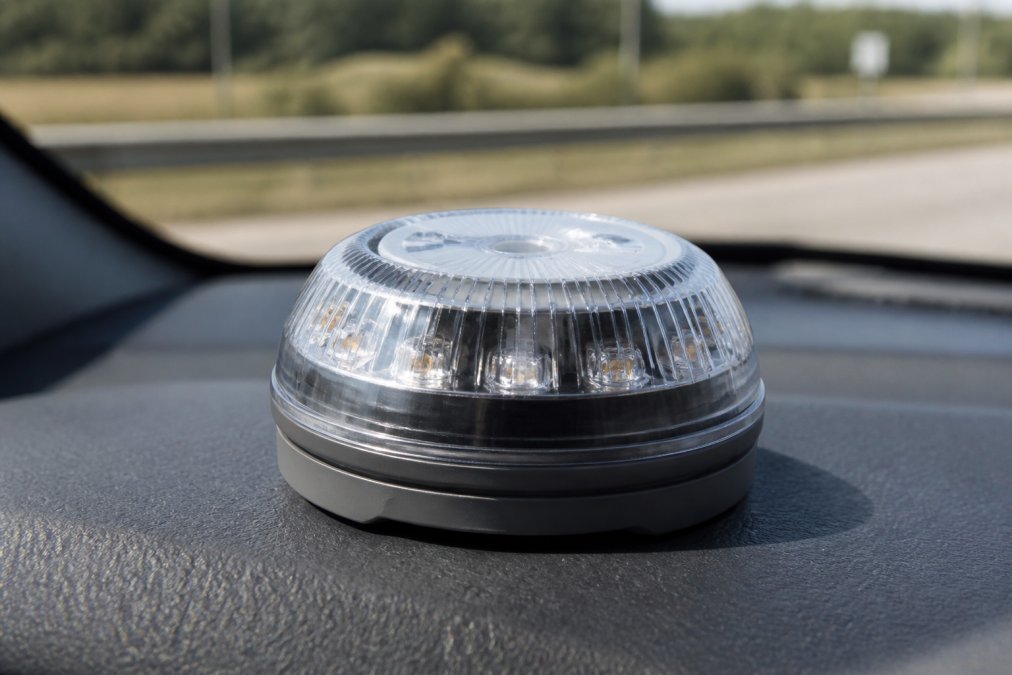
When evaluating a beacon, ask for its homologation certificate. If the seller can’t produce official certification from an accredited testing body, the device hasn’t been verified to meet DGT 3.0 standards, regardless of marketing claims.
DGT 3.0 Connectivity Requirements: GPS, Real-Time Data, and Internal SIM
The connectivity layer separates DGT 3.0 beacons from older warning systems. A connected beacon doesn’t just warn nearby drivers; it actively communicates your location and emergency status to multiple parties simultaneously.
GPS geolocation forms the foundation. The beacon continuously tracks its position using satellite signals and transmits that data in real time. Unlike your mobile phone, which relies on your active signal, a DGT 3.0 beacon operates autonomously. The moment the device is activated, emergency services receive your coordinates.
Real-time data transmission means the beacon sends location updates every 10-30 seconds. This matters because a stationary vehicle on a motorway faces multiple hazards from passing traffic and weather deterioration. Continuous updates ensure emergency responders know exactly where to find you.
Internal SIM connectivity is the requirement that fundamentally changed the landscape. Older beacons relied on Bluetooth or connection to a driver’s mobile phone. If your phone battery was dead or signal failed, the beacon couldn’t transmit. DGT 3.0 beacons include their own embedded SIM card and cellular connectivity, independent of any external device. This autonomous operation is non-negotiable for compliance.
The internal SIM means the beacon is subscription-free in most cases. The connectivity cost is built into the device’s initial purchase or a minimal annual fee, not a recurring monthly subscription.
When you activate a DGT 3.0 beacon during a breakdown, it immediately sends your location, vehicle identification, and emergency status to the national emergency services network. Nearby vehicles equipped with compatible receivers may also receive a warning. You don’t need to make a phone call or provide your location verbally; the beacon does it for you.
The internal SIM and autonomous operation transform a beacon from a passive warning light into an active emergency communication system. This is why DGT 3.0 compliance requires it.
Best Practices for Roadside Vehicle Safety and Device Deployment
Owning a compliant beacon is only half the equation. How you deploy and maintain it determines whether it actually protects you during an emergency.
Placement and mounting matter significantly. The beacon should be positioned where it has clear line of sight to the sky for optimal GPS signal acquisition. On a vehicle, this typically means the dashboard, windscreen mount, or roof-mounted bracket. Placing it in a glove compartment or under a seat degrades GPS accuracy and may prevent satellite signal acquisition entirely.
Activation protocol should be automatic and intuitive. When you pull over during a breakdown, your priority is safety. You shouldn’t need to navigate a complex menu or enter vehicle details manually. The best beacons activate with a single button press and begin GPS acquisition within seconds.
Regular testing prevents surprises. Test your beacon monthly: activate the device, wait for the GPS light to indicate a fix (usually a green LED), and confirm that emergency services receive the transmission. This takes two minutes and gives you confidence the system will function when you genuinely need it.
Battery maintenance is critical for devices with rechargeable batteries. Establish a charging schedule, monthly or quarterly depending on usage. If your beacon uses replaceable batteries, keep spares in your vehicle.
Documentation and registration ensure emergency services can contact you. Most DGT 3.0 beacons require registration with the emergency services network, linking your device’s unique identifier to your contact details and vehicle information. Complete this before you need the beacon.
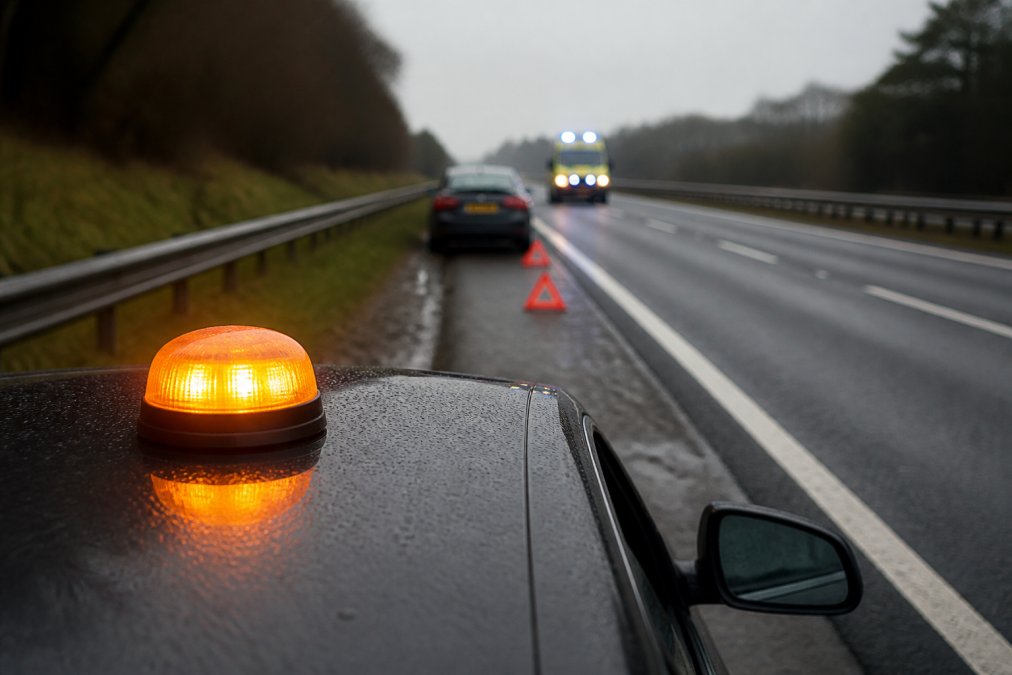
Common deployment mistakes to avoid:
- Mounting the beacon without sky visibility (reduces GPS accuracy)
- Failing to register the device with emergency services (delays response)
- Assuming the beacon works without testing it (dead batteries, failed components)
- Storing the device in extreme temperatures (degrades battery life)
- Ignoring firmware updates (newer versions improve connectivity and reliability)
How to Verify Homologation and Avoid Non-Compliant Devices
The market for emergency beacons has expanded since the DGT 3.0 standard was introduced, and not all devices claiming compliance actually meet it. Homologation verification is your primary defence against buying a non-compliant device.
Homologation is formal certification from an accredited testing laboratory confirming that a specific device model has been tested against DGT 3.0 technical standards and meets all requirements. This is an official certificate issued by an independent body, typically after rigorous testing of prototype units and ongoing quality assurance of production batches.
How to verify homologation:
-
Request the homologation certificate directly from the seller or manufacturer.
-
Check the certificate details: it should name the specific device model, the testing laboratory, the date of certification, and the standard it was tested against (DGT 3.0 or equivalent).
-
Contact the testing laboratory directly if you have doubts. Accredited bodies maintain registries of certified devices.
-
Verify the manufacturer’s credentials. Established road safety companies are far less likely to sell non-compliant devices than new entrants cutting corners.
Red flags indicating a device may not be homologated:
- The seller cannot produce a homologation certificate when asked
- The certificate is generic or vague, without specific model identification
- The device is priced significantly below market alternatives
- The manufacturer has no verifiable history in road safety equipment
- Marketing materials emphasise price over compliance and testing
A non-compliant beacon might have LED lights and claim to have GPS, but if it hasn’t been tested against DGT 3.0 standards, you have no guarantee it will function reliably when you need it. A homologated device has been proven to work.
At Roadflash, every beacon carries full homologation certification. Every unit has been tested against DGT 3.0 technical standards and verified to meet geolocation accuracy, connectivity, battery runtime, and durability requirements.
Battery Longevity, Data Privacy, and Troubleshooting Connectivity
Three practical concerns determine whether drivers actually use their beacons reliably: battery performance, data privacy, and connectivity failures.
Battery longevity affects real-world reliability. A beacon rated for 72-hour runtime assumes optimal conditions. In reality, cold weather reduces battery capacity, frequent activation drains reserves faster, and older batteries lose capacity over time. Check your beacon’s battery health regularly. If it shows reduced capacity, recharge immediately.
Data privacy is a legitimate concern with any device that transmits location data. A DGT 3.0 beacon shares your GPS coordinates with emergency services and, in some cases, with nearby vehicles or traffic management systems. Reputable manufacturers encrypt location data in transit and limit access to authorised emergency services only. Ask your beacon manufacturer about their data protection practices.
Troubleshooting connectivity issues prevents panic during an actual emergency:
-
No GPS fix: Move to a location with clear sky visibility. GPS requires line of sight to satellites. Wait 2-3 minutes for initial acquisition.
-
Data transmission fails: Verify the device has active SIM connectivity. Check that the SIM account hasn’t expired. Restart the device and try again.
-
Battery drains rapidly: Cold temperatures significantly reduce battery capacity. Warm the device to room temperature and test again.
-
LED light is dim or flickering: Check battery status and recharge if needed. If the LED remains dim after a full charge, the device may require repair.
Test your beacon regularly. A device that fails during monthly testing can be repaired or replaced before you need it during an actual emergency.
Never assume your beacon will work during an emergency if you haven’t tested it recently. Monthly activation tests take two minutes and can identify failures before they matter.
Conclusion: Preparing for 2026 Compliance
The January 1, 2026 deadline for DGT 3.0 compliance is now in effect. If you’re still using older warning triangles or non-compliant beacons, your vehicle fails to meet legal safety requirements. Compliance is mandatory.
Preparing for full compliance requires three actions: audit your current equipment, verify homologation of any new devices you purchase, and establish a maintenance schedule to ensure your beacon functions reliably. A connected beacon with GPS geolocation, real-time data transmission, and autonomous operation is no longer a luxury, it’s a legal requirement and a genuine safety investment.
Roadflash’s DGT 3.0 compliant emergency beacons have been specifically designed to meet these standards while delivering the reliability and ease of use that motorists depend on during genuine emergencies. Our multi-award-winning beacons combine advanced GPS geolocation with high-visibility LED warning systems, ensuring both automatic emergency service notification and visible hazard awareness for nearby drivers.
DGT 3.0 official technical standards
Frequently Asked Questions
What exactly is a DGT 3.0 compliant beacon and how does it differ from a warning triangle?
A DGT 3.0 compliant beacon is an electronic emergency signalling device that combines GPS geolocation, real-time data transmission, and high-visibility LED lighting to alert emergency services and other road users to a stationary vehicle. Unlike traditional warning triangles, which are passive and require manual placement, a DGT 3.0 beacon activates automatically, transmits your exact location to traffic management centres, and remains visible in all weather conditions. The beacon communicates vehicle identification and hazard information instantly, enabling faster response times and reducing secondary collision risk on busy highways.
Is a DGT 3.0 compliant beacon mandatory for all vehicle types by January 1, 2026?
The mandatory deadline of January 1, 2026 applies to vehicles operating under specific regulations where DGT 3.0 compliance is enforced. Not all vehicle types are subject to the same requirements, so you must verify your vehicle's classification and operational context. Commercial vehicles, fleet operators, and vehicles frequently used on motorways are typically subject to stricter mandates. Check your vehicle's registration documents and consult your insurer or local traffic authority to confirm whether DGT 3.0 compliance applies to your specific situation.
How do I verify that an emergency beacon is officially homologated and compliant?
Homologated devices carry an official certification mark issued by the regulatory authority overseeing automotive safety standards in your jurisdiction. Check the device packaging and documentation for the homologation number, which confirms the beacon has passed all technical requirements for geolocation accuracy, data transmission, battery performance, and emergency lighting standards. Reputable suppliers like Roadflash provide homologation certificates with every purchase. Never buy beacons from sellers who cannot provide verifiable certification documentation, as non-compliant devices may fail inspection and leave you liable for fines or insurance claim denial.
What happens if my vehicle is involved in a breakdown and the beacon's GPS signal fails to transmit my location?
Modern DGT 3.0 beacons are designed with redundant connectivity and autonomous operation to minimise transmission failure. If the internal SIM loses signal temporarily, the device stores location data and transmits it once connectivity is restored. The beacon also activates high-visibility LED lighting immediately, making your vehicle visible to approaching traffic regardless of signal status. For added security, always inform someone of your journey route and expected arrival time. If you experience connectivity issues after a breakdown, contact emergency services directly by phone and provide your last known location; the beacon serves as an additional safety layer, not a replacement for direct communication.
Does a DGT 3.0 beacon pose any privacy or data security risks?
DGT 3.0 beacons transmit your vehicle's location and identification data only during emergencies or when activated. Data transmission is encrypted and sent exclusively to authorised traffic management and emergency service networks. Your personal information is not sold or shared with third parties. However, you should review your beacon supplier's data protection policy to understand how location data is stored and for how long. Roadflash beacons comply with data protection regulations and use secure, subscription-free connectivity that limits exposure to external networks, ensuring your emergency data reaches only the services that need it.
How long does a DGT 3.0 beacon battery last, and how do I maintain it?
DGT 3.0 beacon batteries typically last 3 to 5 years under normal use, though longevity depends on climate, storage conditions, and activation frequency. To maximise battery life, store the beacon in a cool, dry environment away from direct sunlight and extreme temperatures. Check the battery status indicator regularly, especially before long journeys. Most beacons include a low-battery warning light or indicator. Replace the battery according to the manufacturer's schedule or when the warning activates. Roadflash provides clear maintenance guidelines with every beacon; following these ensures your device remains ready for emergency use and meets compliance standards through the 2026 deadline and beyond.
If I'm a small fleet operator with 15 vehicles, how do I approach DGT 3.0 compliance cost-effectively?
Small fleet operators can achieve compliance by purchasing homologated beacons in bulk, which often reduces per-unit cost. Roadflash offers support for businesses of all sizes and can provide guidance on fleet-wide deployment strategies. Consider phased implementation if budget is constrained: prioritise vehicles that spend the most time on motorways or highways. Subscription-free beacons eliminate ongoing connectivity costs, making total cost of ownership more predictable. Consult Roadflash directly for fleet pricing and support options tailored to your operation size. Compliance investment also reduces insurance premiums and liability exposure, offsetting equipment costs over time.
What should I do if I'm driving in another country and need to ensure my beacon meets local requirements?
DGT 3.0 compliance is enforced in specific jurisdictions; if you're driving abroad, verify whether the destination country recognises DGT 3.0 standards or has its own beacon requirements. Some countries accept homologated beacons from other regulatory bodies, whilst others require country-specific certification. Before travelling, check your destination's traffic authority website or contact your vehicle insurer to confirm what emergency equipment is mandatory. Roadflash can advise whether their beacons meet requirements in your travel destination. Carrying a compliant beacon protects you in emergencies and ensures you meet legal obligations, reducing the risk of fines or insurance complications if a breakdown occurs abroad.
Ready to upgrade to a compliant, tested emergency beacon? Roadflash beacons deliver homologated DGT 3.0 compliance, GPS-enabled geolocation, and 72+ hour battery runtime, all designed to protect you and your passengers during breakdowns on busy roads. Add to basket and ensure your vehicle meets 2026 compliance requirements with a system that’s been proven to work when it matters most.
This article was written using GrandRanker