
Emergency Beacon Features for Night Driving: A 2026 Guide
Table of Contents
- Why Emergency Beacon Features Matter for Night Driving
- Best LED Emergency Beacons for Cars: What to Look For
- Roadside Safety Beacon Regulations and Compliance
- How to Use Emergency Warning Lights Effectively
- Weather Resistance and Durability for All Conditions
- GPS and Geolocated Alert Systems
- Choosing the Right Beacon for Your Needs
- Conclusion
Last Updated: August 11, 2026
Why Emergency Beacon Features Matter for Night Driving
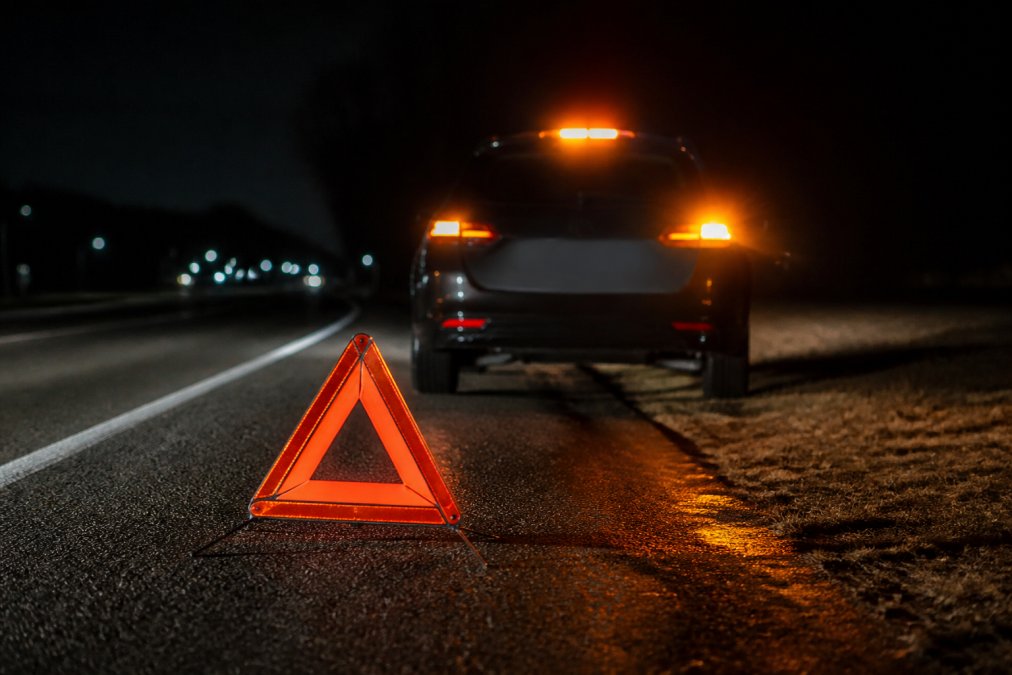
When your car breaks down on a motorway at night, approaching vehicles travelling at 70 mph have less than three seconds to spot your stationary vehicle and react. A standard hazard light, visible only from directly behind, won’t cut it. Night driving accidents involving stationary vehicles account for a disproportionate share of serious motorway collisions because most vehicles blend into darkness until dangerously close.
An emergency beacon that produces 360-degree light, visible from 500 metres away, changes the equation entirely. Beyond motorway breakdowns, emergency beacons matter for any roadside stop. Parked vehicles during roadworks, accident scenes, or temporary hazard warnings all benefit from 360-degree visibility. A proper beacon remains visible in daylight, fog, and heavy rain, conditions where reflective triangles and standard lights fail.
Best LED Emergency Beacons for Cars: What to Look For
Choosing the right emergency beacon means understanding what separates genuinely useful equipment from gimmicks. Several critical features determine whether a beacon actually prevents accidents.
360-Degree Visibility and Light Intensity
The most critical feature is how far the light travels and how completely it surrounds the vehicle. A beacon that only flashes from one side misses traffic approaching from multiple angles, particularly dangerous on curved motorway sections.
Look for beacons explicitly rated for 360-degree horizontal visibility. Light intensity is measured in lumens or candlepower. The sweet spot is a beacon bright enough to cut through fog and rain without creating a blinding effect. Many quality beacons produce between 1,000 and 2,000 lumens.
The AA 3-in-1 Emergency Beacon achieves 360-degree flashing visible from 457 metres with a magnetic base for hands-free deployment. The Kaise V-16 LED Emergency Light offers 360-degree horizontal visibility with an 80 km/h wind-resistant magnetic base and range exceeding one kilometre. Roadflash‘s DGT 3.0 compliant emergency beacons with GPS geolocation combine high-intensity LED output with geolocated alert systems, meaning other drivers see the hazard immediately while emergency services receive precise location data simultaneously.
Battery Life and Power Requirements
A beacon that dies after 30 minutes becomes a liability rather than a safety tool. Most consumer beacons use either disposable AA batteries or rechargeable lithium-ion packs. Disposable batteries offer simplicity; rechargeable options provide longer effective life but require advance charging.
The LAP Electrical Low Profile LED Magnetic Beacon delivers 4 hours of battery life with both cigarette plug and UK mains chargers. The TransQuip Rechargeable Amber LED Beacon extends this to 9+ hours depending on flash pattern.
Battery performance degrades in cold weather, a critical consideration for winter breakdowns. Lithium-ion batteries lose capacity significantly below 5°C, while alkaline batteries perform more consistently in cold conditions. Check whether the beacon allows you to adjust flash patterns, as slower flashing extends runtime considerably compared to rapid strobing.
Magnetic Base and Mounting Stability
A beacon that slides off your vehicle roof during braking creates a new hazard. The magnetic base must withstand wind forces, vehicle vibration, and acceleration forces from nearby traffic passing at speed.
Quality beacons are tested to withstand winds of 45-80 km/h without shifting. On motorways, passing HGVs create wind gusts exceeding 50 km/h. The Haztec Impact ELP Rechargeable Beacon is wind speed certified to 180 km/h, far exceeding typical motorway conditions. The Kaise V-16 offers magnetic base stability rated to winds over 80 km/h.
Magnetic base strength matters less on modern vehicles with steel roofs but becomes critical on vehicles with plastic roof panels or composite materials. Always verify compatibility with your vehicle’s roof material. In a genuine emergency, fumbling with complicated mounting mechanisms costs precious seconds. The best beacons offer one-handed deployment.
Roadside Safety Beacon Regulations and Compliance
In the UK, emergency beacons must comply with specific standards to be legally used on public roads. The primary UK standard is ECE R65, which covers photometric performance, construction, and testing of warning lights. Beacons marked as ECE R65 approved have been independently tested to ensure they meet minimum brightness, flash frequency, and colour standards.
The colour standard for UK emergency beacons is amber (orange-yellow). Red beacons are reserved for emergency vehicles; blue beacons are restricted to police vehicles. Using the wrong colour can lead to prosecution.
Flash frequency must be between 1 and 2 times per second, slow enough to be clearly distinguished from vehicle hazard lights but fast enough to command attention.
The LAP Electrical Low Profile LED Magnetic Beacon carries ECE R65 and ECE R10 approval. The LED Beacon Master Rechargeable USB-C model is R65 approved. The Kaise V-16 LED Emergency Light holds IDIADA PC21020218 certification, meeting European standards that exceed UK requirements.
From 2026, Spain has mandated DGT 3.0 compliant beacons for all vehicles, a standard rapidly becoming expected across Europe. Roadflash’s DGT 3.0 compliant emergency beacons with GPS geolocation meet this emerging standard, positioning you ahead of potential future UK regulatory changes while ensuring compliance if you travel internationally.
How to Use Emergency Warning Lights Effectively
Deploying an emergency beacon correctly is straightforward, but the sequence matters. Proper deployment maximises visibility while keeping you safe from approaching traffic.
Deployment Steps for Motorway Breakdowns
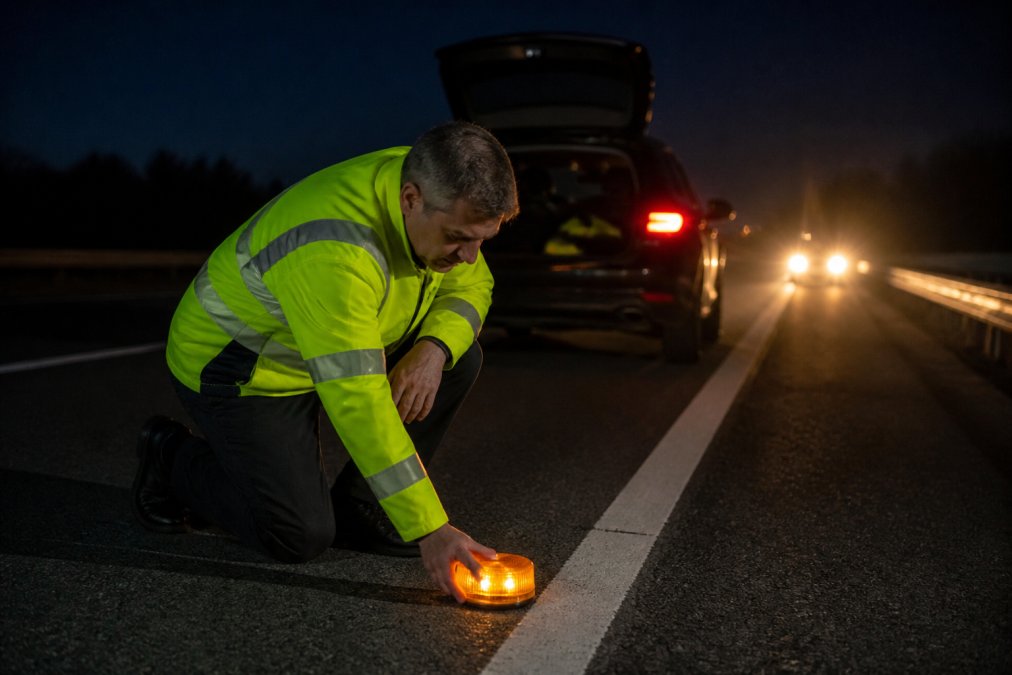
The moment your vehicle becomes disabled on a motorway, activate your hazard lights immediately. Turn off the engine and engage the handbrake. If traffic is light and you’re confident exiting the vehicle is safe, retrieve your emergency beacon from the glove box or boot within 30 seconds.
Exit the vehicle on the passenger side, away from moving traffic. Walk to the rear of your vehicle, staying as far from the traffic lane as the hard shoulder allows. Place the beacon on the roof approximately 30 centimetres behind the roof line to maximise visibility to approaching vehicles while remaining stable during wind gusts. Press the activation switch and confirm the light is flashing before returning to the vehicle. The entire deployment should take under one minute.
Contact recovery services immediately, providing your precise location using motorway marker signs. If your beacon includes GPS geolocation like Roadflash beacons, the location data is transmitted automatically, reducing miscommunication during stressful situations.
Night Driving Scenarios and Placement
Position the beacon at the highest point on your vehicle, typically the roof, to maximise visibility over the roofline of other vehicles. For breakdowns on curves or hills, position the beacon slightly forward of centre on the roof to give approaching traffic maximum warning distance.
During fog or heavy rain, deploy the beacon immediately upon stopping, even if traffic appears light. The beacon’s flashing light cuts through fog more effectively than static reflectors or hazard lights. For temporary roadside stops, deploying the beacon adds a safety margin that costs nothing.
Weather Resistance and Durability for All Conditions
Emergency beacons must function in conditions where standard vehicle lighting fails. Rain, fog, snow, and temperature extremes are routine on UK motorways, particularly during winter months.
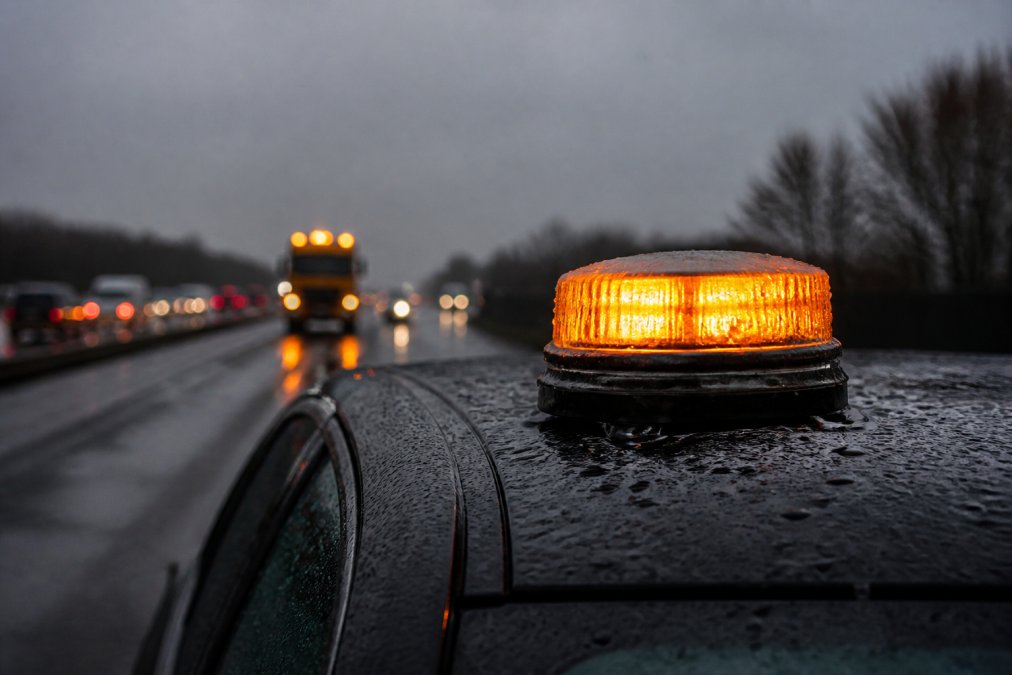
Waterproofing is rated using IP (Ingress Protection) standards. IP56 means dust and water jets won’t penetrate the housing. IP66 means the beacon can withstand heavy rain and temporary submersion. For UK motorway use, IP56 is the practical minimum; IP66 provides additional security during extreme weather.
Polycarbonate lenses are impact-resistant and won’t shatter like glass, though they can become cloudy over time if exposed to UV light. Quality beacons use treated polycarbonate that resists yellowing and maintains optical clarity for years.
Temperature tolerance matters significantly. Alkaline batteries function reliably from -10°C to +50°C. Lithium-ion rechargeable batteries typically function from 0°C to +45°C, with reduced capacity below 5°C. During winter breakdowns, a beacon with alkaline batteries may outperform a rechargeable unit.
The BriteAngle LED Road Safety Warning Triangle combines active LED lights with passive reflective panels, withstanding winds up to 45 mph. This dual-mode approach means the beacon remains visible even if the battery depletes. The Haztec Impact ELP Rechargeable Beacon offers a 5-year warranty, indicating manufacturer confidence in durability across extended use and varied conditions.
Metal components should be stainless steel or treated to resist corrosion. Inspect your beacon annually, checking for lens cloudiness, corrosion, or magnet weakening.
GPS and Geolocated Alert Systems
Modern emergency beacons increasingly integrate GPS geolocation, which fundamentally changes how quickly emergency services locate you. Rather than relying on your ability to read motorway marker signs and communicate your location accurately, geolocation transmits your precise coordinates automatically.
Geolocated alert systems work by transmitting your vehicle’s GPS coordinates to emergency services the moment the beacon is activated. This eliminates delay and potential miscommunication. In fog, heavy rain, or when you’re disoriented after an accident, automatic location transmission becomes genuinely critical.
Roadflash’s DGT 3.0 compliant emergency beacons with GPS geolocation integrate this capability into the beacon itself. When activated, the beacon broadcasts your location to emergency services simultaneously with alerting approaching traffic. This dual function represents the current standard for motorway safety equipment.
The geolocation feature also benefits traffic authorities and breakdown recovery services. They can dispatch resources with full knowledge of your location, reducing response times significantly.
Choosing the Right Beacon for Your Needs
The right emergency beacon depends on your driving patterns, vehicle type, and budget considerations.
If you drive motorways regularly, prioritise beacons with 360-degree visibility rated for at least 500 metres range. Wind-resistant magnetic bases (minimum 45 km/h rating) are essential. Battery life of 4+ hours provides security for extended incidents.
For occasional motorway use, a compact multi-function beacon like the AA 3-in-1 Emergency Beacon balances cost with functionality. For frequent travel in fog, heavy rain, or winter conditions, prioritise beacons with IP66 waterproofing and alkaline battery options.
For professional drivers, fleet operators, and those who value the fastest emergency response, Roadflash’s DGT 3.0 compliant beacons with GPS geolocation justify the investment. Automatic location transmission eliminates communication delays and ensures emergency services reach you with minimum delay.
| Beacon Type | Best For | Key Advantage | Primary Consideration |
|---|---|---|---|
| Compact multi-function (AA 3-in-1) | Occasional motorway drivers | Multiple tools in one device | Limited battery life |
| LED warning triangle (BriteAngle) | Frequent motorway use in adverse weather | Dual LED/reflective visibility | Larger storage requirement |
| Compact strobing beacon (Kaise V-16) | Budget-conscious motorists | High visibility, compact size | Battery-dependent, non-rechargeable |
| Rechargeable professional beacon (LAP Electrical) | Fleet operators, roadside workers | Long battery life, multiple charging options | Requires advance charging |
| GPS-integrated beacon (Roadflash DGT 3.0) | Regular motorway drivers, safety-conscious motorists | Automatic emergency location transmission | Higher initial investment |
When a breakdown happens on a motorway at night, seconds determine whether approaching traffic has time to react. Roadflash’s multi-award-winning DGT 3.0 compliant emergency beacons with GPS geolocation combine high-intensity 360-degree visibility with automatic location transmission to emergency services. Rather than hoping other drivers notice your vehicle, you’re actively alerting traffic while simultaneously notifying recovery services of your precise location. For motorists who value the fastest possible emergency response and the highest visibility standards, Roadflash delivers the protection that transforms a breakdown from a frightening roadside incident into a managed emergency. Add to basket and ensure your next motorway journey includes the safety equipment that actually prevents collisions.
Frequently Asked Questions
How do LED emergency beacons improve visibility in the dark?
LED emergency beacons produce bright, intermittent flashing light that cuts through darkness far more effectively than passive reflectors. A quality beacon with 360-degree visibility can be seen from over 300 metres away at night. The flashing pattern draws drivers' attention better than static light, triggering faster recognition of a hazard. High-lumen output ensures visibility even in fog, rain, or poor weather conditions where traditional warning triangles become nearly invisible.
Are magnetic emergency beacons reliable for night-time breakdowns?
Yes, when properly mounted. A strong magnetic base secures the beacon to your vehicle's roof or bonnet without requiring tools or damaging paint. For night-time use, ensure the beacon is positioned on the highest point of your vehicle for maximum visibility. Wind-certified models (tested to 80+ km/h) remain stable at motorway speeds. However, always deploy additional warning triangles or hazard lights as backup, as no single device should be your only warning system during a breakdown.
What are the legal requirements for vehicle warning lights in the UK?
In the UK, vehicles must carry warning triangles or approved warning devices. Emergency beacons meeting ECE R65 or R10 standards are compliant. From 2026, Spain will mandate V-16 emergency beacons for all vehicles, a standard increasingly recognised across Europe. Check your vehicle's handbook and local regulations before purchasing. If you travel frequently to mainland Europe, investing in a certified beacon ensures compliance across multiple jurisdictions and significantly improves safety during stationary emergencies.
How long should an emergency beacon battery last during a roadside emergency?
Battery life varies by model and flash pattern. Most battery-powered beacons last 4-9 hours on a single charge or set of batteries. Rechargeable models with lithium batteries offer longer runtime and are more economical for frequent users. For occasional motorway commuters, disposable battery models are acceptable if you check batteries regularly. Professional drivers and fleet operators benefit from rechargeable options with USB-C charging. Always verify battery life specifications before purchase and test your beacon quarterly to ensure it functions when needed.
This article was written using GrandRanker