

How to Verify DGT 3.0 Compliance: A Step-by-Step Guide
Table of Contents
- What Is DGT 3.0 Compliance and Why It Matters
- Understanding V16 Beacon Technical Specifications
- Step 1: Locate and Verify the Homologation Code
- Step 2: Check the V16 Beacon Against the DGT Approved List
- Step 3: Inspect Physical Requirements and Operational Condition
- Step 4: How to Register Your V16 Beacon with the DGT
- Spain V16 Emergency Light Law 2026: Mandatory Compliance Dates
- Troubleshooting DGT 3.0 Connectivity and Data Transmission Issues
Last Updated: August 8, 2026
What Is DGT 3.0 Compliance and Why It Matters
DGT 3.0 compliance refers to adherence with Spain’s updated digital traffic safety regulations, which mandate that emergency beacons and hazard warning devices meet specific technical standards for roadside use. The DGT (Dirección General de Tráfico) is Spain’s traffic authority, and their 3.0 framework represents the current generation of requirements for vehicle safety equipment.
If you drive in Spain or operate vehicles there, understanding DGT 3.0 compliance is a legal requirement. Spain’s V16 emergency light law 2026 established mandatory compliance dates that apply to all drivers and fleet operators. Vehicles without compliant emergency beacons face fines, failed roadside inspections, and most critically, reduced visibility during breakdowns when accidents are most likely to occur.
The real consequence of non-compliance goes beyond regulatory penalties. A stationary vehicle on a busy motorway without proper hazard warning equipment becomes a collision hazard. Emergency services need reliable data transmission and real-time incident notification to locate and assist stranded drivers effectively. Roadflash, a Nottingham-based road safety innovator, has built their entire product line around this principle: multi-award-winning emergency beacons that meet DGT 3.0 standards with integrated GPS/Geolocation and high-visibility lighting designed to prevent exactly these scenarios.
This guide walks you through the complete verification process, from locating homologation codes to testing device connectivity.
Understanding V16 Beacon Technical Specifications
The V16 device represents the current technical standard for emergency beacons operating under DGT 3.0 regulations. A V16 beacon is a roadside emergency lighting device engineered to increase vehicle visibility during breakdowns and incidents. It combines high-intensity LED technology with wireless connectivity, allowing real-time data transmission to traffic management systems and emergency services.
Key technical requirements for V16 devices include:
- Light intensity and colour specifications: LED output must meet defined brightness levels (measured in candelas) and emit the correct hazard warning colour to be visible from minimum safe distances
- Wireless connectivity: The beacon must support reliable SIM card integration and data transmission without requiring manual intervention
- Operational temperature range: Devices must function across Spain’s climate conditions, typically -10°C to +60°C
- Battery performance: Longevity specifications ensure the beacon operates for the full duration of a roadside incident
- Physical durability: Materials and construction must withstand vibration, moisture, and UV exposure
- Approval certification: Every V16 beacon bears an engraved lens with its unique homologation code, confirming it has passed laboratory testing
The DGT maintains an official registry of authorized devices. Only beacons listed on this registry are legally compliant. This distinction is critical: a device might look correct and function adequately, but without official approval status, it offers no legal protection and may result in penalties.
The homologation code is your single most reliable verification tool. If the code appears on the DGT approved list, the device has passed all technical and safety testing. If it doesn’t appear, no amount of visual inspection can confirm compliance.
Step 1: Locate and Verify the Homologation Code
The homologation code is the unique identifier that proves your V16 beacon has been officially tested and approved.
Where to Find the Approval Number on Your Device
The homologation code is physically engraved into the lens of the V16 beacon. You’ll find it on the transparent or translucent cover that protects the LED array. To locate it:
- Examine the beacon’s front lens under good lighting
- Look for a series of alphanumeric characters, usually 8-12 characters long
- Wipe the lens gently with a soft cloth if dust obscures the marking
- Photograph the code clearly for your records
The homologation code should be clearly visible without removing any components. If the lens is damaged, cracked, or the code is illegible, the device may not be usable even if it was originally compliant.
Decoding the Homologation Code Format
Homologation codes follow a standardized format established by the DGT. A typical format includes:
- Country identifier: Usually "ES" for Spain
- Manufacturer code: A unique identifier assigned to the approved manufacturer
- Device type designation: Indicating it’s a V16 emergency beacon
- Batch or serial number: Allowing traceability to specific production runs
- Approval year: Showing when the device received certification
Example structure: ES-MFG-V16-2024-001
When you verify your beacon against the approved list, the code you’ve recorded must match exactly, character for character, with an entry in the registry. A single incorrect digit means the device is not officially approved.
Homologation codes can be counterfeited or incorrectly applied. If a code appears on the beacon but doesn’t match any entry in the DGT approved list, the device is either counterfeit or non-compliant. Do not use it.
Step 2: Check the V16 Beacon Against the DGT Approved List
Once you’ve recorded the homologation code, confirm it appears on the official DGT registry. This is where legal compliance is definitively established.
The DGT maintains a public database of all authorized V16 emergency beacons. To verify your beacon:
- Visit the DGT’s official emergency beacon registry through their main website
- Enter your homologation code in the search field
- Confirm your specific code appears in the active/approved section
- Note the approval date, manufacturer name, and any relevant technical specifications
- Check for any notes or restrictions
- Print or screenshot the registry confirmation for your records
The search should return an exact match. If your code doesn’t appear, the device is not DGT 3.0 compliant. Some devices may appear on historical lists but not on the current active registry, indicating their approval has expired.
The DGT approved list is the definitive source of truth for compliance. Your beacon is legal only if its homologation code appears in the current active registry.
Step 3: Inspect Physical Requirements and Operational Condition
Legal compliance requires more than a valid homologation code. The physical device must also meet visible standards and operational requirements.
Visual Identification: What Compliant Devices Look Like
Approved V16 devices feature:
- Engraved lens marking: The homologation code is clearly visible, laser-etched or embossed into the transparent lens
- High-visibility LED array: Multiple bright LEDs arranged for maximum visibility from all angles
- Durable casing: Typically polycarbonate or similar impact-resistant material, free from cracks or significant wear
- Secure mounting bracket: Firmly attached to the device, allowing stable positioning
- Clear indicator lights: Status LEDs showing power, connectivity, and operational mode
- Professional finish: No loose components, clean assembly, and consistent colour
Non-compliant or counterfeit beacons often display faded or illegible homologation codes, dim LED output, brittle plastic casings, loose internal components, missing status indicators, or rough assembly.
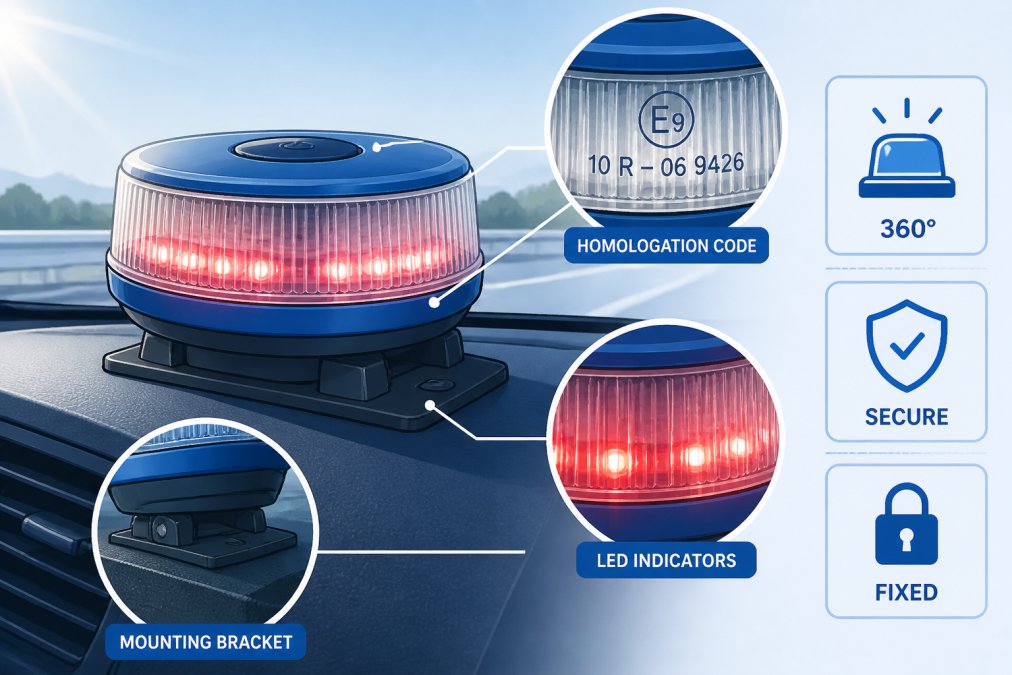
Visual inspection alone cannot confirm full compliance, but it can quickly reveal obvious problems.
Testing Battery Health and Device Longevity
Battery performance is critical. A beacon that loses power during an actual roadside incident becomes useless exactly when it’s needed most.
To assess battery health:
- Check the device’s power indicator when activated; it should illuminate immediately and consistently
- Activate the beacon and observe LED brightness over 5-10 minutes; output should remain stable
- Test the beacon monthly to ensure battery maintains charge
- Check the manufacturing date on the device; batteries degrade over time even if unused
Most V16 beacons are designed to operate for 24-48 hours continuously on a full charge. However, battery capacity degrades over time. A beacon manufactured more than 3-4 years ago may have reduced longevity even if it still functions.
If a device fails to power on, shows dim LED output, or charges very slowly, battery replacement or device replacement is necessary.
Degraded battery performance is often invisible until it’s too late. Test your device regularly and replace batteries proactively, not reactively.
Step 4: How to Register Your V16 Beacon with the DGT
After confirming your beacon meets all technical and physical requirements, register it with the DGT platform. This creates an official record linking your device to your vehicle and enables real-time incident notification and emergency service response.
Registration requirements:
- Access the DGT’s vehicle registration portal using your Spanish vehicle registration number and owner details
- Provide your V16 beacon’s homologation code and serial number
- Specify the vehicle(s) the beacon will be used with
- Confirm the beacon’s GPS/Geolocation capability and wireless connectivity settings
- Agree to data transmission terms
- Complete the registration and retain your confirmation number
Once registered, your beacon becomes part of the DGT’s real-time traffic incident management system. If you experience a breakdown and activate the beacon, emergency services and traffic control systems receive automatic notification of your location.
Fleet operators managing multiple vehicles should register each beacon individually. Registration is typically free but mandatory.
Spain V16 Emergency Light Law 2026: Mandatory Compliance Dates
Spain’s V16 emergency light law 2026 established specific deadlines for compliance. The law mandates that all vehicles operating on Spanish motorways and highways must carry a compliant V16 emergency beacon.
The enforcement timeline includes:
- January 1, 2026: Full enforcement begins for all vehicles
- Compliance verification: Traffic authorities conduct random roadside inspections to verify beacon compliance
- Penalties for non-compliance: Fines ranging from €100 to €500 depending on severity and repeat violations
- Insurance implications: Vehicles without compliant beacons may face insurance claim denials in accident scenarios
The law applies to all vehicle types, including private cars, commercial vehicles, and fleet operations. If your current beacon is older than 2024 or doesn’t appear on the DGT approved list, you must replace it before the enforcement date.
Troubleshooting DGT 3.0 Connectivity and Data Transmission Issues
Even a fully compliant V16 beacon is only effective if its wireless connectivity and data transmission functions work reliably.
Common connectivity issues include:
No wireless signal: The beacon fails to establish a connection with the traffic management network. Verify the SIM card is inserted correctly, check that your mobile network provider has coverage in your area, and restart the beacon.
Intermittent connectivity: The beacon connects and disconnects unpredictably. Move to a location with stronger signal, or request a SIM card replacement from your provider.
Data transmission delays: The beacon connects but takes excessive time to transmit incident data. Most beacons should transmit location data within 10-30 seconds of activation. If delays exceed one minute, document the issue and report it to the manufacturer.
GPS/Geolocation failures: The beacon doesn’t transmit accurate location data. GPS requires a clear view of the sky, so ensure the beacon isn’t obstructed. Activate the beacon in an open area and allow 30-60 seconds for GPS acquisition.
Failed registration with DGT platform: Verify your beacon is registered in the DGT portal, confirm your vehicle registration details are correct, and check that the beacon’s unique serial number matches the registration record exactly.
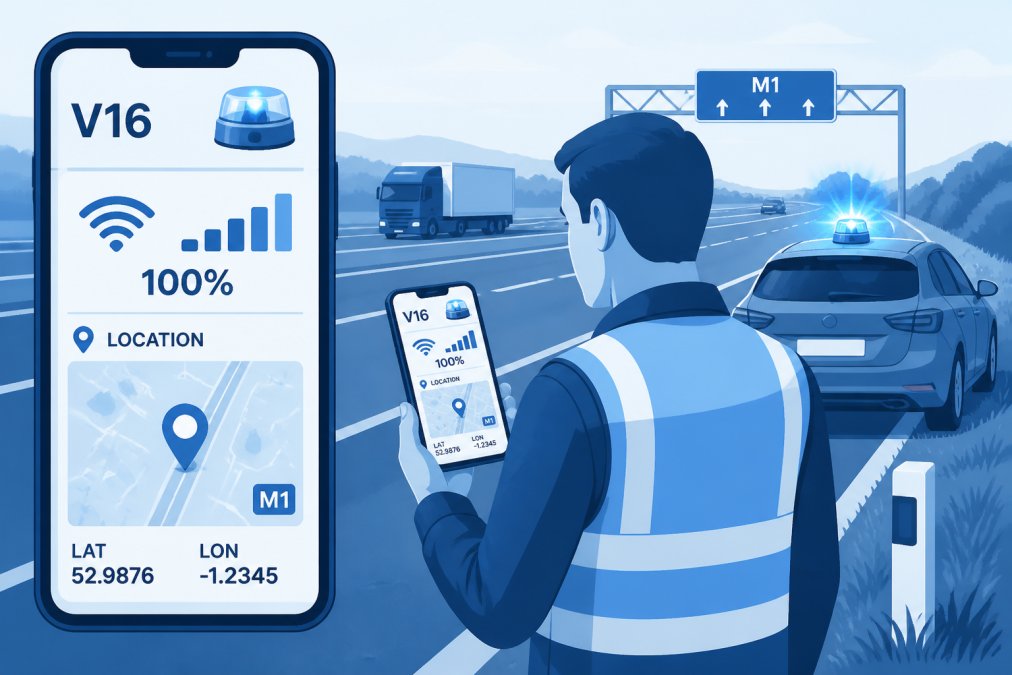
Prevention is more effective than troubleshooting. Test your beacon monthly by activating it briefly and confirming connectivity indicators show active status. Keep your mobile provider’s contact information accessible, and maintain your SIM card’s service plan.
Roadflash’s emergency beacons include built-in diagnostic features that display connectivity status through LED indicators. Green indicates active connectivity; amber indicates searching for signal; red indicates no connection. If connectivity problems cannot be resolved through basic troubleshooting, contact the beacon manufacturer’s technical support.
Ensuring your V16 beacon meets DGT 3.0 compliance protects you legally and keeps you and other road users safe during roadside incidents. The verification process, checking homologation codes, confirming registry status, inspecting physical condition, and testing connectivity, takes less than an hour and provides definitive proof your device will function when needed. Roadflash’s multi-award-winning emergency beacons with integrated GPS/Geolocation are specifically engineered to meet these standards and exceed basic compliance requirements. Begin with your current beacon today: locate its homologation code, verify it against the DGT approved list, and test its connectivity. If compliance gaps exist, upgrade to a certified device before Spain’s mandatory enforcement dates take effect.
Frequently Asked Questions
How do I know if my V16 beacon is DGT 3.0 approved?
Check the homologation code engraved on your device's lens, it should match an entry on the official DGT approved list. The code format typically begins with 'ES' followed by numbers. Visit the DGT's official registry to cross-reference your device's approval number. If your beacon appears on the certified list and displays all mandatory technical specifications (wireless connectivity, real-time data transmission, GDPR-compliant anonymous operation), it meets DGT 3.0 compliance standards.
Is the V16 beacon mandatory from 2026 in Spain?
Yes. Spain's V16 emergency light law 2026 makes V16 beacons mandatory for all vehicles on motorways and highways. Traditional reflective triangles alone no longer satisfy regulatory requirements. Drivers must carry an authorized V16 device that meets DGT 3.0 standards and is registered with the traffic authority. Non-compliance can result in fines and safety risks during breakdowns. Check your vehicle's current equipment against the mandatory compliance dates to ensure you're prepared.
Do I have to register my V16 beacon with the DGT?
Registration requirements depend on your device type and your location's specific regulations. Some V16 beacons register automatically via SIM card integration and anonymous wireless connectivity to the digital traffic platform. Others require manual registration through the DGT portal. Contact your device manufacturer or the DGT directly to confirm whether your particular beacon requires formal registration. Proper registration ensures your device's incident reporting and data transmission functions correctly during emergencies.
What happens if my emergency beacon is not DGT 3.0 compliant?
Non-compliant devices may not transmit real-time incident data to emergency services, leaving you without the safety benefits of automated hazard notification. You risk traffic fines in Spain and other jurisdictions with mandatory compliance laws. Your device may fail roadside inspections, and in the event of a breakdown, emergency responders may not receive your location data. Always verify compliance before purchasing or using any emergency beacon to ensure maximum protection and legal compliance.
This article was written using GrandRanker